UNUSUAL CARS MODEL GUIDE
The Suzuki Alto Works is the factory performance line that turned Suzuki’s practical kei hatchback into a turbocharged miniature hot hatch. Introduced in 1987, it combined a high-output three-cylinder engine with very low weight and offered front-wheel drive or, in selected generations, full-time four-wheel drive.
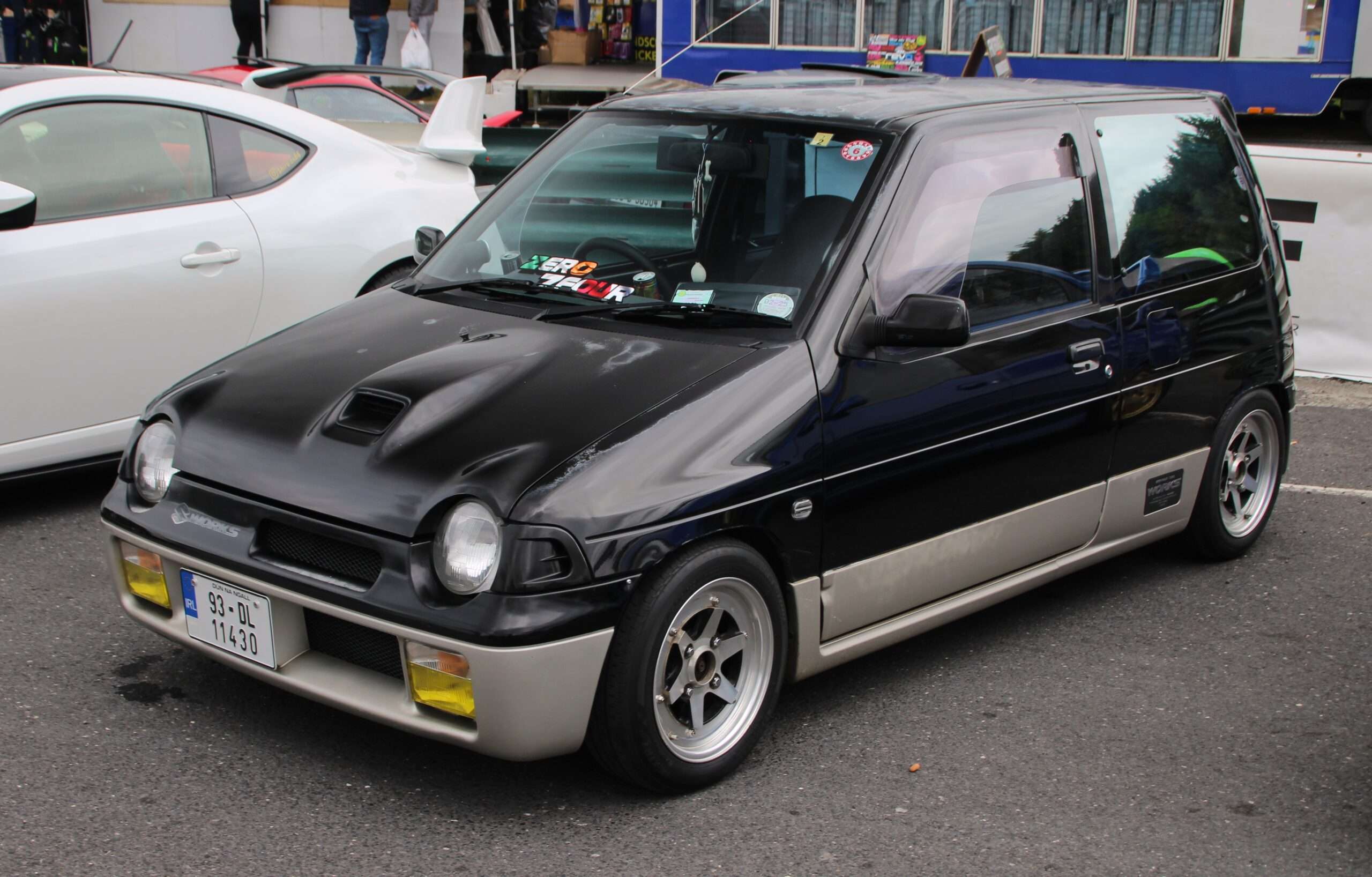
Featured image: 1990 Suzuki Alto Works, photographed by MrWalkr, CC BY-SA 4.0, via Wikimedia Commons; locally hosted.
The first Alto Works
Suzuki launched the Alto Works in February 1987 as the flagship of the second-generation Alto range. Its F5A 543cc three-cylinder used double overhead camshafts, 12 valves, electronic fuel injection, an intercooler and turbocharger. Suzuki’s official Digital Library records 64PS at 7,500rpm.
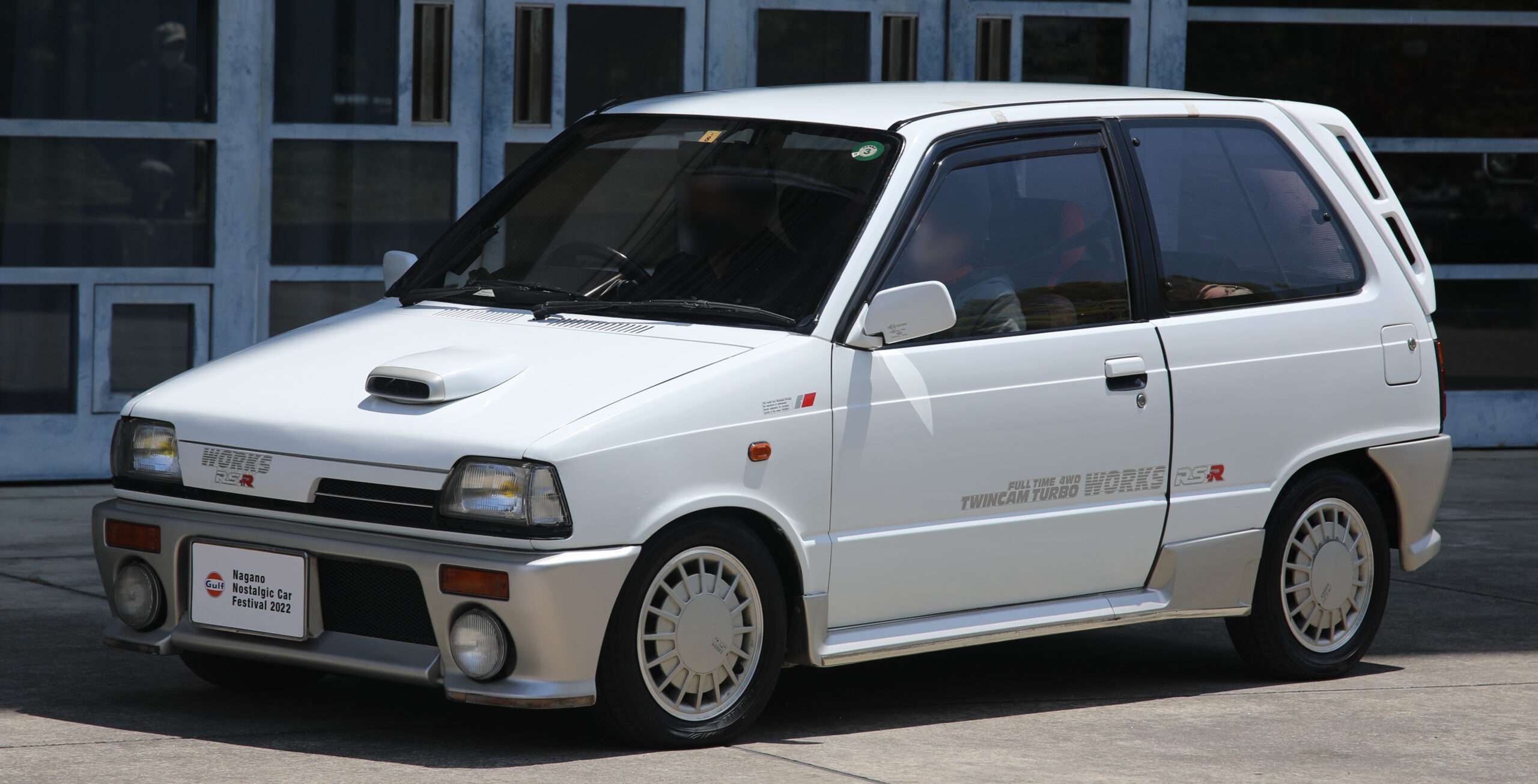
The front-wheel-drive RS-X and four-wheel-drive RS-R became the best-known early versions. Suzuki also offered lower-output Works derivatives, so the badge and body kit do not prove that a car has the twin-cam engine or four-wheel-drive system.
Why 64PS matters
The original Works arrived during an intense Japanese kei performance race. Its 64PS output became the industry’s accepted ceiling for kei cars, even as technology and torque continued to develop. Because the number stayed familiar, buyers must not assume that every 64PS Works has the same engine or drivetrain.
Low mass is just as important as peak output. Suzuki listed the earliest front-wheel-drive RS-X at 610kg and the four-wheel-drive RS-R at 650kg. Those figures explain why a tiny engine could deliver an unusually vivid road-car experience.
Alto Works generations
| Generation | Period | Key features |
|---|---|---|
| CA/CC72V | 1987–88 | First Works; 543cc F5A; RS-X front-wheel drive and RS-R four-wheel drive; 64PS twin-cam turbo flagship. |
| CN/CP/CR/CS family | 1988–94 | New body; transition from 550cc to 660cc kei rules; turbo F5B/F6A engines and two- or four-wheel drive depending on version. |
| HA11S/HB11S and HA21S/HB21S | 1994–98 | Fourth Alto generation; SOHC F6A and twin-cam K6A turbo specifications appeared under different Works grades. |
| HA22S | 1998–2000 | New-regulation body and later K6A turbo; the last Works before the name’s long break. |
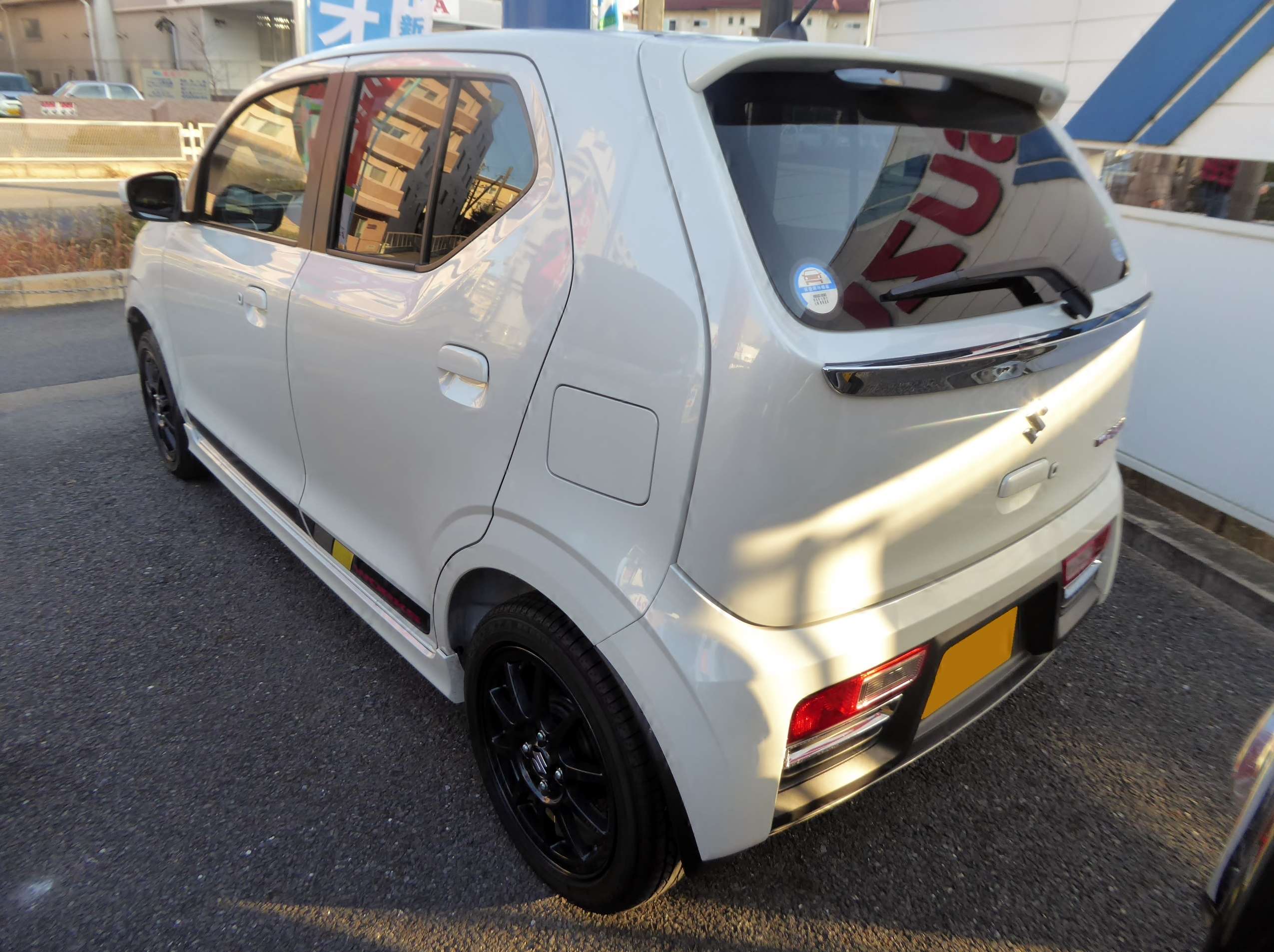
| HA36S | 2015–21 | Badge revived with R06A turbo engine, five-speed manual or automated manual, front- or four-wheel drive, Recaro seats and modern safety equipment. |
Model codes matter because apparently similar cars can use different engines, gearboxes and drivetrains. An HA11S is only one part of the Alto Works story, so its specification should not be transferred to earlier or later generations.

Love cars you don’t see every day?
Get forgotten cars, surprising motoring stories and the most interesting finds from Unusual Cars by email.
Free to join. No spam. Unsubscribe whenever you like. See our privacy policy.
The HA36S revival
Suzuki revived the Works name in 2015 on the eighth-generation Alto. The HA36S retained the 64PS convention but used the modern R06A turbocharged three-cylinder, a short-shift five-speed manual or Auto Gear Shift transmission, and model-specific suspension tuning. Recaro front seats and prominent Works detailing made its purpose clear.
The 2015 car is not a continuation of one unbroken mechanical specification. It is a modern interpretation of the same idea: a very light kei hatchback developed around response, compact dimensions and driver involvement.

Suzuki Alto Works buying guide
Confirm the exact model
Record the complete chassis and model code, engine number, transmission and driven wheels. Compare the car with a Japanese specification sheet for its build period. An RS-X, RS-R, RS/Z and later HA36S Works can require very different parts and technical knowledge.
Rust, crash history and shell condition
Inspect sills, floors, arches, suspension turrets, inner wings, chassis seams and subframes. Kei cars were inexpensive and often used in difficult weather. Competition use, oversize wheels and very low suspension can add stress or hide repaired damage.
Turbo engine and cooling
Start from cold and check smoke, oil leaks, crankcase breathing, idle and boost delivery. Confirm timing-belt or chain requirements for the actual engine, not for “an Alto Works” generally. Inspect the intercooler, hoses, radiator, fan and coolant. Modified cars need evidence of correct fuel and ignition control.
Four-wheel drive and transmission
On four-wheel-drive versions, check matching tyres, fluid history, driveshaft joints and noise from the coupling or differentials. Manual gearboxes should select cleanly without synchromesh resistance; HA36S automated manuals need smooth, documented operation rather than assumptions based on a conventional automatic.
Import history and parts
Most UK examples are Japanese imports. Check the export certificate, translation, model code and mileage evidence. Establish sources for bumpers, lamps, glass, seats, engine electronics and four-wheel-drive components before buying an incomplete car.
Frequently asked questions
When was the first Suzuki Alto Works launched?
Suzuki launched the first Alto Works in February 1987 as the performance flagship of the second-generation Alto range.
What is the difference between RS-X and RS-R?
On the original Works, RS-X denotes the front-wheel-drive twin-cam turbo flagship and RS-R the full-time four-wheel-drive version. Later generation labels must be checked independently.
Why do many Alto Works models have 64PS?
The original car reached 64PS, which became the accepted Japanese industry ceiling for kei-car output. Later cars retained that headline figure while engines, torque and technology changed.
Was the Alto Works officially sold in Britain?
The Japanese-market Works generations were not mainstream official UK models. Most surviving British cars are imports and need model-specific documentation.
Which Alto Works is best?
That depends on whether you prefer an early analogue car, a 1990s four-wheel-drive model or the modern HA36S. Condition, identity and parts support are more important than choosing by badge alone.
Research sources
- Suzuki Digital Library: Alto Works generations and specifications
- Suzuki: 30 years and ten million Alto-family sales
- Suzuki: 2015 Alto Works presentation
Continue the Suzuki story
The Alto Works turned everyday kei-car engineering into a long-running performance lineage. Explore the complete Suzuki hub, then read the Swift GTi guide and discover the Cappuccino.