UNUSUAL CARS MODEL GUIDE
The Toyota Chaser JZX90 and JZX100 turned an outwardly restrained Japanese-market four-door into one of the defining performance saloons of the 1990s. The key model was the rear-wheel-drive Tourer V, powered by Toyota’s 2.5-litre 1JZ-GTE straight-six and offered with either an automatic gearbox or the sought-after R154 five-speed manual.
Quick answer: the JZX90 Tourer V of 1992–96 used a 280PS twin-turbo 1JZ-GTE, while the sharper JZX100 of 1996–2001 retained the 280PS rating but switched to a single turbo and VVT-i. Both are capable, usable fast saloons, but surviving cars must be checked carefully for accident repairs, drift use, undocumented manual conversions and poorly engineered modifications.
Where the Chaser fitted in Toyota’s range
The Chaser shared much of its engineering with the Mark II and Cresta. Toyota differentiated the three through styling, equipment and character rather than treating them as completely separate platforms. The fifth-generation Chaser arrived in October 1992 and formally divided the range into the sporting Tourer line and the more luxurious Avante line.
That distinction matters. A JZX chassis code alone does not prove that a car is a turbocharged Tourer V. JZX90 and JZX100 codes also appeared on naturally aspirated versions, while GX, SX and diesel codes covered other engines. The model plate, drivetrain, factory equipment and Japanese history should all agree.

JZX90 Tourer V: twin turbos and 280PS
Toyota’s official history records five petrol engines for the 1992 Chaser, from a 1.8-litre four-cylinder to a 3.0-litre straight-six. The range-topper was the Tourer V’s 2.5-litre twin-turbo 1JZ-GTE, rated at 280PS. Four-wheel double-wishbone suspension was standard across the generation, with technologies such as ABS, traction control, electronically controlled suspension and a Torsen limited-slip differential fitted or offered according to grade.
The JZX90 established the formula enthusiasts now associate with the Chaser: discreet four-door bodywork, a longitudinal six-cylinder engine, rear-wheel drive and substantial tuning potential. It also established the need for careful identification. Avante, Tourer S and Tourer V cars can look similar after years of body-kit and badge changes.
JZX100 Tourer V: single turbo and VVT-i
The sixth-generation Chaser arrived in September 1996. Toyota described it as a dynamic sports sedan, although its frameless-door appearance was technically a four-door pillared hardtop. Compared with the related Mark II, it used shorter overhangs and distinctive four-lamp headlights.
The Tourer V again produced an official 280PS, but the later 1JZ-GTE used one turbocharger instead of the JZX90’s pair and gained Toyota’s VVT-i variable valve timing. The change improved low- and medium-speed torque while simplifying the boost system. ABS and twin airbags became standard safety equipment on this generation.

JZX90 and JZX100 compared
| Model | Years | Tourer V engine | Character |
|---|---|---|---|
| JZX90 | 1992–1996 | 2.5-litre 1JZ-GTE, twin turbo, 280PS | Rounder early-1990s styling and the more complex twin-turbo installation. |
| JZX100 | 1996–2001 | 2.5-litre 1JZ-GTE VVT-i, single turbo, 280PS | Sharper body, stronger mid-range response and the generation most closely associated with drifting. |
| Tourer S | Both generations | Naturally aspirated 1JZ-GE | Sporting appearance and chassis specification without the Tourer V turbo engine. |
| Avante | Both generations | Several engines and drivetrains | Luxury-oriented range; specification must be checked from the model plate. |

Engine, transmission and chassis
The 1JZ-GTE is a strong engine, but its reputation should not replace an inspection. Standard power figures reveal little about a car that may have spent years with altered boost, fuelling and engine management. Ask for evidence of the turbo specification, injectors, fuel pump, ECU calibration, cooling system and maintenance.
Factory five-speed Tourer V cars used Toyota’s R154 manual gearbox. Many cars were automatic when new and have since been converted. A well-executed conversion can drive properly, but it is not the same thing as a factory manual car. Check the model plate, pedal box, hydraulics, wiring, transmission tunnel work, propeller shaft and differential ratio. Price and describe the car according to what it actually is.
Double-wishbone suspension at each corner gave the Chaser a useful balance of ride, grip and adjustability. That versatility helped make it a favourite for drifting, which is also why underbody, steering and suspension checks are essential today.

Why the Chaser became a cult car
The appeal is the contrast between appearance and ability. A Chaser can carry four adults and blend into ordinary traffic, yet a genuine Tourer V has the engine, layout and chassis to support serious performance. Export markets discovered that combination long after Toyota ended production in June 2001.
Drifting, time attack and street-car culture then made JZX100s internationally recognisable. The downside is that standard examples are now difficult to find. Original aero, interior trim, factory wheels and uncut wiring have become important evidence of a car’s history rather than cosmetic trivia.
Love cars you don’t see every day?
Get forgotten cars, surprising motoring stories and the most interesting finds from Unusual Cars by email.
Free to join. No spam. Unsubscribe whenever you like. See our privacy policy.
Toyota Chaser buying guide
Confirm the identity
Match the chassis number and Toyota model code to the import paperwork. Confirm whether the car began life as a Tourer V, Tourer S or Avante, and whether its transmission is original. Auction sheets are useful only when their provenance can be verified.
Look for accident and drift damage
Inspect chassis rails, suspension pick-up points, sills, jacking points, boot floor and rear subframe areas. Uneven seams, fresh underseal, poorly aligned panels or different paint textures can reveal repair work. Check the steering lock-to-lock and inspect the inner edges of all four tyres.
Assess modifications as a complete system
A large turbo or boost controller is not an isolated upgrade. The fuel system, ECU, intercooler, exhaust, cooling and drivetrain must be suitable and documented. Avoid improvised wiring, vented crankcases, unexplained warning lights and cars that cannot demonstrate a stable cold start and clean full-load run.
Test gearbox, differential and brakes
On an R154, listen for bearing noise and check every gear for graunching or jumping out. Automatic changes should be clean and consistent. Clunks can indicate worn bushes, mountings or differential backlash. Confirm that brake and suspension upgrades use identifiable parts.
Do not overlook trim and glass
Mechanical components can often be sourced through the wider JZ family, but model-specific lamps, body panels, seals and interior pieces are increasingly difficult. A complete, straight car is usually a better basis than a cheaper incomplete project.
Frequently asked questions
What is a Toyota Chaser Tourer V?
It is the high-performance rear-wheel-drive Chaser grade powered by a turbocharged 2.5-litre 1JZ-GTE straight-six. The JZX90 used twin turbos; the JZX100 used a single turbo with VVT-i.
How much power did the JZX100 Tourer V make?
Toyota rated the Japanese-market JZX100 Tourer V at 280PS. Modified cars may make more, but an unsupported power claim is not evidence of condition or engineering quality.
What is the main difference between JZX90 and JZX100?
The JZX90 arrived in 1992 with a twin-turbo 1JZ-GTE. The JZX100 arrived in 1996 with sharper styling, standard ABS and twin airbags, and a single-turbo VVT-i version of the 1JZ-GTE.
Were all JZX100 Chasers turbocharged?
No. The JZX100 family included several naturally aspirated and diesel versions. The Tourer V is the turbocharged performance model; a chassis code or body kit alone does not prove Tourer V identity.
Is a manual-converted Chaser a bad car?
Not necessarily, but the conversion must be assessed on workmanship and documented honestly. It should not be priced or described as a factory manual without evidence from the model plate and original records.
Research sources
- Toyota: fifth-generation Chaser history and specifications
- Toyota: sixth-generation Chaser history and specifications
- JDM BuySell: X100 buyer’s guide
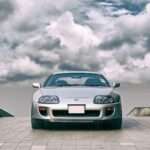
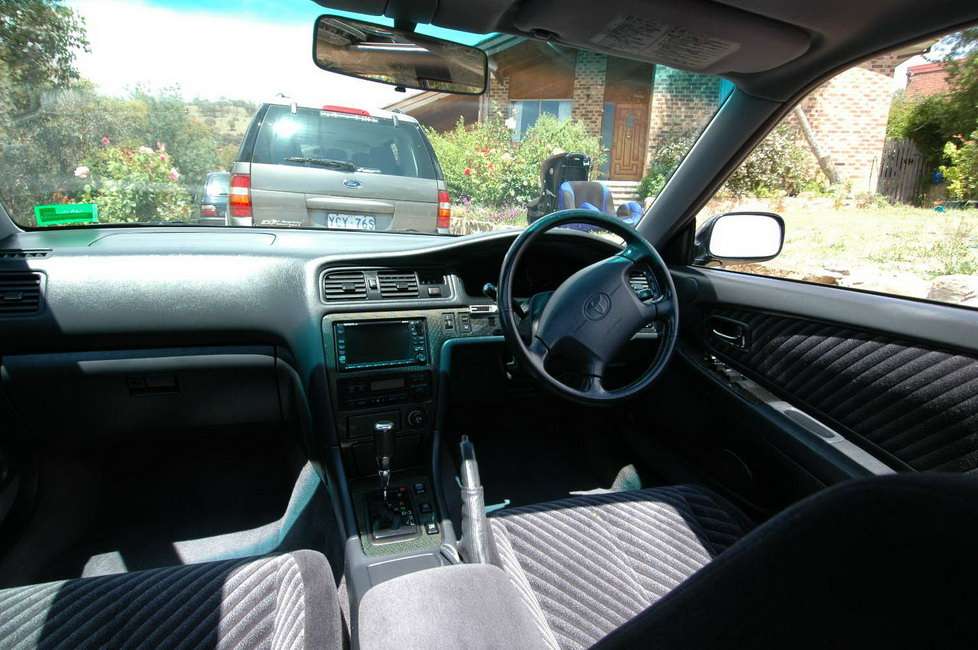
- Featured image: JZX100 Chaser Tourer V by 先従雗始, CC0.
Continue the Toyota story
Explore the Rare & Performance Toyotas hub, compare Toyota’s straight-six flagship in the Supra A80 guide, or go back to the analogue Supra A70.