UNUSUAL CARS MODEL GUIDE
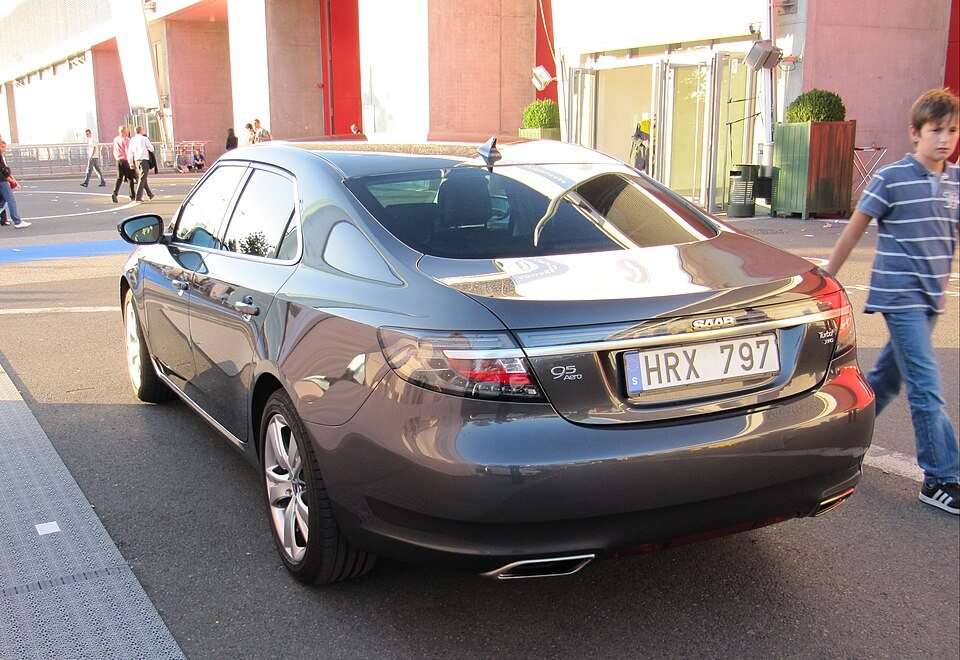
The second-generation Saab 9-5 was the company’s last new production car and one of its rarest UK-market models. Launched in Britain in 2010, the large saloon combined dramatic Scandinavian styling with turbocharged petrol and diesel engines, modern safety equipment and a cabin that deliberately retained Saab ideas such as Night Panel and an aircraft-inspired driver display.
Why Saab needed a new flagship
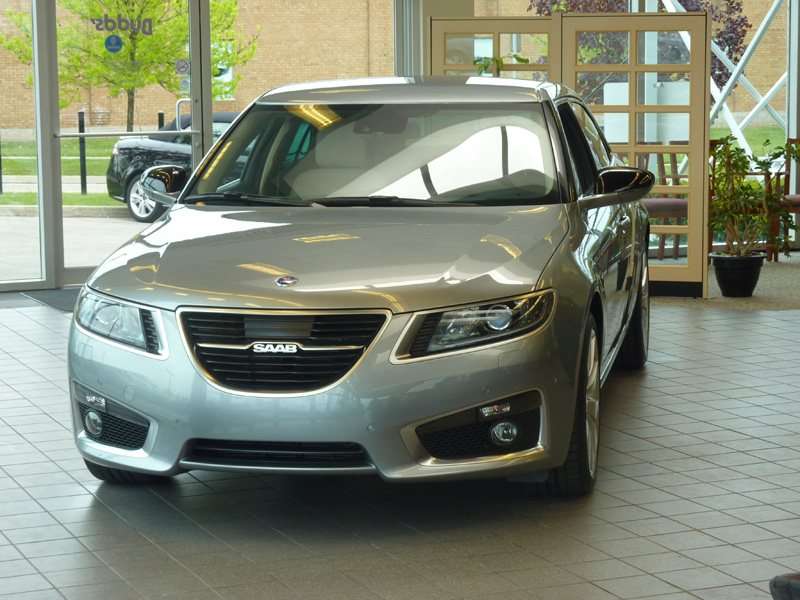
The original 9-5 had served from 1997 to 2009. Its replacement used General Motors’ Epsilon II architecture but was engineered, styled and calibrated to present a recognisably Saab identity. The long wheelbase, wraparound glazing and clean tail gave it far more visual presence than the older car.
Saab began production in early 2010 and UK deliveries followed that year. Vector SE and Aero were the most familiar British trims. Equipment varied, but buyers could find head-up display, adaptive lighting, lane-departure warning, keyless operation and a colour instrument display that mimicked an aircraft altimeter.
UK engines and transmissions
The UK range included a 1.6-litre turbo petrol, a two-litre turbo petrol and 2.0 TiD and twin-turbo TTiD diesels. The flagship Aero used a 2.8-litre turbocharged V6 with Saab XWD all-wheel drive. Manual and automatic transmissions were offered according to engine and specification.
| UK version | Character | Buying priority |
|---|---|---|
| 1.6T | Lower-capacity petrol entry point | Cooling, turbo response and service history |
| 2.0T | Balanced turbo-petrol choice | Timing, oil history and electronics |
| 2.0 TiD/TTiD | Long-distance diesel economy | DPF, EGR, injectors and dual-mass flywheel |
| 2.8T Aero XWD | V6 performance flagship | XWD servicing, cooling and matched tyres |

Why the second-generation 9-5 is rare
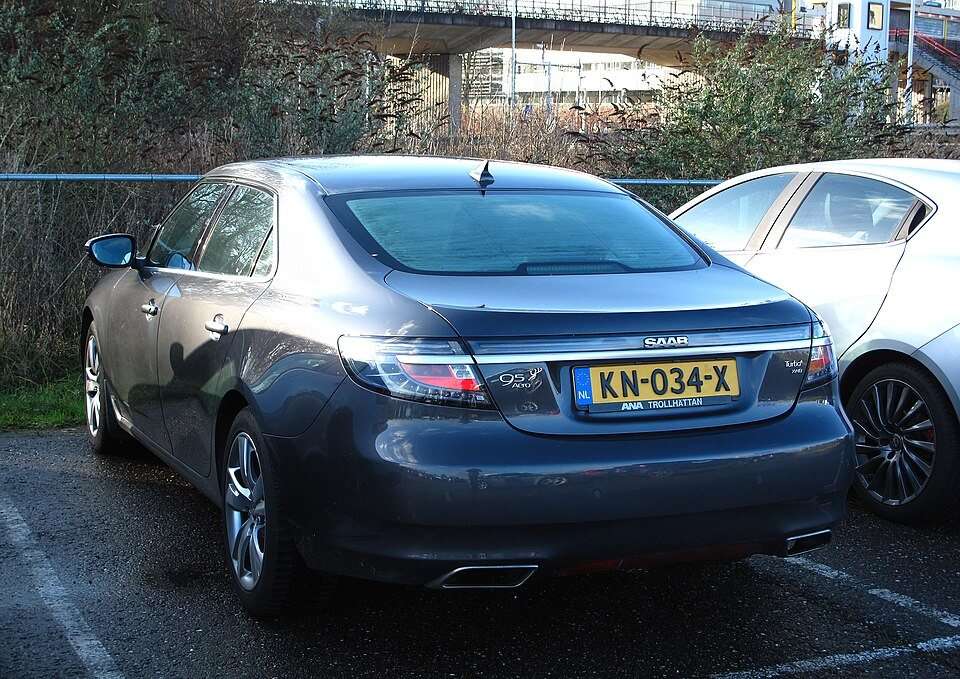
The car reached customers during Saab’s final period of instability. Production interruptions limited supply and the Trollhättan line stopped in 2011. The planned SportCombi estate was shown, but did not enter normal series production before the collapse. Surviving saloons therefore represent the final complete Saab model programme rather than the beginning of a long replacement cycle.
Rarity has two consequences. It strengthens the car’s appeal as a modern classic, but it can make model-specific lighting, glazing, body panels, trim and electronic modules more difficult to replace. Mechanical sharing helps with some service items, yet it should not be confused with universal parts availability.
Love cars you don’t see every day?
Get forgotten cars, surprising motoring stories and the most interesting finds from Unusual Cars by email.
Free to join. No spam. Unsubscribe whenever you like. See our privacy policy.
Second-generation Saab 9-5 buying guide
Electronics and cabin systems
Test every function: head-up display, instrument screen, infotainment, navigation, climate control, parking sensors, electric seats, mirrors, locks and keyless entry. Low battery voltage can create misleading warnings, but persistent faults still require diagnosis rather than a battery reset.
Diesel emissions equipment
Diesel cars need evidence of suitable use and servicing. Repeated short journeys can trouble the particulate filter and EGR system. Check cold starting, smoke, regeneration history, injector correction and the condition of the clutch and dual-mass flywheel on manuals.
Petrol engines and cooling
Look for stable temperature, clean oil, smooth boost and an absence of leaks or timing noise. The V6 places greater demands on cooling and under-bonnet packaging. Any remap should be supported by invoices and a convincing maintenance record.
XWD and chassis
XWD cars should have four matching tyres with closely matched wear. Confirm service history for the coupling and rear drive unit, then listen for vibration or bearing noise. Check front suspension joints, rear bushes, dampers and wheel alignment on every version.
Body, lamps and model-specific trim
Inspect accident repairs particularly carefully because replacement panels and lamps can be scarce. Check the lower body, subframes, wheelarches and brake pipes for corrosion, and make sure unique Aero or Vector parts are present rather than substituted.
Continue the Saab story
Return to the Rare & Performance Saabs hub, then compare it with the earlier first-generation 9-5 Aero and 9000 Aero.
Research sources
- Contemporary UK range and pricing announcement
- Saab production press material
- Archived Saab 9-5 model documents
Frequently asked questions
Was the second-generation Saab 9-5 sold in the UK?
Yes. Right-hand-drive saloons were officially sold in Britain from 2010 with petrol and diesel engines.
What years was the second-generation Saab 9-5 built?
Series production began in 2010 and ended in 2011 when Saab’s Trollhättan production stopped.
Was there a second-generation Saab 9-5 estate?
Saab showed the 9-5 SportCombi, but it did not enter normal series production before the company’s collapse.
Which second-generation Saab 9-5 is fastest?
The range-topping 2.8-litre turbocharged V6 Aero with XWD is the principal performance version.
Are parts difficult to obtain?
Routine mechanical parts have some GM-family support, but body panels, lamps, trim and model-specific electronics can be scarce.