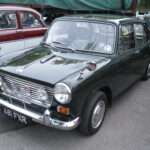
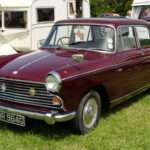
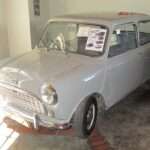
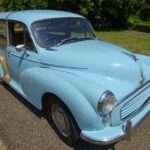
Rare and forgotten Morris cars include far more than the familiar Minor. This UK-focused marque hub brings together disappearing family cars, unusual flagship derivatives and practical buying guides—from the front-wheel-drive 1100/1300 and spacious Landcrab to the Oxford Series VI, Marina, Ital and specialist Minor variants.
Start here: choose a model below for its history, specifications, known problems and the checks that matter before buying. The collection focuses on cars sold in Britain under the Morris name and treats Austin-badged relatives as connected models rather than interchangeable identities.
Explore Morris model guides
Morris 1100 and 1300 ADO16
BMC’s best-selling front-wheel-drive family car, with Hydrolastic suspension, roomy packaging and important rust checks.
Morris 1800 Landcrab
The Morris-badged ADO17: front-wheel drive, Hydrolastic suspension and remarkable passenger space.
Morris Ital 2.0 HLS
The rare automatic flagship of the final rear-wheel-drive Morris family-car range.
Morris J2 Camper
A forward-control Morris van converted into a compact period camper, with corrosion and conversion checks.
Morris Marina 1.8 TC
The twin-carburettor Marina saloon and coupé that topped the original 1971 performance range.
Morris Minor Million
The lilac 350-car celebration series built around Britain’s first million-selling model.
Morris Minor Traveller
The timber-framed estate version, combining Minor simplicity with distinctive ash bodywork and practical load space.
Morris Minor Van and Pick-up
The hard-working LCV versions of the Minor, now rare and requiring careful chassis and identity checks.
Morris Oxford Series VI
The final Farina-styled Oxford, offering a 1.6-litre B-Series engine, generous cabin space and traditional rear-wheel drive.
Why Morris cars became rare
Morris was once one of the most familiar badges on British roads. High production did not guarantee survival: ordinary cars were used hard, values fell, corrosion took hold and later restorers often concentrated on the best-loved versions. Marinas and Itals became especially scarce, while uncommon specifications such as the 1.8 TC and 2.0 HLS were dismantled or modified when they were worth little.
Rarity is not proof of value or quality. A rare derivative can still be uneconomic to restore, and registration databases may group engines, trims or Austin and Morris relatives together. Each guide therefore concentrates on verifiable identity, structural condition and parts availability.
Morris, Austin and British Leyland names explained
The Morris story overlaps with BMC and British Leyland badge engineering. The 1100/1300 shared its ADO16 structure with Austin and other marques, while the 1800 shared its ADO17 structure with Austin and Wolseley versions. Later corporate reorganisation gradually reduced the independence of the Morris marque. Buyers should use chassis and production records rather than assume two similarly shaped cars are identical.
Buying a rare Morris
- Verify the model: check chassis plates, engine numbers, registration history and period documents.
- Inspect structure: sills, floors, suspension mounts and previous repairs matter more than cosmetics.
- Confirm completeness: mechanical service parts may be available when trim, badges and panels are not.
- Budget realistically: a cheap project can cost far more than a sound running car.
- Use specialist clubs: marque knowledge is invaluable for identity, parts and correct restoration.
Further Morris coverage
The hub now covers nine distinct UK-market Morris stories spanning family saloons, estates, commercial vehicles and campers. Future additions should focus on genuinely different derivatives—such as the Marina estate or scarce Oxford Traveller—rather than duplicate closely related Austin or MG coverage.