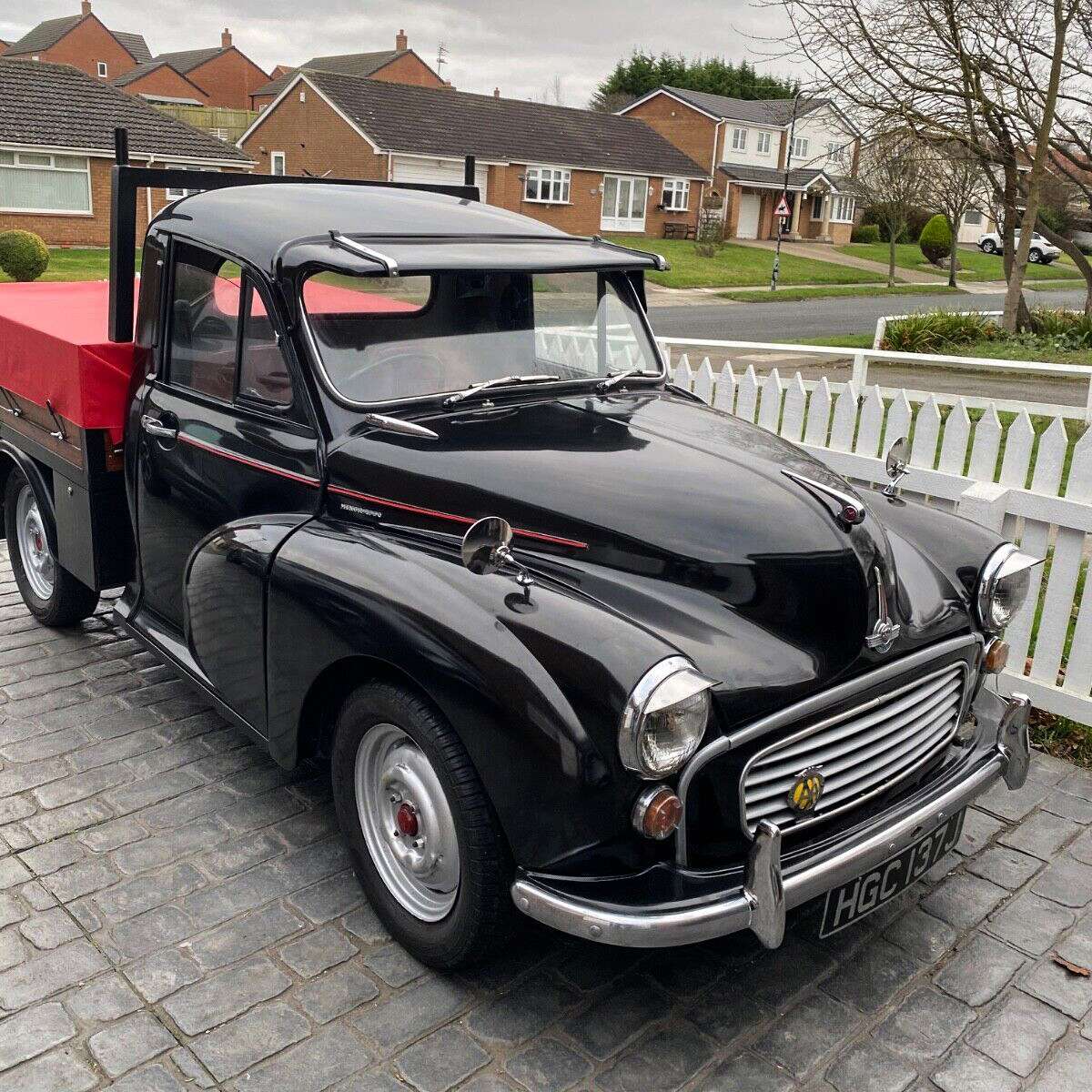
The Morris Minor van and pick-up turned the familiar Minor into a compact British working vehicle. Introduced in 1953 and produced until 1971, these commercials served the Post Office, tradespeople, local authorities and small businesses. Their hard working lives make complete, structurally honest survivors especially appealing today.
Morris Minor commercial at a glance
| Introduced | 1953 |
|---|---|
| Production ended | 1971 |
| Versions | Panel van and pick-up |
| Engines | 803cc, 948cc and 1,098cc A-Series |
| Construction | Separate chassis with commercial rear body |
| Later ratings | 6cwt and strengthened 8cwt models |
| Main buying risk | Chassis corrosion and non-original conversions |
How the van and pick-up differed from a Minor car
Although the cab, engine and much of the running gear were recognisably Minor, the light commercials used a separate chassis beneath the cab and load body. This was fundamentally different from the unitary-construction saloon and the timber-framed Traveller. The arrangement allowed Morris to build a panel van or open pick-up capable of repeated working use.
Early commercial Minors shared the small A-Series engines of contemporary cars. When the 1,098cc engine arrived in 1962, the vehicles became known as the Morris 6cwt van and pick-up. An 8cwt version with stronger rear springs was added later in the 1960s. Austin-badged versions also appeared after the Austin A35 van ended, so identity should be checked from chassis records rather than badges alone.
Post Office and fleet vehicles
The General Post Office became one of the best-known users. GPO vans were built to fleet requirements and many wore red or green liveries during their service lives. Other public bodies and businesses ordered vehicles in large numbers, frequently adding racks, signs, windows or specialist equipment.
Surviving vans may have been restored into Post Office-style livery without being genuine ex-GPO vehicles. Such recreations can still be enjoyable, but provenance and original specification should be described accurately.
How do Minor commercials drive?
The van and pick-up share the Minor’s direct steering and simple A-Series mechanical layout but feel more utilitarian. An empty rear body can produce a lively ride, while a heavily loaded or poorly repaired vehicle may steer and brake badly. The 1,098cc engine is the most practical standard choice for present-day use.
These vehicles were not designed for modern motorway speeds. Lower gearing, cabin noise, drum brakes and modest performance reward relaxed driving and careful route planning.
Morris Minor van and pick-up buying guide
Chassis and cab structure
- Inspect the full length of both chassis rails, especially spring and suspension mounting points.
- Check crossmembers, outriggers and the junction between cab and load body.
- Look for distortion, cracks and heavy plating caused by overloading or past accident damage.
- Inspect cab floors, sills, inner wings, bulkhead and front chassis extensions.
- Use caution where thick underseal conceals welds or layered repairs.
Van body and pick-up bed
On a van, examine gutters, rear door apertures, roof seams, wheel tubs and load floor. Doors should fit without excessive lifting and should not reveal movement in the body. On a pick-up, inspect the bed floor, side panels, tailgate, mounting points and any timber sections. Water trapped beneath mats or improvised lining can cause severe corrosion.
Confirm it is genuine
Minor commercials are desirable enough that saloons and Travellers have sometimes donated parts or identities to rebuilt vehicles. Check the chassis number in its correct physical location, compare it with the V5C and obtain a British Motor Industry Heritage Trust certificate where appropriate. A van cut into a pick-up or fitted with side windows may be usable, but it should not be represented as a rare factory version without evidence.
Engine and driveline
- Start from cold and listen for bottom-end rumble, timing-chain noise and excessive tappet clatter.
- Check oil pressure, blue smoke, coolant leaks and crankcase breathing.
- Test clutch action, second-gear synchromesh and the gearbox for jumping out of gear.
- Listen for propshaft vibration and differential whine.
- Check engine and axle numbers if originality is important.
Steering, suspension and brakes
Inspect kingpins, trunnions, steering joints and wheel bearings for play. Confirm rear springs match the vehicle’s rating and are not cracked or flattened. Brakes should operate squarely without leaks, dragging or excessive pedal travel. Old commercial tyres may have ample tread but be unsuitable because of age or load rating.
Cab, trim and equipment
Commercial interiors were basic, but correct seats, instruments, handles and fleet fittings can be difficult to replace. Inspect wiring added for signs, radios or work equipment. Check that any rear seating, camper conversion or modern seat-belt installation is structurally sound, documented and acceptable for road use.
Van, pick-up or converted example?
A sound van offers secure, weatherproof carrying space and the widest choice. Genuine pick-ups are scarcer and need especially careful identity checks. Period conversions and restored fleet vehicles can be fascinating, but buy the history as evidence rather than as a story attached to fresh paint.
Frequently asked questions
Is a Minor van just a saloon with a box body?
No. The commercial uses a separate chassis and purpose-built rear body rather than the saloon’s unitary structure.
What do 6cwt and 8cwt mean?
They refer to nominal payload ratings. Later 8cwt versions used stronger rear suspension and related specification changes.
Were Austin Minor vans built?
Austin-badged versions of the Minor commercial were sold from the late 1960s after the A35 van ended.