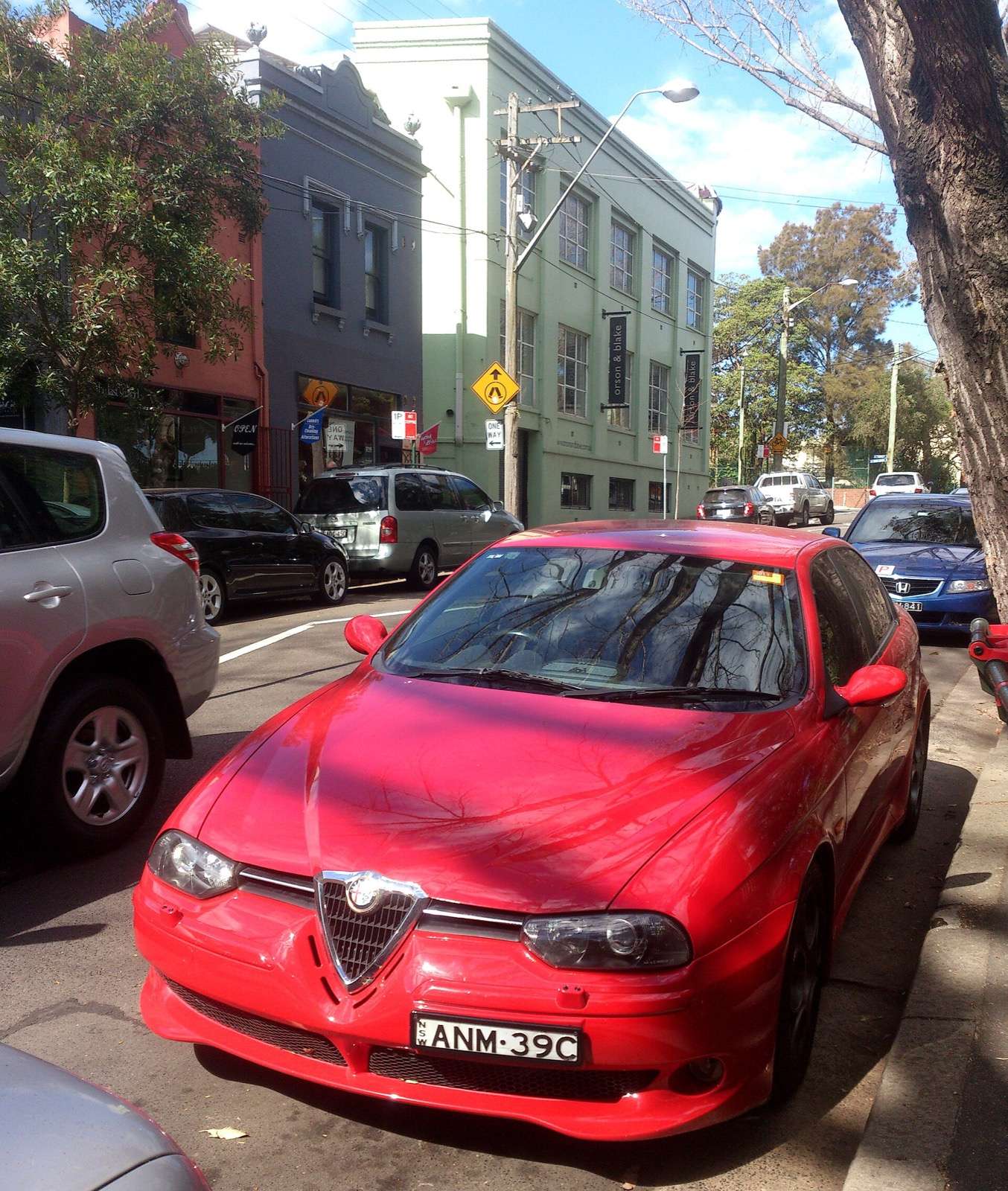
The Alfa Romeo 156 GTA turned one of the 1990s’ most beautiful saloons into a 250bhp V6 flagship. Available as both a four-door and Sportwagon, it combined Walter de Silva’s design, the celebrated 3.2-litre Busso engine and a chassis extensively revised by Alfa’s engineers.

From award-winning saloon to GTA
The standard 156 was unveiled in 1997 and quickly became a design landmark. Hidden rear door handles gave the four-door the stance of a coupé, while its shield grille and high waistline established a new Alfa family identity. The model won the 1998 European Car of the Year award.
The GTA arrived in 2001, reviving a badge rooted in the lightweight Giulia GTA competition cars of the 1960s. This was not a stripped homologation special. It was a muscular road flagship with wider arches, deeper bumpers, unique wheels, large brakes and a richly trimmed cabin.
The 3.2-litre Busso V6
Capacity grew to 3,179cc, with 24 valves and Bosch engine management. Official figures were 250 bhp and 300 Nm. Alfa quoted 0–100 km/h in 6.3 seconds and a 250 km/h top speed, equal to roughly 155 mph. A six-speed manual gearbox was standard, with a Selespeed automated manual offered in some markets.
The polished inlet pipes are as recognisable as the exhaust note. Power builds linearly rather than arriving in a turbocharged surge, giving the car a broad operating range and a distinctive response. Drive remained through the front wheels.
Saloon and Sportwagon
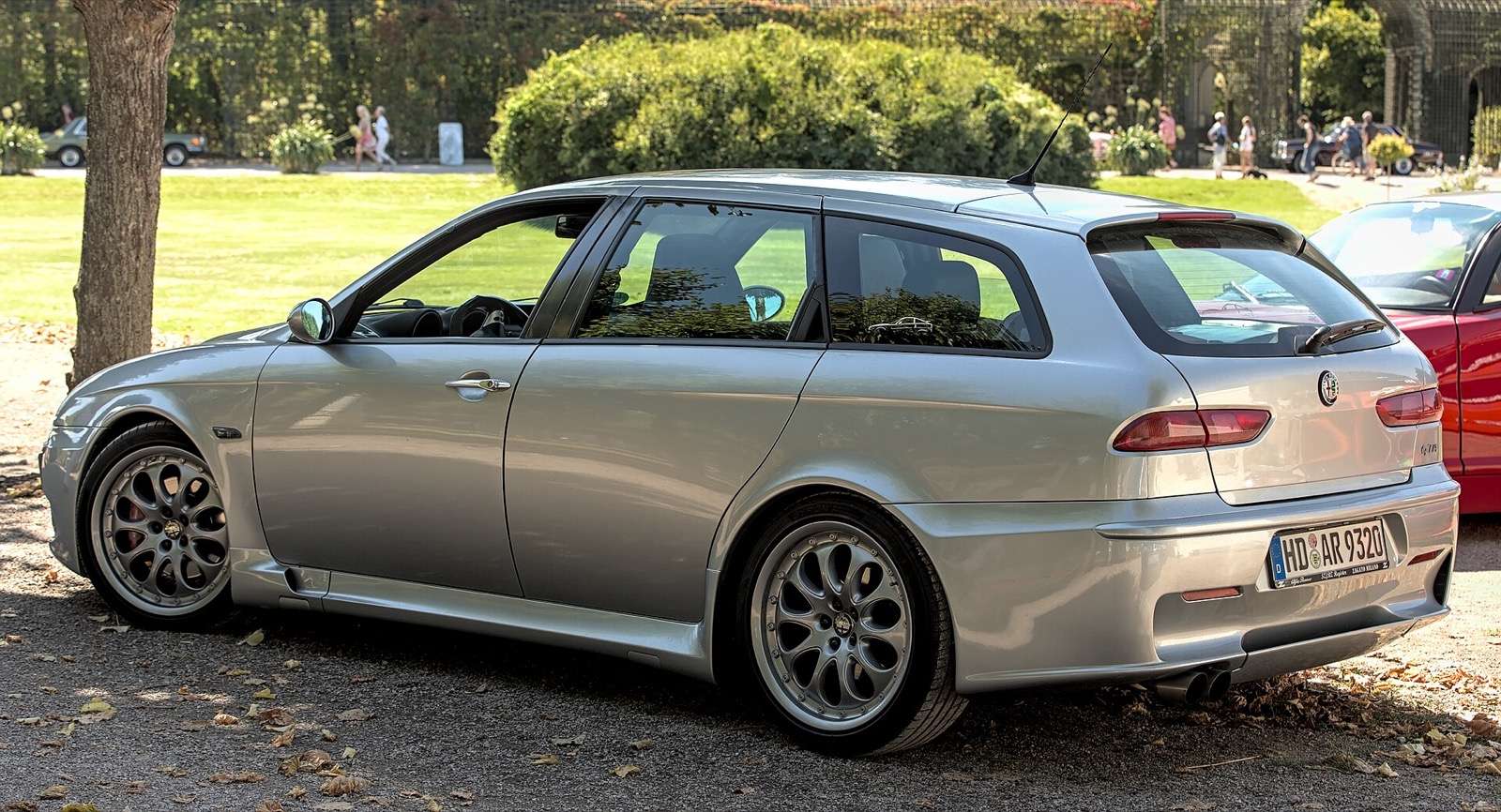
Both body styles used the same drivetrain and 250bhp output. The Sportwagon was marketed as a lifestyle estate rather than a maximum-capacity load carrier, but its rarity and shape now make it particularly desirable. The saloon is slightly lighter and represents the original 156 silhouette at its most aggressive.
Chassis revisions included quicker steering, firmer suspension, a wider track and Brembo front brakes. Like the 147 GTA, the 156 initially used 305mm front discs before later cars adopted 330mm items. Its ability to deploy power depends heavily on tyres, alignment and differential condition.
Love cars you don’t see every day?
Get forgotten cars, surprising motoring stories and the most interesting finds from Unusual Cars by email.
Free to join. No spam. Unsubscribe whenever you like. See our privacy policy.
Why the 156 GTA still matters
The GTA was produced in relatively limited numbers until 2005 and sat outside the facelifted 156’s normal styling cycle. It therefore preserves the original de Silva shape while adding the final and largest mainstream form of the classic Busso V6.
Maintenance determines whether a car feels exceptional or exhausted. Cambelt intervals, oil-cooler pipes, cooling system condition, suspension bushes, front brake specification, floor corrosion and differential history all matter. Many cars use a Q2-type limited-slip differential, improving traction and replacing an open unit whose failure can damage the gearbox casing.

Alfa Romeo 156 GTA FAQs
What engine is in the 156 GTA?
A naturally aspirated 3.2-litre 24-valve Busso V6 producing 250 bhp and 300 Nm.
Was the 156 GTA available as an estate?
Yes. Alfa sold both the four-door saloon and the Sportwagon, with the same engine and drivetrain.
Is it front-wheel drive?
Yes. Both manual and Selespeed versions drive the front wheels.
How fast is a 156 GTA?
Alfa quoted 0–100 km/h in 6.3 seconds and 250 km/h, approximately 155 mph.
What does GTA mean?
It stands for Gran Turismo Alleggerita. The historic badge referred to lightweight competition cars, although the 156 GTA was a well-equipped road flagship rather than a stripped racer.
Research sources
Launch history and figures were checked against the official Alfa Romeo/Stellantis 156 GTA material.
Continue the Alfa Romeo story
Visit the Rare & Performance Alfa Romeos hub, then explore the 155 Q4 and 916 GTV.