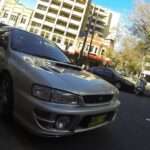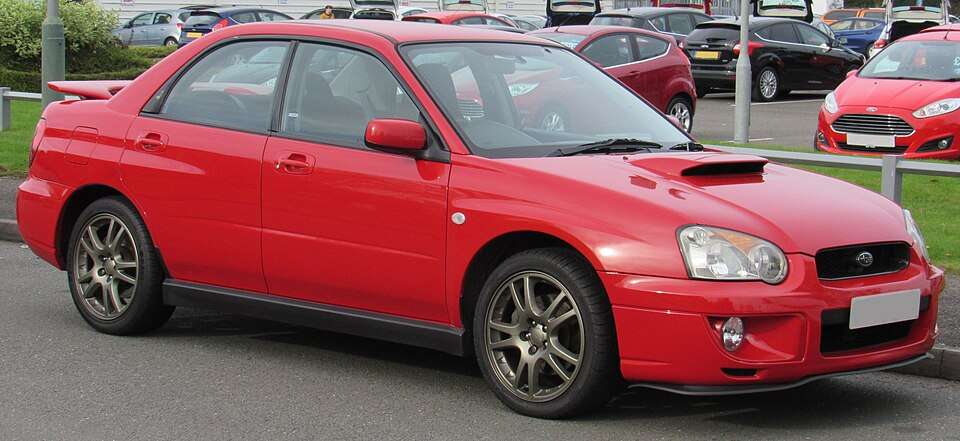
A new-age Impreza WRX can deliver all-weather traction, a distinctive flat-four character and genuine everyday practicality. It can also hide structural rust, mixed engine specifications and poorly documented tuning. This guide concentrates on standard WRX saloons and wagons from the 2001–2007 era, keeping STI, imports and special editions clearly identified rather than treating every bonnet scoop as the same car.
Our buying verdict
Start with the soundest, best-documented standard or carefully specified WRX you can find. A specialist inspection should establish structural condition, actual engine health and the compatibility of its hardware and map. Choose a 2.0 or 2.5 on present evidence, not on internet absolutes. A healthy wagon can be an excellent road car; an STI badge or expensive exhaust cannot compensate for a compromised shell.

Bugeye, blobeye or hawkeye: identify the actual car
Owners commonly describe the early new-age nose as bugeye, the middle restyle as blobeye and the final restyle as hawkeye. Those descriptions are useful search terms, not engine codes. UK early/middle WRX models generally use a 2.0-litre turbo boxer; the later UK WRX moved to 2.5 litres. Subaru’s August 2005 Frankfurt release confirms the revised 2.5-litre WRX series for that European introduction.
| Choice | What matters | Verify |
|---|---|---|
| Early 2.0 WRX | Original new-age body and age-related condition | Engine identity, corrosion and maintenance chronology. |
| Middle restyle 2.0 | Popular blobeye appearance, saloon or wagon | Actual specification and evidence of use and repairs. |
| Later UK 2.5 | Different engine specification and low-speed character | Correct engine, cooling/combustion assessment and map. |
| Wagon | Useful rear access and load space | Rear structure, tailgate, seals and body-specific parts. |
| STI / import / special edition | Potentially different engines, gearboxes, brakes and driveline | VIN/chassis record, provenance and dedicated specification checks. |
A normal WRX is not mechanically identical to an STI. Do not assume a six-speed gearbox, DCCD, Brembo brakes or STI engine internals from exterior trim. Japanese-market and other imports can differ from UK cars, and engine or gearbox swaps require their own documentation. Match the chassis, installed engine, ECU and invoices before judging a service record.
Special-edition or Prodrive claims need original documentation and the hardware currently fitted. A badge or a dyno printout cannot prove factory provenance. A replacement engine described as forged needs a builder’s component list, date, mileage, running-in and mapping record. It may be a sound repair, but the word alone establishes none of those things.
For daily use, prioritise comfortable seats, sensible wheels, quiet transmission operation and a complete interior. Try the wagon or saloon with your passengers and typical luggage. A car that has been returned to standard appearance may still carry earlier software or mechanical changes, so ask about its full history.
UK prices: exclude classics, STI cars and later hatchbacks
Checked 4 November 2026. PistonHeads showed seventeen WRX adverts spanning several generations. Relevant visible examples included a 2002 UK bugeye saloon with 130,000 miles at £5,495; a 2003 saloon with 117,963 miles at £12,000; a 2006 2.5 saloon with 100,000 miles at £6,995; and 2006 2.5 wagons at £7,995/94,500 miles and £9,999/88,000 miles. These are asking prices and seller descriptions, not inspected cars or completed sales.
The spread does not establish that a particular restyle is automatically worth a premium. Other results included classic-shape cars, later hatchbacks, imports and ambiguous specifications; those were not combined into one new-age value range. Verify that a 2007 registration belongs to the body generation you actually intend to buy.
Compare original market, engine, body, gearbox, rust condition and meaningful invoices. A dealer’s preparation, special-edition provenance or a documented rebuild may alter value, but each needs evidence. An attractive low price is not enough when the shell or engine cannot be assessed.
Add belts, tyres, brakes and inspection findings to the purchase price. Get separate structural and mechanical estimates where needed, and insurance terms for all modifications. Do not use an old rebuild receipt as a substitute for checking how the car runs and what has happened since.
Rust and shell inspection come first
Arrange a proper lift inspection. Examine inner and outer sills, rear arches, jacking points, floor seams, suspension mounting areas, subframes and brake/fuel lines. Inspect accessible strut-tower and boot areas and ask a specialist what needs trim removal. External paint can look good while concealed seams and inner sections need significant work.
Read MOT corrosion advisories chronologically. Ask for photographs showing repairs before paint and underseal, the bodyshop invoice and the protection applied afterwards. A plated outer sill is not proof that inner structure was repaired correctly. Obtain a complete metalwork and paint scope rather than pricing a visible patch in isolation.
Inspect inner wings, chassis rails, front and rear panel alignment and boot floor for accident or rally-style damage. Check tow points, sump and exhaust clearance, undertrays and damaged jacking seams. Fresh underside coating needs inspection of the surface beneath, especially if it prevents the specialist seeing original seams and repair quality.
On wagons, examine tailgate seals, rear glass/wiper functions, load-floor areas and damp trim. On either body, check carpets, door seals, sunroof if fitted and lamp mountings. Spoilers, bumpers and brake conversions should not distract from the quality of the shell and repair history.

Boxer engine health, timing belts and drivetrain
Insist on a cold start and fully warm test drive. Watch oil pressure warnings, idle, exhaust smoke and temperature behaviour; listen for persistent knocking or unusual mechanical noise. Ask about measured oil and coolant use, overheating and earlier engine work. A loud exhaust can obscure symptoms, so a specialist assessment is particularly valuable on modified cars.
Have the inspector decide whether compression, leak-down, cooling-pressure or combustion-gas tests are appropriate. Interpret results together and ask about limitations. Concerns about head sealing, pistons/rings or bearings cannot be ruled out by a short drive or a quiet idle alone. Equally, do not condemn every 2.5 or every rebuilt engine without evidence about the particular car.
Timing belt: require a dated invoice giving mileage, engine and complete component scope. Confirm the VIN/engine-specific time-and-mileage requirement with a Subaru specialist. Scoobyclinic’s own service description explicitly separates belt kits with tensioners and pulleys from basic oil servicing. A belt-only receipt is not evidence that the rest of the drive system was renewed.
Ask what the quote includes for the water pump, idlers, tensioner, seals, coolant and labour. Correct 2.0/2.5 and engine-code matching matters. Oil leakage near the belt area and evidence of poor timing work need diagnosis. Treat missing evidence as an immediate maintenance requirement rather than relying on a seller’s recollection.
Inspect turbo condition, oil/coolant lines, boost plumbing, intercooler connections and fuelling. Misfires or erratic boost need proper logging and diagnosis, not an assumption that the exhaust or a map is responsible. Require the software to match the actual turbo, injectors, fuel pump, intake and exhaust, using the fuel specified by the tuner. A universal “stage” label is not a specification.
For a rebuilt engine, request the builder, parts, measurements, installation date, running-in procedure and follow-up mapping/service evidence. Scoobyclinic’s first-party build description illustrates why component selection and clearance records matter. It does not imply every WRX requires a forged build, nor that an expensive piston set guarantees a reliable completed engine.
Test clutch engagement, all gears and reverse from cold and hot, listening for crunching, whine, slip and drivetrain vibration. Gearbox and differential swaps need compatible ratios and a documented installation. Have a specialist investigate binding or unusual behaviour in tight turns; do not test the car with abusive launches. Match tyres appropriately across the all-wheel-drive system.
Inspect brakes, wheel bearings, arms, bushes, springs, dampers and steering. Modified hubs and brakes must be identified before ordering parts. A large wing and upgraded calipers do not make an ordinary WRX an STI, and a fresh alignment cannot compensate for worn joints or corroded mounting areas.
Cabin, wiring and daily usability
Inspect seat wear, trim, carpets and warning-lamp self-checks. Test air conditioning, heater, windows, locks, mirrors and both keys. Check any aftermarket gauges, stereo, alarm and boost controller for secure installation and tidy wiring. A competition-style interior or replacement steering wheel needs a careful safety-equipment assessment.
Try the driving position and ride on the actual suspension. Listen for rattles and tyre noise, and check whether a large exhaust makes normal journeys tiring. Confirm supplied tools and wheel-lock key, and inspect the load cover and folding seats on a wagon. Missing original pieces can take time to source.

Maintenance costs, belt kits and alternator searches
The figures below are editorial planning allowances for parts only, unless a fitted service is explicitly identified. They are not live eBay quotes: brand, specification, availability, delivery and VAT treatment vary. Obtain a registration/VIN-matched written estimate before committing to a repair. Cheap search results can include incompatible parts, deposits or single components rather than a complete kit.
Affiliate disclosure: the parts searches below use our eBay affiliate campaign. We may earn a commission if you buy, at no additional cost to you. Search results are not a recommendation of every seller or product; verify fitment, maker, returns and warranty.
| Maintenance item | Parts allowance / search | What to check |
|---|---|---|
| 2.0 timing-belt kit | £160–£300 | Engine-specific complete kit; labour and pump decision extra. |
| Water pump | £50–£110 | Match engine and pipe configuration. |
| Oil/filter service parts | £45–£85 | Specification depends on engine and use; seek specialist advice. |
| Four spark plugs | £30–£70 | Correct type/heat range; access labour varies. |
| Air filter | £15–£40 | Match original or modified intake. |
| Alternator | £120–£250 | Confirm unit, connections and exchange terms. |
| Auxiliary belts | £20–£55 | Separate from the timing belt; inspect pulley condition. |
| Front discs and pads | £110–£260 | WRX, STI and converted brake setups differ. |
| Clutch kit | £160–£330 | Identify fitted gearbox/flywheel; labour extra. |
| Wheel bearing parts | £35–£85 | Confirm axle, ABS compatibility and labour. |
For a later 2.5, begin separately with 2.5 WRX timing-belt kit: allow £170–£320 and 2.5 WRX alternator: allow £120–£260. These remain editorial parts allowances, not live quotes, under the same disclosure and fitment cautions. Confirm a replacement engine before ordering.
Ask for the exact service plan for the installed engine and how the car is used. Engine, gearbox and differential fluids are separate maintenance items. Written estimates should identify parts, labour, seals, coolant, VAT, diagnostics and any mapping or running-in work.
Hidden ownership costs: shell repairs and mixed specifications
Structural repairs can exceed the value implied by a modest purchase price. Obtain a bodyshop assessment covering inner structure, fabrication, paint and protection rather than a quote for a visible outer patch. A car whose underside cannot be inspected leaves a major uncertainty in the budget.
An engine rebuild can grow when removal, machining, damaged heads, turbo condition, fuelling, clutch and mapping are included. Ask what is excluded and who authorises discoveries. A bare engine or parts kit price is not the cost of a complete installed, tested road car.
Modified cars can cost more to maintain because identifying every component takes time. Imported specification, a gearbox swap or mixed brake parts can complicate routine ordering. Keep a coherent record and use a specialist who understands the combination rather than relying on the registration lookup alone.
Get insurance terms for modifications, current tax and any zone treatment by registration, and a realistic fuel budget using the required fuel. Allow for four suitable tyres, brakes, suspension and geometry. Preserve a reserve after purchase and address structure, cooling and safe running before adding power.

New-age WRX viewing checklist
- Verify chassis, original market, engine, gearbox and WRX versus STI/special-edition identity.
- Inspect sills, arches, floors, towers, mounts and pipes on a lift.
- Review corrosion repairs with photographs and detailed invoices.
- Check belt date, mileage and tensioner/idler/pump scope.
- Start cold, drive fully warm and obtain specialist diagnostics and engine tests where appropriate.
- Document all rebuild, hardware, software, fuel and running-in requirements.
- Test clutch, gearbox and driveline; inspect compatible tyres, brakes and suspension.
- Obtain written repair costs and insurance acceptance, retaining a first-year reserve.
Subaru Impreza WRX buying questions
Is a WRX the same as an STI?
No. Engines, gearboxes, brakes and differential arrangements can differ. Verify the original and currently installed specification; badges and bodywork are insufficient.
Should I choose a 2.0 or 2.5?
Buy on current condition, history and specialist findings. Confirm the actual engine and investigate oil use, coolant loss, overheating and compression concerns. Neither displacement guarantees or rules out trouble.
Does it need a timing belt?
Yes. Require dated evidence for the correct engine and complete belt-drive scope, then confirm its time-and-mileage requirement. A basic service stamp is not enough.
Does “forged engine” mean reliable?
Only the build evidence can explain what was done. Ask for components, clearances, builder, installation, running-in and mapping records, and assess how it runs now.
Are wagons a good alternative?
They can be very useful road cars. Check body-specific rust, tailgate and water ingress and compare actual condition; practicality does not remove engine or drivetrain inspection needs.
Sources, method and image credits
Checked 4 November 2026. Independent buying and inspection advice uses the following primary factory/workshop information and dated adverts. Workshop marketing is not evidence of fault prevalence, and no pictured or advertised car was inspected by us.
- Subaru: August 2005 European introduction of the revised 2.5-litre WRX series
- Scoobyclinic: service, diagnostic and belt-kit scope
- Scoobyclinic: build documentation and component/clearance context
- PistonHeads: dated new-age WRX asking-price examples
Licensed saloon and wagon photographs illustrate the generation and include overseas examples. They do not establish UK equipment, originality or inspected condition. Credits, source pages and licences accompany the images; hub thumbnail credits sit outside the cards.