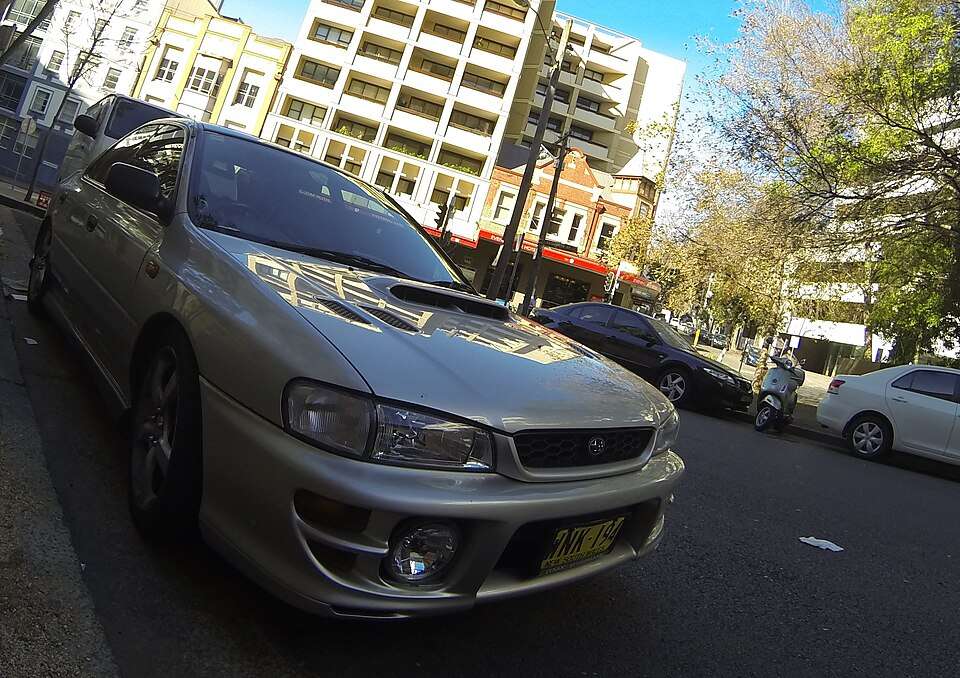
The classic Subaru Impreza Turbo offers rally-era character, a distinctive flat-four and all-wheel-drive performance in a practical saloon or wagon. It also sits in a market full of imports, conversions, special-edition claims and modified engines. Buying well means verifying the exact specification, inspecting hidden rear structure and understanding the engine’s calibration before being persuaded by its soundtrack or power figure.
Our buying verdict
Seek a sound, documented UK Turbo or correctly identified import with conservative, evidenced mechanical specification. Structure and engine health take priority over a large spoiler or claimed horsepower. A specialist inspection should address the rear turrets, fuelling/tuning, cooling and drivetrain; budget for proper diagnosis rather than assuming a cheap fault on a fast car.

UK Turbo 2000, WRX or STi?
This guide covers the original-generation turbocharged Impreza through 2000, commonly called the classic. The GC saloon and GF wagon are often grouped together in searches, while GC8 is widely used for the turbo saloon family. Later GD/GG cars need their own guide; do not apply their maintenance schedules or parts indiscriminately to a classic.
| Type | What to establish | Buying implications |
|---|---|---|
| UK Turbo 2000 AWD | UK-market specification, engine/gearbox and build year | A comparatively clear starting point when original and documented. |
| Japanese WRX | Applied model code, version, import history and installed engine | Power, ECU, turbo, brakes and fuel requirements vary. |
| Japanese STi | Authentic version and specification, not simply badges or trim | Specialist identity checks and suitable maintenance are essential. |
| UK special editions | Documented provenance, original equipment and any performance package | A numbered plaque or familiar colour alone is insufficient. |
| Converted or rebuilt car | Actual engine, gearbox, differential, wiring and calibration combination | Parts and servicing now follow the installed specification. |
The UK turbo arrived during the 1990s with performance that made it a landmark road car. Japanese WRX and STi versions developed rapidly, with revisions to engine, turbo, transmission and equipment. It is misleading to describe every classic as one fixed power output or every import as inherently better than a UK car.
Series McRae, Catalunya, Terzo, RB5 and P1 names carry different significance and should be authenticated individually. A claimed Prodrive package also needs invoices and specification evidence. A standard car, a factory special edition and a later conversion are different purchases, even when they share paint and a bonnet scoop.
For most first-time buyers, a well-kept ordinary UK Turbo can offer the experience with less specification uncertainty than an obscure import. A properly identified import can be equally appealing, but allow time for documentary checks and a Subaru specialist’s assessment. Rare collector versions need valuation and authenticity work beyond a general viewing checklist.
Choose a saloon or wagon to suit your use. Inspect rear access, luggage space and seating rather than assuming rally associations mean every car is impractical. Equally, do not assume four-wheel drive makes an old performance car forgiving on poor tyres or immune to driver error. Condition, geometry and tyre compatibility remain fundamental.
Classic Impreza prices: read adverts carefully
Car & Classic listings checked on 3 November 2026 included a 1998 GT Turbo advertised with 90,081 miles at £9,995 and a 1998 WRX STi at £25,000. A 2000 GT Turbo advertised with 38,000 miles carried a £21,995 asking price, but its listing also stated a six-speed gearbox, a detail that requires clarification rather than assuming an untouched ordinary classic specification.
These are individual seller asking prices and claims, not verified sale values or authenticated specifications. Later-generation cars appearing in the same search were excluded. A high asking price or a low-mileage description cannot replace evidence of the installed drivetrain, body repairs and engine condition.
Compare matching versions, steering position, provenance and originality. A modified engine may have cost a great deal to build, but the invoice needs to show who built it, what components and clearances were used, and how it was calibrated. A power graph is only one piece of evidence, not a warranty of durability.
Before travelling, request underside and rear-turret photographs, service and belt invoices, import documents where relevant and a list of all modifications. Price any necessary return to an appropriate road specification. Do not compare an ordinary high-mileage Turbo directly with a documented special edition or an unusually presented collector car.

Rust: rear turrets are a major priority
Inspect outer and inner rear arches, rear sill ends, jacking points and floors. Classic Imprezas can corrode seriously in the UK climate. The most important hidden check is the rear suspension turret/inner-arch structure, where deteriorated seams can allow water and corrosion to progress beyond what is visible from outside.
A neat outer-arch repair does not prove the inner structure was repaired. Ask for photographs showing the work beneath the finished panel and the surrounding turret. Significant turret repairs can require extensive dismantling and accurate alignment; a small visible patch is not automatically a complete structural solution.
Use a lift and a Subaru-experienced body specialist where necessary. Inspect accessible boot areas and trim with permission, comparing the view from above with the underside. If access is refused or structural condition remains uncertain, do not make the purchase depend on an optimistic welding allowance.
Check sills, rear screen surround on relevant cars, subframes, mounting points and brake/fuel lines. Look for trapped dirt, thick new coatings, irregular seams and old repairs. Corrosion protection is useful when applied to sound or properly repaired metal, but fresh black finish alone provides little evidence.
At the front, inspect chassis legs, inner wings and suspension mounting areas for accident damage and repair quality. Performance cars can have had significant impacts without every detail appearing in a history report. Compare panel gaps, paint, fasteners and tyre position, then investigate suspicious geometry through a specialist.
Identity, imports and theft history
Match chassis/applied-model information with documents and the installed engine and gearbox. Check the import chronology, mileage units and any odometer conversion. A low mileage shown on a UK display may not be a complete lifetime total if the history mixes kilometres and miles.
Verify special editions through credible records and knowledgeable specialists. Check keys, immobiliser/alarm provision and insurance requirements for the exact car. A history check is sensible, but it does not establish every past repair, theft attempt or identity change. Unresolved identification questions are a reason to pause, particularly where a rarity premium is involved.
Engine health, tuning and turbo checks
Start with the actual specification
Ask what engine is installed, whether it has been rebuilt or replaced, and which ECU/calibration it uses. Record turbo, injectors, fuel pump, intake, intercooler, exhaust and boost-control changes. A list of expensive brand names does not show that the combination works safely together.
For a rebuilt engine, read the invoice for builder, date, mileage, components and warranty. Establish subsequent service and running-in history where applicable. A seller’s description of forged internals is not enough to infer the safe boost level or quality of assembly. Have the inspecting specialist assess the evidence.
Cold start, oil and cooling
Check oil level before starting and ask about use over distance. Listen from cold through warm running for abnormal knocks, persistent rattles or other mechanical noises. Some sounds need expert interpretation, but a seller should not dismiss every knock as normal piston slap. Persistent smoke and poor running also require diagnosis.
Inspect cam-cover areas and other visible leak points, noting whether oil reaches hot exhaust components. Distinguish a minor external leak from unexplained oil consumption or internal wear. A clean engine bay immediately before sale can hide evidence, so recheck after a proper drive.
Inspect radiator, hoses, header/expansion arrangements and coolant evidence for the actual engine. Investigate overheating, repeated topping up, contamination or unusual pressurisation. Do not automatically transfer every internet warning about later Subaru engines to this car, but do not assume the classic is immune to head-gasket or internal damage.
A Subaru specialist may recommend compression, leak-down, cooling pressure tests or other diagnostic checks depending on symptoms. Agree the scope before inspection. One test result is useful evidence within a broader assessment; it is not a lifetime guarantee.
Boost, fuelling and suitable fuel
Confirm the fuel grade required by the installed calibration, especially on imports and tuned cars. Ask for mapping invoices and whether the car has changed mechanically since it was mapped. An intake, exhaust or boost-control change after calibration may matter even if the seller considers it a minor upgrade.
Assess delivery progressively during a safe, insured drive. Hesitation, surging, detonation-like noise, smoke or an engine warning should stop enthusiastic testing and lead to diagnosis. Do not keep applying boost to see whether a fault clears. A boost gauge and a dyno printout cannot establish the present condition of every fuel-system component.
Prefer a clear, conservative specification supported by reputable work over a headline power claim. Standard-looking cars can also have hidden modifications, so inspect the actual plumbing and electronic controls. Insurance declarations and roadworthiness must reflect the car as fitted, including the exhaust and emissions equipment appropriate to it.
Timing belt and service evidence
The classic turbo flat-four uses a timing belt. Obtain dated invoices covering the correct belt, tensioning arrangement and idlers, with water-pump assessment and related parts identified. Production revisions and engine swaps make exact compatibility important.
Confirm the correct age and mileage schedule from suitable Subaru information for the actual engine and market. The Scoobyparts service article consulted explicitly covers later 2001–2019 UK cars, so its intervals should not be copied onto every classic. Missing reliable belt history is a reason to plan the correct service before normal use.
Gearbox, differentials and four-wheel drive
Check every gear cold and warm for clean engagement, particularly under normal road loads. Investigate crunching, jumping out of gear, clutch slip, judder and driveline clunks. Classic five-speed units can be vulnerable when power and usage exceed their capability; the claim that a car only needs a stronger clutch may overlook other stress.
For a gearbox or differential swap, establish the exact units and compatible ratios. A six-speed conversion needs more evidence than the number of forward gears. Ask who performed it and what related components were changed. The specialist should assess the installed combination rather than ordering parts by registration alone.
Check tight low-speed turns for abnormal binding or behaviour and inspect driveshafts, CV boots, mounts and leaks. Tyres should be appropriately matched across the car in size, type and rolling characteristics. A mismatched set can introduce drivetrain concerns as well as poor handling.
Suspension and brakes
Inspect struts, springs, mounts, bushes, links and wheel bearings. Knocks can have several causes, and rusty structure must be excluded before treating a noise as a cheap droplink. Check alignment and inner tyre wear, particularly on lowered or track-used cars.
Brake specifications changed and conversions are common. Confirm calipers, disc dimensions and wheel clearance physically. Inspect seized sliders or pistons, hoses, pipes and parking-brake operation. A large brake kit should have quality installation evidence, not simply a persuasive appearance.

Interior, warning lamps and security
Try windows, mirrors, ventilation, air conditioning where fitted, locks, lights and wipers. Check warning lamps during the self-test and investigate any that fail to illuminate or remain on. A removed bulb is not a repair. Inspect wiring around aftermarket gauges, alarms and audio equipment.
Review seat, belt and steering-wheel installation, especially if motorsport-style parts are fitted. Original trim and special-edition details can be expensive to source correctly. Holes from old security equipment and poorly fitted boost gauges can also indicate work that needs tidying or diagnosis.
Check for damp in the boot and cabin, including accessible areas beneath carpets. Verify speed display, rear fog-lamp arrangement and import documentation as appropriate. Obtain the supplied keys and alarm information securely, and confirm with your insurer what security is required before purchase.
Classic Impreza maintenance costs and parts
Affiliate disclosure: eBay parts links below are affiliate links using our campaign. We may earn a commission if you buy, at no extra cost to you. Links open search results rather than a verified individual product. Check engine, year, part number, seller, condition and returns; search results can contain incompatible items.
Set a service plan for the installed engine, gearbox and intended use. Track oil and filtration, plugs, coolant, brake fluid, gearbox/differential fluids, belts and chassis inspection separately. Modified or hard-used cars may need specialist recommendations beyond an original schedule. Low annual mileage still leaves age-related work.
An eBay search on 3 November 2026 showed Import Car Parts advertising a Mitsuboshi timing-belt/water-pump kit for specified 1996–1998 Turbo V3/V4 applications at £162.95, and a different kit advertised for specified 1992–1996 WRX applications at £279.95. These are parts-only listing examples and seller fitment claims. Compare classic Impreza belt and water-pump kits only after confirming the engine, tensioner arrangement and complete contents.
| Item | Useful parts search | Compatibility check |
|---|---|---|
| Alternator | Classic Turbo alternators | Engine revision, output, mounting, connectors and exchange terms. |
| Routine service | Classic Turbo service parts | Oil requirements, filter quality and actual engine. |
| Ignition | Classic Turbo spark plugs | Correct heat range for engine and calibration. |
| Cooling | GC8 Turbo radiators and hoses | Market, engine and installed cooling layout. |
| Clutch | Classic Turbo clutch kits | Gearbox and actuation type, power use and flywheel scope. |
| Brakes | Classic Turbo brake calipers | Actual caliper conversion, disc dimensions and side. |
| Suspension | GC8 suspension components | Saloon/wagon, version, mounts and alignment. |
Hidden ownership costs
Set a first-year budget before making an offer. Add the purchase price, fees and collection, independent inspection, immediate servicing, diagnosed repairs, insurance, storage and a reserve for unresolved work. Use quotations for the car in front of you; a percentage of the purchase price is a poor substitute for knowing what needs doing.
- Turret repair. Structural work behind rear arches can require extensive access and accurate alignment; a visible patch price may be inadequate.
- Calibration and fuel. Budget for the specified fuel and specialist assessment after hardware changes. A previous map is not a guarantee of today’s condition.
- Drivetrain matching. Gearbox, differentials and tyre compatibility matter when conversions have been carried out.
- Insurance and identity. Obtain cover for the exact import, special edition and modifications; verify provenance before paying a premium.
- Parts are only part of the bill. Access, diagnosis, fluids, alignment, seized fasteners and VAT can change the total. Ask the workshop what its quotation includes and how additional work will be agreed.
- Exchange units and delivery. Alternators, starters and other rebuilt components can require a returnable old unit. Compare the surcharge, return postage, deadline and warranty before choosing a supplier.
- Insurance and downtime. Obtain a quote for the actual specification and declared modifications. Allow for recovery and alternative transport if this will be your only car.

Viewing and test-drive checklist
Before travelling
- Confirm registration, exact version, seller identity and ownership history. Ask about accidents, insurance write-offs, engine changes and modifications.
- Read the MOT chronology and request invoices, not just a stamped service book. Agree a cold start, inspection access and a properly insured test drive.
- Get a written list of included keys, original parts and any outstanding faults. For a distant car, request current underside and engine-bay photographs.
At the car
- □ Verify applied-model identity, UK/import specification and special-edition evidence.
- □ Inspect rear turrets, inner arches, sill ends and repair photographs.
- □ Identify engine, ECU, fuel requirement and all hardware changes.
- □ Review belt, oil-service and rebuild invoices, not just a power graph.
- □ Test cold/hot running, cooling and progressive boost without stressing a suspect engine.
- □ Check gearbox/differential compatibility, clutch, tyre matching and low-speed binding.
- □ Inspect brakes, suspension, warning lamps, wiring and security provision.
- □ Compare identification with documents, check panel alignment and inspect accessible structure on a lift. Never go beneath a car supported only by a jack.
- □ Try lights, wipers, washers, heater, locks and warning lamps. Inspect tyres for age and damage as well as tread.
- □ Drive from cold to fully warm, using gears and brakes progressively. Note smoke, overheating, vibration, warning lights or hesitant acceleration; stop if a serious fault develops.
- □ Recheck hot starting and visible leaks afterwards. Record unresolved faults and obtain specialist estimates before paying a deposit.
Proceed when identity, structure and maintenance evidence fit the description. Investigate when a fault has a plausible cause but no diagnosis. Walk away when crucial inspection is refused, identity remains uncertain or the budget depends on a serious fault being cheap. Put any inspection condition and deposit terms in writing.
Buying questions answered
Is a UK Turbo safer to buy than an imported WRX?
A UK car can be easier to identify, but condition and evidence decide risk. Imports need precise version, engine, fuel and mileage checks; a well-documented import can be a better purchase than a neglected UK car.
Where do classic Imprezas rust most seriously?
Rear turrets and inner arches are major priorities, alongside rear sill ends, floors and mounting areas. An outer-arch repair does not establish that the hidden structure is sound.
Should I avoid a remapped Impreza?
Assess the complete hardware/calibration combination, installer, fuel requirement and engine condition. An unsupported power claim or unexplained changes add uncertainty.
Can later Impreza service intervals be used for a classic?
Do not assume so. Confirm the schedule for the actual classic engine and market, especially after swaps. Correct belt and tensioner compatibility matters too.
Why do matching tyres matter on an Impreza?
Suitable, compatible tyres support predictable handling and appropriate rolling characteristics for the all-wheel-drive system. Ask a Subaru specialist about the actual wheel and drivetrain combination.
Sources and research method
Independently written desk research by Unusual Cars UK, checked on 3 November 2026. We have not road-tested or inspected the illustrated cars or independently authenticated sellers’ claims. Buying recommendations and inspection priorities are our editorial assessment. Historical guides inform technical context; their old price bands are not current valuations. Confirm service requirements against the actual vehicle and suitable workshop information.
- Scoobyparts: Impreza buyers guide — Primary specialist-owner guidance on inspection, modifications, tyres and documents.
- Classics World: first-generation Impreza guide — Classic-specific turret corrosion, engine and drivetrain cross-check.
- Scoobyparts: servicing scope — Explicitly later-model UK coverage; its intervals were not transferred to classics.
- Car & Classic: Impreza Turbo adverts — Dated asking examples, filtered for classic generation; specifications remain seller claims.
- GOV.UK used-car checks and MOT history — document and test-history checks.
Images are illustrative surviving vehicles, not the advertised cars discussed in the market section. Individual credits and licence links accompany each photograph. No endorsement by a photographer, club, supplier or seller is implied. Prices and availability can change.