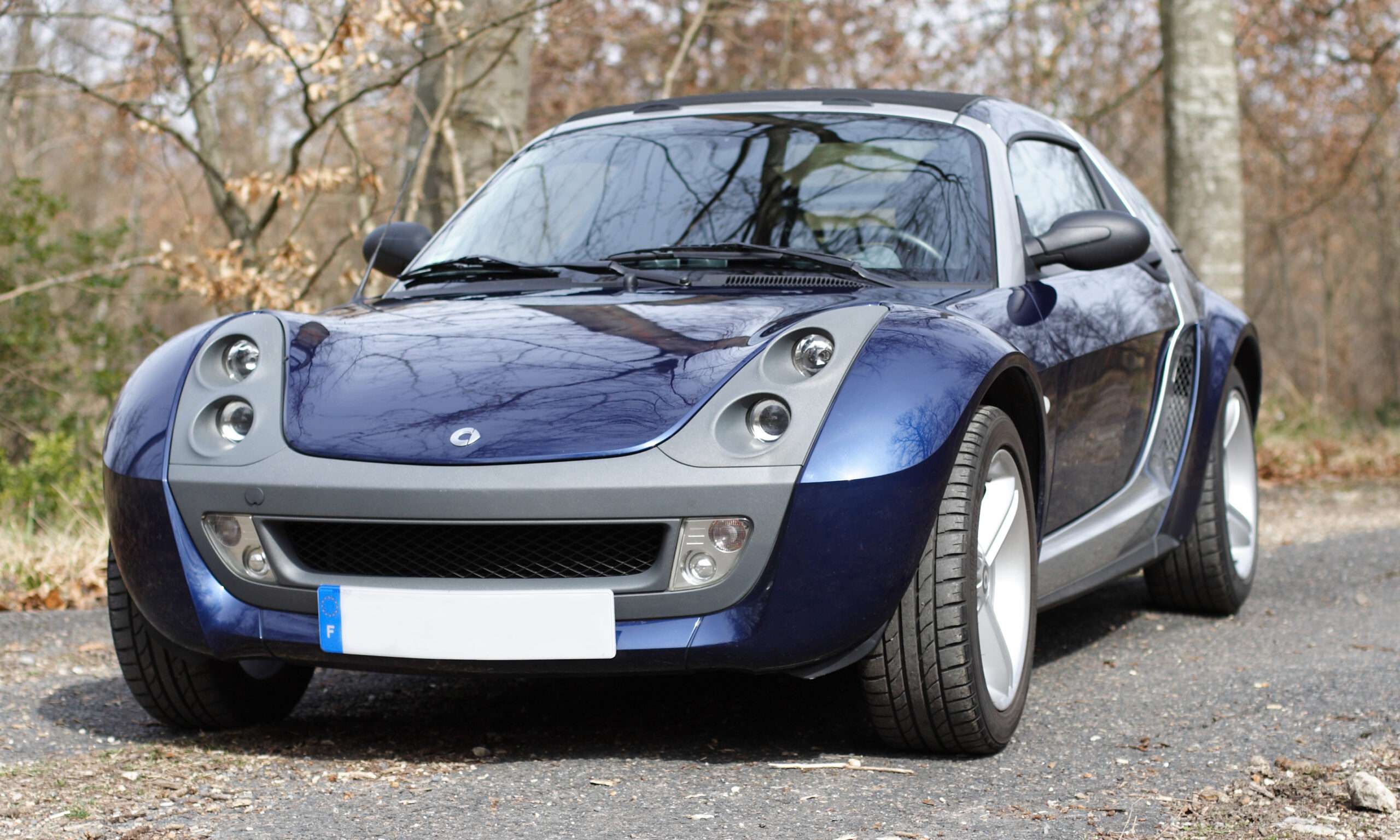
The Smart Roadster is one of the most distinctive small sports cars sold in Britain during the 2000s. Launched in the UK in 2003, it combined a rear-mounted turbocharged three-cylinder engine, rear-wheel drive and an exceptionally light body with the compact thinking already familiar from the Smart City-Coupé. It was never intended to rival a conventional hot hatch for practicality. Its appeal was low seating, tiny dimensions and the feeling of working a modest amount of power unusually hard.
There were two closely related bodies. The open Roadster had a flatter rear deck and a removable or electrically operated roof arrangement, while the Roadster Coupé added a glazed fastback section that gave it more luggage space and a different silhouette. Both were officially sold in the UK, including right-hand-drive cars, and both have become much scarcer than their contemporary press coverage might suggest.
UK history and model range
Smart introduced the Roadster family in 2003 and production ended in 2005, although UK registrations continued into 2006. Most cars used a 698cc turbocharged three-cylinder petrol engine. Depending on version, output was approximately 61PS or 82PS, while the range-topping BRABUS model produced about 101PS. A six-speed automated manual gearbox was standard: it is a conventional manual transmission operated by electro-hydraulic controls rather than a torque-converter automatic.
UK buyers could choose both Roadster and Roadster Coupé variants, with equipment and trim varying by year. Later cars are not automatically better; condition, evidence of water-tightness and a detailed service history matter far more than registration date. BRABUS wheels, suspension, exhaust and body details are desirable, but they are also expensive to replace and have sometimes been added to ordinary cars.
What is it like to drive?
The Roadster’s strongest qualities are its steering, low mass and sense of scale. It fits narrow British roads, changes direction eagerly and feels faster than its figures suggest. The gearbox is the most divisive part. In automatic mode it pauses noticeably between changes, but lifting the throttle slightly and choosing gears manually makes it smoother. A healthy clutch actuator and correctly taught-in clutch are essential.
Smart Roadster common problems
Water leaks and electrical damage
Water ingress is the defining Roadster inspection point. Check the roof seals, A-pillars, mirror areas, rear section and front bulkhead. Feel carpets and under-seat areas rather than accepting a dry surface. Water reaching the SAM fuse and control module can create intermittent lights, starting faults, wiper problems and apparently unrelated electrical behaviour. A car that smells damp deserves a careful specialist inspection.
Roof mechanism
On cars with the powered soft top, check that it travels evenly, closes fully and is not being forced by damaged cables or sliders. Inspect removable roof bars and storage bags. Coupé rear glazing and seals should also be checked for leaks. Replacement roof components can be difficult and costly.
Gearbox, clutch and actuator
Slow shifts are characteristic, but refusal to select a gear, repeated dashboard bars, harsh take-up or excessive clutch slip are not. Faults may involve the clutch actuator, wiring, clutch wear or adaptation. A diagnostic scan and test from cold are sensible before purchase.
Engine, turbo and exhaust
Check the oil level, service intervals and evidence of correct lubricant. Excessive oil use, smoke, a noisy turbo, boost leaks and crankcase-breather faults can become expensive. Inspect the exhaust manifold and turbo area for cracks or blowing, and make sure the cooling system reaches and holds a normal temperature without losing coolant.
Suspension, brakes and structure
Broken rear springs, tired dampers, seized brakes and worn bushes are all possible on little-used cars. Examine the Tridion safety cell and panel gaps for accident repairs. The plastic outer panels do not rust, but they can conceal structural damage and the steel beneath still needs inspection.
Parts availability and ownership
Routine service parts are generally obtainable, while Roadster-specific trim, roof pieces, glass, BRABUS wheels and body panels may require patience or used specialists. A knowledgeable independent Smart workshop is particularly valuable because diagnostic adjustment and model-specific experience can save speculative parts replacement.
Smart Roadster buying checklist
- Inspect every roof and bulkhead seal and lift the carpets.
- Scan the SAM and other control units for stored faults.
- Test all six gears, reverse and both manual and automatic modes.
- Check oil use, turbo boost, cooling and exhaust condition.
- Confirm roof bars, bags, keys, history and BRABUS provenance.
- Inspect the Tridion cell, suspension, brake pipes and tyres.
Verdict
A dry, well-maintained Smart Roadster remains a wonderfully unconventional British-road sports car. The best purchase is not necessarily the lowest-mileage example, but the car with proven leak prevention, healthy electronics and evidence that it has been used and serviced regularly. Buy on condition and specialist inspection, and its unusual layout becomes the attraction rather than the risk.
Research sources included Smart’s official heritage archive, contemporary manufacturer specifications and independent UK buying guides. Image: D4m1en, CC BY-SA 3.0, via Wikimedia Commons.