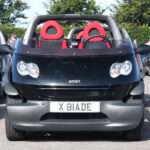
The first-generation Smart Forfour Brabus is the model that proves Smart’s early ambitions extended well beyond two-seat city cars. Sold in the UK for a short period in 2005 and 2006, it combined the practical five-door Forfour body with a 177PS turbocharged engine, a close-ratio manual gearbox and chassis changes developed with BRABUS. It was quick enough to trouble contemporary hot hatchbacks, yet it disappeared when production of the original Forfour ended.
Today it sits in an unusual position: recognisably related to the Mitsubishi Colt underneath, but fitted with enough Smart- and BRABUS-specific hardware to make originality important. Survival is modest, good cars are rarely advertised and neglected examples can consume their apparent price advantage quickly.
UK history
The original Forfour, factory code 454, arrived in Britain in 2004 and shared its basic architecture with the contemporary Mitsubishi Colt. The BRABUS flagship followed in 2005. Its Mitsubishi-derived 1,468cc four-cylinder engine gained a turbocharger and produced 177PS with 230Nm, driving the front wheels through a five-speed manual gearbox.
Contemporary figures quoted 0–62mph in roughly 6.9 seconds and a top speed close to 137mph. Uprated brakes, firmer suspension, 17-inch wheels, deeper body styling, twin exhaust outlets and distinctive trim separated it from ordinary Forfours. Production of the entire 454 range ended in 2006, leaving the BRABUS as a very short-lived official UK model.
Driving character
The engine delivers strong mid-range boost rather than the peaky character of many small naturally aspirated hot hatches. Grip is plentiful in the dry, although torque can make a worn front end feel untidy. The ride is firm on the original 17-inch wheels and the turning circle is not especially small. A tight, quiet example feels energetic and solid; rattles, wandering or drivetrain shunt point to deferred maintenance.
Smart Forfour Brabus common problems
Turbo, intake and cooling system
Check for smooth boost without hesitation, smoke or warning lights. Split boost hoses, tired clamps and neglected ignition components can cause poor running. Inspect the cooling system for leaks and evidence of overheating, and confirm that the temperature remains stable in traffic. Regular oil changes with the correct specification matter to turbo life.
Clutch and gearbox
The BRABUS uses a conventional five-speed manual rather than Smart’s automated transmission. Test for clutch slip under full boost, a high biting point, difficult selection and noise from bearings or driveshafts. An aggressive remap can shorten clutch life and should be supported by invoices and sensible maintenance.
Suspension, steering and brakes
Listen for knocks from front links, bushes and top mounts. Uneven front-tyre wear can indicate geometry issues or previous kerb damage. The large BRABUS wheels are vulnerable to buckling and corrosion, so inspect their inner rims as well as the visible faces. Brakes should pull up squarely without vibration or seized calipers.
Rust and body condition
Examine rear wheelarches, sill seams, subframes, suspension mounting areas and the underside. The car is modern enough to look clean above while corrosion develops below. Check the panoramic roof, doors and tailgate for water ingress, then inspect carpets and electrical connectors for damp.
BRABUS identity and scarce parts
Badges and wheels have been fitted to lesser Forfours. Verify the VIN, engine specification and factory data rather than relying on appearance. Bumpers, skirts, exhaust sections, wheels, interior trim and other model-specific pieces can be expensive or difficult to source. Missing originality should be reflected in the price.
Service history and modifications
A thick history is more useful than a low odometer reading. Look for documented oil services, coolant maintenance, plugs, brake fluid, suspension work and careful tyre replacement. Mild upgrades are common, but poorly mapped engines, crude induction kits and lowered suspension can hide problems. Standard or sympathetically modified cars will generally be easier to value and maintain.
Buying checklist
- Confirm genuine BRABUS identity from the VIN and factory specification.
- Test boost, cooling and clutch performance from cold and fully warm.
- Inspect all four 17-inch wheels and check tyre wear and geometry.
- Examine sills, arches, subframes and suspension mounts underneath.
- Check air conditioning, panoramic roof, windows and every electrical item.
- Value the presence of correct body trim, exhaust and interior parts.
Verdict
The Smart Forfour Brabus is a strong fit for collectors who want a genuinely quick but overlooked UK-market hatchback. Its rarity is rooted in its short production life rather than artificial exclusivity. Find an original, rust-free example with controlled boost and solid history, and it offers performance, practicality and a story unlike almost any rival.
Research sources included Smart’s official heritage timeline, contemporary manufacturer specifications and independent UK ownership and buying-guide material. Image: Matti Blume (MB-one), CC BY-SA 3.0, via Wikimedia Commons.