UNUSUAL CARS MODEL GUIDE
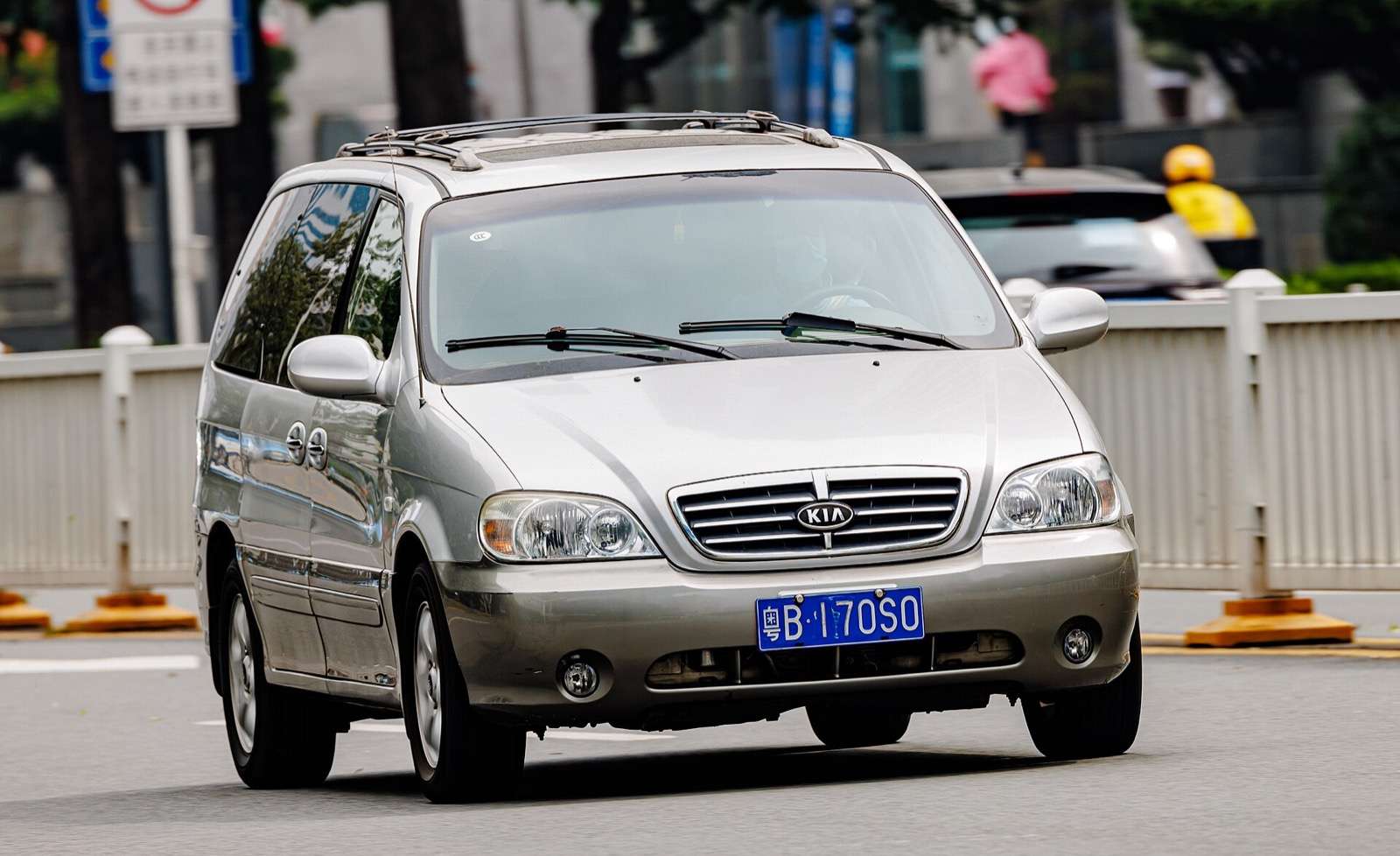
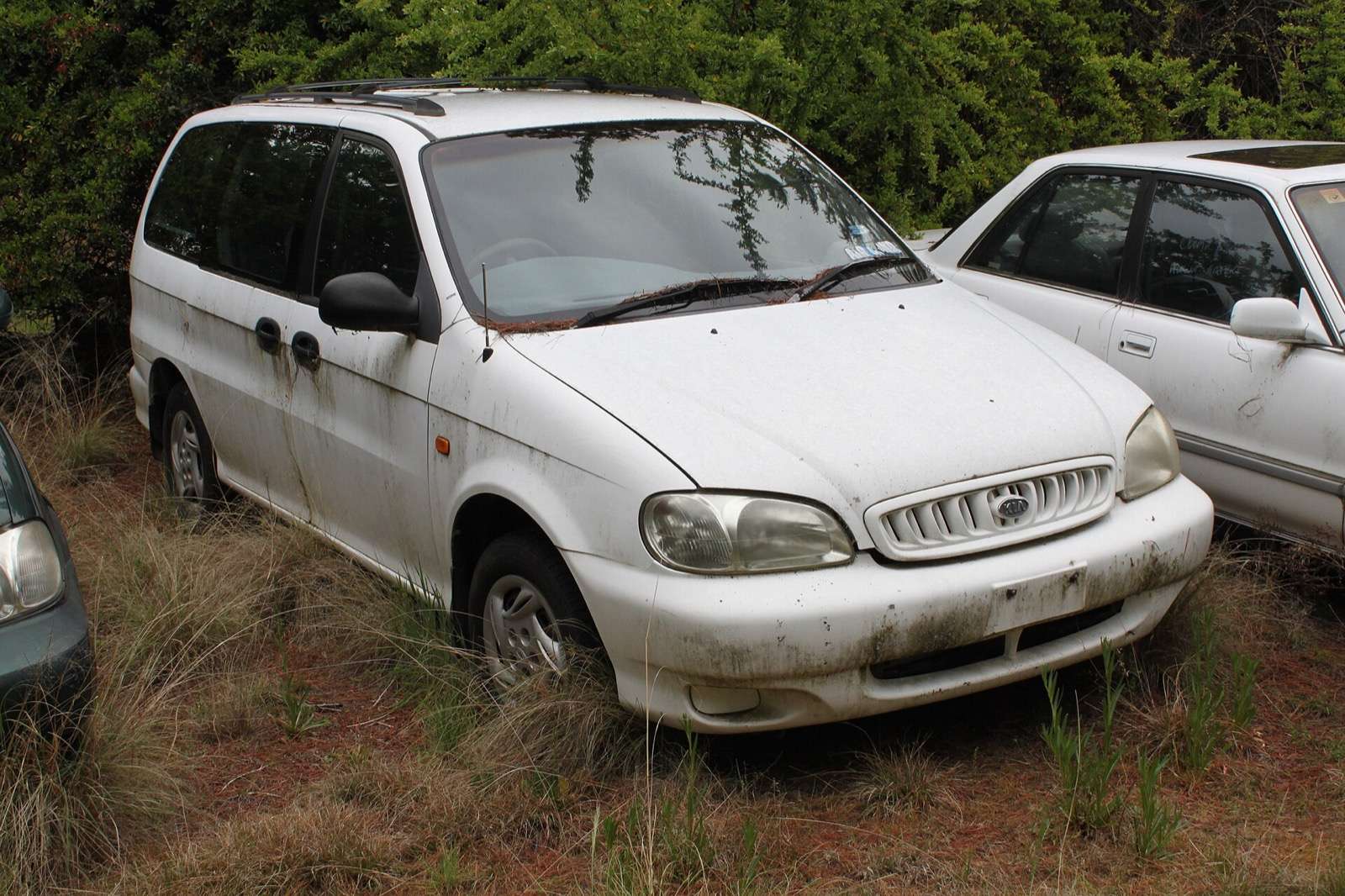
The original Kia Sedona was a vast seven-seat MPV sold for the price of a much smaller family car. It was neither delicate nor fashionable, but twin sliding doors, removable seats and a choice of V6 petrol or big diesel power made it formidable value. Many worked hard; surprisingly few are now preserved.
Featured image: Kia Carnival KV-II, sold in Britain as the Sedona. Photograph by Dinkun Chen, CC BY-SA 4.0, via Wikimedia Commons; resized and locally hosted.
Maximum space for minimum money
Kia launched the Sedona alongside the Clarus and Shuma in September 1999. In other markets it was called Carnival, but its purpose was universal: challenge the Ford Galaxy, Renault Espace and Chrysler Voyager with more equipment for less money. The opening price was under £14,000, remarkable for such a large vehicle.
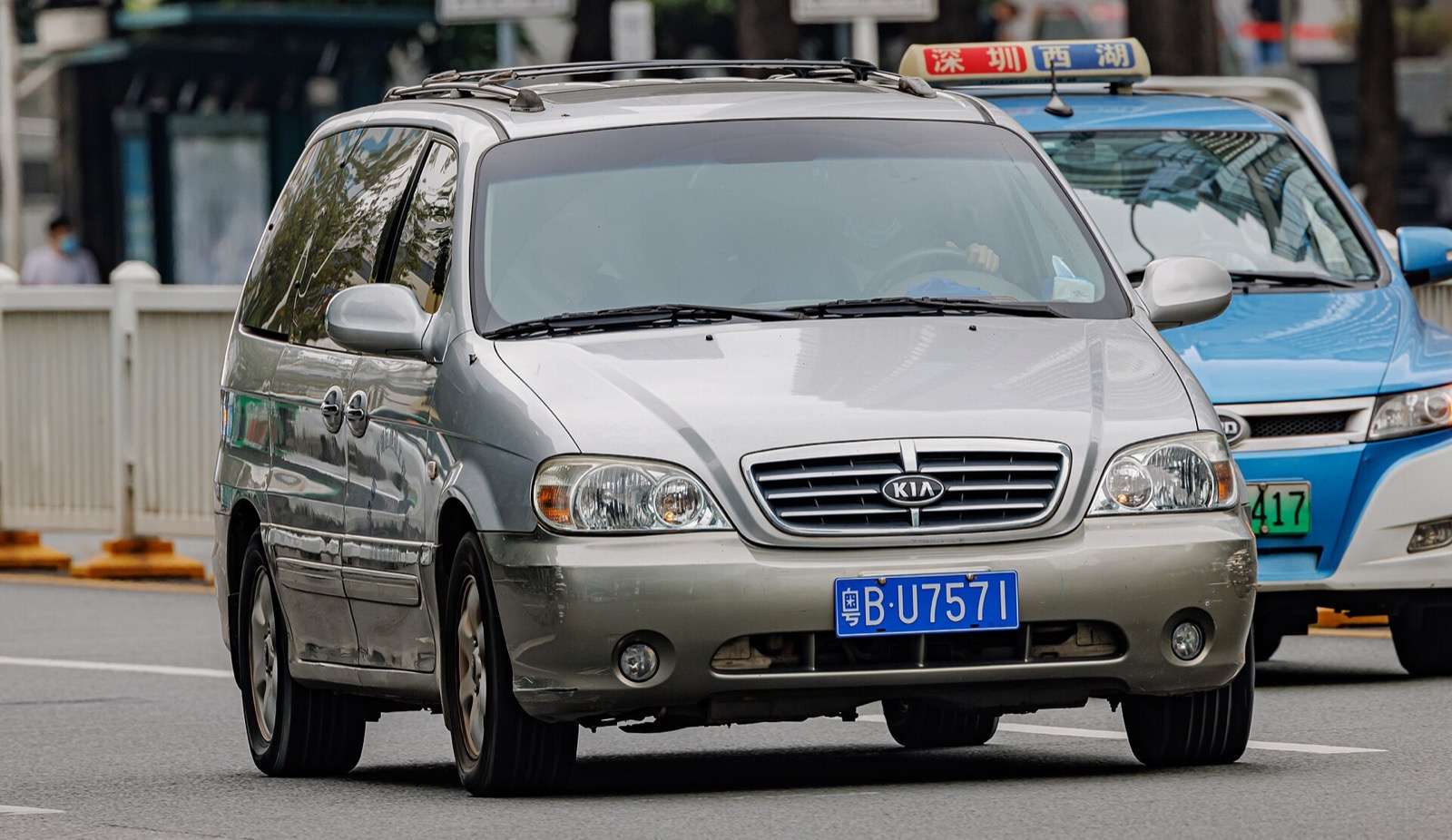
Every model had five doors, twin sliding rear doors and seven individual seats. Even the base S was well supplied with storage; SX added useful features such as air conditioning and anti-lock brakes, while GSX and Executive versions brought progressively more luxury. Manual and automatic transmissions were available with both engines.
V6 petrol and big diesel
The smooth 2.5-litre V6 gave respectable performance but could return fuel consumption in the high teens. The original 2.9 turbodiesel was slower yet far better suited to long-distance family duty. For 2001 Kia revised the nose, tail and cabin and introduced a 143 bhp common-rail version of the diesel, creating the form most familiar in Britain.
| Specification | UK-market Kia Sedona Mk1 |
|---|---|
| UK sales | September 1999–2006 |
| Body | Five-door MPV with twin sliding rear doors |
| Seats | Seven, individually removable |
| Engines | 2.5-litre V6 petrol; 2.9 turbo / CRDi diesel |
| Later diesel power | Approximately 143 bhp |
| Transmission | Five-speed manual or automatic |
| Trims | S, SX, GSX and Executive |
Driving manners were never its strongest suit. The Sedona was heavy, steering required effort and the V6 was thirsty. Yet as an inexpensive people carrier it delivered extraordinary cabin volume, and its imposing scale became part of its appeal.
Love cars you don’t see every day?
Get forgotten cars, surprising motoring stories and the most interesting finds from Unusual Cars by email.
Free to join. No spam. Unsubscribe whenever you like. See our privacy policy.
Kia Sedona Mk1 buying guide
Structure, doors and interior
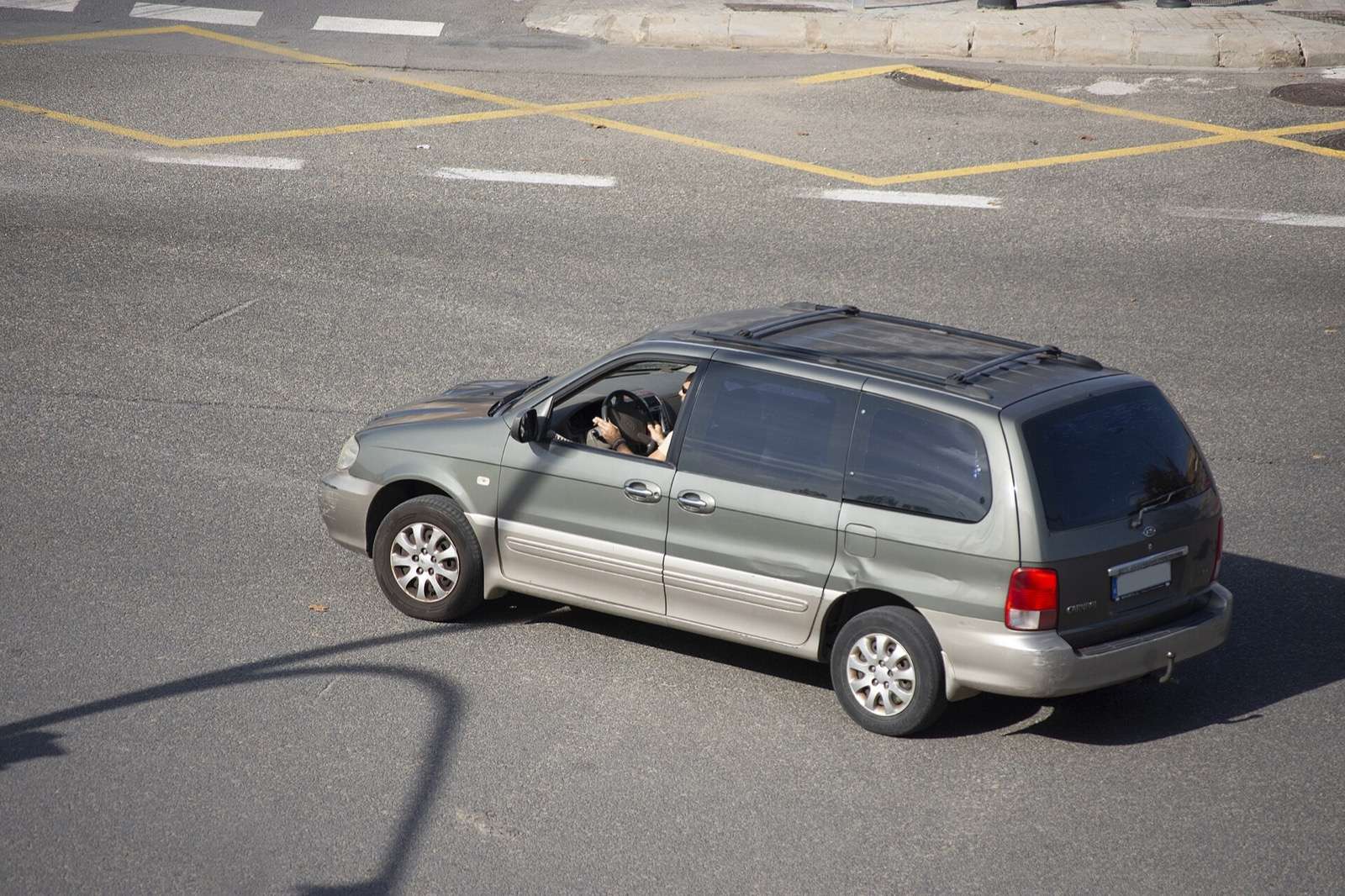
Inspect sills, jacking points, subframes, suspension mounts, brake pipes, wheelarches and the floor around seat mountings. Check both sliding doors run smoothly and latch securely. Remove and refit the rear seats if possible; broken handles, missing trim and damaged mechanisms can be frustrating to source.
Engines and cooling
A full service history is essential. Diesels should start cleanly without excessive smoke, uneven running or injector noise. Verify belt-change requirements and look carefully for oil, fuel and coolant leaks. Any overheating is a warning on a large, heavily worked MPV. The V6 should be smooth and quiet, but calculate its fuel costs honestly.
Transmission, brakes and electrics
Manual clutches can suffer in cars used for towing or urban work, while an automatic should select promptly and change smoothly. Check for binding brakes, hot wheels, worn wheel bearings and suspension knocks. Test air conditioning, sunroof, windows, mirrors, central locking and every dashboard switch; the more highly equipped the car, the more there is to fail.
Research sources
- RAC Drive: Kia Sedona 1999–2006 used review
- Auto Express: Kia Sedona 1999–2007 review
- Get Carwise: Kia Sedona problems and buying guide
- Kia Heritage: New Carnival
Continue the Kia story
Explore the Rare & Performance Kias hub, then meet its 1999 launch companions, the Kia Clarus and Shuma.