UNUSUAL CARS MODEL GUIDE
The Ferrari F430 family developed the 360’s aluminium platform with a new 4.3-litre V8, electronic differential and much more sophisticated chassis electronics. It spans the 2004 F430 Berlinetta, open F430 Spider, focused 430 Scuderia and limited Scuderia Spider 16M.
Quick answer: the F430 is usefully more modern than a 360 but still demands specialist inspection. Check exhaust manifolds and brackets, clutch wear, F1 pump and actuator, E-Diff operation, engine and gearbox mounts, suspension joints, carbon-ceramic brakes, roof operation, aluminium corrosion, accident repairs and complete annual servicing.
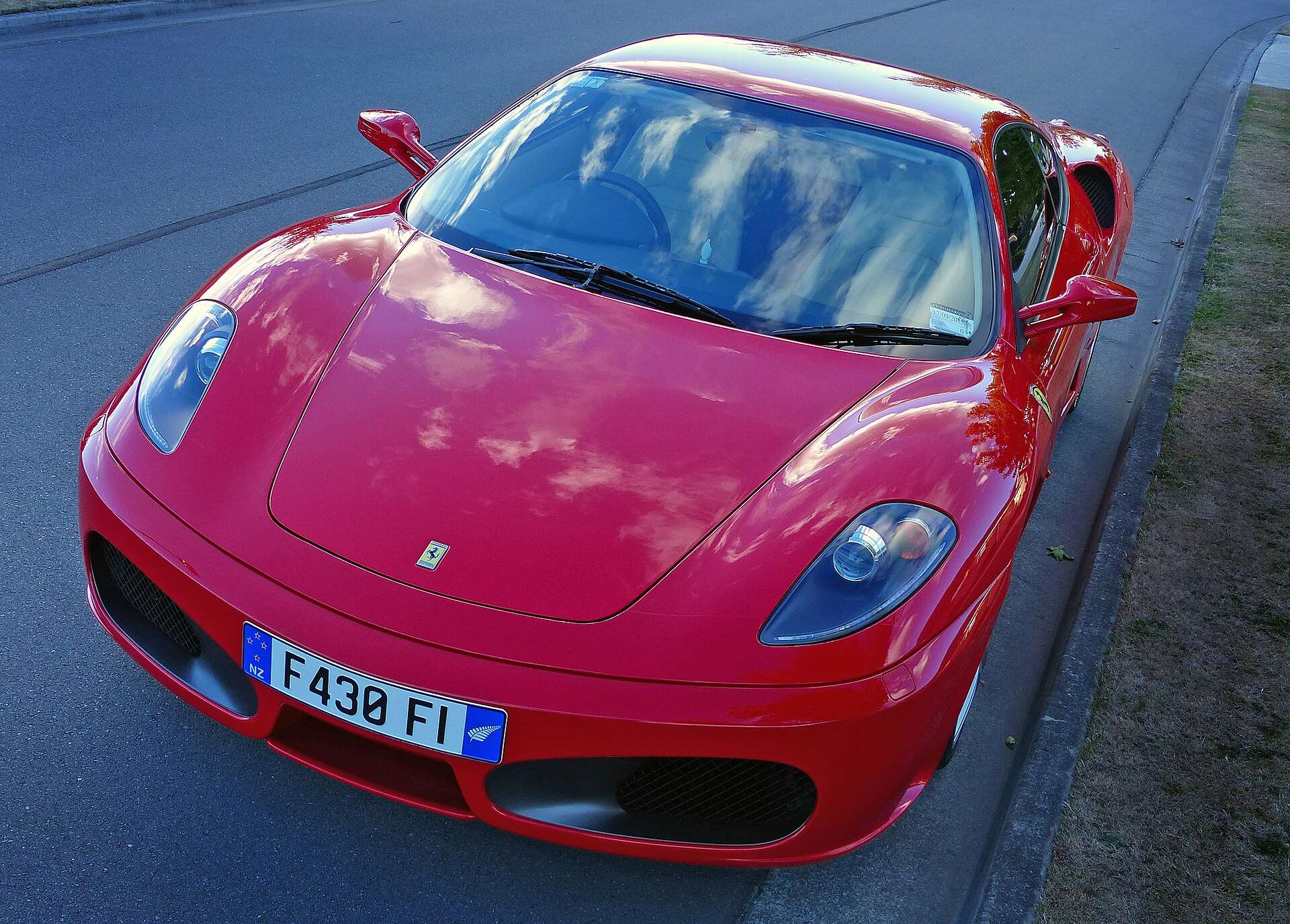
Featured image: red Ferrari F430 front three-quarter. Photograph by Bernard Spragg. NZ from Christchurch, New Zealand, CC0, via Wikimedia Commons; locally hosted.
A major mechanical step beyond the 360
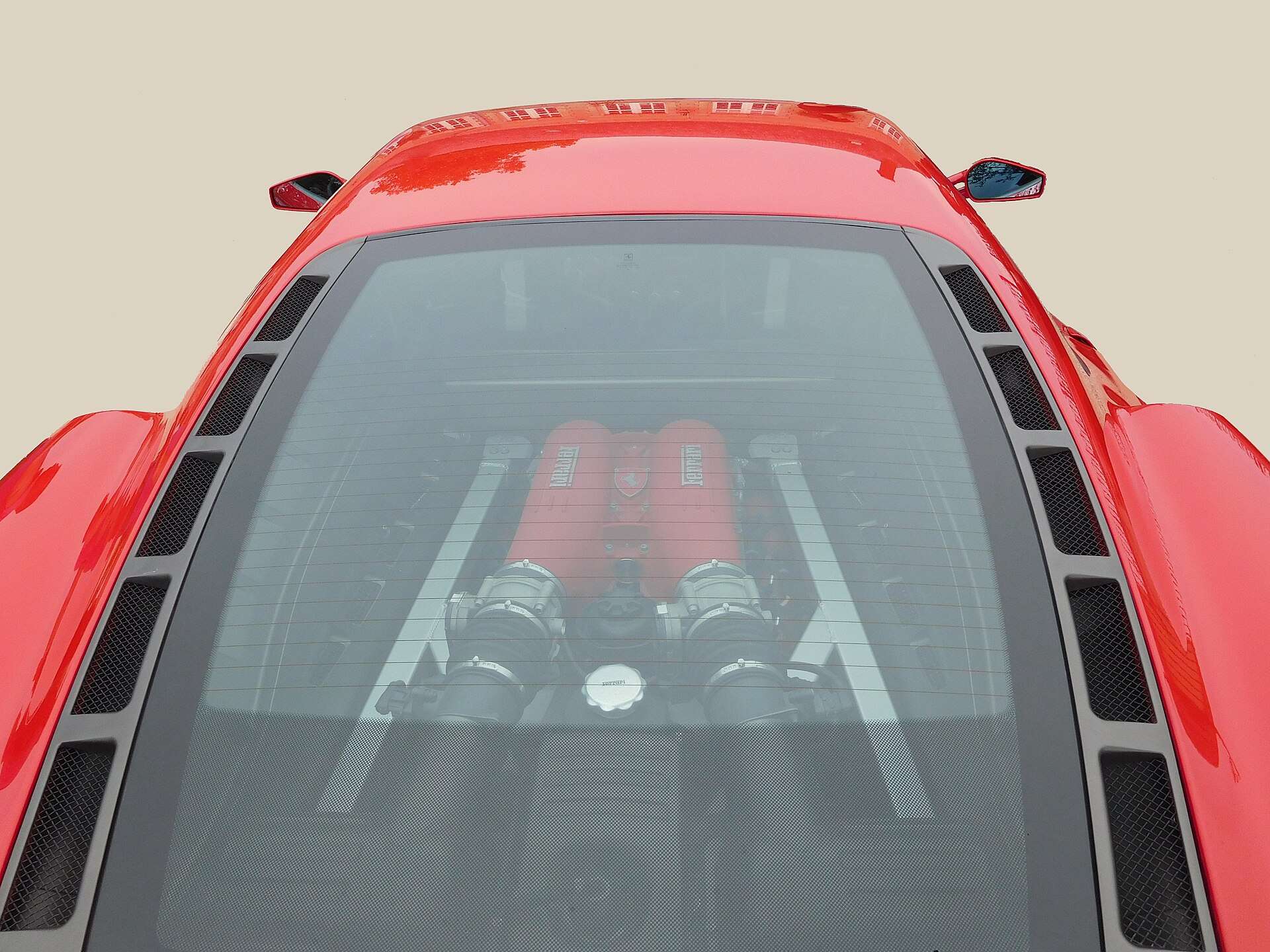
Although its aluminium structure evolved from the 360, the F430 received a new 4,308cc flat-plane-crank V8 unrelated to the earlier Dino-derived family. Ferrari quoted 490CV for the standard car. The engine used chain-driven camshafts rather than scheduled cambelts, removing one famous service item without making maintenance inexpensive.
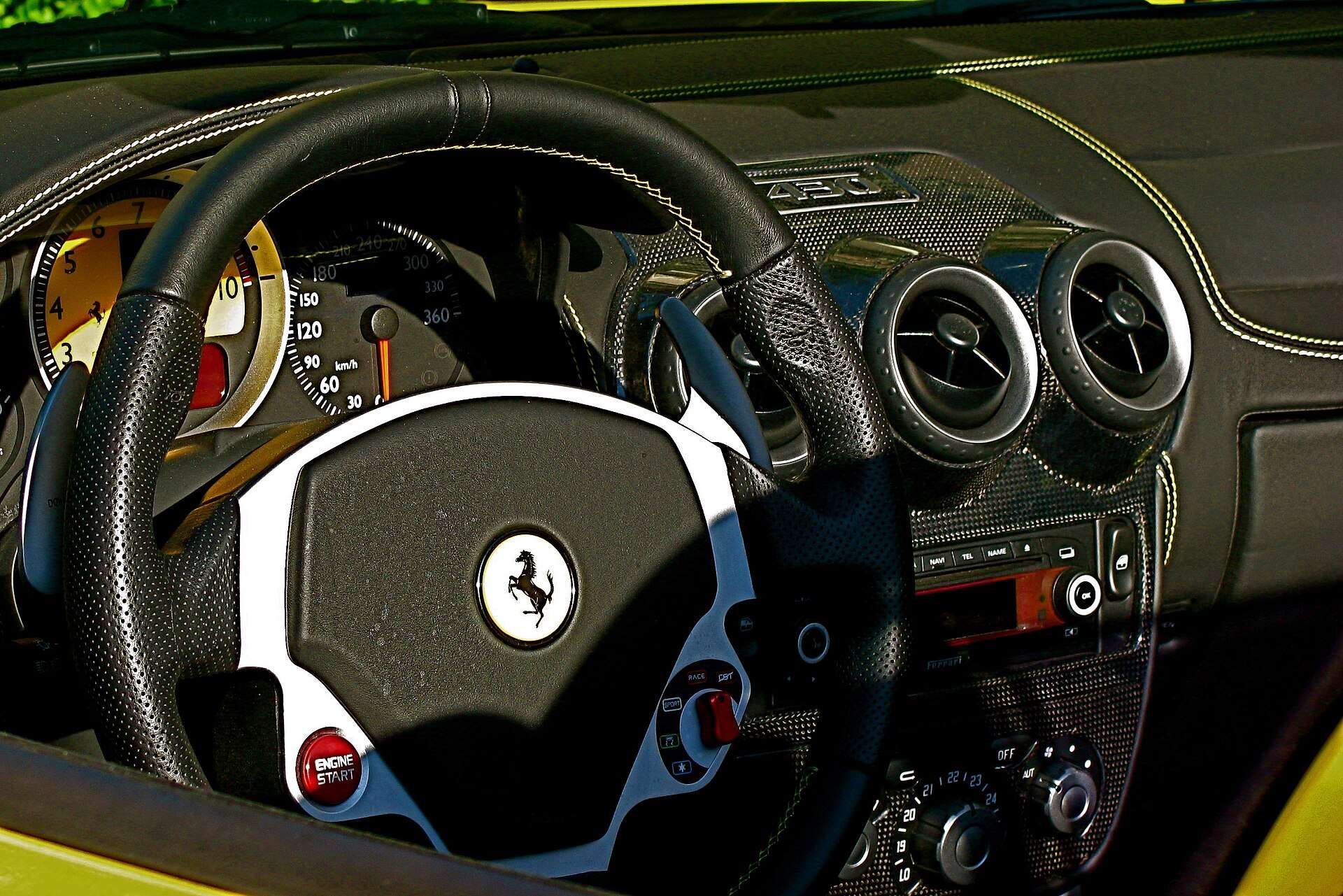
The steering-wheel manettino coordinated damping, traction control, stability systems, throttle response and the electronic differential. This integration let the F430 deploy more performance while remaining approachable. Styling by Pininfarina retained the glass engine cover and incorporated cues from Ferrari’s racing past, including paired front intakes inspired by the 156 Formula One car.
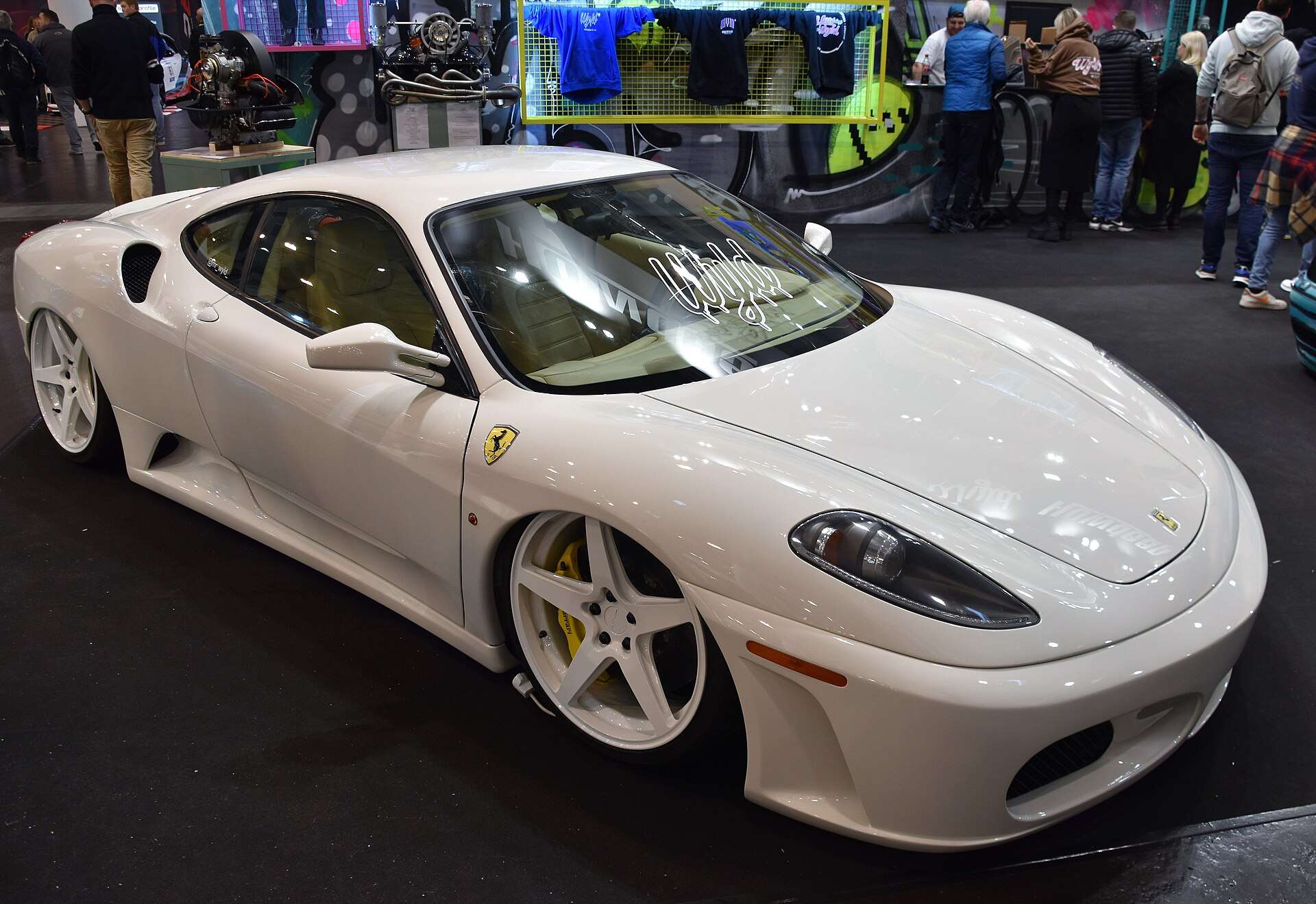
F430, Spider, Scuderia and 16M
| Version | Character | Key distinction |
|---|---|---|
| F430 | Berlinetta | 490CV, manual or F1 transmission |
| F430 Spider | Open road car | Powered fabric hood and reinforced structure |
| 430 Scuderia | Track-focused coupé | 510CV, lower weight, SuperFast2 shifts and firmer chassis |
| Scuderia Spider 16M | Limited open special | Scuderia hardware celebrating 16 constructors’ titles |
The gated six-speed manual was available on standard Berlinettas and Spiders but is rare. The automated F1 transmission is far more common. The Scuderia was F1-only and combined reduced weight, carbon-ceramic brakes, revised aerodynamics and closer integration of F1-Trac with the E-Diff. The 16M translated that formula to the Spider body.
Love cars you don’t see every day?
Get forgotten cars, surprising motoring stories and the most interesting finds from Unusual Cars by email.
Free to join. No spam. Unsubscribe whenever you like. See our privacy policy.
Engine, manifolds and exhaust
The V8 should start cleanly from cold, hold steady oil pressure and pull evenly without warning lights. Exhaust manifolds can crack, potentially releasing heat or debris near the engine, and mounting brackets may fail as the system expands. Evidence of updated manifolds or a sound specialist repair is valuable. Check tailpipe valves, catalytic converters, oxygen sensors, engine mounts, oil leaks, radiators and cooling fans.
Annual servicing matters even at low mileage. Diagnostic records can reveal misfires, over-revs and stored faults. A pre-purchase compression or leak-down test is prudent if running quality, history or mileage cannot be reconciled. Non-standard exhausts and engine software should be declared and supported by invoices.
F1 transmission, E-Diff and clutch
Both manual and F1 cars use a conventional single clutch. A diagnostic report should record clutch wear, selected-gear values, pump operation and faults. Slow engagement, selection warnings, repeated pump cycling or inconsistent shifts can point to the pump, accumulator, actuator, sensors or poor calibration. Reversing uphill and creeping in traffic accelerate clutch wear.
The electronic differential uses its own hydraulic control and can suffer solenoid or pressure faults. Check for leaks and warning messages, then drive the car through every manettino position once fluids are warm. A factory manual should shift cleanly without clutch slip or release-bearing noise; verify that a purported manual is factory-built rather than a later conversion.
Suspension, brakes, body and Spider roof
Worn ball joints, track-rod ends, bushes and dampers can produce knocks, vague steering and uneven tyre wear. Carbon-ceramic discs are durable in road use but extremely expensive if chipped, cracked or worn; specialists can measure remaining life. Inspect tyres for age and matching specification, wheels for damage, undertrays for careless jacking and brake cooling ducts for impact damage.
Look for bubbling where aluminium meets fixings, and inspect paint depth, panel alignment and structural castings for accident repair. Operate a Spider roof repeatedly, checking elastic straps, microswitches, hydraulic action, seals and the closing sequence. Cabin buttons often develop sticky coatings, while leather can shrink around the dashboard. These are familiar repairs, but should not conceal more serious neglect.


Sources and further reading
- Ferrari: special-series V8 bloodline
- Ferrari Technical Information: model catalogue
- PistonHeads: Ferrari F430 buying guide
- evo: Ferrari F430 buying checkpoints
Continue the Ferrari story
Explore the complete Ferrari hub. Continue with the Ferrari 360 and Ferrari F355.
Frequently asked questions
What engine does the Ferrari F430 use?
It uses a 4,308cc naturally aspirated flat-plane-crank V8 with chain-driven camshafts.
Was the Ferrari F430 available with a manual gearbox?
Yes. Standard F430 Berlinettas and Spiders could be ordered with a gated six-speed manual, although most used the F1 transmission.
What makes the 430 Scuderia different?
It has 510CV, reduced weight, firmer chassis settings, carbon-ceramic brakes and faster SuperFast2 F1 shifts.
What does Scuderia Spider 16M mean?
It is the limited open Scuderia created to celebrate Ferrari’s sixteenth Formula One constructors’ championship.
What should be checked before buying an F430?
Check manifolds, exhaust brackets, clutch and F1 diagnostics, E-Diff, mounts, suspension joints, brakes, roof, aluminium body, accident history and servicing.