UNUSUAL CARS MODEL GUIDE
The One-77 was Aston Martin’s attempt to build a road car without the constraints of a normal model programme. A carbon-fibre monocoque, hand-formed aluminium body, inboard suspension and a Cosworth-developed 7.3-litre V12 created the fastest and most powerful Aston Martin yet. Only 77 were built, making provenance, originality and factory-level care central to ownership.
Quick answer: the Aston Martin One-77 was revealed in 2009 and production concluded in 2012 after 77 examples. Its 7,312 cc naturally aspirated V12 produces 750 bhp, driving the rear wheels through a six-speed automated manual transaxle. Aston Martin recorded a 220 mph maximum. Buyers must verify identity and history, inspect the carbon monocoque and aluminium body, assess brakes and suspension, and confirm access to specialist parts and support.
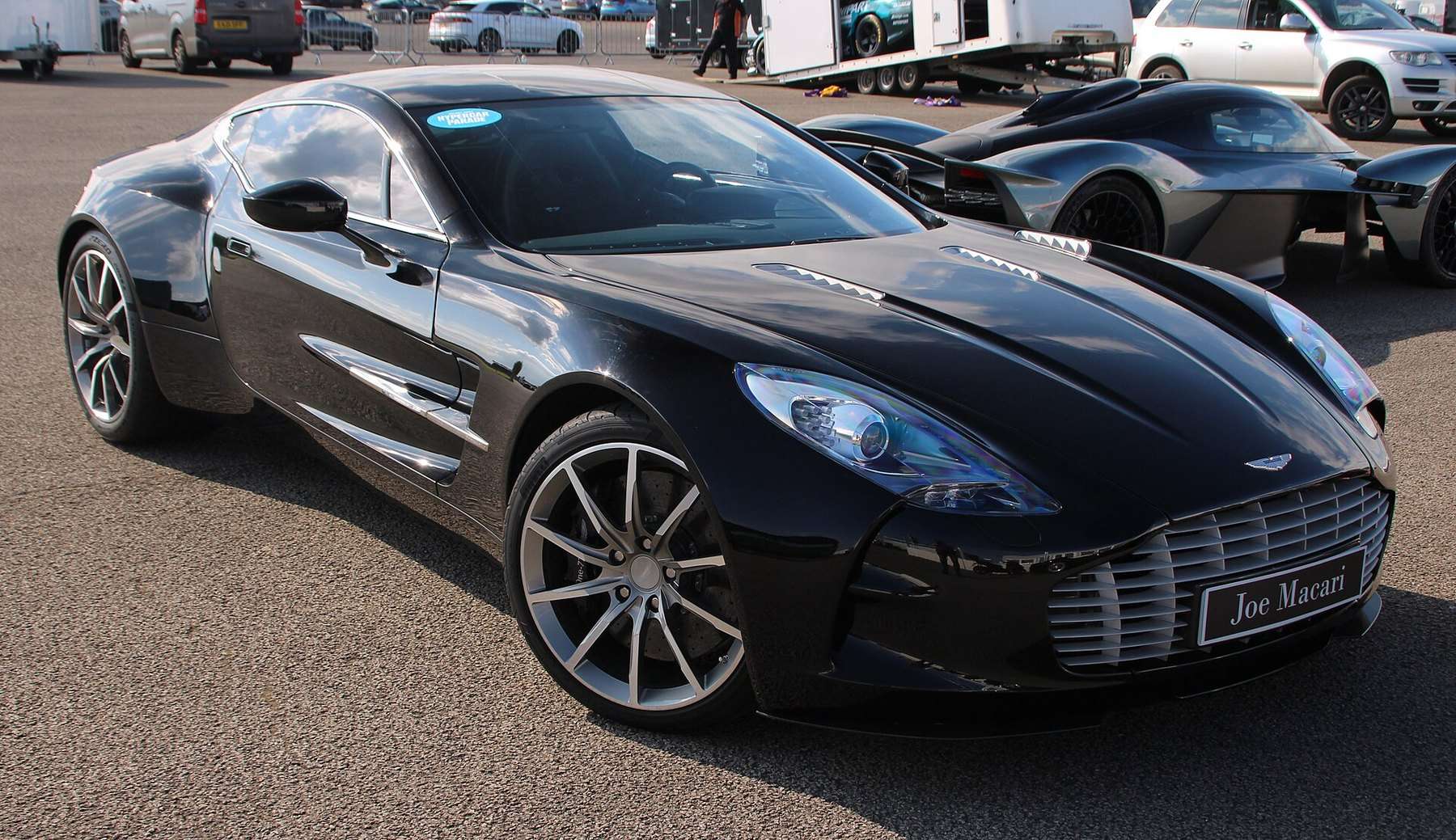
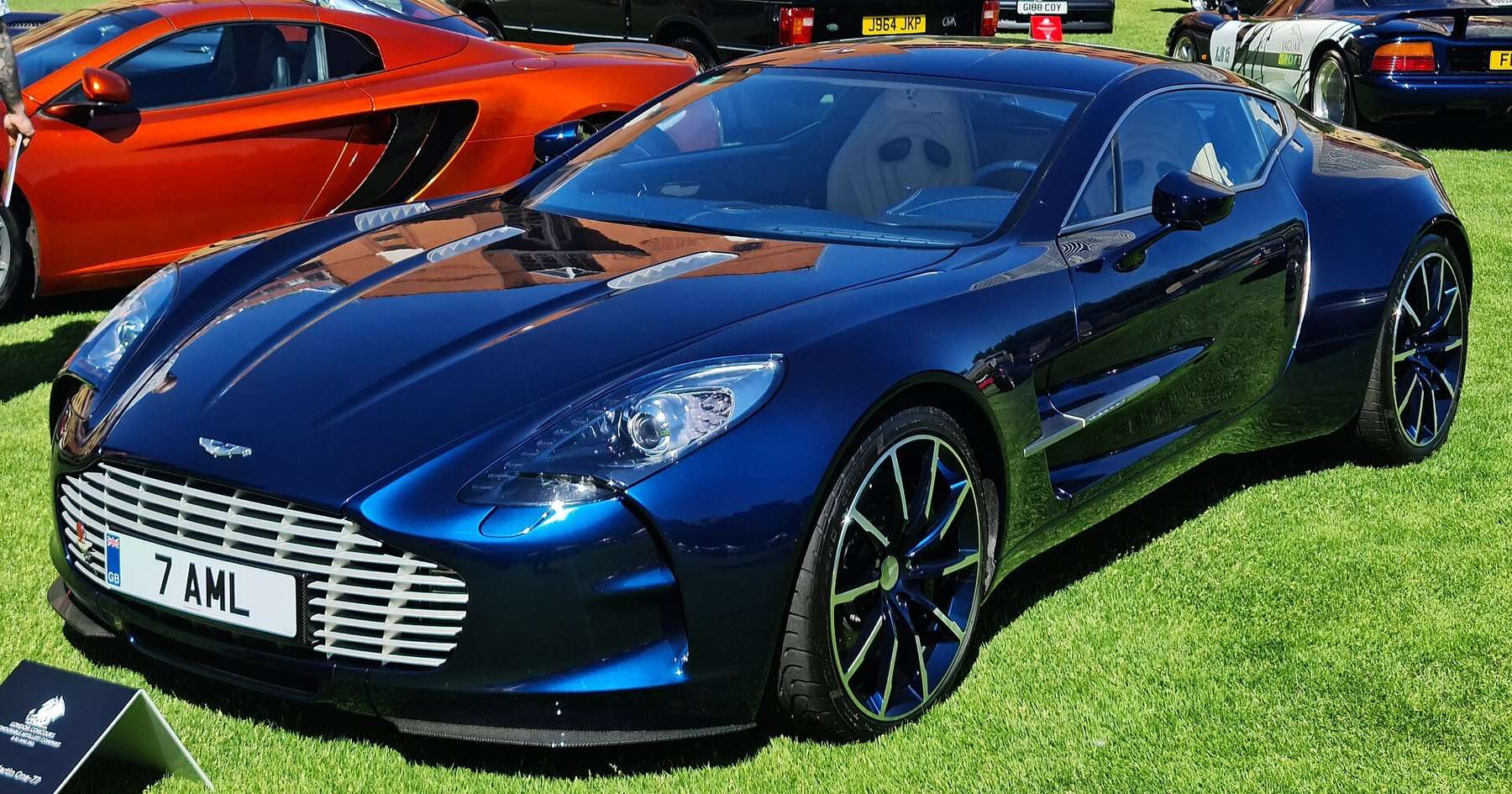
Featured image: Dark blue Aston Martin One-77 front three-quarter view. Photograph by MrWalkr, CC BY-SA 4.0, via Wikimedia Commons; locally hosted.
Why Aston Martin created the One-77
First shown partially concealed at the 2008 Paris motor show, the One-77 made its finished debut at the 2009 Concorso d’Eleganza Villa d’Este and won the event’s design award for concept cars and prototypes. Its name described the production plan directly: one Aston Martin design, limited to seventy-seven customer cars.
The project sat above the regular VH range and cost more than £1 million before options. Each buyer could work with the factory on colour, trim and dynamic specification, while low-volume manufacturing allowed construction methods that would have been impractical for a DB9 or DBS.

Carbon monocoque and aluminium body
The structural core is a highly rigid carbon-fibre monocoque developed with specialist expertise, clothed in hand-formed aluminium panels. The sweeping front wings, deep side channels and broad rear haunches were shaped as functional aerodynamics as well as visual theatre.
Suspension uses double wishbones with inboard springs and dampers operated through pushrods. Multimatic Dynamic Suspension Spool Valve dampers were individually calibrated, while carbon-ceramic brakes reduced unsprung weight and controlled the car’s immense performance.
| Item | One-77 specification |
|---|---|
| Engine | 7,312 cc naturally aspirated V12 |
| Power | 750 bhp |
| Transmission | Six-speed automated manual transaxle |
| Structure | Carbon-fibre monocoque; aluminium body |
| Weight | 1,630 kg |
| Top speed | 220 mph achieved in testing |
Love cars you don’t see every day?
Get forgotten cars, surprising motoring stories and the most interesting finds from Unusual Cars by email.
Free to join. No spam. Unsubscribe whenever you like. See our privacy policy.
The 7.3-litre Cosworth-developed V12
Aston Martin and Cosworth reworked the company’s familiar V12 so extensively that capacity grew to 7,312 cc while engine mass fell. Revised castings, internal components, cylinder heads and breathing produced 750 bhp without turbocharging, meeting the project’s demand for road manners as well as headline power.
The engine sits low and far back in the chassis, connected through a carbon torque tube to the rear-mounted gearbox. The six-speed transmission is an automated manual rather than a conventional automatic, so its clutch operation, hydraulic system and calibration require model-specific knowledge.

Performance and driving hardware
Aston Martin recorded 220 mph during high-speed testing, making the One-77 the company’s fastest road car at the time. Carbon-ceramic discs measure 398 mm at the front and 360 mm at the rear, and the suspension was designed to deliver control without making the car unusable on the road.
Tyres are critical on a 750 bhp, rear-wheel-drive car. Age, heat cycles, correct specification and storage history matter even when tread remains. Wheels, centre caps, underbody aero and brake components are bespoke and should be inspected for damage before any demonstration drive.

Provenance, originality and inspection
A One-77 should be accompanied by complete factory documentation, build records, service history, keys, tools and any model-specific accessories. Confirm chassis identity directly through Aston Martin rather than relying on auction descriptions. Paint, trim and mechanical changes must be traced because the specification of each car is part of its significance.
Inspect the carbon monocoque and its bonded or bolted interfaces for damage, repairs and evidence of incorrect lifting. Aluminium panels require specialist assessment for distortion or filler. A conventional paint-depth reading is not enough on mixed materials, and accident repairs should be documented by an organisation with appropriate composite capability.

Cabin, electronics and storage
The cabin mixes exposed carbon fibre, hand-finished leather and unique metalwork. Check every switch, display, seat function, climate-control circuit, sensor and key. Low voltage can trigger faults, but a collector car kept on display may also suffer from stale fluids, dry seals and components that have never reached regular operating temperature.
Storage should control humidity while allowing scheduled exercise and servicing. Fuel quality, battery support, tyre position and heat cycles all matter. A low odometer does not remove age-related maintenance, and preserving the car by never driving it can create a different set of mechanical problems.

What buying a One-77 really requires
This is closer to acquiring a coachbuilt prototype than an ordinary used supercar. Before purchase, agree who will inspect, transport, insure, store and maintain it, and confirm the availability and lead time of bespoke components. A factory-supported examination is proportionate to the value and complexity.
Condition, documented originality and continuity of care outweigh small mileage differences. The strongest car has an unbroken history, no unexplained body or monocoque work, correct equipment and evidence of regular recommissioning. Any exception should be reflected in both the expert report and the acquisition price.
Sources and further reading
- Aston Martin: One-77 official history and specifications
- Aston Martin Media: One-77 archive
- Aston Martins: One-77 engine and production technical document
- Multimatic: composite and suspension engineering background
- Aston Martin Heritage Trust
Continue the Aston Martin story
The One-77 demonstrated carbon construction and design ideas that influenced the second-generation Vanquish and Aston Martin’s later limited-production cars. Explore the complete Aston Martin hub. Continue with the second-generation Vanquish. Explore the V12 Vantage family.
Frequently asked questions
How many Aston Martin One-77 cars were built?
Aston Martin completed 77 production examples, with production concluding in 2012.
What engine is in the Aston Martin One-77?
It uses a Cosworth-developed 7,312 cc naturally aspirated V12 producing 750 bhp.
How fast is the Aston Martin One-77?
Aston Martin recorded a top speed of 220 mph during testing.
Is the One-77 body carbon fibre?
Its structural monocoque is carbon fibre, while the exterior body panels are hand-formed aluminium.
What is most important when buying a One-77?
Factory-verified identity, continuous provenance, documented originality and expert inspection of the carbon structure, aluminium body and bespoke mechanical systems are essential.