UNUSUAL CARS MODEL GUIDE
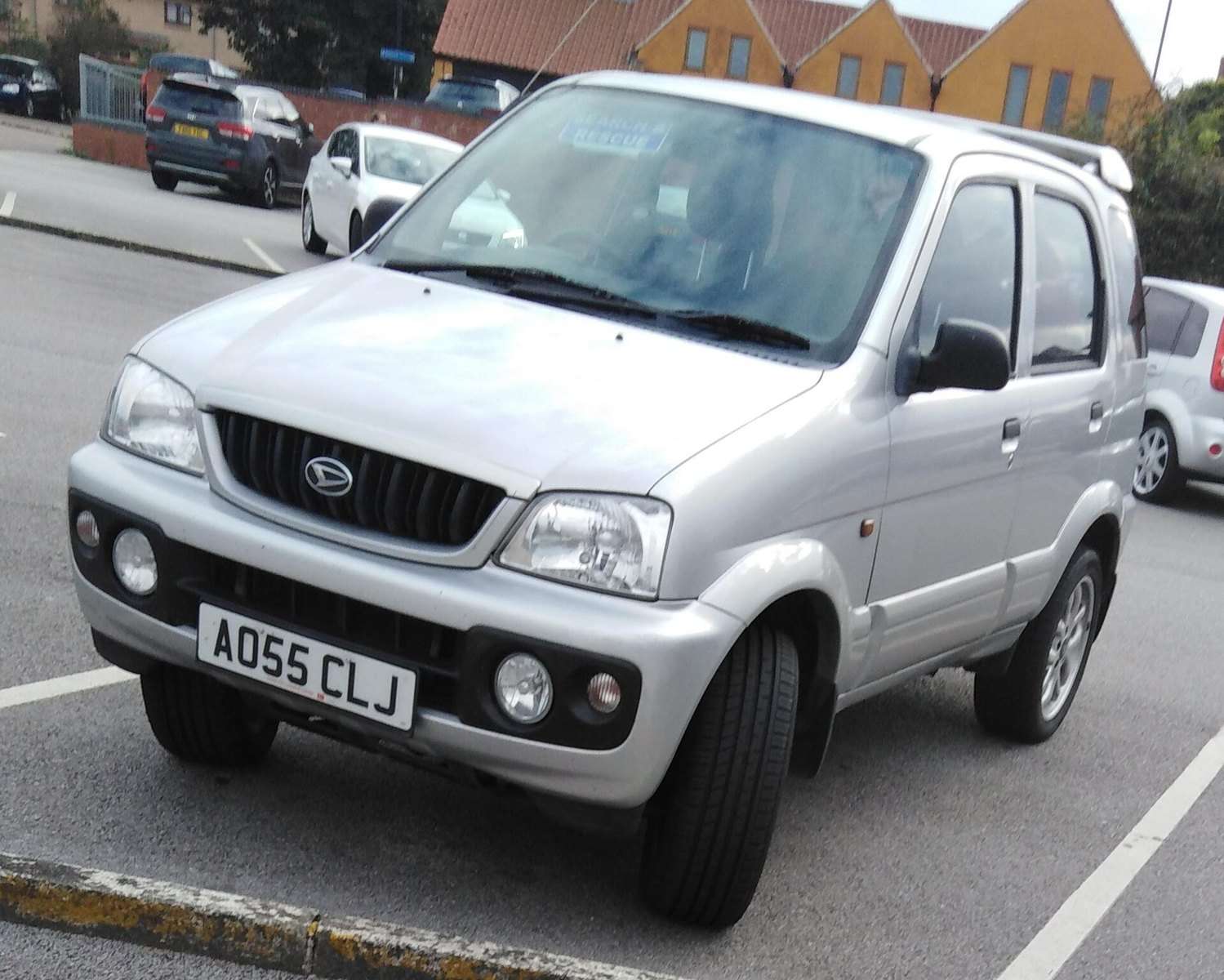
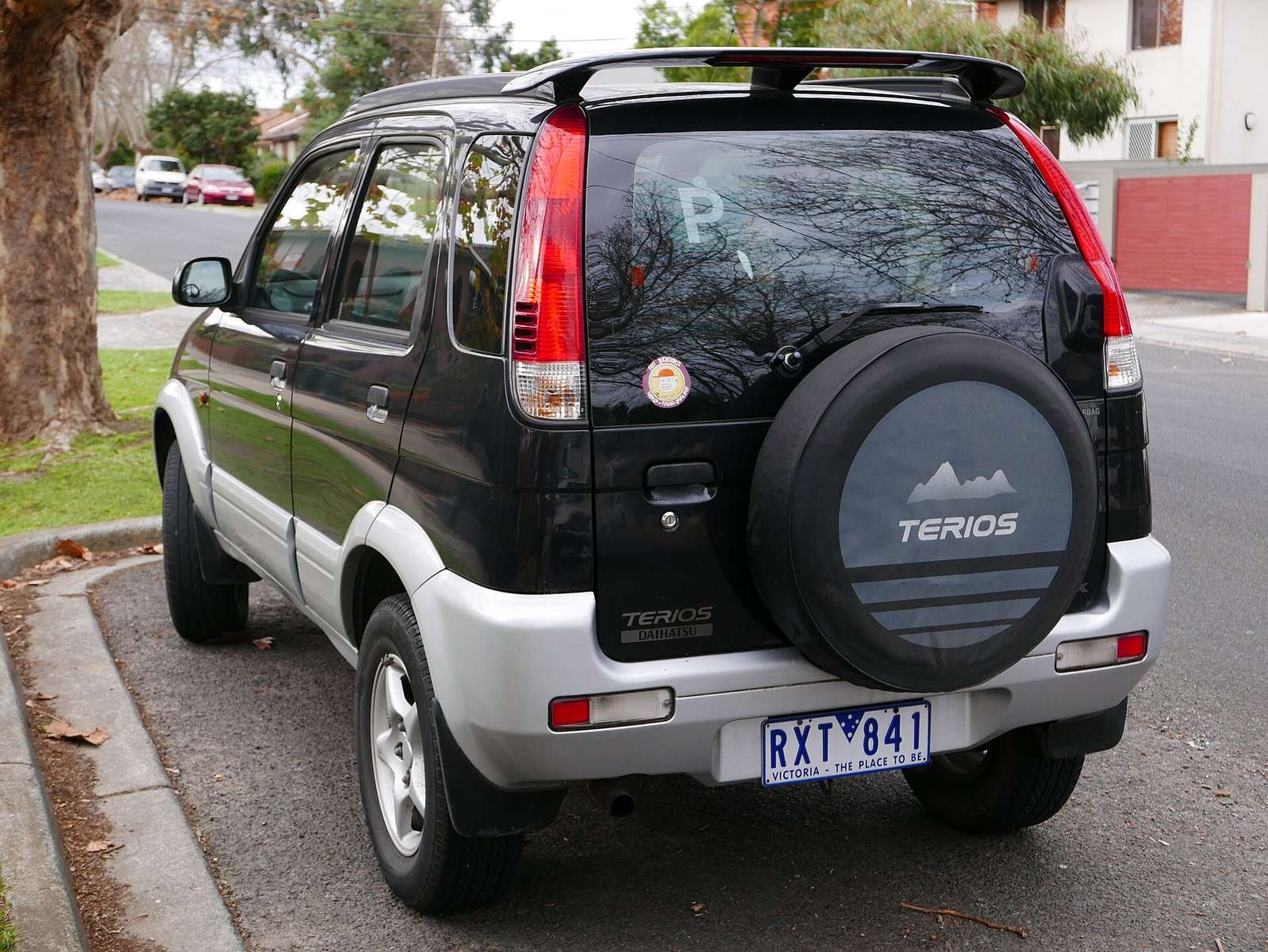
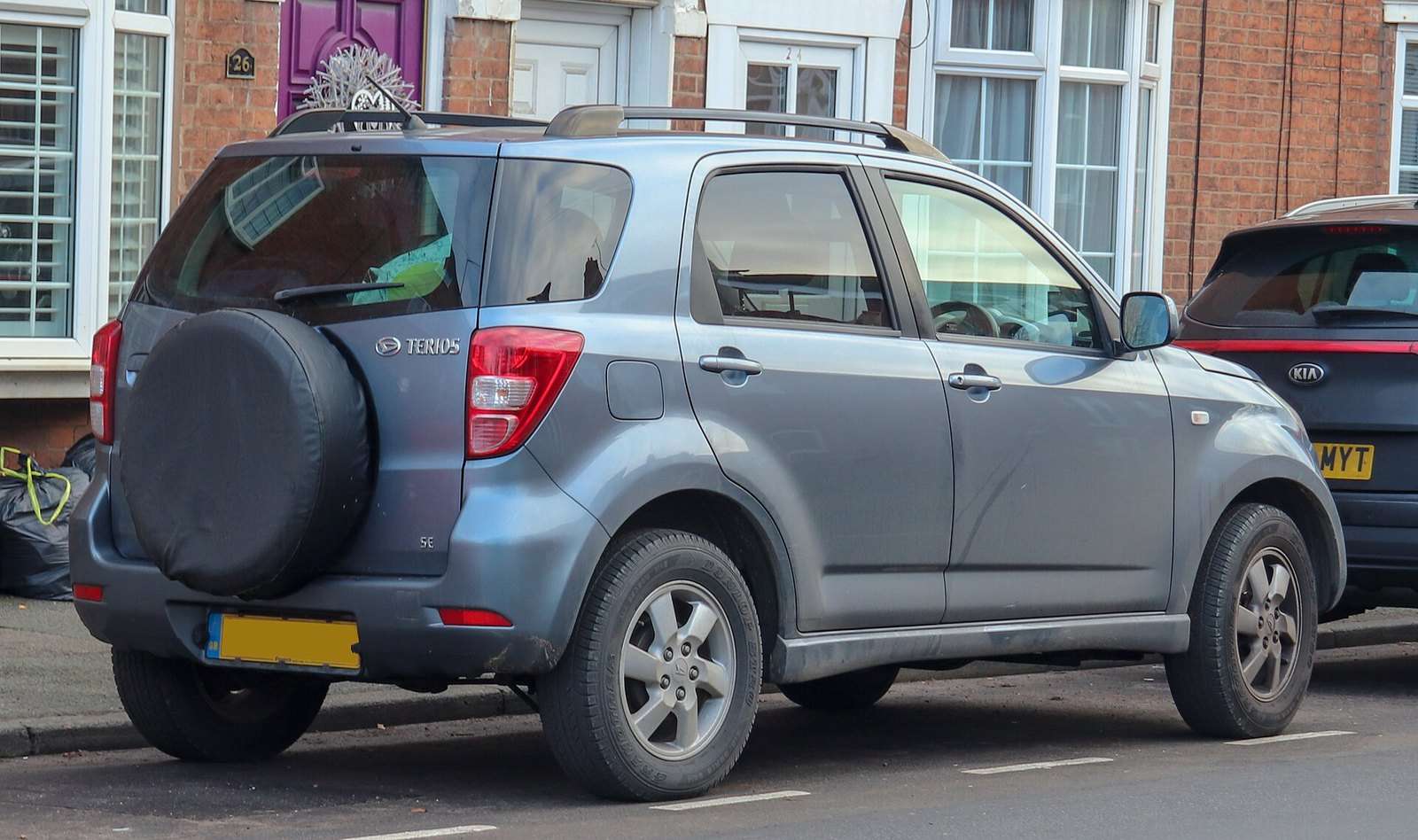
The Daihatsu Terios brought four-wheel drive, five doors and an upright driving position to a body scarcely wider than a supermini. Britain’s first J100 generation used a 1.3-litre petrol engine and a narrow, tall body; the 2006 J200 replacement grew up with a 1.5-litre engine, more cabin space and better road manners. Both remain useful where compact dimensions matter more than motorway refinement.
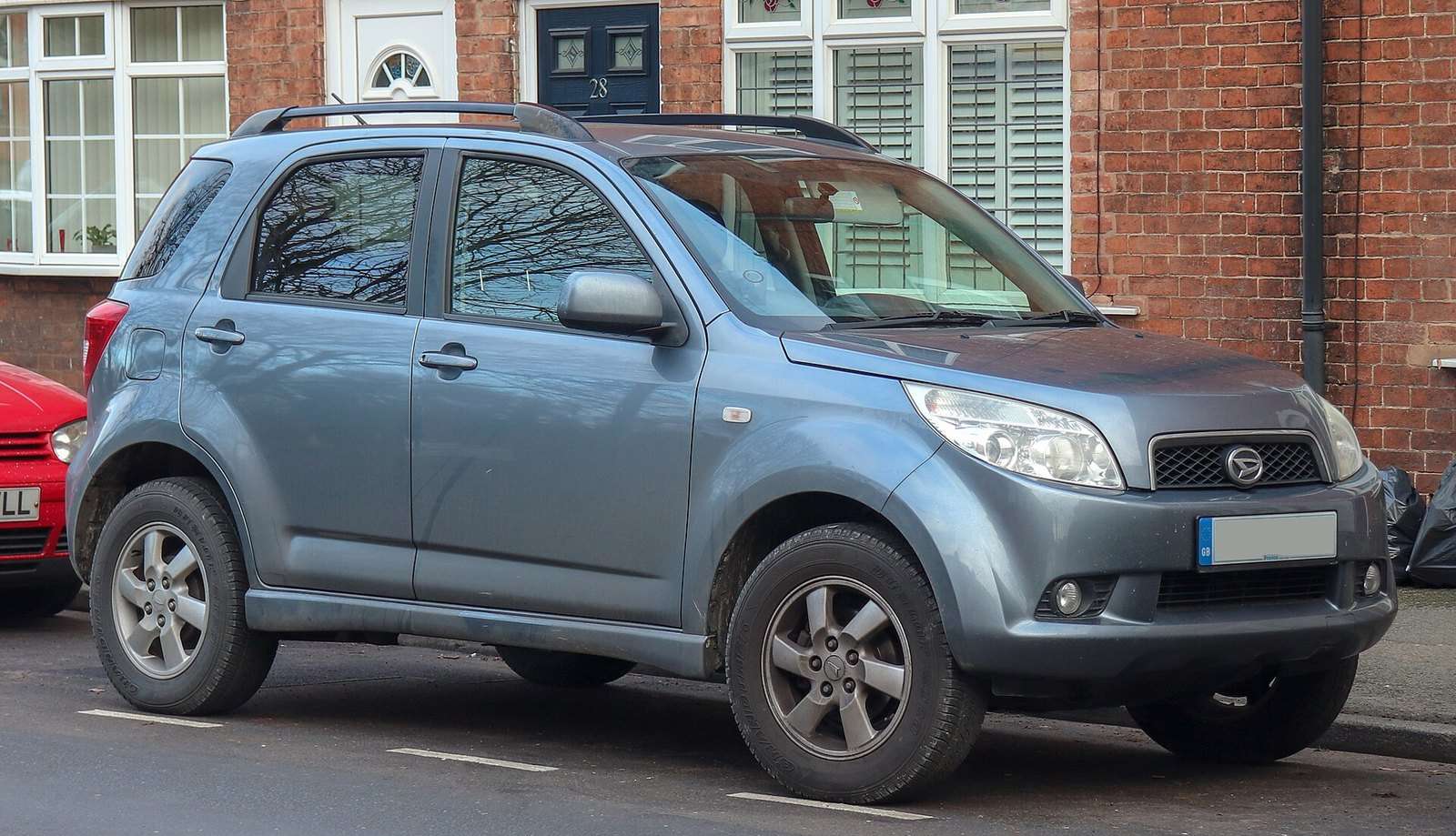
Featured image: 2007 UK-market Daihatsu Terios SE front three-quarter view. Photograph by Calreyn88, CC BY-SA 4.0, via Wikimedia Commons; locally hosted.
J100: a genuinely tiny five-door 4×4
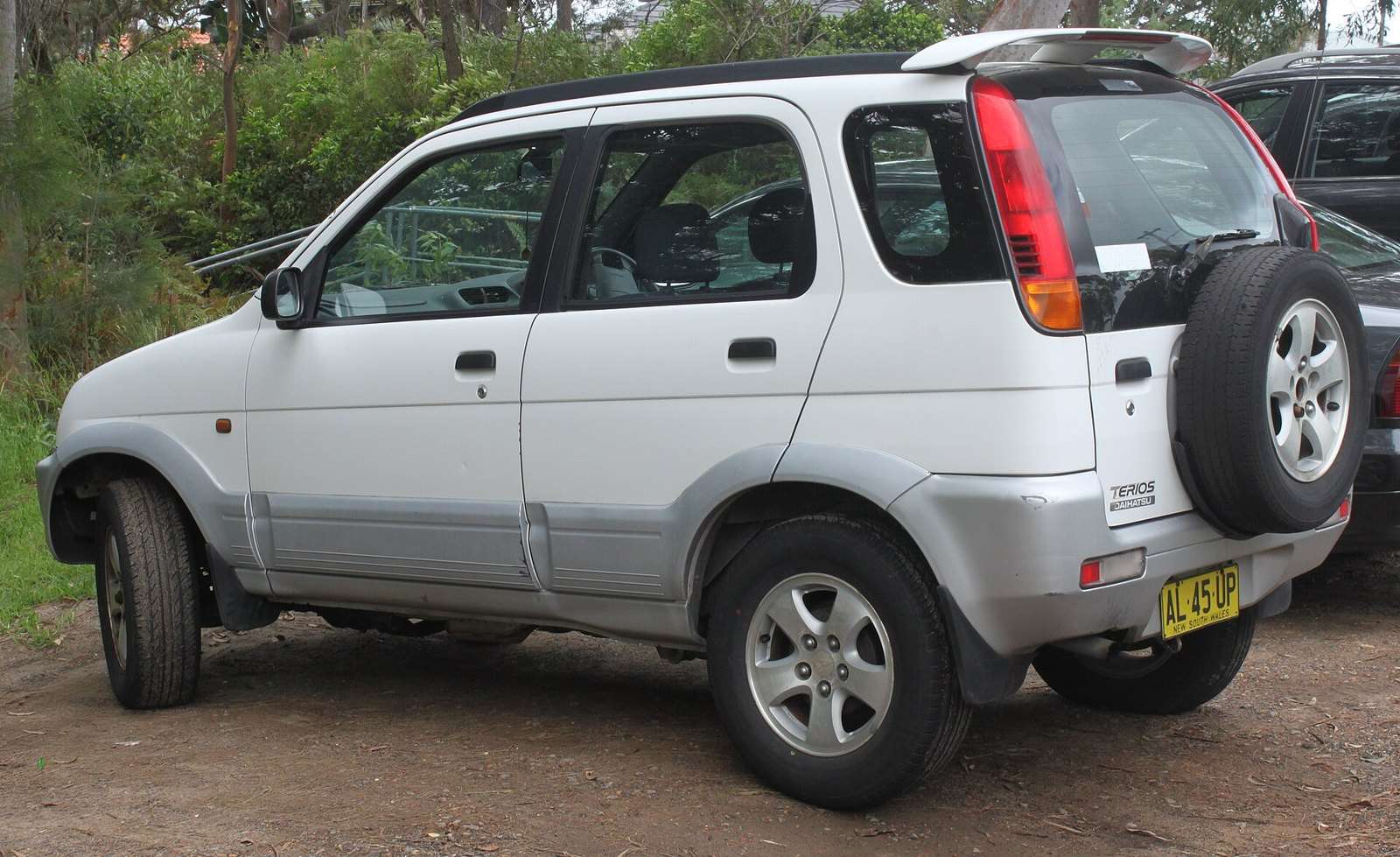
The original Terios appeared in Japan in 1997 and reached Britain soon afterwards. Its narrow J100 body, rear-mounted spare wheel and high roof created the appearance of a shrunken off-roader, but it offered five proper doors and a useful upright cabin. A 1.3-litre petrol engine powered UK cars, with manual and automatic transmissions appearing across the range.
Its appeal was ease rather than speed. The Terios fitted parking spaces and lanes that challenged larger 4x4s, while four-wheel drive gave reassuring traction on wet grass, snow and rough tracks. Period reviews also noted its compromises: a bouncy ride, modest high-speed performance, considerable wind noise and a small boot once passengers were aboard.
J200: larger, stronger and more road friendly
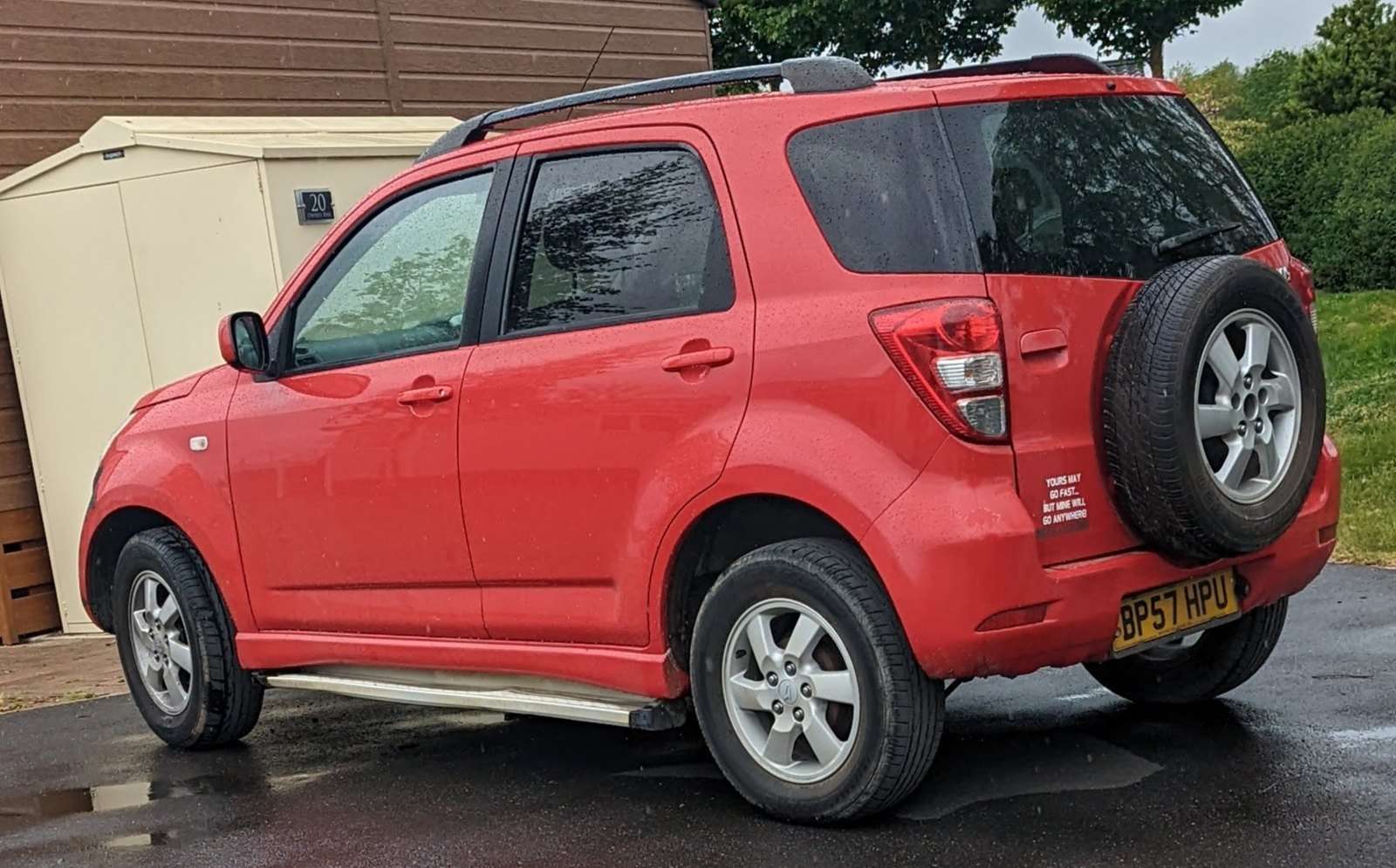
The second-generation Terios arrived in Britain in 2006 with a substantially wider body, longer wheelbase and a 1.5-litre petrol engine. It remained compact beside mainstream SUVs but no longer felt like a kei-derived curiosity. Cabin room, stability and equipment improved, while the side-hinged rear door and external spare wheel preserved the model’s recognisable outline.
| Generation | UK engine | Character |
|---|---|---|
| J100, 1997–2006 | 1.3-litre petrol | Very narrow, light, basic and manoeuvrable |
| J200, 2006–2010 UK era | 1.5-litre petrol | Wider, roomier and more settled on road |
Most UK J200s used full-time four-wheel drive, with a centre-differential lock provided for slippery surfaces on suitable versions. It is not a substitute for low range, and the lock must not be used on dry high-grip roads. Confirm the exact system and controls fitted to the individual car.
Love cars you don’t see every day?
Get forgotten cars, surprising motoring stories and the most interesting finds from Unusual Cars by email.
Free to join. No spam. Unsubscribe whenever you like. See our privacy policy.
Engines, cooling and service history
Start from cold, listening for chain or valvetrain noise and checking that warning lamps extinguish normally. Both generations need clean oil, a sound cooling system and evidence of regular servicing. Look for coolant staining around the radiator, expansion tank, pump and hoses, then run the engine fully warm and confirm the fan cycles.
Misfires, poor idle or engine-management lights can stem from ignition coils, plugs, sensors or air leaks. On the road, the engine should pull consistently rather than hesitate. A car used only for short journeys may have a tired exhaust and contaminated oil despite low mileage. Automatic cars need clean fluid and smooth engagement; manuals need a light, progressive clutch and clean gear selection.
Four-wheel drive, tyres and chassis
Four matching tyres with similar tread depth are essential. Persistent circumference differences load the centre differential and driveline. Listen for whining, rumbling or clunks from the transfer components, propshafts, differentials and wheel bearings. On a J200 with a lock control, verify engagement only on a suitable loose surface and make sure the warning indicator behaves correctly.
Inspect the front subframe or chassis structures, sills, floor, rear suspension mounts, arches and brake pipes for corrosion. Check steering joints, wishbone bushes, ball joints, anti-roll-bar links, dampers and springs. The car should track straight and remain composed; excessive hopping, wandering or tyre scrub is not simply part of the design.
Cabin, rear door and ownership reality
The side-hinged rear door is heavy because it carries the spare wheel. Inspect its hinges, latch, check strap and surrounding body for movement or cracking. Check the rear seal and load floor for water, then inspect roof rails, screen surrounds and door apertures. On the J100 especially, crash repairs can be difficult to hide around the narrow pillars and short overhangs.
Test air conditioning, windows, central locking, instruments, ABS and every warning lamp. Confirm the spare, jack and tools are present. Routine service parts can often be obtained through specialists, but Daihatsu-specific trim, lamps and four-wheel-drive components are becoming scarce. A complete car with an owner’s file is worth more than an apparently cheap example missing unique pieces.
Buying checklist
Identify the generation and 4WD system
J100 and J200 cars differ significantly, and the controls must be used correctly.
Check all four tyres as a set
Mismatched sizes or wear can damage or disguise faults in the four-wheel-drive system.
Inspect the heavy rear door
Look for hinge wear, body cracking, water leaks and a secure spare-wheel mounting.
Sources
- Daihatsu: Terios model history
- RAC Drive: first-generation Terios UK review
- Auto Express: second-generation Terios used review
- Top Gear: 2006 Terios introduction
Continue the Daihatsu story
Explore more inventive Japanese city cars, turbo hatchbacks and compact 4x4s in the complete Daihatsu hub.
Frequently asked questions
Was the Daihatsu Terios sold in the UK?
Yes. Both the first J100 generation and the larger J200 replacement were sold through British Daihatsu dealers.
What engines did UK Terios models use?
The first generation is principally associated with a 1.3-litre petrol engine, while the second generation used a 1.5-litre petrol engine.
Does the Terios have low-range gearing?
No. It offers four-wheel drive, and some J200 versions have a centre-differential lock, but it does not use a traditional low-range transfer box.
Which Terios generation is best?
The J100 is smaller and more characterful; the J200 is roomier, more stable and easier for regular road use. Condition is decisive.
What is the most important drivetrain check?
Use four correctly matched tyres and listen for noise or binding from the centre differential, propshafts and differentials.