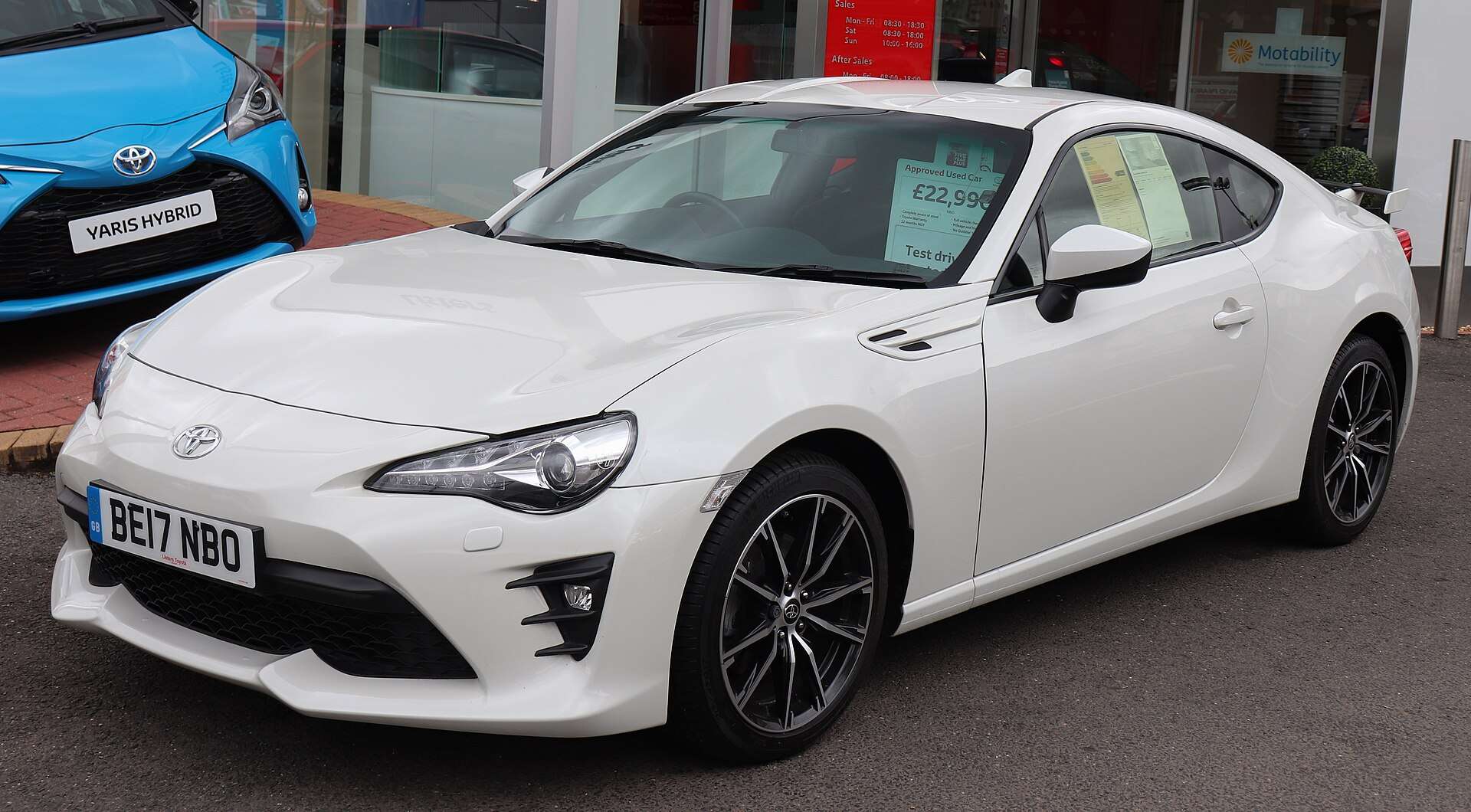
The first-generation Toyota GT86 and Subaru BRZ offer a compact rear-wheel-drive coupe with a naturally aspirated boxer engine and a choice of manual or automatic transmission. Their appeal is balance, response and involvement, rather than effortless low-rev turbo torque. Buying one well means judging its servicing, accident history and modifications as carefully as the way it looks. This guide covers the original 2.0-litre cars, not the later 2.4-litre GR86 or second-generation BRZ.
Our buying verdict
Choose a structurally sound, well documented car which starts from cold, runs consistently warm and has a credible history for engine, gearbox and differential maintenance. Verify recall status against the VIN through the appropriate manufacturer. A lightly used standard example can justify a premium, but standard appearance alone is not proof of gentle use. Price the next major service, tyres and any remedial work before comparing asking prices.

Versions and specifications
Toyota’s original launch material describes a 1,998cc naturally aspirated horizontally opposed four-cylinder engine, rear-wheel drive and either a six-speed manual or six-speed automatic. It quotes 197bhp and explains that D-4S uses separate port and direct injectors. The Subaru BRZ shares the core platform and engine architecture, but equipment, suspension specification and market details should be verified for the exact vehicle.
| Choice | Why it appeals | What to check |
|---|---|---|
| Early GT86 or first-generation BRZ | The original shape and often the lowest entry price | Build identity, complete servicing and manufacturer recall record |
| Facelift cars | Later appearance and detail changes | Actual build specification; later styling does not establish engine condition |
| Six-speed manual | Direct involvement and a conventional clutch | Cold/hot selection, clutch release, bearing noise and modification history |
| Six-speed automatic | Convenient daily use and paddle control | Correct transmission identity, fluid history, reverse and warm shift behaviour |
| Special editions or imported Toyota 86s | Distinctive equipment or provenance | Market specification, insurance, parts and genuine edition documentation |
Decide whether you want a standard road car, a carefully developed track car or a collector example. Many have received coilovers, exhaust manifolds, altered wheels, forced induction or replacement seats. Expensive additions do not necessarily add value for your purpose. Reverting a car to quiet, complete road specification may cost more than the included upgrades are worth to you.
Do not confuse a turbo or supercharger conversion with the factory naturally aspirated package. Ask for the engine build, calibration, fuel requirements, supporting cooling and drivetrain work, and an insurer’s acceptance of the exact specification. A headline power figure does not establish reliability. Equally, a standard car still needs a proper inspection.
Prices and market evidence
Car & Classic advertisements directly read on 4 November 2026 included a 2012 GT86 manual at £10,995 with 71,000 miles, a 2015 manual at £14,990 with 57,714 miles, a 2016 manual at £14,975 with 67,325 miles and a 2012 automatic at £15,950 with 40,000 miles. These are selected asking examples, not completed transactions, a representative survey or independent condition assessments.
The results also contained overseas cars, a kilometre-recorded example and a substantially modified wide-body car. They should not be combined indiscriminately into a UK standard-car value band. The pages checked did not establish a comparable current BRZ sample, so this guide does not invent a BRZ premium or discount.
Compare like-for-like vehicles and add immediate costs to the asking figure. A service invoice which includes spark plugs and differential oil can matter more than a lower odometer number with no explanation of due work. Inspect the whole car before accepting a seller’s description of “never tracked” or “no expense spared”. Those statements are difficult to prove and do not replace condition evidence.
For an unusual edition, establish which original equipment remains. A set of wheels, interior trim or a numbered plaque alone cannot establish provenance. Confirm any recorded damage, imported history and finance before travelling. A car with an attractive advertised price is not necessarily good value after body repairs, tyres and overdue servicing.

Bodywork, rust and accident checks
Match the VIN, registration and original data, then read the MOT chronology for mileage, tyre, corrosion and suspension patterns. Check recorded insurance damage and finance through suitable services. An unrecorded repair will not be discovered by a database alone. Arrange daylight viewing and a lift inspection rather than relying on flattering photographs.
Inspect sills, jacking points, chassis seams, subframes, suspension pickups, brake pipes and the rear underside. Check how road salt and storage have affected fasteners and components. A comparatively modern shell can still have corrosion or poor previous repairs. Fresh underbody coating should be supported by photographs showing the preparation and metal beneath it.
Look for paint differences, disturbed fasteners, uneven gaps, overspray and irregular seams around the front and rear structure. Examine the boot floor and accessible inner panels with permission. Replaced bumpers can follow a modest cosmetic incident, but unexplained deformation or persistent alignment problems warrant specialist assessment.
Inspect the lower front bumper, undertrays and exhaust for ground contact. On lowered cars, identify spring and damper brands, fitting quality and an alignment record. Check wheel inner barrels and tyre inner shoulders. Kerbing, cracks, poor wheel repairs and uneven wear can add substantial expense to a car which looks tidy from a few metres away.
Track use is not automatically disqualifying. Ask what maintenance accompanied it and inspect consumables, heat exposure, mounting points and repairs. A well maintained track-used car may be clearer to assess than an undocumented “road-only” example. The important issue is what remains worn, damaged or unsuitable for your intended use.
Engine, recall, gearbox and differential checks
Recalls and previous engine work
Ask specifically about previous valve-spring, cylinder-head or engine work, and obtain the complete invoice and manufacturer campaign record. Confirm applicability and completion by VIN with Toyota or Subaru; registration year and an owner-forum list are insufficient. Toyota’s current UK recall page provides a VIN or registration checker. The manufacturer should also explain any outstanding action and the appropriate booking process.
A record of completed work is valuable evidence, but does not certify the engine’s condition today. Read the date, mileage, parts and subsequent service history. If an engine has been replaced, verify its identity, source, installation and warranty. Ask a specialist to assess unexplained leaks, noise or warning lamps before attributing every symptom either to a recall or to normal boxer-engine character.
Oil level, cold start and warm running
Request a genuinely cold start. Observe warning lamps, idle, exhaust and any persistent metallic noise, then assess the engine again fully warm. Read oil invoices for specification, date and mileage. Clean oil at the viewing cannot establish the quality of maintenance over the car’s life.
Check oil level correctly and investigate significant consumption, coolant loss or evidence of overheating. A seller’s regular top-up is not a diagnosis. Never open a hot pressurised cooling system. Persistent knocking, an oil-pressure warning or substantial contamination needs professional investigation, not a longer demonstration drive.
Where use or symptoms justify it, commission additional diagnostic tests, including suitable pressure or engine-condition testing. A normal compression result alone is not a complete guarantee against every internal fault. Ask for a written conclusion which explains what was tested, the limits of the assessment and any further work recommended.
D-4S injection and misleading generic advice
The Toyota primary source confirms both port and direct injection. That matters when judging claims borrowed from direct-injection-only engines. Do not automatically prescribe expensive intake cleaning at a universal mileage simply because a website says that all direct-injection engines inevitably need it. Diagnose rough running, fuel trims, misfires and intake condition on the actual car.
Likewise, a misfire can involve ignition, fuelling, air leaks, wiring or mechanical condition. Read stored and pending faults and interpret them alongside a warm road test. A new coil or a cleared warning lamp is not proof that the cause has been resolved. Ask whether fault codes were cleared recently and why.
Timing system, cooling and supporting components
The FA20 has a timing chain rather than a routine cambelt replacement package. This does not make the complete timing system guaranteed for life. Unexplained chain-area noise or timing faults require specialist diagnosis; do not buy a chain kit as a preventive substitute for an inspection.
Inspect the radiator, hoses, fans, coolant condition and evidence of leakage. Assess the auxiliary drive, charging system and battery separately from the timing system. An alternator should be replaced after charging and wiring tests, not because the car needed a jump-start at the viewing.
On forced-induction conversions, establish how lubrication, fuelling and cooling were addressed and how the engine is calibrated now. A parts list or dyno sheet from several owners ago is insufficient. This guide does not promise a safe power level for every standard engine, nor prescribe a particular modification as universally necessary.
Manual gearbox, clutch and automatic
Try every manual gear from cold and repeat fully warm without forcing the lever. Investigate persistent crunching, jumping out of gear or abnormal whine. A cold-shift characteristic and a worn synchro are not interchangeable explanations. A specialist should distinguish the gearbox, clutch release, linkage and mounts where symptoms overlap.
Check clutch slip under normal load, pedal movement, hydraulic leaks and noises which change with pedal position. Establish whether the clutch, release components or flywheel have been changed, and which parts were installed. A very abrupt upgraded clutch can be an intentional compromise which may not suit daily use.
On an automatic, test reverse engagement, gentle manoeuvring, normal shifts and manual/paddle control, then repeat when hot. Obtain the correct service requirements for that gearbox and its actual history. An engine service does not automatically include automatic-transmission fluid work.
Differential, brakes and geometry
Inspect drivetrain leaks, boots, joints, mounts and differential behaviour. Ask which lubricant was used and when it was changed. A “limited-slip upgrade” claim needs clarification of what the original car had, what was fitted and why. Avoid aggressive public-road traction demonstrations as a substitute for mechanical inspection.
Check dampers, springs, bushes, joints and alignment. Tyres should suit the car, have sensible matching specifications and be in good condition on the inner edges as well as the visible shoulders. Very sticky tyres or a stiff track setup can change ride and running costs substantially.
Inspect discs on both faces, pads, calipers, hoses, fluid and parking-brake operation. Ask how often fluid and consumables were assessed if the car was tracked. The size of an aftermarket brake kit does not establish correct installation, balance or availability of future replacement parts.

Interior, electrics and everyday use
Test both keys, locks, windows, mirrors, lights, wipers, climate control and fitted infotainment. Check all warning lamps from ignition-on to running. A lamp which never illuminates should be investigated alongside one which remains on. Inspect any aftermarket wiring and establish that safety equipment remains correctly installed.
Check seats, bolsters, adjustment, belts, carpets and the boot for wear or damp. Replacement seats should have appropriate mountings and a clear explanation of safety-system integration. A tidy cabin can save time and money compared with a stripped car promised to be easy to return to standard.
Try your own driving position and rear-seat access. The small rear seats and low coupe seating are not equivalent to a practical family hatchback. Test boot space with your likely luggage requirements and consider whether exhaust noise, clutch weight and suspension firmness suit the journeys you will actually make.
Small faults can accumulate. A non-functioning window, intermittent lock and weak air conditioning should not each be assumed to require a trivial part. Include diagnosis and labour in the purchase budget and ask for a clear explanation where water ingress accompanies electrical problems.
Maintenance costs and useful parts
Affiliate disclosure: The eBay links below use our campaign 5339238906. We may earn a commission on qualifying purchases. They open vehicle-specific searches, not vetted products or guaranteed-fitment recommendations. Check VIN, engine, build date, component numbers, seller terms and the workshop’s requirements before ordering.
Tuning Developments’ directly checked sixth-year/60,000-mile service was £549 including VAT. Its listed work includes engine oil and filter, sump washer, rear differential oil, brake fluid and spark plugs. The page also mentions a reduced £529 price for an existing performance air filter, although the visible main list does not clearly itemise an air-filter replacement. Confirm the complete current scope and eligibility rather than silently adding work to the package.
This is one specialist’s fitted service example, not a national tariff or a substitute for the exact manufacturer schedule. Spark-plug parts prices alone do not capture access and labour on a boxer engine. Ask for a written quote showing what is due by age and mileage, including gearbox or automatic servicing separately where appropriate.
| Item | What to establish | Compare availability |
|---|---|---|
| Oil and filter | Confirm the vehicle-appropriate specification and dated service record | Oil and filter on eBay |
| Spark plugs | Match the exact application and quote access/labour separately | Spark plugs on eBay |
| Alternator | Diagnose battery, output, wiring and auxiliary drive first | Alternator on eBay |
| Timing-chain components | Only after diagnosis; not a routine cambelt service | Timing-chain components on eBay |
| Cooling parts | Locate the leak or fan/thermostat fault before choosing components | Cooling parts on eBay |
| Clutch and release parts | Quote the complete diagnosed job, including hydraulics and labour | Clutch and release parts on eBay |
| Gearbox and differential service | Use correct fluids for the actual transmission and differential | Gearbox and differential service on eBay |
| Brakes | Identify standard or upgraded caliper/disc application | Brakes on eBay |
| Suspension | Inspect wear and geometry before ordering upgrades | Suspension on eBay |
Obtain written estimates which separate diagnosis, parts, labour, fluids, tax and delivery. A parts price is not a fitted repair bill. Agree how additional work discovered during dismantling will be authorised, and retain invoices showing date, mileage and the actual specification used.
At purchase, prioritise structure, tyres, brakes, leaks and overdue maintenance before cosmetic or performance upgrades. Where servicing is unproven, budget for a baseline inspection and the work it identifies. Confirm manufacturer requirements for the exact vehicle rather than relying on a timetable borrowed from a related model.

Hidden ownership costs
The asking price is only the beginning. Include these less obvious expenses when deciding which example offers value.
- Major-service overlap: plugs, brake fluid and differential oil can fall due together. Compare full packages, not only an oil-change price.
- Modified-car reversals: restoring road-friendly suspension, quiet exhausts, correct seats and emissions equipment can outweigh the value of the upgrades.
- Geometry and tyres: alignment work may expose seized hardware or worn joints, and a set of suitable tyres is part of making the car usable.
- Track preparation: inspection, fluid changes, brakes and tyres are recurring expenses; a track history without supporting maintenance is incomplete.
- Engine diagnosis: a reassuring warm idle does not resolve a cold noise or past oil-pressure concern. Budget for an appropriate independent assessment.
- Imports and special editions: correct lamps, trim, documentation and insurance can add work beyond the headline purchase price.
Get an insurance quote for the actual specification before committing, including modifications. Check current vehicle tax against the exact registration, and allow for inspection, recovery or collection, secure storage and the first year’s due work. Long periods of storage do not stop tyres, fluids, seals or corrosion ageing.
Viewing checklist: from first enquiry to decision
Before travelling, request the registration and VIN, service invoices, MOT chronology, modification list and confirmation that a cold start and independent inspection are welcome.
- Verify VIN, build, gearbox, service chronology and current recall status with the correct manufacturer.
- View cold in daylight, assess fluids, warning lamps, idle and smoke, and read diagnostic faults.
- Inspect underside corrosion, lifting damage, structural repairs, wheel inner barrels and tyre shoulders on a lift.
- Road-test cold and hot gear selection or automatic behaviour, clutch operation, drivetrain noise, brakes and steering at legal speeds.
- Establish original equipment and every modification, with invoices and insurer acceptance.
- Check the major-service invoice for plugs, brake fluid and differential oil, and price outstanding work in writing.
- Test all fitted cabin equipment, keys and safety systems; assess practicality and noise for your real use.
Proceed when identity, condition and records agree. Investigate unexplained noises, warning lamps, leaks and gaps before paying. Walk away from concealed identity, serious unresolved structural concerns or refusal of an appropriate inspection. A discount does not define the upper limit of an unknown repair.
Buying questions answered
Should I choose a GT86 or BRZ?
Compare the actual cars, specification, service evidence and condition. Their shared core architecture does not mean every trim, suspension detail or market specification is identical. A better maintained example is usually a stronger starting point than a preferred badge with unresolved faults.
Is there a routine timing-belt change?
The FA20 timing drive uses a chain. It still requires diagnosis if there are noises or timing faults; a chain is not a lifetime condition guarantee.
How much is the major service?
The checked Tuning Developments sixth-year/60,000-mile package was £549 including VAT, listing plugs, differential oil and brake fluid alongside engine servicing. Confirm the current scope and what your individual car needs.
Does the engine use direct injection only?
No. Toyota’s D-4S description specifies both port and direct injectors. Diagnose intake or running issues before adopting universal cleaning advice written for another engine design.
How do I check recall completion?
Use the appropriate manufacturer’s VIN-based records and obtain confirmation of completed and outstanding work. A registration year, forum list or verbal seller assurance does not establish eligibility or completion.
Sources and research method
Researched on 4 November 2026 using the manufacturer, workshop, supplier and market pages listed below. Manufacturer material establishes specification; workshop accounts inform inspection priorities; supplier listings show dated costs and availability. Advertised prices are asking prices, not sold values or independent condition reports.
- Toyota: original GT86 launch engineering — Primary evidence for 1,998cc boxer engine, 197bhp, port-plus-direct D-4S injection and manual/automatic choice.
- Tuning Developments: year-six/60,000-mile service — £549 including VAT and listed service scope checked 4 November 2026; package ambiguity noted rather than inferred.
- Toyota UK recall checker — Official VIN/registration checking route; no individual vehicle eligibility asserted.
- Car & Classic: GT86 advertisements — Dated UK asking examples; overseas, substantially modified and unchecked historic sale cards excluded from valuation claims.
Also use the GOV.UK used-car checks and MOT history service. Verify current recall completion with the manufacturer against the VIN. These checks cannot certify the condition of an individual vehicle.
This is a research-based buying guide, not a report of a first-hand test of the cars advertised. Prices, parts and availability change; confirm quotes and fitment. An independent inspection should resolve vehicle-specific concerns before purchase.