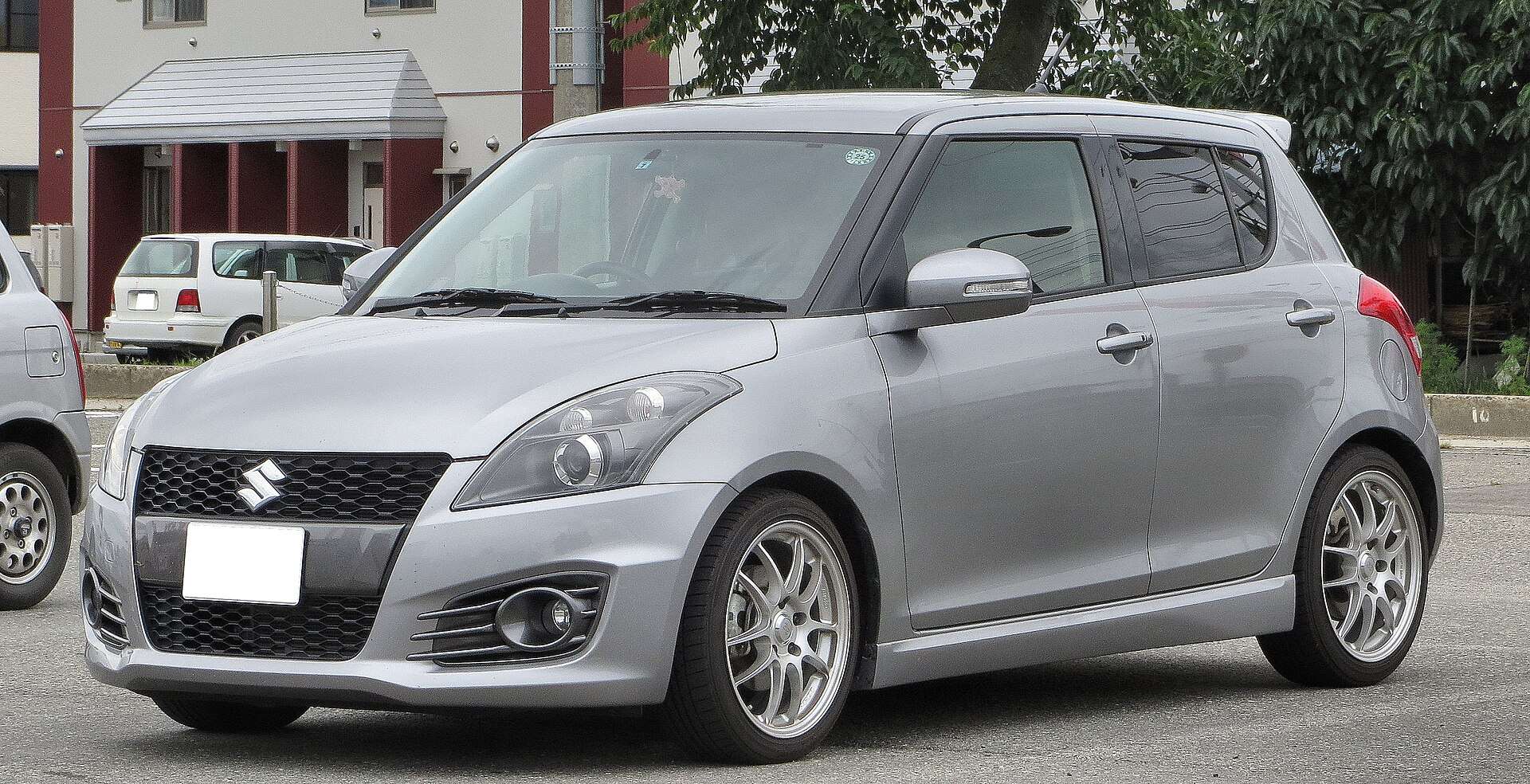
The naturally aspirated Suzuki Swift Sport ZC32S offers compact dimensions, a six-speed manual gearbox and performance that can be enjoyed without chasing a large power figure. It is a strong used-buying candidate for someone who wants a practical small enthusiast car, but its reputation must not replace an inspection. This guide covers the UK 2012–2017 1.6-litre generation, with clear distinctions from the earlier five-speed Sport and later turbocharged Boosterjet cars.
Our buying verdict
Our starting recommendation is a relatively standard ZC32S with consistent service invoices, a sound underside, clean gear selection and suitable matched tyres. Choose three or five doors to suit your use. Pay more attention to rust, repairs and deferred maintenance than cosmetic modifications. A well-kept high-mileage car may be a better buy than a low-mileage example with patchy records, but both need the same basic checks.

Identify the right Swift Sport generation
Suzuki’s UK model dossier identifies a 1.6-litre M16A petrol engine producing 100 kW/136 PS and 160 Nm, with a six-speed manual gearbox. The three-door went on sale in January 2012; the five-door joined in July 2013. Suzuki added navigation and DAB equipment to the UK standard specification in 2014.
Those details are useful identifiers. The earlier ZC31S Sport and the later ZC33S Boosterjet are different cars with different parts and maintenance needs. A broad marketplace search for “Swift Sport” can return components for all three. Confirm the VIN, engine and generation before ordering, and establish original market on an imported car.
| Choice | Why it matters | What to check |
|---|---|---|
| ZC32S 1.6 M16A | The naturally aspirated generation covered here | VIN/engine identity and six-speed UK specification |
| Three-door | A compact appearance and broad early supply | Long-door access, seat mechanisms and whether rear access suits you |
| Five-door | Easier access for passengers and daily use | Door and lock operation, seals and complete equipment |
| Later UK equipment | Navigation/DAB may improve usability | Actual fitted system and function; do not infer equipment solely from registration |
| Imported or modified car | May be a valid alternative with different specification | History, transmission, equipment, insurance and part compatibility |
The UK dossier lists automatic air conditioning, keyless entry/start, cruise control, HID projector headlamps with washers and a 17-inch wheel package. Its standard tyre size is 195/45 R17. Use those as original UK references, not a guarantee of what remains on a used car. Replacement wheels and tyres need their own fitment and condition assessment.
An advert for an automatic or CVT should prompt a check of origin and exact model. The UK ZC32S specification described by Suzuki is six-speed manual. An imported transmission choice should be assessed on its own documentation and service needs rather than folded into UK manual advice.
Which one would we choose?
For everyday use, a standard five-door with invoices and healthy consumables is a particularly useful starting point. A three-door is equally worth considering if access works for you. The condition of the actual car matters more than our body-style preference or an assumption that later equipment always makes a better purchase.
Try the seats, steering position, visibility and luggage space. Take a representative legal-speed drive that includes the roads you use. The six-speed gearbox helps the overall package, but a small performance hatch can still feel different from a larger commuter on a long motorway trip. Choose it for your routine as well as its reputation.
Swift Sport ZC32S prices and market evidence
On 4 November 2026, the Car & Classic Swift Sport page showed a UK 2013 1,586 cc six-speed manual at 71,017 miles asking £5,499. A later 2023 1.4 hybrid Boosterjet was also present, but it is a different generation and is not a comparator for this guide.
A separate 2012 ZC32S advert described a modified car with Bilstein B14 suspension, approximately 100,000 miles, an asking figure of £3,500, visible rust and a damaged front skirt. The page explicitly states that the advert has been removed through sale or otherwise. It is a historic advertised example, not live stock or proof that £3,500 was achieved.
That distinction matters. A search result can look current while its underlying page is withdrawn, and an attractive price may come with disclosed bodywork or suspension changes. This limited sample cannot support a reliable national valuation band, a measured five-door premium or a depreciation forecast.
Compare cars with the same generation, origin and transmission, then account for repairs and preparation. New tyres, brake work, corrosion repair, overdue fluids and a clutch complaint can consume the saving on a cheaper advert. A higher price needs evidence of condition and work rather than a seller’s confidence alone.
Prepare a first-year total before negotiating: inspection, purchase, exact-registration tax and insurance, immediate work, scheduled servicing and a reserve. Keep the reserve available after purchase. A reputation for straightforward ownership is useful context, not protection against an individual neglected car.
Rust, underside and accident repairs
Match the VIN and registration documents, establish ownership, review MOT mileage and advisories and arrange a provenance check for finance, theft and insurance history. Imported cars need their original records and mileage units reconciled too. A valid MOT is not an accident-repair certificate or proof that inaccessible metal is sound.
Inspect the sills, jacking areas, floor seams, subframe areas, rear beam, suspension mounts and brake pipes on a lift. Look for corrosion, impact damage, crushed lifting points and fresh coating that prevents assessment. Age, road salt, storage and previous repairs matter even when the car looks tidy from above.
Distinguish surface corrosion on a removable part from structural corrosion at a mounting area. Ask for photographs and a repair scope that includes access, parts, welding if required, paint/protection and reassembly. A small patch seen at the edge of an arch can need a more extensive repair once the affected material is exposed.
Compare paint texture, panel gaps and colours in daylight. Inspect bonnet and wing fixings, lamp mounts, door shuts and the boot floor. Check lower bumpers and skirts for kerb or grounding damage, especially on lowered cars. A repair that looks presentable still needs assessment of the structure and attachment points.
Inspect inner wheel faces and tyre wear, and investigate pulling, vibration or an off-centre steering wheel. A geometry printout is useful alongside physical inspection; it cannot replace it. Do not assume that a car with replacement coilovers simply needs tracking to behave correctly.
Check doors, seals, tailgate and cabin for water ingress. Damp carpets, staining or a musty smell need a traced source and an estimate for drying or electrical consequences. Open and close all fitted doors, operate locks repeatedly and check that the boot release works consistently.

M16A engine and six-speed gearbox checks
Cold starting, service history and oil
Arrange a genuine cold start. Check oil level using the correct procedure and review invoices for oil specification, filters, dates and mileage. A service-book stamp may not show what was supplied. Consistent calendar-based attention is valuable even when annual mileage is modest.
Listen for persistent abnormal mechanical noise, observe smoke and check idle quality and warning lights. A pre-warmed demonstration provides less information. Ask about top-ups and the distance between them; one short drive cannot establish oil consumption over a longer period.
The M16A uses a timing chain, so a routine cambelt change is not the normal maintenance item. That does not make it immune to wear or remove the need for correct oil servicing. Investigate abnormal timing noise or relevant faults with a Suzuki specialist rather than buying a chain kit simply because the car has reached a particular mileage.
Misfires, hesitation or an uneven idle need diagnosis. Ignition, air leaks, fuel delivery, sensors, timing and compression can produce overlapping symptoms. A fault code is a starting point, not an instruction to replace the named component. If symptoms justify further testing, agree its scope and interpretation with the inspector.
Cooling, leaks and auxiliary drive
Inspect coolant when cold, hoses, radiator area, pump-related connections and dried traces. During a normal drive, observe temperature behaviour and heater operation. Inspect again when warm without opening a hot cooling system. Recurrent loss or an overheating history needs a traced cause and appropriate follow-up checks.
Inspect for oil leaks around the engine and beneath it after a drive. A freshly cleaned engine should be checked again. Ask whether the diagnosis identifies the source or only the place where fluid collects. An inexpensive seal can still involve significant access and cleaning.
Check the auxiliary belt, pulleys and tensioning arrangements. These are separate from the engine’s timing chain. A charging complaint should begin with battery condition, output, cables and connections; it should not automatically become an alternator purchase. Match any replacement to the exact engine and electrical specification.

Clutch, gearbox and drivetrain
Test the six-speed gearbox cold and fully warm, including reverse and normal changes through each gear. Do not force a reluctant shift. Suzuki’s dossier describes the transmission’s model-specific design, but its original shift quality is not evidence about a particular used gearbox’s condition.
Assess clutch take-up, pedal behaviour and signs of slipping under normal load. Listen for noises that change with clutch position, engine speed or road speed. A specialist should distinguish clutch/release, gearbox, mounts and wheel-bearing concerns before quoting. The cheapest clutch kit is not an installed repair budget.
Investigate clunks and vibration rather than accepting them as inherent to a Sport. Check mounts and driveshaft-related components during the lift inspection. Modified mounts or a lightweight flywheel can alter noise and vibration, so establish what has been fitted and whether the character suits your use.
Ask about gearbox-fluid servicing and leaks, and obtain the correct fluid specification and level procedure for the actual unit. A fluid change can be sensible maintenance but is not a guaranteed cure for worn internal parts. Poor operation that improves after warming still deserves diagnosis.
Suspension, brakes and tyres
Inspect dampers, springs, mounts, bushes, links, joints and wheel bearings. Suzuki’s Sport specification includes chassis changes from the normal Swift, so a general Swift listing is not enough to prove an equivalent part. Check compatibility by VIN and installed components.
On a lowered or coilover-equipped car, check installation, adjustment, clearance, corrosion on threaded parts and alignment evidence. Ask whether original parts are included and usable. The cost of returning to standard may include springs, dampers, mounts, fixings and labour rather than a simple afternoon’s swap.
Inspect brake discs on both faces, pad wear, caliper operation, hoses and parking brake. Confirm the correct disc/caliper specification before ordering. A brake quote may need seized-hardware or caliper work as well as friction parts, particularly where the car has spent long periods standing.
The original UK tyre size is 195/45 R17. Check the tyres actually fitted for suitable specification, matching, age and condition. Inspect inner rims for damage. Tyres and geometry are central to the car’s appeal; a set of unrelated worn tyres can make a sound chassis feel disappointing and create an immediate expense.
Modifications and track use
Obtain invoices for intake, exhaust, software, suspension, brake and engine changes. Confirm insurance acceptance and road-use compliance. More expensive hardware is not automatically better for your driving, and a claimed power gain is not evidence of reliable calibration.
Track use should prompt questions about preparation and maintenance rather than an automatic verdict. Inspect consumables, mounting areas, cooling and repairs, and check the security of seats and belts if changed. A carefully maintained car can be easier to assess than an undocumented one described as standard.
Interior, electrics and everyday equipment
Inspect seat bolsters, adjusters, mountings and rear-access mechanisms on a three-door. Check belts and the normal warning-light sequence. Wear should be considered with the mileage history, allowing for legitimate replacement parts. A retrim improves appearance without proving the condition of the underlying structure.
Test keyless entry and start with both keys, locks, windows, mirrors, lights and wipers. Check the HID system and washers where fitted, and assess any aftermarket lighting carefully. A failed original lamp can involve more than a cheap bulb, so obtain an exact diagnosis and quote.
Test air conditioning, fan speeds, cruise control, audio, Bluetooth and navigation/DAB where fitted. Use your own phone and check operation after a restart. A correctly functioning older system may still need an upgrade for your use; evaluate installation quality and integration before buying an aftermarket replacement.
A suitable diagnostic scan should be interpreted alongside the physical inspection. Recently cleared faults and a dark dashboard are not proof of completed repairs. Battery, charging and wiring checks can be more useful than speculative replacement of expensive modules.

Maintenance costs and useful parts
Affiliate disclosure: The eBay links below use our campaign 5339238906. We may earn a commission on qualifying purchases. They open vehicle-specific searches, not vetted products or guaranteed-fitment recommendations. Check VIN, engine, build date, component numbers, seller terms and the workshop’s requirements before ordering.
On 4 November 2026, CTC Performance displayed its ZC32S M16A oil-service kit at £79.44, listing 4 litres of Motul Eco-Lite 0W-20, an oil filter and an air filter. The page did not clearly establish VAT treatment, and its store banner reported a temporary closure until mid-November, so confirm the current total and dispatch date. This is parts-only and its 4-litre bottle is not a refill instruction.
Sims Suzuki’s dealer listing displayed £53.19 including taxes for oil, filter and sump washer, with shipping calculated separately. Its wording specifies 2015-onwards 1.6 petrol applicability, so confirm an earlier ZC32S by VIN. It does not include the same contents as the CTC kit. Compare Swift Sport ZC32S service kits item by item and follow the applicable handbook oil specification and quantity.
| Item | What to establish | Compare availability |
|---|---|---|
| Oil and filter kit | Correct approval, quantity, filter and washer; distinguish parts from labour | Oil and filter kit on eBay |
| Air and cabin filters | Check which filters a kit includes and match model | Air and cabin filters on eBay |
| Spark plugs and coils | Correct M16A specification; diagnose misfire first | Spark plugs and coils on eBay |
| Alternator and battery | Charging test and exact output/pulley/connection match | Alternator and battery on eBay |
| Auxiliary belt | Separate from timing chain; inspect related pulleys | Auxiliary belt on eBay |
| Timing components | Chain engine: symptom-led assessment rather than routine cambelt replacement | Timing components on eBay |
| Cooling parts | Trace leaks or temperature faults; include coolant/testing | Cooling parts on eBay |
| Clutch and release components | Match gearbox and obtain a complete fitted quote | Clutch and release components on eBay |
| Brakes | Actual Sport caliper/disc compatibility and caliper condition | Brakes on eBay |
| Suspension and bearings | Sport-specific fitment; include mounts and geometry | Suspension and bearings on eBay |
Obtain written estimates which separate diagnosis, parts, labour, fluids, tax and delivery. A parts price is not a fitted repair bill. Agree how additional work discovered during dismantling will be authorised, and retain invoices showing date, mileage and the actual specification used.
At purchase, prioritise structure, tyres, brakes, leaks and overdue maintenance before cosmetic or performance upgrades. Where servicing is unproven, budget for a baseline inspection and the work it identifies. Confirm manufacturer requirements for the exact vehicle rather than relying on a timetable borrowed from a related model.
Hidden ownership costs
The asking price is only the beginning. Include these less obvious expenses when deciding which example offers value.
- Tyres and wheels,Suitable matched 17-inch tyres, rim repairs and alignment can create a sizeable immediate bill.
- Rust repair scope,A visible arch blemish or coated underside needs assessment of the affected metal, not just a cosmetic quote.
- Returning a modified car to standard,Allow for complete compatible suspension, mounts, fixings and labour rather than assuming stored old parts are serviceable.
- HID lighting and keys,Original lighting hardware, washers and replacement keys can matter financially even when the engine is healthy.
- Service-kit differences,Oil/filter kits and more complete filter packages are not equivalent; check taxes, delivery, fitment and labour.
- Deferred small jobs,Brakes, fluids, battery, air conditioning and minor electrical faults can add up to more than the saving on the cheapest advert.
Get an insurance quote for the actual specification before committing, including modifications. Check current vehicle tax against the exact registration, and allow for inspection, recovery or collection, secure storage and the first year’s due work. Long periods of storage do not stop tyres, fluids, seals or corrosion ageing.
Viewing checklist: from first enquiry to decision
Before travelling, request the registration and VIN, service invoices, MOT chronology, modification list and confirmation that a cold start and independent inspection are welcome.
- Obtain VIN, ZC32S/M16A identity, market origin, service invoices and modification list before travelling.
- Verify ownership, provenance and MOT mileage, and distinguish live stock from withdrawn search results.
- Inspect sills, lifting areas, floor, rear beam, pipes, suspension mounts and accident repairs on a lift.
- Start cold, inspect fluids and leaks, observe idle and smoke and arrange diagnostic work where concerns justify it.
- Test normal power delivery and cooling; stop and investigate warning lights or overheating.
- Assess clutch and all six gears cold and hot, plus mounts, bearings, brakes, tyres and wheel inner faces.
- Check seat access, keyless operation with both keys, lighting, washers, climate control and infotainment.
- Obtain itemised immediate and upcoming costs, then compare the prepared total with another documented car.
Proceed when identity, condition and records agree. Investigate unexplained noises, warning lamps, leaks and gaps before paying. Walk away from concealed identity, serious unresolved structural concerns or refusal of an appropriate inspection. A discount does not define the upper limit of an unknown repair.
Buying questions answered
Which Swift Sport does this guide cover?
The ZC32S generation sold in the UK from 2012 to 2017, with a naturally aspirated 1.6 M16A and six-speed manual. Earlier ZC31S and later turbocharged ZC33S cars need different advice.
Does the ZC32S have a cambelt?
The M16A uses a timing chain. Maintain the correct oil service and investigate abnormal noise; routine cambelt replacement is not the normal scheduled item.
Is the five-door less worth considering?
No. It offers easier rear access and the same core UK powertrain proposition. Condition, history and your practical needs should drive the choice.
Can I use any Swift Sport service kit?
No. Confirm generation, VIN, oil approval and contents. Listings can cover different engines and years; bottle size is not the engine’s refill quantity.
What would make you walk away?
Unresolved identity issues, structural corrosion, serious running or gearbox faults, or a repair total that exhausts the budget. A model’s reputation does not clear an individual car.
Sources and research method
Researched on 4 November 2026 using the manufacturer, workshop, supplier and market pages listed below. Manufacturer material establishes specification; workshop accounts inform inspection priorities; supplier listings show dated costs and availability. Advertised prices are asking prices, not sold values or independent condition reports.
- Suzuki UK: Swift Sport 2012–2017 dossier — Primary M16A, gearbox, body introduction dates, UK equipment and tyre-size evidence.
- CTC Performance: M16A ZC32S oil-service kit — Dated displayed price and contents; taxes, dispatch and fitment require confirmation.
- Sims Suzuki: genuine service kit — Tax-inclusive displayed parts price, contents and 2015-onwards wording; not a universal earlier-car guarantee.
- Car & Classic: Swift Sport listings — One live UK ZC32S asking example; later Boosterjet excluded.
- Car & Classic: withdrawn modified 2012 Swift Sport advert — Historic asking figure and disclosed defects, explicitly not live stock or an achieved sale value.
Also use the GOV.UK used-car checks and MOT history service. Verify current recall completion with the manufacturer against the VIN. These checks cannot certify the condition of an individual vehicle.
This is a research-based buying guide, not a report of a first-hand test of the cars advertised. Prices, parts and availability change; confirm quotes and fitment. An independent inspection should resolve vehicle-specific concerns before purchase.