The FK2 was the Civic Type R’s decisive move into turbocharged performance, combining a practical five-door body with a six-speed manual and serious chassis hardware. It is now old enough that history, wear and modification quality matter more than its reputation when new. This UK guide covers the 2015–2016 generation, allowing for later registrations, and keeps it separate from FN2, FK8 and FL5 advice.
Our buying verdict
Choose a documented, well-inspected car whose gearbox, cooling, brakes and adaptive suspension work properly. A standard or carefully specified example is usually easier to assess than one with unexplained software and hardware changes. GT equipment can add daily convenience, but do not trade mechanical condition for a desirable colour, a low odometer reading or a long modification list.

FK2 versus other Type Rs, and standard versus GT
Honda’s 2015 UK factory press kit describes a five-door, four-seat, front-wheel-drive Type R with a 2.0-litre direct-injection turbo engine, 310PS and 400Nm. It uses a six-speed manual and helical limited-slip differential. These facts identify a substantially different proposition from the earlier naturally aspirated FN2, even when both are advertised with the same red badges.
| Choice | Why it matters | Buying check |
|---|---|---|
| FK2 Type R | Turbo K20C1, manual and front-wheel drive | VIN, build, original specification and current calibration. |
| GT package | Additional convenience and assistance equipment | Test the fitted systems; badges do not prove the package. |
| Standard adaptive suspension | Factory damping and +R operating mode | Normal operation, leaks, warning codes and actual road comfort. |
| Original 19-inch wheels | Low-profile tyres and specific brake clearance | Damage, tyre specification and quality of any replacements. |
| Modified / imported example | Hardware, software and equipment may differ | Documentation, mapping, insurer acceptance and parts compatibility. |
Confirm production and original market from the VIN rather than using a late registration to assume FK8 identity. Engine-family parts shared with later cars are not automatically identical fitments. A seller’s “stage one” description tells you little without the named calibration, fuel requirement and hardware list.
Try the seats, rear access and ride on the actual car before deciding. Honda’s original chassis includes adaptive dampers, dual-axis front suspension and a torsion-beam rear layout. Do not assume that an aftermarket coilover conversion retains the original functions, or that a warning-cancellation device proves the replacement setup is well engineered.
UK price evidence: two relevant advertised examples
Checked 4 November 2026. PistonHeads displayed 56 Civic Type R adverts across many generations. Relevant visible FK2 descriptions included a 2016 GT with 83,368 miles at £17,498 and a 2017-registered GT advertised with 310PS and 38,500 miles at £20,989. These are asking prices, not completed transactions; the later registration particularly needs build/VIN confirmation.
The page also reported a 2015 FK2 ex-Mugen demonstration car sold at £22,250 on 21 October 2024 with 24,000 miles. That is a historical, unusually specified platform-reported result, not a present valuation for a standard car. Auction fees, condition and provenance need separate checking.
Do not mix FN2, FK8 and FL5 advertisements into one Type R price range. Compare like specification, mileage, ownership, accident history and service evidence. A useful comparison adds immediate tyres, brakes, suspension and service work to the asking price rather than rewarding whichever car has the cleanest engine-bay photograph.
Obtain insurance terms for the exact car and modifications, and an independent inspection before a deposit. A low-mileage car can still have old fluids, damaged wheels or heavy track wear. The visible sample is too small to justify a universal price premium for GT trim, colour or model year.
Bodywork, rear axle and underside inspection
Inspect low splitters, side skirts, wheel-arch extensions, undertrays and cooling openings. Scrapes and broken fixings may be cosmetic, but missing ducting and poor repair quality deserve attention. Compare panel gaps, paint texture, lamp brackets, front structure and boot floor for collision repairs.
Have the underside checked on a lift, including rear axle/beam condition, mounts, brake pipes, jacking points and exposed fasteners. A ten-year-old performance car still needs a corrosion assessment even when the upper body looks clean. Ask what an earlier coating or refurbishment covered and whether structural concerns were addressed before refinishing.
Check hatch seals, boot-floor areas, carpets and headlining for water marks. Operate locks, windows, rear washer/wiper and heated glass. Modified spoilers, bonnets and lamps should be described honestly and inspected for fit, fixings and water sealing. An attractive exterior conversion does not establish original equipment or repair quality.

Engine, cooling, gearbox and adaptive chassis checks
Insist on a genuinely cold start, then a fully warm drive and hot restart. Observe idle, exhaust smoke, temperature behaviour and warning lamps and inspect for leaks afterwards. Obtain a Honda-capable diagnostic scan and ask about recently cleared faults. A car with a clean dashboard can still need investigation of misfires, coolant loss or poor boost control.
The K20C1 uses a timing chain rather than a scheduled cambelt. Oil specification, service evidence and investigation of unusual timing noise remain important. Do not confuse an auxiliary-belt invoice with internal timing work. Ask a Honda specialist for the correct time-and-mileage service plan, including plugs, fluids and any scheduled inspection requirements for the specific build.
Inspect radiator and intercooler condition, cooling fans, hoses, reservoir and the integrity of airflow ducting. Honda devoted considerable factory engineering to thermal management. For a car with track history or higher output, ask what was changed, why and whether data or inspection confirms satisfactory operation. Extra cooling hardware is not proof that earlier overheating caused no damage.
Check turbo and charge-system plumbing, oil leakage and the quality of intake/exhaust installations. Uneven boost or reduced power needs diagnosis before assuming that a sensor or a map will fix it. Establish the exact software, fuel requirement and supporting components. A lower advertised power number or a return to standard appearance does not document how the car was previously used.
Test all six gears and reverse with the gearbox cold and fully warm. Look for baulking, crunching, slipping, clutch judder and noises that change with pedal position. Ask about correct gearbox fluid and any previous clutch or gearbox work. A promise that new oil cures a selection fault should be verified by a specialist before purchase.
Inspect the dual-axis front suspension, joints, bushes, damper condition and steering for play, leaks and poor repairs. Confirm normal adaptive-damping and +R operation without warnings. Knock diagnosis matters: replacing an anti-roll-bar link will not cure a worn joint elsewhere. Identify any damper conversion and what functions it changes.
Give the rear beam, bushes, underbody and brake hardware specific attention. Dream Automotive’s own rear-axle refurbishment page describes corrosion treatment and warns that seized caliper bleed nipples, heatshields and other corroded components can expand the scope. That is a reason to inspect the individual car, not a claim that every FK2 needs the same restoration package.
Inspect brakes for disc condition, pad life, even operation and evidence of excessive heat. Check wheel damage, tyre age, suitable specification and uneven wear. Honda’s original 19-inch/235/35 tyre setup carries real replacement costs; alternative wheels need appropriate clearance and fitment. Worn suspension should be repaired before alignment.
Cabin, GT equipment and four-seat practicality
Check the sports seats for bolster damage and secure adjustment, the steering wheel and gear knob for wear and the cabin for untidy wiring. Test air conditioning, windows, mirrors, locks, both keys, parking equipment and any GT assistance functions. Original infotainment may feel dated, but an aftermarket screen still needs a complete functional and installation check.
Confirm the rear seating arrangement and try access and luggage loading with your passengers. The five-door body is practical, but this Type R is a four-seater. Check folding-seat operation, load-floor trim, tools and locking-wheel key. Inspect carpets and the boot for dampness and investigate water entry before accepting that cleaning explains it.
Test the ride on the roads you actually use, in the normal setting as well as +R where appropriate. A car can be mechanically sound and still be too firm or noisy for your daily use. Tyres, wheel damage, aftermarket mounts and suspension changes can influence that impression as much as the original design.

Maintenance costs and useful parts searches
The figures below are editorial planning allowances for parts only, unless a fitted service is explicitly identified. They are not live eBay quotes: brand, specification, availability, delivery and VAT treatment vary. Obtain a registration/VIN-matched written estimate before committing to a repair. Cheap search results can include incompatible parts, deposits or single components rather than a complete kit.
Affiliate disclosure: the parts searches below use our eBay affiliate campaign. We may earn a commission if you buy, at no additional cost to you. Search results are not a recommendation of every seller or product; verify fitment, maker, returns and warranty.
| Maintenance item | Parts allowance / search | What to check |
|---|---|---|
| Oil/filter service parts | £50–£95 | Correct Honda specification and quantity; labour extra. |
| Air and cabin filters | £25–£65 | Verify original or modified intake. |
| Four spark plugs | £45–£100 | Correct specification for the engine and calibration. |
| Auxiliary belt | £20–£50 | Separate from the timing chain; inspect pulleys and tensioner. |
| Alternator | £200–£450 | Verify exact unit, output, remanufactured terms and deposit. |
| Manual gearbox oil | £30–£65 | Correct specification/quantity and procedure; not a repair for worn internals. |
| Front discs and pads | £240–£500 | Check original Brembo setup versus conversions and pad suitability. |
| Rear discs and pads | £90–£190 | Inspect calipers, bleed nipples and handbrake operation. |
| Clutch kit | £250–£500 | Flywheel, hydraulics and fitting may be additional. |
| Front suspension link parts | £35–£90 | Diagnose the noise; verify exact application and quantity. |
The ranges are parts planning allowances, not workshop quotes. Adaptive dampers, turbo repairs and gearbox work should be individually diagnosed and quoted, including VAT, labour, fluids and any coding or calibration. Routine servicing and an underbody restoration package are different scopes.
Use the correct Honda time-and-mileage schedule and keep invoices for oil, plugs, gearbox and brake-fluid work. Low mileage does not stop fluid or rubber ageing. Ask what the latest “major service” included rather than assuming every necessary job was bundled into the stamp.
Hidden ownership costs: tyres, chassis hardware and seized parts
A used FK2 can need several expensive consumables at once. Include four suitable tyres, wheel repairs, brakes and suspension findings in the first-year comparison. A car priced attractively beside an FK8 may not remain cheaper after overdue maintenance and damaged components are included.
A rear-axle refurbishment starting price is not necessarily an all-inclusive restoration bill. Dream’s published scope explicitly allows for additional corroded hardware. Ask what is included, how structural condition is assessed and who authorises extra work after dismantling. Refreshed paint or powder coating should follow an assessment of the metal beneath.
Track use and tuning should lead to a more detailed history discussion, not an automatic rejection or a blanket claim of reliability. Obtain the exact hardware and calibration record and have the inspector assess cooling, clutch, brakes and tyres accordingly. Warranty exclusions and claim limits also need reading before relying on cover.
Get insurance acceptance for every modification, check current tax and any zone treatment by registration, and budget fuel for actual driving. Keep a reserve for repairs before buying cosmetic upgrades. The series’ maintenance searches help compare components; they do not replace professional fault finding or a complete fitted estimate.

FK2 viewing checklist
- Confirm FK2 identity, build, original market, GT equipment and current software.
- Review service, accident and modification records alongside MOT history.
- Start cold, drive fully warm and obtain suitable diagnostics.
- Inspect cooling, boost plumbing, leaks and any track-related changes.
- Test clutch and all gears cold/hot; diagnose crunching or slipping.
- Check adaptive dampers, dual-axis front suspension and rear beam condition on a lift.
- Assess brakes, tyre ages/specification, wheels, body repairs and cabin equipment.
- Price immediate work and insurance, then preserve a first-year reserve.
Honda Civic Type R FK2 buying questions
Is a 2017-registered Type R always an FK8?
No. Confirm the VIN, build and body generation. Late registrations can overlap, and a portal’s year filter is not sufficient.
Does the FK2 have a timing belt?
Its K20C1 engine uses a timing chain. The external auxiliary belt is separate; oil history and investigation of unusual noises still matter.
Is the FK2 a five-seater?
No. Honda’s factory specification describes four seats in its five-door body. Try the rear access and load space before deciding whether it meets your needs.
Is a gearbox crunch cured by fresh oil?
Do not assume so. Correct fluid matters, but clutch operation, linkage or internal wear may require diagnosis and repair. Test cold and hot before buying.
Is GT trim the main buying priority?
It can improve daily convenience, but condition and maintenance come first. Verify the equipment and test it; badges and advert descriptions are not build records.
Sources, method and image credits
Checked 4 November 2026. This independently written guide uses factory specification and first-party workshop scope, with limited dated adverts. Commercial material is not treated as evidence that every car has a particular defect; no advertised or pictured vehicle was inspected by us.
- Honda: 2015 UK factory press kit and chassis/seat specification
- Dream Automotive: rear-axle refurbishment scope and additional corrosion-related work
- Dream Automotive: model context; factory material takes precedence over inconsistent figures
- PistonHeads: dated FK2 asking-price examples and historical auction result
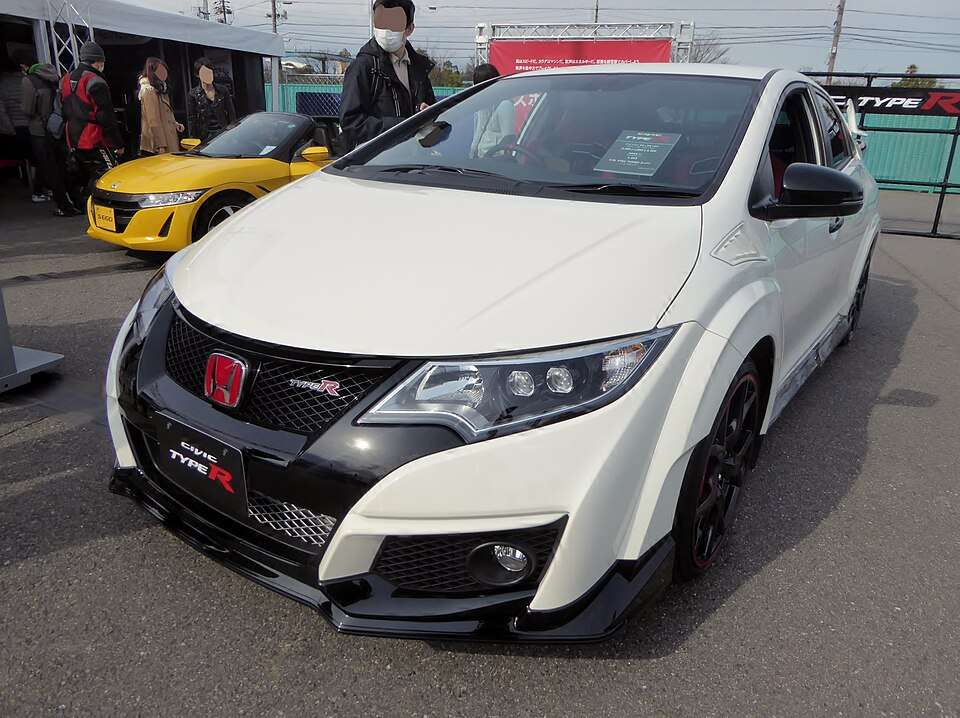
Images include overseas and visibly modified FK2 examples. They illustrate body and modification differences, not guaranteed factory equipment or inspected condition. Sources and licences are credited alongside each image, with hub thumbnail credits outside the cards.