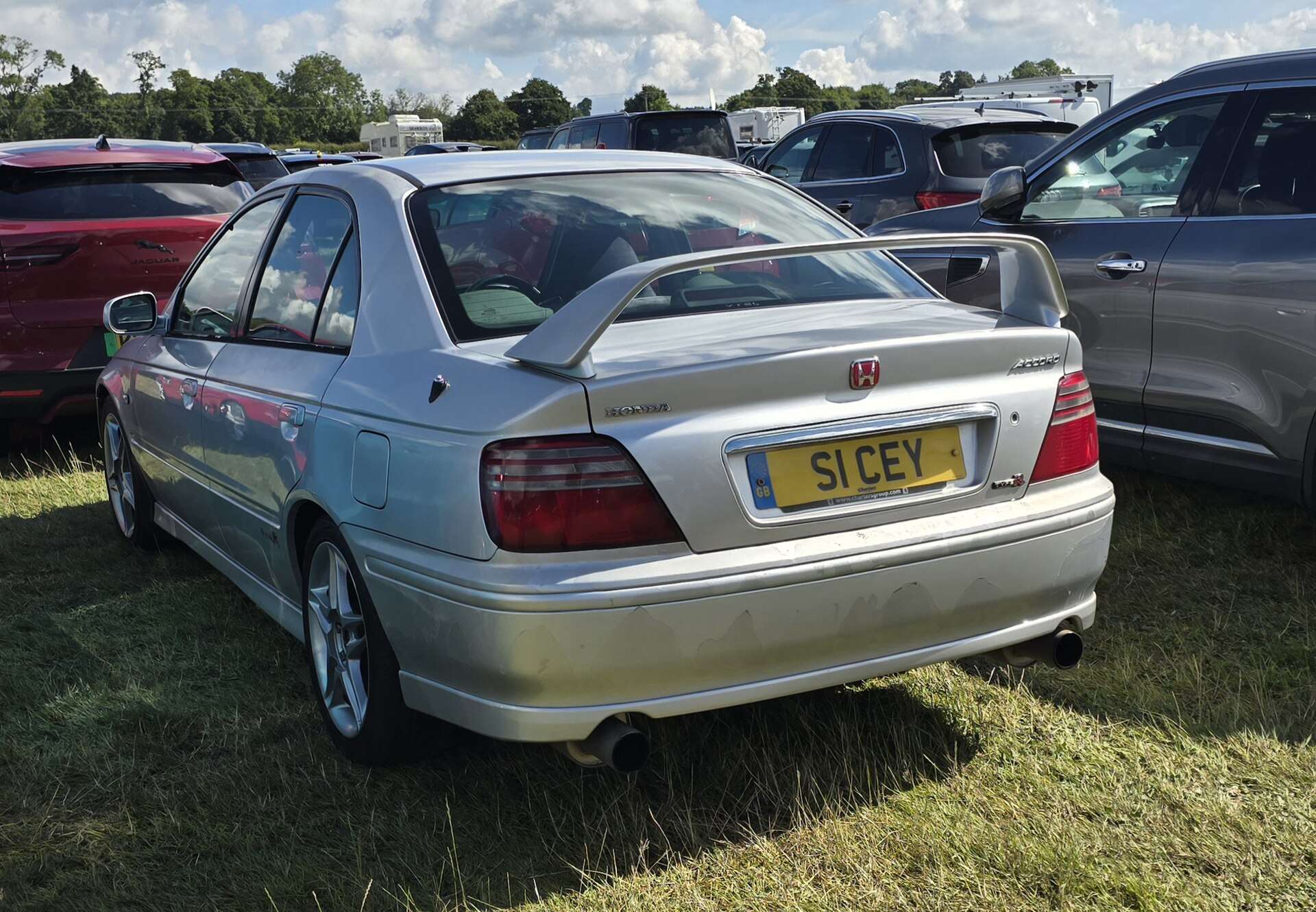
The Honda Accord Type R CH1 is a distinctive alternative to a hot hatch: four doors, a high-revving 2.2-litre naturally aspirated engine and a focused manual drivetrain. It offers usable space without losing the character that makes older Type Rs interesting. Today, buying well depends on finding a sound shell, understanding H22A7 maintenance and checking the gearbox and original equipment carefully. A reputation for Honda reliability does not make a quarter-century-old car maintenance-free.
Our buying verdict
Choose a genuine CH1 with documented structural condition, credible timing and balance-belt history, a healthy warm engine and a clean-shifting gearbox. Properly documented repairs can be acceptable, but fresh underseal and a recent inspection certificate cannot replace an independent lift inspection. Keep a reserve for metalwork, servicing and scarce Type R trim rather than spending everything on the asking price.

Understand the CH1 Accord Type R
This guide covers the European CH1 Type R with the H22A7 2.2-litre engine and five-speed manual gearbox. Honda’s factory Type R comparison quotes 212 PS for the Accord. It is a different proposition from Japanese Accord Euro R models and later ordinary Accords carrying Type R-style badges or seller-selected advert labels.
Honda’s European Type R history identifies the Accord as a model developed specifically for Europe. Verify the chassis, engine and transmission rather than relying on the badge, spoiler, red cam cover or seats. Components and complete drivetrains can be changed during a long ownership history.
| Choice | What matters | Buying approach |
|---|---|---|
| Early CH1 | Original styling and equipment details. | Identify the actual build, gearbox and service history; inspect condition rather than assuming all early cars share the same problems. |
| Later / facelift CH1 | Revised details and potentially different components. | Confirm build specification and fitted parts; later age alone does not establish a healthy car. |
| Standard or mildly modified road car | Practical enthusiast use with a clear maintenance baseline. | Coherent servicing, suitable tyres, complete trim and documented changes. |
| Track-focused or substantially modified car | Specialist appeal for a buyer who wants that setup. | Engine, transmission, suspension, safety equipment and insurance need a separate audit. |
Ask whether an engine or gearbox has been replaced and what identification and invoices support the change. Do not order parts simply from the car’s year if a different assembly is installed. A well-maintained genuine car is more useful than an apparently rare specification with unresolved identity questions.
Try the driving position and rear-seat space with your normal use in mind. Recaro seat shape and condition matter to comfort as well as value. If the car will be used daily, check cold starting, demisting, heater, air conditioning where fitted and normal low-speed operation, not just the high-rpm experience.
Prices: exclude misleading comparisons
A specialist-market check on 4 November 2026 found a 2001 CH1 advertised on Car & Classic at £6,995 with 122,787 miles. The seller described annual servicing, two keys, recent suspension and alignment work, underside welding and sealing, a Cobra rear exhaust and the original rear exhaust section included. These are unverified seller statements and an asking price, not a condition report or achieved sale.
This example illustrates how much detail sits behind one price. Ask for photographs and invoices for the welding, establish what was repaired and inspect it independently. A description of modifications or previous repairs should be reconciled with any headline claim of originality, rather than accepted from one word in the advert.
The broad Accord searches also returned later diesels, ordinary petrol models and Euro Rs. Their prices should not be blended into a CH1 Type R range. Build a comparison from several genuine cars with similar structural condition, history, originality and maintenance needs. One advertisement is useful context but cannot define the whole market.
Price the first-year work before negotiating. Metalwork, belts, a gearbox repair and missing seats or exhaust components can erase a small saving. Keep an independent inspection and a repair reserve in the purchase plan.
Rust and structural repairs
Inspect the rear arches, inner arch areas, sill ends, jacking points, floor and spare-wheel well in dry conditions and on a lift. Look for swelling seams, dampness, trapped dirt and patches. A neat outer arch is only the visible part of the inspection.
Check suspension and subframe mounting areas, brake and fuel pipes, front structural sections and the underside around previous repairs. Ask an experienced Honda inspector to assess the shell rather than treating a recently issued roadworthiness certificate as a complete structural survey.
For welding or restoration, request photographs before filler, paint and protective coatings. Invoices should identify the repairer and scope. A properly completed repair can be preferable to untouched deterioration, but a fresh coating alone does not establish quality.

Compare panel gaps, paint texture, fixings and inner structural areas for accident repair evidence. Check geometry and tyre wear if the car pulls, wanders or has an off-centre steering wheel. A clear history report cannot prove the absence of every unrecorded impact.
Inspect door and boot seals, glass surrounds and beneath carpets for moisture. A water leak can drive corrosion as well as electrical trouble. Confirm that any original spoiler, bumpers, trim and exhaust pieces are present and serviceable, or establish their replacement cost before purchase.
H22A7 engine and drivetrain checks
Cold start, oil use and VTEC operation
Ask for a genuinely cold engine. Check oil and coolant safely before running, then observe smoke, idle stability, abnormal mechanical noise and warning lights. Ask about oil consumption between services and how the owner monitors the level. High-rpm capability is not permission to neglect warm-up or lubrication.
Read invoices for appropriate oil, filters, plugs, coolant and larger inspection work. Ask about valve-clearance checks rather than assuming every service included them. An engine swap needs its own maintenance chronology; the chassis mileage is not automatically the mileage of the installed engine.
During a full warm drive, check clean response and consistent operation through sensible engine speeds. Investigate persistent smoke under load or on the overrun, misfire and unusual noises. Compression or leak-down testing may be useful where symptoms or history justify it, but the results need proper technique and specialist interpretation.
If VTEC operation is not right, identify the cause rather than assuming an inexpensive solenoid is the answer. Oil condition, level, pressure, engine temperature, controls and mechanical health all matter. An unresolved “VTEC issue” is a diagnostic job to price before buying.
Timing belt and balance-shaft belt: check the whole scope
The H22A7 installation has a timing belt and a separate balance-shaft belt. The genuine-parts catalogue for the 2001 Type R lists both belts, their adjusters and the automatic timing-belt adjuster. This is why a vague “belt changed” receipt is insufficient to establish a complete job.
Request the date, mileage, workshop, belt identities and tensioning components used. Confirm the appropriate Honda schedule for the actual engine with a specialist. Age matters even when the car covers few miles. A seller’s recollection without a supporting invoice should be reflected in the immediate service plan.
Ask the garage to explain the tensioner arrangement, related seals, pump condition, accessory drives and fasteners in its proposed scope. Do not buy a kit simply because an online search says it fits an Accord 2.2: diesel, ordinary petrol and different H-series applications are not interchangeable.
Modified balance-shaft or tensioner arrangements need explicit documentation and expert assessment. A seller describing a conversion as an upgrade should explain which parts and procedure were used. You need a serviceable known configuration, not an unrecorded mechanical experiment.
Cooling system and leaks
Inspect radiator, hoses, expansion areas, pump and fan operation for leaks or residue. Watch warm-up and temperature stability throughout the test and inspect again afterwards. Repeated coolant loss or overheating history needs appropriate testing before purchase.
Look around cam-cover and accessible seal areas, distributor-related components and the lower engine for oil leaks. Have the source identified rather than assuming every trace comes from a simple gasket. A clean engine bay can conceal recent cleaning, so combine the cold inspection, warm drive and lift assessment.
Check engine mounts, exhaust supports, heat shielding and any intake or management modifications. An aftermarket exhaust should be securely fitted, suitable for your use and declared to the insurer. Ask whether original parts included with the car are actually complete and usable.
Five-speed gearbox, clutch and differential
Test every gear when cold and again fully warm. Pay attention to clean engagement, baulking, crunching, noise and whether a gear disengages under normal load. Do not force the lever to overcome a fault or accept a short-shift kit as proof that the gearbox has been improved internally.
Check clutch release, take-up and slipping under sensible warm load. Price the flywheel assessment, release components, seals and labour separately if a clutch quote excludes them. A competition-oriented clutch can change the road experience considerably.
Ask about gearbox or differential replacement and any changed ratios or internals. Have an experienced workshop verify the installed arrangement and assess noise and operation. Do not infer healthy differential function from an aggressive demonstration or from a badge.
Suspension, steering and brakes
Inspect arms, ball joints, bushes, springs, dampers, top mounts and bearings. Check for excessive lowering, poor clearances and components that do not belong together. The Type R’s handling depends on suitable tyres and geometry as much as on the name on the boot.
Look for uneven tyre wear, damaged wheels and a steering pull, then obtain a geometry assessment where necessary. Inspect brake discs, pads, caliper operation, pipes and fluid history. Confirm the correct Type R hardware or identify any conversion before ordering service parts.
Check ABS and other fitted warning lights perform their normal self-test. Uneven braking, recurrent vibration and steering knocks need diagnosis rather than a promise that a cheap set of pads will solve them.
Recaros, original trim and electrical checks
Inspect Recaro bolsters, frames, rails and locking mechanisms. Replacement seats and retrimming can affect originality and cost, so confirm what is installed and whether it is safe and comfortable. Check steering wheel, gear knob, pedals and carpets against the history without treating wear as an exact mileage calculator.
Test windows, mirrors, central locking, wipers, lights, heater, air conditioning if installed, instruments and all keys. Inspect aftermarket alarm and audio wiring. A battery fault should be tested rather than offered as a blanket explanation for warnings or poor starting.
Check the rear cabin and boot for dampness and signs of dismantling. Original trim that seems ordinary can be difficult to replace in the correct finish. Include missing items in the price discussion before the sale rather than discovering the supply problem afterwards.
Maintenance and practical parts budgets
Use the actual H22A7 engine, gearbox and VIN to establish a service plan. The belt rows below deliberately distinguish camshaft and balance drives. They are parts allowances only; a complete specialist belt service also requires appropriate labour, procedures and ancillary components.
These are editorial UK parts-only budgeting allowances, not live offers or fitted quotes. Brand, VAT treatment, exchange surcharges and availability can change the total. Obtain a written fitted quote and check part numbers against your VIN, engine and modifications.
Affiliate disclosure: we may earn a commission from qualifying eBay purchases, at no extra cost to you. The links open vehicle-specific searches; they do not certify the suitability or quality of individual listings. Check seller, fitment, warranty and returns.
| Maintenance item | Parts allowance | What to check |
|---|---|---|
| Oil and filter service parts | £45–£95 | Confirm the correct specification and monitor level between services. |
| Timing and balance-belt components | £120–£260 | Check both belts and included tensioning components. |
| Automatic timing-belt adjuster | £100–£220 | Confirm actual configuration; do not assume every kit includes it. |
| Water pump | £45–£110 | Check quality, application, seals and scope of the belt job. |
| Accessory belts | £20–£65 | Identify each belt and the equipment installed. |
| Spark plugs | £25–£70 | Correct specification matters more than a generic performance label. |
| Alternator | £120–£280 | Check output, fitment and exchange terms after charging diagnosis. |
| Starter motor | £90–£210 | Test battery, cables and earth connections first. |
| Clutch kit | £160–£330 | Flywheel, seals, hydraulics and labour may add substantially. |
| Front discs and pads | £120–£260 | Verify genuine Type R specification or the fitted conversion. |
| Radiator | £90–£220 | Confirm dimensions, connections and intended road use. |
Hidden ownership costs
Inner structural repair: proper metalwork may include inner arches, sills, mounting areas, paint and corrosion protection. The price of one repair panel is not a fitted restoration estimate. Ask for staged photographs and a clear scope.
The complete belt job: timing belt, balance belt, tensioners, adjuster, seals and pump decisions can produce very different quotes. Compare like-for-like work and the actual configuration, not the cheapest kit headline.
Gearbox repair: a crunchy or noisy five-speed can need more than new fluid. Obtain a specialist estimate and check parts availability before treating it as a minor negotiating point. A used replacement has its own uncertain history.
Seats and original components: correct Recaros, wheels, exhaust sections and trim can be expensive or scarce. A retained original part is useful only when complete and serviceable. Returning a modified car to standard may need several separate purchases.
Tyres, bushes and geometry: the driving experience depends on these fundamentals. Budget for a suitable matching tyre set, sound joints and alignment before considering cosmetic changes or more engine power.
Insurance, storage and downtime: quote the actual car and modifications before paying. Low mileage does not stop rubber, fluids and tyres ageing. Keep a reserve for diagnosis, recommissioning and specialist parts lead times as well as routine servicing.


Eight checks before you commit
- Authenticate CH1 Type R identity, H22A7 engine and installed gearbox.
- Inspect arches, sills, floor, mounting areas and repair quality on a lift.
- Read welding photographs and invoices before accepting fresh paint or underseal.
- Verify timing and balance-belt records, tensioner scope and the current schedule.
- Assess cold start, oil use, cooling and warm running with appropriate diagnostics.
- Test every gear, clutch, drivetrain, brakes, steering and suspension.
- Check Recaros, original parts, all electrical equipment and moisture beneath carpets.
- Obtain independent estimates, insurance acceptance and a first-year reserve.
Frequently asked questions
Is an Accord Euro R the same car?
No. This guide covers the European CH1 with H22A7 and five-speed manual. Japanese Euro R models and later Accords need their own specification and parts checks.
Does the engine have two belts to consider?
The genuine-parts catalogue identifies both the timing belt and the separate balance-shaft belt, plus tensioning components. Confirm the complete service scope for the actual engine.
Does a recent roadworthiness certificate prove the shell is sound?
It is useful evidence but does not replace an independent lift inspection of corrosion and previous repairs. Ask for photographs and invoices for welding.
Should I reject every repaired car?
Not automatically. Properly documented and independently assessed metalwork can be acceptable. Hidden deterioration or an unexplained fresh coating is harder to evaluate.
What is the best use of the first maintenance budget?
Establish a sound structural and mechanical baseline: required belt work, correct fluids, healthy brakes, suitable tyres and geometry, then diagnose any unresolved faults.
Research and sources
Factory material establishes model context and output, while the genuine-parts catalogue identifies the belt arrangements. The market example is a dated seller advertisement and has not been independently inspected. No failure rate is inferred from an individual listing.
- Honda: comparison of Type R flagship models: European Accord context, 2.2-litre engine and 212 PS manufacturer figure.
- Honda European Type R history: the Accord’s European development context.
- Genuine Honda parts catalogue: 2001 Type R timing drive: timing belt, balance belt and adjuster identification; not a fitted quotation or maintenance interval.
- Car & Classic: 2001 Accord Type R seller advertisement: the dated asking-price and seller-description example, subject to availability and verification.