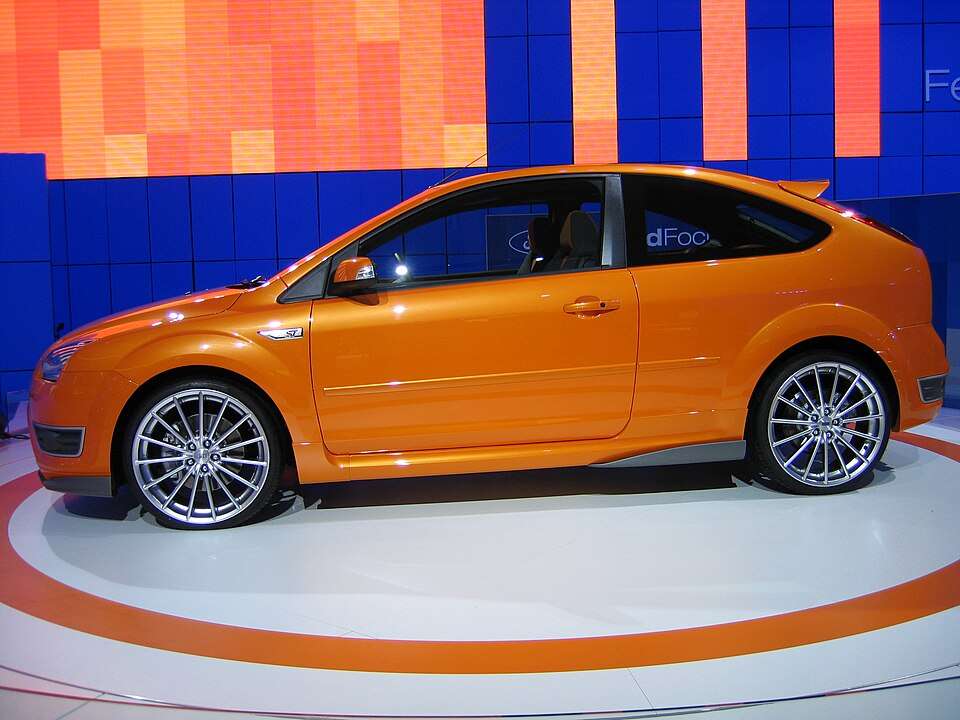
The five-cylinder Ford Focus ST combines a distinctive engine with the practicality of a three- or five-door hatchback. That makes it an appealing usable enthusiast car, but the condition of a twenty-year-old example depends on far more than its claimed power. This guide covers the 2.5-litre Mk2 ST225, including ST, ST-2, ST-3 and ST500. It does not apply the same engine advice to the earlier ST170, later four-cylinder ST or Mk2 RS.
Our buying verdict
Buy a sound shell with documented belt work, healthy cooling and a coherent engine specification. A standard or modestly modified car with proper records is our preferred starting point. Do not pay a premium for a block-mod claim or a tuning-stage label until a specialist has established what was actually done and assessed the engine in front of you.

ST, ST-2, ST-3 and ST500: which version?
The Mk2 ST arrived in 2005 with a Volvo-derived turbocharged five-cylinder petrol engine, front-wheel drive and a six-speed manual gearbox. Its familiar ST225 name refers to the nominal 225PS specification. The ST-2 and ST-3 labels denote equipment levels, not separate generations or increasing engine outputs. A facelift during 2008 changed the appearance and equipment, but a registration date alone does not establish a car’s build specification.
Compare the actual body and seating layout with how you intend to use it. Three-door access differs from the five-door, and the sculpted leather rear seating associated with ST-3 specification needs checking against the approved seat count and fitted belts. Do not assume every ST is a five-seater. A later retrim or replacement interior can obscure the original equipment.
| Version | Buying appeal | What to verify |
|---|---|---|
| ST / ST-2 | Five-cylinder performance with different equipment and cloth-trim possibilities | Actual lights, seating, stability equipment and options against build information |
| ST-3 | Leather-trimmed, generously equipped specification | Seat count, heated seats, lighting and all electrical equipment actually fitted |
| ST500 | Limited pre-facelift collector interest | Documented identity, correct original equipment and history rather than stripes alone |
| Facelift Mk2 ST | Later appearance and equipment | Build date, individual maintenance and actual engine condition; no blanket immunity from faults |
| Mountune or other tuned example | Potentially attractive documented upgrades | Installer, hardware, software, maintenance requirements and insurance disclosure |
Our recommendation is the most complete car whose condition and specification suit your budget, rather than automatically choosing the highest trim level. Recaro condition, a working heated screen and sound bodywork can matter more in ownership than a badge. Authentic special-edition equipment may have collector value, but replacement stripes and a plaque are not independent proof of identity.
Ask whether a car has been returned to standard before sale. A standard-looking airbox or exhaust does not prove that the calibration, turbo or injectors remain original. Conversely, a visible modification is not automatically poor work. The important questions are what changed, why, who did it and whether the installation has since proved reliable under normal use.
Focus ST225 prices: dated asking evidence
Car & Classic advertisements checked on 4 November 2026 included the following Mk2 petrol examples. These are seller descriptions and displayed asking prices. We have not inspected the vehicles or verified their histories, and they are not confirmed sales.
| Advertised example | Displayed ask | Comparison note |
|---|---|---|
| 2007 ST, 83,000 miles, Kettering | £4,500 | Condition, modifications and maintenance need individual examination |
| 2008 ST, 81,000 miles, Faringdon | £7,493 | Build/specification and supporting invoices matter more than registration alone |
| 2006 ST, 66,900 miles, Sealand | £9,995 | A different seller proposition; do not assume the price proves superior condition |
| 2006 ST, 66,500 miles, Balsall Common | £10,250 | Compare preparation, originality and documented work before judging value |
A live auction’s £2,000 bid was excluded because an unfinished auction is not an asking or sold value. We also excluded later STs, diesels, ST-Line cars, ordinary Focus models and the RS. A 2007 result displaying only 70 miles was not used as a reliable mileage comparable without investigating the underlying advertisement. Search summaries can contain errors or abbreviated descriptions.
These examples support a shortlist, not a universal national valuation band. Compare like with like: body, equipment, originality, structural condition, engine evidence and imminent servicing. Ask whether a dealer’s preparation includes the timing drive, brakes and correction of warning lights, or merely an MOT and cosmetic work. Make any material condition part of the written agreement.
A cheaper car needing a clutch, tyres, cooling repairs and structural work can exceed the cost of a better example quickly. Prepare an initial service and repair estimate before offering. A low displayed mileage is only useful when old MOT records, invoices and the physical car support it; a long period in storage creates its own recommissioning requirements.
Rust, water leaks and accident repairs
Inspect the rear wheel arches where the bumper meets the painted metal, including evidence of rubbing, bubbling and previous repairs. Look along the sills and their ends, jacking regions, floor edges and inner arches. Examine subframes, suspension attachments and brake or fuel lines on a lift. Good exterior paint cannot establish the condition of the hidden structure.
Check behind accessible skirt edges with the owner’s permission. Loose skirts can be a simple fixing issue, but they can also conceal damage or corrosion. Distinguish a replaceable outer panel from deterioration in the structure behind it. A repair-panel price is not a complete bodyshop estimate: dismantling, inner metal, paint and corrosion protection belong in the quotation.

Open the boot and inspect the spare-wheel area, carpets, seams and accessible trim for dampness. Trace water ingress rather than assuming a dry surface means a resolved leak. Examine tailgate hinge and washer arrangements, seals and evidence of repeated drying. Water introduced when opening a wet hatch differs from a continuous leak; establish what actually happens during normal use.
Look for uneven gaps, disturbed fixings, overspray, non-matching panels and poorly supported wiring after front-end repairs. Record repair evidence and ask for photographs taken before the car was painted. A replacement bumper is not automatically concerning, but unexplained structural changes or a missing accident history need further investigation. Check that the chassis identity matches the documents and surrounding metal has not been disturbed.
Engine problems: liners, breathing, cooling and tuning
Cylinder-liner concerns need evidence
Cracked cylinder liners are a recognised inspection concern in the model’s specialist and owner literature. Symptoms such as coolant loss, persistent misfiring, abnormal pressure or exhaust smoke require investigation, but none establishes the cause on its own. A head-gasket diagnosis and a liner diagnosis are not interchangeable. Ask a knowledgeable workshop to decide which pressure, combustion-gas, compression or further tests are justified.
Do not assume every engine will fail, that every early car is defective or that every facelift car is protected. The condition and history of the individual engine matter. If a seller claims a block modification, ask for the invoice, installer, method, date, mileage and accompanying work. A modification intended to support the bores is not proof that an existing crack was repaired or that the present engine is healthy.
For an engine replacement or rebuild, establish its identity and specification, the reason for the work and what was inspected or renewed. Request machining and assembly records where available, along with subsequent maintenance. A photograph of a dismantled engine or a receipt for loose parts is weaker evidence than a complete workshop record that can be reconciled with the car.
Breather and oil-filter housing
Investigate unusual whistling at idle, oil leaks, poor idle or signs of abnormal crankcase pressure. The breather diaphragm/oil-filter housing arrangement is a known area to assess. Have the system checked properly rather than replacing parts because of an internet sound comparison. A failed breather component can coexist with other faults, and an invoice for one repair does not establish the health of the whole engine.
Check the oil level before starting and ask about top-ups, fluid specification and change intervals. Persistent blue smoke, heavy breathing or an unexplained low level needs an answer before a demanding drive. Do not accept a claim that all turbocharged engines consume the same amount. Compare the seller’s experience with the workshop’s assessment and the engine’s actual specification.

Cooling, boost and ignition
Inspect radiator, expansion tank, hoses, thermostat area, fans and connections for staining, damage or makeshift repairs. Observe warm-up and temperature behaviour during a normal road test and after returning to idle. A new radiator does not prove that previous overheating caused no damage. Never open a hot pressure cap to investigate coolant loss.
Weak or erratic boost can involve leaks, control plumbing, sensors, ignition or turbocharger condition. A dashboard boost needle is not a substitute for diagnosis, especially on a mapped car. Have fault codes and relevant live readings interpreted with physical checks. Do not treat a single code as an instruction to buy a turbo or boost solenoid.
Inspect turbo oil and coolant plumbing, intake hoses, intercooler mounting and exhaust joints. Ask whether the car retains emissions equipment appropriate to its registration and use, and verify any alteration before purchase. A recent MOT does not independently validate every modification or establish that a seller’s claimed power output is accurate.
Timing belt and auxiliary drive
The five-cylinder engine has belt-driven cam timing. A dated invoice should identify the belt and tensioning components, the mileage and associated pump or seal work. PistonHeads’ historical guide cites a 10-year/125,000-mile original schedule; confirm the correct current requirements for the actual vehicle and components with a specialist. Do not use that figure to justify an unknown or deteriorated belt.
Age matters even when a collector car covers few miles. If the maintenance record is inadequate, arrange the required work before normal use. Include an assessment of the auxiliary drive and cooling system in the quotation. A belt-only online listing cannot tell you the fitted cost or whether the workshop needs additional rollers, seals, fluids or other parts.
Gearbox, clutch and driveshafts
Try every gear from cold and again when fully warm, observing selection, noise and whether engagement remains consistent. Crunching, jumping out of gear or a pronounced whine needs diagnosis. A worn linkage may cause a vague lever, but it does not excuse evidence of internal gearbox wear. Check mounts and inspect for fluid leaks.
Assess clutch engagement and slip progressively under appropriate load on a safe, insured road test. Avoid deliberately labouring the engine at low rpm in a high gear to force a result. Tuned torque can expose clutch limitations, so identify the fitted clutch, flywheel and hydraulic-release arrangement before comparing replacement prices. An RS-based conversion needs its own documented parts list.
Inspect driveshaft boots, joints and their surrounding areas for grease, deterioration and poor clearances, especially on lowered cars. Vibration or a clonk can have more than one source. Check engine and gearbox mounts and obtain a diagnosis rather than assuming every noise requires a complete shaft.
Suspension, steering and brakes
Inspect springs, dampers, bushes, ball joints, bearings and mounting points. Broken springs and tired bushes can undermine an otherwise attractive car. Uneven tyre wear needs an explanation that considers alignment, worn parts, wheel damage and previous accident repair. A lowered stance is not proof of a properly developed chassis.
Check tyres for suitable specification, matching axle arrangements, age and damage. Assess steering assistance, warning lights and leaks as appropriate. Braking should be progressive and consistent; vibration, pulling, seized calipers or heavily corroded lines require investigation. A large brake conversion must be identified before ordering discs or pads from a standard ST catalogue.
Recaros, heated screens and electrical checks
Inspect seat bolsters, bases, adjusters and mountings rather than only the visible cloth or leather. Creaking or movement needs checking for wear or damage. Test heated functions where fitted and compare the rear-seat layout and belts with the registered capacity. A cheap retrim can conceal a damaged base without repairing it.
Operate windows, locks, mirrors, wipers, audio, air conditioning and all fitted lighting. Check the heated windscreen where conditions allow and ask about any non-working area. Confirm headlamp levelling and washers where fitted. A car fitted with aftermarket lights needs a separate assessment of installation quality and suitability.

Check both keys if included and look for old alarm, stereo and accessory wiring. Flickering lights or a battery warning deserve a charging-system test that includes battery condition, cables and earths. An alternator can be a repair item, but fitting one without diagnosis may leave the original problem unresolved. Confirm correct warning-lamp operation before and after starting.
Maintenance costs, timing kits and alternators
Affiliate disclosure: Our eBay parts links use campaign 5339238906. We may earn a commission if you buy, at no extra cost to you. Links open searches rather than a verified product. Results may include unsuitable parts; confirm engine, build date, part number, condition and returns before ordering.
Price reference checked 4 November 2026: A&E Motorsport displayed £289.99 for its Genuine Ford timing-belt-kit and water-pump package for the Mk2 ST225, SKU FSTTBKWP. The page used a generic product image and did not itemise every included component. Treat this as a displayed parts-only example; confirm contents, tax, stock and delivery directly. It is not a fitted-service quotation. Compare ST225 timing-belt and water-pump listings using the exact engine application.
| Job or item | What to include in the estimate | Model-specific search |
|---|---|---|
| Timing service | Belt, required tensioners/rollers, pump decision, auxiliary-drive assessment, coolant and labour | ST225 timing components |
| Alternator | Charging diagnosis, correct output/mountings/pulley and any exchange charge | ST225 alternators |
| Breather housing | Diagnosis, correct housing/diaphragm application and associated seals | ST225 breather components |
| Clutch and flywheel | Identify standard or converted setup; include hydraulics, fluid and access labour | ST225 clutch parts |
| Cooling system | Correct hoses, radiator and thermostat; pressure testing and bleeding | ST225 cooling parts |
| Routine service | Oil, filters and plugs appropriate to engine specification and calibration | ST225 service items |
Search results can mix ST170, Mk2 RS, later ST and ordinary Focus parts. Ask the supplier to confirm fitment and compare brand, contents, warranty, returns and delivered cost. For a modified car, provide the actual component specification to the workshop. Buying the lowest-priced kit first can restrict the repair plan before anyone has established what the vehicle needs.
Hidden ownership costs
Plan the first year before agreeing the purchase price. Add inspection, collection, immediate servicing, diagnosed repairs, tyres, insurance, storage and a contingency for unresolved work. Use a written estimate for the actual car rather than assuming that spending a fixed percentage of its price will cover everything.
- Unverified engine claims: a block modification or rebuild requires documentary review and present-condition testing. Price unresolved cooling or misfire concerns before committing.
- Torque-related repairs: clutch, flywheel, release hydraulics and driveshaft work can arrive together on a tuned example. An advertised power figure does not identify the parts needed.
- Body and equipment: arch repairs, a heated screen, Recaro repairs and restoring altered wiring may cost more than ordinary service parts suggest.
- Fuel, tax and insurance: obtain current quotes for the actual registration, driver and modifications. Historical annual-tax figures and forum fuel-economy claims are not a personal ownership budget.
- Labour and associated work: diagnosis, access, fluids, alignment, seized fixings and tax can change the bill. Confirm what the quotation includes and how additional work will be agreed.
- Exchange components: rebuilt alternators or starters may require a returnable old unit. Compare the surcharge, return deadline, postage and warranty as well as the headline price.
- Downtime: allow for recovery and alternative transport if a rare component or specialist appointment is needed. A catalogue entry does not prove that a part is on the shelf.
Viewing and test-drive checklist
Before travelling
- Confirm registration, exact specification, seller identity and ownership history. Ask about accidents, insurance losses, modifications and engine replacements.
- Read the MOT chronology and request dated invoices. Arrange a genuinely cold start, inspection access and a properly insured road test.
- Request current underside photographs and a written list of known faults, included keys and spare or original parts.
At the car
- □ Confirm Mk2 ST225 identity, body, trim and approved seating; authenticate ST500 or Mountune claims separately.
- □ Inspect rear-arch/bumper junctions, sills, underside, mounting areas and boot moisture on a lift.
- □ Read belt, cooling, breather and engine-work invoices; verify what a claimed block modification actually included.
- □ See cold running, full warm-up and hot restart; investigate smoke, coolant loss, crankcase symptoms and persistent misfire.
- □ Test gears and clutch progressively; inspect driveshaft boots, mounts, suspension, tyres and fitted brake specification.
- □ Try both keys and every fitted electrical function, then obtain a charging diagnosis or specialist estimates for remaining faults.
- □ Inspect accessible structure on a suitable lift. Never go under a vehicle supported only by a jack.
- □ Try all fitted equipment, check warning-lamp behaviour and assess tyres for age, damage and specification as well as tread.
- □ Test progressively from cold to fully warm, then recheck starting and visible leaks. Stop if a serious fault develops.
Proceed when the description, identity, condition and records agree. Investigate a plausible but undiagnosed fault before negotiating. Walk away if crucial inspection is refused or the budget depends on a serious problem proving cheap. Put inspection conditions and deposit terms in writing.
Buying questions answered
Are ST-2 and ST-3 more powerful than an ST?
They are equipment designations rather than automatic increases in engine output. Confirm actual engine specification, any tuning and the build record.
Do all ST225 engines need a block mod?
No universal conclusion is justified from the badge or year alone. Assess engine condition and history; verify the scope of any claimed modification or repair with a knowledgeable specialist.
Does the ST225 use a timing belt?
Yes. Confirm the correct time and mileage requirements for the actual vehicle and components, and obtain dated evidence of the complete timing service.
Is a mapped ST225 a bad purchase?
A documented, competently executed conversion can be worthwhile. Identify hardware, software, torque-related supporting work, maintenance and insurance implications before pricing it.
What matters more than low mileage?
Sound structure, credible engine and belt evidence, stable cooling, complete equipment and the quality of previous work. Long storage can create repairs despite low mileage.
Sources and research method
Independently written desk research by Unusual Cars UK, checked on 4 November 2026. We have not inspected or road-tested the illustrated cars or independently authenticated sellers’ claims. Inspection priorities and recommendations are our editorial assessment. Historical guides inform technical context; their old prices are not current valuations. Confirm service requirements against the actual vehicle and appropriate workshop information.
- JXL Performance: ST225 buying guide, October 2024 — Specialist inspection context; fault descriptions are not treated as measured failure rates.
- Ford Owners Club: ST225 owner discussion, March 2024 — First-hand reports of breather, charging, liner and boot-water concerns; individual experiences are not universal diagnoses.
- PistonHeads: Mk2 ST guide, February 2020 — Version and timing context; historical prices, blanket facelift assumptions and aggressive test instructions not adopted.
- A&E Motorsport: timing-kit/water-pump package — Primary displayed parts-only price checked 4 November 2026; exact scope and delivered cost require confirmation.
- Car & Classic: Focus ST advertisements — Dated asking examples with generations, RS, diesel, auction bids and doubtful summary mileage separated.
- GOV.UK used-car checks and MOT history — identity, document and test-history checks.
Images illustrate versions and inspection themes; they are not photographs of the advertised examples discussed above. Credits and licence links accompany each image. No endorsement by photographers, owners, specialists or suppliers is implied. Prices and availability can change.