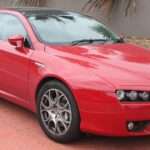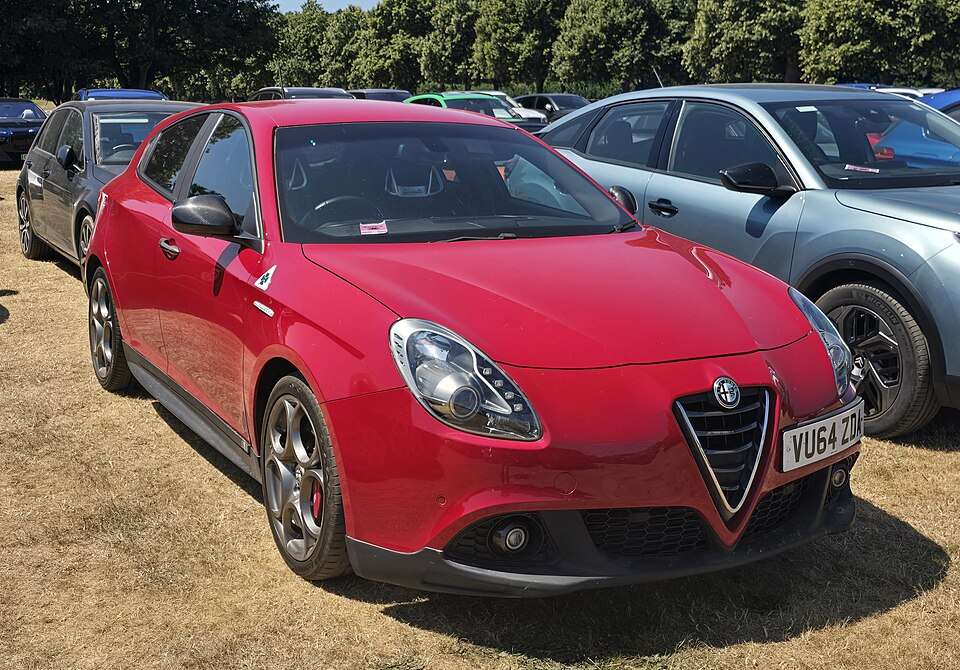
The Alfa Romeo Giulietta Quadrifoglio Verde combines a turbocharged 1750 petrol engine with five-door practicality and distinctive styling. The early manual and later TCT cars need different buying decisions, and the badge is easily confused with lower-powered Giulietta trim levels. This UK guide focuses on the genuine 1750 performance models, with later 1750 Veloce cars included as relevant alternatives.
Our buying verdict
Choose a correctly identified 1750 with dated oil and cambelt evidence, a clean diagnostic assessment and healthy transmission behaviour. Early manuals suit buyers who want a conventional clutch and gearlever; the later aluminium-engine TCT offers a different driving experience and a more complex gearbox inspection. Do not pay a QV premium for QV Line styling, a smaller petrol engine or a diesel Veloce.

Giulietta QV, Cloverleaf and Veloce: which version is it?
The original UK press pack calls the top 1750 TBi model Cloverleaf and gives a 235 power rating, with a six-speed manual gearbox. In 2014 Alfa introduced the revised Quadrifoglio Verde with an aluminium-block 1750 turbo engine rated at 240, paired as standard with the six-speed ALFA TCT twin dry-clutch transmission. The change is more significant than a small increase in an advert’s power field: engine identification and gearbox type affect maintenance and parts.
| Version | What makes it distinct | Buying emphasis |
|---|---|---|
| Early 1750 Cloverleaf / QV manual | Original performance model with six-speed manual | Cambelt date, oil history, clutch and gearbox condition |
| 2014-on 1750 QV TCT | Revised aluminium engine and six-speed twin dry clutch | Belt history, hot/cold TCT operation and specialist diagnostics |
| QV Launch Edition | Limited edition with specific trim and numbered plaque | Verify identity, completeness and paint/trim repair costs |
| Later 1750 Veloce | Relevant continuation of the high-output 1750 proposition | Confirm engine and TCT rather than using the Veloce name alone |
QV Line is a styling/equipment designation, not proof of the 1750 engine. Veloce was also used on other engines, including diesels. Check capacity, fuel type, VIN, build information and actual transmission before comparing prices. A 1.4 MultiAir article’s engine-specific faults and service parts should not be transferred to the 1750 simply because both cars are Giuliettas.
Alfa’s 2014 UK release describes the Launch Edition as a 500-car series with 100 intended for the UK, adding specific exterior details and a numbered plaque. Verify any premium against the car’s documentation and original equipment. A plaque or replacement mirror covers alone do not authenticate the whole car. Factory power labels and advert units can differ; use original model identity rather than a seller-entered bhp figure to establish the variant.
Drive the version you actually intend to buy. The manual offers a familiar clutch/gearlever relationship; the TCT adds automated clutch control and paddles. Seating, pedals, rear visibility and luggage access are equally relevant if this will be your daily car. Make sure the styling appeal is backed by a comfortable driving position and an ownership budget.

Giulietta QV prices: compare the right engine and transmission
Market snapshot, 4 November 2026: the PistonHeads 2014 Giulietta page showed a 78,000-mile 1750 TCT QV at £9,990, a private Launch Edition with 108,700 miles at £8,495, and a 61,650-mile 1750 TCT Quadrifoglio Verde at £8,195. These are three asking prices, not verified sales. Their non-linear relationship with mileage shows why condition, seller, documentation and edition need inspection rather than an automatic mileage adjustment.
The broader Giulietta page also showed a 2016 1750 TBi Veloce TCT at £9,990 with 78,000 miles and a 2018 1750 Veloce TCT at £12,495 with 57,518 miles. They provide context for later alternatives, not a valuation of an early manual QV. Cheaper 1.4 QV Line, MultiAir and diesel Veloce listings are excluded. The visible sample does not establish a current early-manual price range.
Make a shortlist with the same engine generation and gearbox. Ask each seller for the cambelt invoice, oil-service dates, gearbox diagnosis or repair records and details of any remap. Price immediate belt work, tyres and unresolved electrical issues before comparing total acquisition cost. A lower asking price is not automatically better value if several expensive jobs coincide.
Do not treat limited-edition status as an investment guarantee. Missing special trim, poorly repaired matte paint or an undocumented modified engine can outweigh rarity for a buyer seeking a usable car. Agree any deposit terms only after arranging the checks and confirming identity. An advert’s “full history” should resolve into dated work and mileage, not remain a marketing phrase.
Bodywork, corrosion and accident repair checks
Inspect in daylight with dry panels, then arrange a lift inspection. Check sills, jacking points, floors, subframes, suspension mounts and brake pipes. Look behind liners and shields where access permits. A clean outer body does not establish the condition underneath, particularly on a car used through UK winters. Ask the inspector to distinguish surface corrosion from material deterioration and structural repair needs.
Check front bumper, lower spoilers, side skirts and wheelarches for kerb damage, loose fixings or poor repairs. Uneven panel gaps, overspray, disturbed fasteners and paint differences warrant further investigation. Inspect inner wings, headlamp mounts, boot floor and the rear panel, alongside a history check. A clear report cannot prove the car has never had a repair.
Open the hatch and inspect the luggage well and beneath the carpet for water staining. Check rear lamp seals, hatch seals and signs of damp in the cabin. Test the rear wiper, washer, demister and all rear lamps while opening and closing the hatch normally. Intermittent operation can be a wiring issue rather than several unrelated failed components.
On Launch Edition cars, inspect special trim and paint carefully. Matte or multi-layer finishes need an appropriate bodyshop estimate; a conventional polishing approach may be unsuitable. Confirm that carbon-effect or carbon-fibre pieces are the correct items rather than treating any replacement as original. A cosmetically complete ordinary QV may be a more straightforward purchase than a limited edition needing hard-to-match repairs.

1750 engine, timing belt and gearbox checks
Oil and turbo health: read the service invoices for date, mileage and correct engine-specific lubricant. Check the level before starting and investigate repeated top-ups, leaks or unexplained low oil. Start cold, listen for abnormal mechanical noise and watch for persistent smoke. Test boost delivery after warming the engine, looking for hesitation, warning lamps or inconsistent performance. A remap is not a diagnosis for an underlying boost or ignition problem.
Check intake and boost hoses, visible oil lines, coolant hoses, radiator and thermostat behaviour. A turbo replacement should have an invoice explaining the cause and associated checks, not just proof of a new unit. If the engine has been overheating or losing coolant, request a pressure test and further diagnosis. Avoid inferring a failure rate from internet anecdotes: the condition of the individual car and quality of its service history are the decision points.
Cambelt evidence: the 1750 uses a toothed timing belt. Ask for the exact replacement date and mileage, kit contents, tensioners/idlers and whether the water pump was changed. Alfa Workshop’s illustrated 1750 procedure shows engine support, dedicated cam/crank locking tools and water-pump access as part of the job. A parts receipt alone does not show the belt was fitted or timed correctly. An auxiliary belt invoice is a different service.
Use the correct schedule for the actual build and engine. Alfa Workshop publishes separate early and late plans, dividing them at 6 May 2014; its later plan states a maximum cambelt interval of 72,000 miles or five years, whichever comes first. That is the workshop’s published late-car schedule, not a blanket promise for every engine, climate or usage pattern. Confirm the applicable manufacturer handbook and a specialist’s recommendation. With no credible dated evidence, budget replacement before normal use rather than estimating belt age from appearance.
Manual: assess clutch take-up, slip under load, judder and gear engagement from cold and warm. Listen on acceleration and overrun, and inspect mounts, driveshaft boots and leaks. Do not apply a different Alfa model’s gearbox reputation to this car without identifying its transmission. A worn clutch requires a fitted quote including the release system and an assessment of the flywheel.
TCT: test drive and reverse selection, gentle pull-away, low-speed manoeuvres, normal acceleration, downshifts and manual/paddle operation. Repeat after the car is hot. Jerking, warning messages, delayed engagement, lost gears or repeated refusal to select need an Alfa-capable diagnostic assessment. Battery and charging condition should be checked as part of diagnosis, rather than used as a blanket excuse for a gearbox fault.
The TCT uses dry friction clutches and an electrohydraulic operating system, as described in Alfa’s release and Alfa Workshop’s own gearbox examination. It is not a conventional torque-converter automatic or a generic wet-clutch DSG. Ask a specialist to assess faults, hydraulic operation, relevant clutch data and any calibration needs. Do not assume a routine fluid change will cure worn clutches or actuator problems, and do not buy a DSG kit for it.
Inspect brakes and chassis on the lift. Assess calipers, discs, pads, springs, dampers, front wishbones, links and rear bushes. Uneven tyre wear deserves geometry checks after any worn components are corrected. Factory documents and adverts may not use consistent brake dimensions; match the actual fitted system and part numbers before buying discs. Modified suspension needs secure installation and a usable road alignment.
Interior, tailgate wiring and electrical checks
Alfa Workshop’s first-hand Giulietta buying advice identifies tailgate wiring breaks as a source of rear wiper, lighting and radio-reception problems. Its maintenance index also provides door-handle, fuel-flap and boot-loom repair procedures. These are specific items to test, not proof that every car will fail. Check all rear electrical functions, both keys, locks, windows and mirrors during a viewing.
Inspect interior door handles for cracks, looseness or an improvised repair and operate each from inside and outside. Check the fuel flap opens and latches correctly. Test every ventilation setting, temperature command, fan speed and air-conditioning operation. A system that only blows at one temperature needs diagnosis rather than a promise that it is normal Alfa behaviour.
Try the DNA switch and verify the indicated mode changes without warnings, using only safe, ordinary driving. Check the instrument cluster’s warning-light sequence, steering assistance, parking sensors and infotainment. Pairing and USB functions should work if they matter to you, and aftermarket electronics should not compromise standard systems. A diagnostic scan complements these checks; it does not replace them.
Inspect seat bolsters, one-piece sports-seat backs where fitted, steering-wheel wear and pedals against the claimed mileage. Check the rear-seat release, parcel shelf and luggage fittings. Look beneath carpets for damp and investigate any smell of stale water. A tidy dashboard can coexist with damaged wiring or wet insulation out of sight.

Maintenance costs, timing kits and useful 1750 parts
The figures below are editorial planning allowances for parts only, unless a fitted service is explicitly identified. They are not live eBay quotes: brand, specification, availability, delivery and VAT treatment vary. Obtain a registration/VIN-matched written estimate before committing to a repair. Cheap search results can include incompatible parts, deposits or single components rather than a complete kit.
Affiliate disclosure: the parts searches below use our eBay affiliate campaign. We may earn a commission if you buy, at no additional cost to you. Search results are not a recommendation of every seller or product; verify fitment, maker, returns and warranty.
| Maintenance item | Parts allowance / search | What to check |
|---|---|---|
| Timing kit | £90–£190 | Match early/later engine; fitting, locking tools and water pump not automatically included. |
| Water pump | £35–£90 | Check compatibility and include coolant and sealing parts in the job. |
| Oil-service filters | £25–£70 | Correct 1750 engine application; oil and labour additional. |
| Spark plugs | £35–£85 | Use exact engine specification; not a 1.4 MultiAir set. |
| Alternator | £120–£300 | Verify output, mounting, pulley and connector, plus any exchange terms. |
| Auxiliary drive | £45–£140 | Separate from the timing belt; check belt and pulley condition. |
| Ignition coil | £25–£65 each | Diagnose misfire before replacing and match the connector/part number. |
| Thermostat assembly | £40–£120 | Verify housing and hose connections; pressure-test leaks. |
| Front brake refresh | £140–£320 | Confirm fitted disc size and caliper; parts vary by model and modification. |
| Front suspension arm | £55–£150 each | Side and brand matter; fitting and geometry additional. |
The searches deliberately include 1750 TBi QV. Marketplace compatibility tools remain a starting point: confirm VIN, engine code, original part number and seller evidence. Generic Giulietta kits can be intended for a diesel or 1.4 petrol. A linked price allowance is not a recommendation to buy the cheapest component for a timing or braking job.
Alfa Workshop’s later schedule includes TCT control-oil level checks and frequent 1750 oil/filter entries; its annual oil-change recommendation is explicitly the workshop’s advice. Have the applicable fluids and procedures confirmed for your actual gearbox. For hatch electrical faults, research Giulietta tailgate loom repair parts only after identifying the damaged circuits; a loom repair is not interchangeable with a gearbox service.
Hidden ownership costs: what the asking price leaves out
Catch-up belt work. When history is unclear, obtain a complete quote for the appropriate timing kit, pump where required, auxiliary components, fluids and labour. Do not compare that total with an advert for a belt alone. A low-mileage car can still be overdue by age, and a recent invoice should identify the actual engine and work done.
TCT diagnosis and repair. A clutch or hydraulic-system repair may require specialist equipment, calibration and substantial labour. A used gearbox also needs identification, provenance and installation checks. Keep a separate contingency and do not accept an unidentified warning light merely because the seller offers a discount. The routine maintenance table cannot price an undiagnosed transmission fault.
Turbo and modification history. Price the complete repair and its cause, including oil supply, boost plumbing and any calibration issue identified by the specialist. Request the tuner’s invoice and specification for modified cars and declare changes to the insurer. Claimed power is not evidence of engine health; a noisy exhaust is not a substitute for a clean diagnostic result.
Tyres, brakes and paint. Four appropriate tyres, a brake refresh and suspension alignment can arrive together. Launch Edition trim or specialist paint repair is additional. Wheel damage and uneven wear may reveal a chassis problem that a tyre replacement alone will not solve. Inspect before assuming the visible cosmetic defect is the full job.
Electrics and daily use. Wiring diagnosis, door-handle repairs, air-conditioning work and a correct replacement battery can turn several small faults into a meaningful total. Obtain insurance and tax information for the registration and check any location-specific driving restrictions relevant to your use. Include fuel, parking and alternative transport during repairs in your own budget; none is included in the parts allowances.
Keep maintenance records after buying. A dated belt invoice, clear oil history and documented TCT assessment reduce uncertainty for you and a future buyer. A realistic purchase combines the price, immediate repairs and a reserve. Spending the entire budget on a special-edition badge while postponing known mechanical work undermines the reason for buying an enjoyable car.
Giulietta Quadrifoglio Verde viewing checklist
- Confirm VIN, 1750 engine, manual/TCT and edition; separate QV Line, 1.4 MultiAir and diesel Veloce.
- Check dated oil and cambelt invoices, kit contents and water-pump work against the applicable schedule.
- Start cold and investigate smoke, misfire, leaks, coolant loss or inconsistent boost before agreeing a deal.
- Test the manual clutch or TCT carefully cold and hot, with a suitable Alfa diagnostic inspection.
- Lift-inspect floors, subframes, mounts, pipes and accident-repair evidence.
- Test tailgate wiring functions, fuel flap, door handles, climate control, DNA and both keys.
- Inspect tyres, brake specification, suspension wear and alignment, including modifications.
- Get fitted repair estimates, registration-specific insurance/tax checks and a first-year contingency.
Giulietta QV buying questions
Is QV Line the same as Quadrifoglio Verde?
No. QV Line styling does not establish the 1750 performance engine. Check the VIN, capacity, fuel type and actual gearbox. Veloce has also been used on lower-powered petrol and diesel Giuliettas.
Should I choose the manual or TCT QV?
Choose after driving both and inspecting their histories. The early manual provides a conventional clutch and gearlever; the later 1750 TCT combines a revised engine with automated twin dry clutches and needs a gearbox-specific assessment.
Does the 1750 Giulietta have a cambelt?
Yes. Obtain dated replacement evidence and use the correct build/engine schedule. Alfa Workshop’s late-car plan states a maximum of 72,000 miles or five years, whichever comes first; confirm the applicable handbook and usage advice for the actual car.
Does the QV have the same MultiAir problems as the 1.4?
Do not transfer 1.4 MultiAir-specific component advice to the 1750 QV. Identify the actual engine and diagnose its symptoms. Correct oil servicing remains important, but the engines and required parts are different.
Can a cheap fluid service fix a faulty TCT?
That cannot be assumed. Dry clutches, hydraulic controls, electronics and calibration need diagnosis. Have warnings, hesitation or lost gears assessed with suitable Alfa equipment and obtain a written repair scope before purchase.
Sources, research method and image credits
Researched 4 November 2026. This is a desk-researched buying guide, not a claim of inspecting or driving the advertised cars. Manufacturer releases establish the original versions; Alfa Workshop’s own procedures and gearbox examination provide first-hand technical context. Inspection priorities are our synthesis, not a statistical reliability survey. Classified figures are asking prices; parts figures are separate editorial allowances.
- Alfa Romeo: original UK Giulietta press pack and Alfa Romeo: June 2014 UK QV launch release. Used for early manual/later aluminium-engine TCT distinctions and Launch Edition details.
- Alfa Workshop: illustrated 1750 timing-belt and pump procedure, early service plan and late service plan. Workshop advice and build-specific distinctions are identified in the text.
- Alfa Workshop: examination and operation of the TCT gearbox; workshop Giulietta observations and maintenance procedure index. Diesel and 1.4 MultiAir-specific faults have not been transferred to the 1750.
- PistonHeads: dated 2014 QV sample and broader Giulietta listings for later 1750 Veloce context. Availability and asking prices change.
All four model photographs carry individual original-file and licence links. Japanese display cars illustrate the model rather than exact UK equipment or the cars in our price sample. Explore alternatives in the Buying Guides hub.