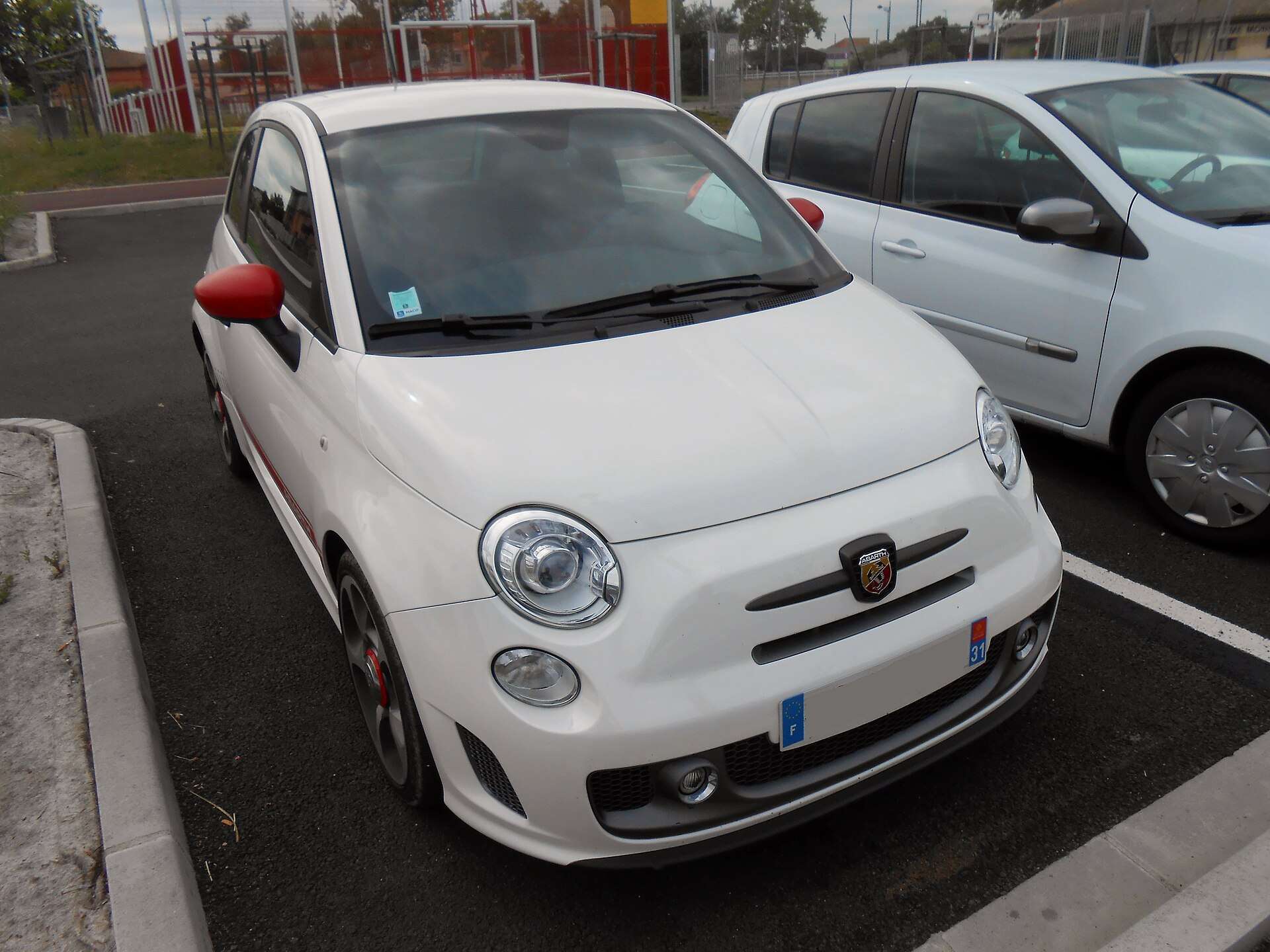
The petrol Abarth 500 and 595 make a persuasive used buy: compact dimensions, a characterful turbocharged engine and a large supply of tempting cars. That abundance also makes it easy to buy on colour, exhaust noise and a Competizione badge while overlooking the work that determines the real first-year bill. This guide covers the petrol 1.4 T-Jet hatchback and folding-roof C models, with UK buying checks and dated maintenance evidence. The electric 500e and the more specialised 695 derivatives need their own assessment.
Our buying verdict
For most buyers, a documented, sensibly priced manual with a healthy cooling system and proven timing-belt history is the strongest starting point. A higher-output Competizione can justify its premium when its specification is authentic and its brakes, dampers and seats are healthy. Choose an MTA only after a thorough cold and hot test and a specialist check of any hesitation or warning. Budget for the actual car, rather than assuming every small Abarth has small-car running costs.

Abarth 500 and 595 versions: which should you buy?
The familiar shape conceals a long succession of outputs, equipment packs and special editions. Abarth’s own UK 595 range release describes a 1.4 T-Jet line-up with 145 hp in the base car, 160 hp in the Trofeo, 165 hp in the Turismo and 180 hp in the Competizione. Those are the manufacturer’s hp labels for that particular range; they are not a definitive specification table for every earlier 500 or later 595 carrying the same trim name.
| Version | Buying appeal | What to establish |
|---|---|---|
| Earlier Abarth 500 | Often an accessible route into the petrol range | Original output, age-related work and whether any tuning or esseesse conversion is documented |
| 595 / Trofeo | An everyday alternative to chasing the highest output | Exact model-year specification, wheels, exhaust and service requirements |
| 595 Turismo | Comfort and leather-trim appeal | Condition of the seats and the original equipment; manual and MTA examples exist |
| 595 Competizione | Performance equipment as well as power | Which brakes, dampers, seats and differential the car actually has |
| 500C / 595C | Folding fabric roof with the same small-car footprint | Roof operation, water ingress and repair quotations as well as the mechanical checks |
In the cited range, the Competizione combines 180 hp with Sabelt Corsa seats, Brembo four-piston front calipers and 305 mm drilled, ventilated discs, Koni FSD front and rear suspension and an Active Record Monza exhaust. The mechanical D.A.M. limited-slip differential was an option: Competizione does not automatically mean mechanical LSD. Obtain build evidence, especially where the seller attaches a premium to a performance pack.
The Turismo’s positioning is more comfort-oriented. That can suit someone who likes the Abarth’s character but does not want the expense or seating position of the more specialised specification. Sit in both types before deciding: seat height, thigh support and the relationship between the steering wheel and pedals are personal fit issues that an online specification cannot resolve.
Manual or MTA?
MTA is an automated manual rather than a conventional torque-converter automatic. A pause during a change is not by itself a diagnosis, but repeated refusal to select, unexpected neutral, warning messages or severe judder need proper investigation. Try manoeuvring, reverse, hill starts and repeated hot restarts, not just one quick drive on an open road. Someone expecting the smooth low-speed behaviour of a modern automatic should try a healthy example before committing.
A manual makes the ownership proposition easier to assess, but still needs a clutch-slip and gear-selection check. Avoid forcing either transmission into gear. Test the actual car at sensible road speeds and ask a specialist to resolve questionable operation. Do not assume an advertised “automatic” has a different transmission simply because the listing omits MTA.
Standard, converted or tuned?
A documented factory or dealer conversion is different evidence from a seller’s estimate of power. Ask for invoices covering the software, turbo, injectors, intake, intercooler and exhaust as applicable. Confirm insurance acceptance before travelling. An attractive engine cover or loud exhaust does not establish the internal engine specification. If parts have been changed, future ordering must follow what is fitted as well as the registration.
Prices: what the current asking market shows
These UK 595 advertisements were visible on Car & Classic on 4 November 2026. They are individual asking prices, not achieved values, and have not been independently inspected. The mileage and transmission are the advertisers’ descriptions. They show the spread of the market rather than a valuation for any particular car.
| Advertised example | Mileage | Asking price |
|---|---|---|
| 2016 595 1.4 T-Jet | 107,000 miles | £4,995 |
| 2013 595 Turismo MTA | 77,000 miles | £5,995 |
| 2017 595 Competizione manual | 54,000 miles | £9,995 |
| 2020 595 Competizione MTA | 32,700 miles | £14,795 |
At the cheaper end, the amount of deferred work matters more than a small saving in the purchase price. A timing-belt job, tyres, suspension and a clutch problem can arrive together. At the dearer end, verify that the equipment and history support the premium. Do not treat a race-prepared car, an overseas kilometre listing or a low-volume collector edition as a direct comparator for a normal UK road car.
Our buying preference is to compare cars on their total cost to put into dependable use. List everything due in the next twelve months, obtain written quotations, then add that to the price. A tidy, relatively standard car with strong invoices can be better value than a newer badge or a claimed power figure. These samples are from the 595 market; they should not be presented as a separate valuation series for every early Abarth 500.

Bodywork, corrosion and accident checks
Start with identity. Match the VIN and registration documents, establish the seller’s right to sell, review MOT mileage and advisories, and arrange a provenance check for finance, theft and insurance history. Modified cars and repaired cars are not interchangeable categories: assess both the quality of the work and its documentation. A clean MOT cannot establish that a body repair was structurally sound.
Inspect the sills, jacking points, floor, suspension mounting areas and rear underbody on a lift. Look for corrosion, crushed lifting points, impact damage and fresh coating that obscures the metal beneath. Do not let the modest external dimensions discourage a proper underside inspection. A repair estimate needs to include access, cutting and finishing, not just the price of a patch of steel.
Check panel gaps, paint transitions, overspray on seals and fasteners around wings, bonnet and boot. Compare the headlamps and rear lamps for age and mounting condition. Inspect the front bumper and low trim for kerb damage, and look behind decorative pieces where practical. Uneven tyre wear or a steering wheel that is off-centre deserves an alignment and structural assessment rather than an assumption that tracking will cure it.
Open and close both doors and the tailgate repeatedly. Check handles, hinges, locks and the loom where it flexes into the tailgate. Inspect the boot floor and footwells for damp, staining and musty smells. A wet interior needs a traced source and an estimate for drying or electrical repairs; cleaning the carpet does not solve water entry.
Buying a C convertible
Operate the roof through its normal positions without forcing it. Look for uneven movement, fabric damage, worn seals and water staining around the rear interior. Confirm that the heated rear screen and relevant switches work. Have a roof specialist price any defect before negotiating: replacement fabric, mechanism work, alignment and leak diagnosis are different jobs. Do not assume that an inexpensive donor roof will fit the precise model and equipment.

Engine, turbo, cooling and transmission checks
Ask to see a genuinely cold start. Check the oil level and condition using the correct procedure, inspect for fluid leaks and examine the service invoices for the oil specification used. Listen for persistent abnormal mechanical noise and watch for smoke that continues after the engine settles. A short video of a running engine is not equivalent to seeing the car start cold and then reach temperature.
The petrol T-Jet uses a timing belt. Obtain an invoice identifying the kit, date and mileage; a stamp marked “service” does not prove a belt change. Confirm the appropriate calendar and mileage limits from the handbook or an Abarth specialist against the VIN. If the history cannot establish when the belt and associated parts were renewed, include that work in the purchase budget before normal use.
Inspect the cooling system with the engine cold: hoses, radiator, expansion tank and visible pipe connections. On the drive, watch temperature behaviour and check that the heater works. After the drive, inspect for fresh leaks without opening a hot cooling system. Persistent coolant loss, overheating or contamination warrants a proper pressure test and diagnosis. Avoid buying a problem described as “just a thermostat” unless that diagnosis is documented.
Power delivery should be consistent. A hesitation under load could involve ignition, boost leaks, fuelling, control hardware or software, so ask for fault codes and live-data diagnosis rather than buying a turbo on speculation. Check intake and intercooler connections, exhaust condition and evidence of non-standard boost control. Where a car has been tuned, the calibration and supporting hardware matter more than the advertised peak number.
A compression or leak-down assessment can be useful when the history, symptoms or modifications give cause for concern. Agree the interpretation with the inspecting specialist. It is not sensible to publish one pressure figure as a pass mark for every engine, gauge and test method, nor to treat a fault-free dashboard as evidence that all cylinders are healthy.
Clutch, gears, brakes and suspension
On a manual, check engagement cold and hot, the bite point, take-up and signs of slipping under normal load. Listen for changes in noise with clutch position and road speed. Obtain a diagnosis that distinguishes clutch, release mechanism, gearbox and mounting issues. With MTA, include the clutch and its automated control system in the assessment; an adaptation or calibration should not be sold as a guaranteed cure for worn hardware.
Inspect dampers for leaks, springs for damage, bushes and links for play, and tyres for uneven wear or mismatched specification. Identify Koni or other replacement components from their part numbers. A harsh ride alone is not proof of a fault, but bouncing, clunks or instability deserve inspection. Check wheel condition on both faces and confirm the wheel and tyre combination has suitable clearance.
Brake parts differ by specification. Check the actual calipers and disc dimensions, not just the badge. Look for damaged bleed nipples, seized hardware, uneven pad wear and corrosion on both disc faces. A Brembo-equipped car can be rewarding to drive, but a neglected caliper and disc set needs its own budget. Test the parking brake and ask for evidence of brake-fluid servicing.
Seats, controls and electrical equipment
Try the driving position before becoming attached to a colour or special edition. Sabelt seat condition matters financially as well as visually: inspect bolsters, shells, adjusters and mountings. Check that seats lock securely and that any replacement seats and belts are correctly fitted and declared where required. A cosmetic retrim does not prove a seat structure is sound.
Test the air conditioning, fan speeds, windows, mirrors, central locking, rear wiper, heated screen, lights and every fitted infotainment function. Inspect aftermarket wiring and accessories for secure installation. A weak battery can complicate electrical diagnosis; have the battery, charging output and connections tested before assuming an alternator or control unit is defective.
The dashboard warning lights should perform their normal start-up check and extinguish as appropriate. A diagnostic scan should cover relevant systems, not only the engine. Record outstanding and stored faults, investigate them and confirm repairs. Avoid accepting “they all do that” as an explanation for intermittent electrical equipment or transmission warnings.

Maintenance costs and useful parts
Affiliate disclosure: The eBay links below use our campaign 5339238906. We may earn a commission on qualifying purchases. They open vehicle-specific searches, not vetted products or guaranteed-fitment recommendations. Check VIN, engine, build date, component numbers, seller terms and the workshop’s requirements before ordering.
The Abarth Workshop’s fixed-price page, checked on 4 November 2026, lists £430 including VAT for cambelt replacement, and £57.65 for water-pump replacement including antifreeze only when performed alongside the belt job. The pump figure is an add-on, not a standalone fitted price. The same page lists oil and filter replacement at £154.74 and brake-fluid replacement at £69.64, including VAT. Confirm current eligibility, parts and labour scope directly before booking.
Use these as dated workshop examples rather than a universal national tariff. Buying a timing-belt and water-pump kit separately is a parts comparison, not the equivalent of a fitted workshop service. Obtain a quote that identifies the tensioner, pump, coolant and any additional work.
| Item | What to establish | Compare availability |
|---|---|---|
| Timing-belt kit and water pump | VIN-specific kit, proof of previous replacement and fitted scope; use the handbook schedule | Timing-belt kit and water pump on eBay |
| Oil and filters | Correct approval and quantity for this engine and model year; itemised service history | Oil and filters on eBay |
| Spark plugs and ignition coils | Correct specification; diagnose misfire before ordering | Spark plugs and ignition coils on eBay |
| Alternator | Test battery and charging system; match output, connections and pulley | Alternator on eBay |
| Thermostat and cooling components | Trace the leak or temperature fault; specify coolant and bleeding | Thermostat and cooling components on eBay |
| Manual clutch kit | Match gearbox and installed components; obtain an all-in labour quote | Manual clutch kit on eBay |
| MTA components | Specialist diagnosis and exact part numbers; do not assume a listing resolves the fault | MTA components on eBay |
| Brake discs and pads | Match standard or Brembo calipers and actual dimensions | Brake discs and pads on eBay |
| Suspension and top mounts | Match axle and suspension specification; include alignment | Suspension and top mounts on eBay |
| Tailgate wiring and door handles | Confirm the failed item and repair scope | Tailgate wiring and door handles on eBay |
Obtain written estimates which separate diagnosis, parts, labour, fluids, tax and delivery. A parts price is not a fitted repair bill. Agree how additional work discovered during dismantling will be authorised, and retain invoices showing date, mileage and the actual specification used.
At purchase, prioritise structure, tyres, brakes, leaks and overdue maintenance before cosmetic or performance upgrades. Where servicing is unproven, budget for a baseline inspection and the work it identifies. Confirm manufacturer requirements for the exact vehicle rather than relying on a timetable borrowed from a related model.
Hidden ownership costs
The asking price is only the beginning. Include these less obvious expenses when deciding which example offers value.
- Belt history that proves less than it appears,A service stamp may leave belt, tensioner and water-pump work unproven. Price the missing evidence as work to establish, not as reassurance.
- Performance equipment,The wheels, dampers, calipers and seats that attract you can cost more to replace than ordinary Fiat 500 equivalents. Check each fitted part.
- MTA diagnosis and downtime,A car that refuses a gear may need recovery as well as diagnosis. Get a written scope covering hardware, calibration and road testing.
- Convertible roof repairs,Allow for mechanism and leak investigation, not only a fabric patch. Parts compatibility and labour can dominate the bill.
- Modifications and returning to standard,Software, exhausts, seats and suspension may alter insurance and road-use acceptability. Returning a car to standard can require several parts and labour jobs.
- Electrical niggles that accumulate,The cited workshop page lists a tailgate loom at £275.60 and a door-handle hinge at £176.56 including VAT. Confirm which side and work are included; several small faults can outweigh a purchase-price discount.
Get an insurance quote for the actual specification before committing, including modifications. Check current vehicle tax against the exact registration, and allow for inspection, recovery or collection, secure storage and the first year’s due work. Long periods of storage do not stop tyres, fluids, seals or corrosion ageing.
Viewing checklist: from first enquiry to decision
Before travelling, request the registration and VIN, service invoices, MOT chronology, modification list and confirmation that a cold start and independent inspection are welcome.
- Before travelling, obtain the VIN, service invoices, belt date and mileage, modification list, cold-start agreement and precise trim and transmission details.
- Compare the documents, MOT mileage, finance/provenance information and physical identity. Resolve discrepancies before paying a deposit.
- Inspect the sills, floor, lifting points and suspension areas on a lift, and check accident repairs, tyres and wheel condition.
- Start cold, observe warning lights, check fluids and look for leaks. Agree an appropriate diagnostic scan with the specialist.
- Test normal power delivery, cooling, clutch and gear selection; repeat relevant checks when hot. Do not use full-load road driving to investigate a suspected fault.
- For MTA, test reverse, manoeuvres and hot restarts. Stop if warnings or loss of drive occur and obtain a specialist assessment.
- Test every cabin function and the complete C roof sequence if fitted; check for water ingress.
- Itemise immediate repairs, scheduled work and tyres. Compare that total with a better documented alternative before negotiating.
Proceed when identity, condition and records agree. Investigate unexplained noises, warning lamps, leaks and gaps before paying. Walk away from concealed identity, serious unresolved structural concerns or refusal of an appropriate inspection. A discount does not define the upper limit of an unknown repair.
Buying questions answered
Is an Abarth 595 a good used buy?
It can be, especially when its identity, belt history and condition are clear. The best value is usually the car with the least expensive unresolved work, rather than the most powerful badge at the lowest price.
Does the Abarth 500 or 595 have a timing belt?
The petrol 1.4 T-Jet covered here uses a timing belt. Confirm the applicable calendar and mileage schedule against the VIN, and obtain documentary proof of the last replacement.
Is every 595 Competizione fitted with a limited-slip differential?
No. In the manufacturer range release cited here, the mechanical D.A.M. differential is optional. Verify build information and fitted hardware rather than relying on the Competizione name.
Should I choose manual or MTA?
A manual is our starting recommendation for most buyers. MTA suits some owners, but it is an automated manual with a different low-speed character and needs a proper cold and hot assessment. Warnings, refusal to select or severe judder require diagnosis.
Are Abarth parts interchangeable with Fiat 500 parts?
Some platform parts may be shared, but performance brakes, suspension, engine components and trim must be matched precisely. Use the VIN, part number and installed specification; a broad marketplace search is not a fitment guarantee.
Sources and research method
Researched on 4 November 2026 using the manufacturer, workshop, supplier and market pages listed below. Manufacturer material establishes specification; workshop accounts inform inspection priorities; supplier listings show dated costs and availability. Advertised prices are asking prices, not sold values or independent condition reports.
- Abarth UK: new 595 range, performance and style — Manufacturer evidence for the cited range’s outputs, equipment, transmissions and optional differential; not every production year.
- The Abarth Workshop: fixed-price servicing — Dated VAT-inclusive service and repair examples, including the water-pump add-on condition.
- Car & Classic: Abarth 595 advertisements — UK asking-price examples checked on the research date; no claim of sold values.
Also use the GOV.UK used-car checks and MOT history service. Verify current recall completion with the manufacturer against the VIN. These checks cannot certify the condition of an individual vehicle.
This is a research-based buying guide, not a report of a first-hand test of the cars advertised. Prices, parts and availability change; confirm quotes and fitment. An independent inspection should resolve vehicle-specific concerns before purchase.