The Lancia Delta Integrale turns a practical five-door hatchback into a rally-bred road car with real collector appeal. That combination attracts buyers, but it also creates expensive traps: version confusion, disguised corrosion, tired four-wheel-drive components and performance modifications without supporting work. This guide covers the original-generation 8V, 16V and Evoluzione road cars, with UK buyers and imported examples in mind.
Our buying verdict
Choose a structurally sound, correctly identified car with detailed specialist history. An excellent ordinary 8V or 16V can be a more satisfying purchase than a tired Evo bought for its badge. Commission an Integrale specialist to assess the shell, belt history, boost control and complete drivetrain before committing.

8V, 16V, Evo I or Evo II?
The Integrale developed from the Delta HF 4WD, but the names are not interchangeable. The first Integrale added wider arches and upgraded running gear to a turbocharged 2.0-litre twin-cam, four-wheel-drive layout. The 8V is generally associated with about 185bhp in non-catalysed form. The 16V introduced in 1989 brought a different cylinder head, approximately 200bhp in the familiar non-catalysed specification and a more rear-biased nominal torque distribution.
The first Evoluzione arrived in 1991 with substantially wider bodywork and track and further chassis changes. Evo II followed in 1993 with revised management and a catalytic converter, commonly quoted at 215bhp. Market and emissions specifications complicate the simple progression: some earlier catalysed cars retained eight-valve engines. Establish engine code, market origin and actual hardware rather than assuming every late-looking shell has the same engine.
| Version | Buying appeal | Identification caution |
|---|---|---|
| HF 4WD predecessor | More discreet appearance and historical interest | Not an Integrale simply because a seller uses the term loosely. |
| Integrale 8V | Original wide-arch character and an appealing road-car balance | Distinguish non-catalysed and market-specific catalysed installations. |
| Integrale 16V | More power and later development without full Evo pricing | Check head, management, engine identity and documented modifications. |
| Evoluzione I | Wider track and bodywork, substantial collector interest | A body conversion or bonnet change does not establish factory Evo identity. |
| Evoluzione II | Final mainstream development and revised management | Verify emissions equipment, build details and any claimed special edition. |
Factory Integrales were left-hand drive. Right-hand-drive conversions exist and should be assessed as conversions, including steering rack, geometry, bulkhead work and documentation. A conversion is not automatically unusable, but it can change the driving experience and the buyer pool. Drive the actual car and obtain specialist advice rather than assuming a right-hand-drive example is simply the same specification with the wheel moved.
Limited-edition badges, stripes, paint and numbered plaques require corroboration. Ask for build records and a continuous history supporting the identity. Originality can matter substantially at high prices, but photographic references of another survivor are not proof. For a car bought mainly to drive, a carefully maintained standard-specification 8V or 16V deserves consideration alongside the wider Evos.
The Integrale is associated with Group A rallying. The Delta S4 is a separate mid-engined Group B machine, not a hotter version to which ordinary Integrale parts and buying advice apply. Competition cars, replicas and heavily modified road cars also need a different inspection brief from a standard road-going example.
Integrale prices: compare like with like
On 3 November 2026, Car & Classic results included a car advertised as a 1992 HF Integrale 16V with 60,000 miles at £38,995, a 1994 Evo 2 Rosso Monza with 22,974 kilometres at £98,000 and a 1993 Evo 2 with 117,970 kilometres at £110,000. These are asking prices and seller descriptions, not independent verification of specification, mileage or condition and not completed sales.
The same results contained limited editions, overseas euro-priced cars, competition machinery and unrelated Lancias. Exclude those when comparing a normal UK-registered 16V. Verify whether an odometer and advert use miles or kilometres, especially on imports. An odometer conversion or replacement needs supporting records; a low displayed number is not enough.
There is no useful single “Integrale price” spanning an ordinary 8V and an authenticated special-edition Evo II. Make a shortlist within one specification, then adjust for shell condition, original trim, documented servicing, modifications and import history. A specialist inspection should come before a deposit at this level of expenditure. If the inspection finds corrosion or a drivetrain fault, obtain a written estimate rather than subtracting a generic internet repair allowance.
Ask about foreign registration papers, import and tax documentation where relevant, UK registration, finance and accident history. Storage and show use do not eliminate service needs. A car that has been inactive for years can need substantial recommissioning even when it has travelled little. Budget to use it after purchase rather than consuming every available pound on the asking price.

Rust, stress cracks and identity checks
Inspect the shell before listening to promises of rally heritage. Check inner and outer wings, wheelarches, sills, floors, door bottoms, front and rear valances and the structure behind them. Look at both sides of repair areas. Fresh paint and sealant can conceal old rust, so ask for restoration photographs showing the metal before covering and paint.
The rear roof edge and tailgate-hinge area deserve particular attention. Bubbling here can involve more than a cosmetic roof repair. Inspect screen corners and surrounds, the scuttle and the lower A-pillars. Water entering through damaged seals can affect the cabin and electrical connections as well as the surrounding steel.

Stress cracks are a separate concern from ordinary corrosion. Examine the screen-pillar corners, door-aperture corners, front chassis legs, suspension turrets and mounting areas. Very stiff or lowered suspension can transmit additional loads into an ageing shell. A welded crack without an explanation of the cause and surrounding structure is not necessarily a finished solution.
Have the car lifted to examine crossmembers, jacking points, front wishbone mountings, rear subframe areas and chassis legs. Check the front panel supporting the radiator; rainwater enters through bonnet vents. Ask a specialist to distinguish surface corrosion from section loss and to assess the quality of any previous accident repair. An ordinary MOT inspection is not a comprehensive appraisal of Integrale restoration quality.
Compare identification marks and supporting records, and investigate disturbed metal around them. A registration document is part of the evidence, not proof that the whole shell and every component are original. Wider arches, a later bonnet, interior or replica plaque can alter appearance without changing factory identity. When an expensive version claim cannot be substantiated, do not price the car as though it has been proved.
Engine, turbocharger and four-wheel-drive problems
Timing belts and engine health
The Lampredi-derived twin-cam engine needs disciplined maintenance. Published buying guides cite historical cambelt mileage limits of 36,000 miles for the 8V and 24,000 for the 16V, but elapsed time, component choice and modifications also matter. Agree the current interval with an Integrale specialist. If there is no credible dated invoice, arrange belt work before normal use rather than relying on an owner’s recollection.
The balance-shaft belt, tensioners, bearings and water-pump assessment belong in the same planning conversation. Ask for an itemised invoice. A receipt for one cam belt does not establish that the whole belt system was renewed. Some cars have had balance-shaft modifications or deletion; those need clear records and specialist evaluation rather than an assumption that the missing parts are an improvement.
Insist on a cold start and assess the engine when fully warm. Listen for bearing knocks, persistent top-end noise and timing-related sounds. Watch for smoke, oil leaks and abnormal crankcase breathing. A smoky exhaust can involve turbocharger wear, valve guides or broader engine condition; proper diagnosis may include pressure, compression and leakage testing. Do not assume the cheapest explanation is the correct one.
Check oil pressure with an understanding of temperature, engine speed, gauge accuracy and the actual engine build. Published rules of thumb cannot replace measured diagnosis. Ask how often the owner checks oil level and what consumption has been recorded. Unexplained consumption or pressure concerns should be resolved before treating the car as a ready-to-use purchase.
Turbo, fuel and cooling systems
A healthy engine should deliver power cleanly without misfire, alarming smoke or uncontrolled boost. Have a specialist evaluate boost control, fuelling, ignition and any mapping changes. A larger turbo or a power claim is not evidence that cooling, fuel delivery, clutch and drivetrain capacity were considered together. Obtain supporting invoices and calibration information and disclose modifications to the insurer.
Inspect the radiator, hoses, fan operation, coolant condition and signs of persistent leaks. A fan that works only from an added switch may be concealing a control fault. Do not open a hot pressure cap. Have unexplained coolant loss, overheating history or abnormal pressure investigated professionally. A new radiator does not establish the condition of the head gasket or the rest of the circuit.
Look for deteriorated fuel lines, poor wiring, missing heat protection and non-standard boost plumbing. Stop an inspection if fuel is leaking. Electrical supply and earth faults can masquerade as mechanical problems, particularly on modified cars. A documented standard installation is often easier to diagnose than a collection of unrelated aftermarket parts.
Transmission, clutch and differentials
The permanent four-wheel-drive transmission makes the Integrale special and adds expensive components to inspect. Test every gear cold and warm, listening for synchromesh crunching, bearing whine and noises that change between drive and overrun. Check the clutch for slip and poor release. A clutch replacement involves more than the retail price of a friction kit, so obtain a fitted estimate.
Inspect gearbox, transfer and differential areas for leaks and listen for clonks or vibration. A short drive around a block cannot establish the health of the entire system. Have a specialist assess the centre coupling and differential behaviour using an appropriate method. Do not provoke wheelspin or aggressive manoeuvres to try to prove four-wheel-drive operation.
Check all four tyres for matching specification, compatible rolling circumference, age, condition and sensible wear. Tyre mismatch deserves investigation on a permanent four-wheel-drive car. Ask whether the correct fluids have been used and whether driveline work is documented. A quiet cabin at low speed does not exclude a problem that appears under load or when fully warm.
Suspension, steering and brakes
Inspect bushes, balljoints, links, springs, dampers and strut mountings. Uneven tyre wear, pulling and clunks can have several causes, including geometry and structural problems. Returning a poorly modified car to a coherent setup can involve more than fitting standard springs. Check wheel condition and clearance, then budget for a proper four-wheel alignment after any relevant repair.
Test braking progressively and inspect discs, pads, hoses and calipers. Low-use cars can have sticking hydraulics. Where ABS is fitted, verify the warning sequence and diagnose any fault with suitable equipment. Do not assume every Integrale has identical brakes or ABS equipment. Wheel and brake modifications need documented compatibility and a practical route to replacement parts.
Interior, trim and electrical checks
Inspect the correct seats and coverings, bolsters, door cards, dashboard, switches, steering wheel and parcel shelf. Recaro repairs and matching aged Alcantara or leather can be expensive. A limited-edition interior should agree with the car’s authenticated specification. Missing small trim pieces can become a time-consuming search rather than a quick service-counter purchase.

Operate every instrument, lamp, window, lock, wiper and heater control. Check charging under load and investigate warning lights rather than accepting disconnected bulbs or an assertion that “Italian electrics always do that”. Look for water staining and poor alarm or stereo wiring. A competent electrical diagnosis can separate a bad earth from an expensive component failure.
Sit in the car long enough to assess the driving position, visibility and left-hand-drive layout on the roads you will use. A brief static impression is not enough to decide whether it suits you. Include secure storage, practical security and access for servicing in the ownership plan, especially for a valuable special edition.
Maintenance costs, belt kits and useful parts
Affiliate disclosure: eBay parts links below are affiliate links using our campaign. We may earn a commission if you buy, at no extra cost to you. Links open search results rather than a verified individual product. Check engine, year, part number, seller, condition and returns; search results can contain incompatible items.
Tanc Barratt’s CBKITWP16 page was checked on 3 November 2026. Its main product price was £188.20 excluding VAT, while an associated-product card on the same page showed £179 excluding VAT for the same code. Because those figures conflict, confirm the current price directly before budgeting. Neither is a fitted-service quote. The page describes cam and balance-shaft belts, bearings/tensioners and a water pump for 16V Integrale/Evo applications.
| Job / item | What the quote must cover | Parts search |
|---|---|---|
| 16V timing service | Correct belt system, bearings/tensioners, pump, seals as needed, labour and VAT; resolve the supplier price discrepancy. | Compare 16V timing-service parts |
| 8V timing service | Use the appropriate 8V kit and establish emissions/engine specification. | Search 8V belt kits |
| Alternator | Diagnose charging; verify brackets, pulley, output and electrical connections. | Search Integrale alternators |
| Clutch and transmission | Identify exact version; include access labour and related wear after diagnosis. | Search Integrale clutch kits |
| Routine service | Correct oil, filters, ignition parts and all drivetrain fluid specifications. | Search 16V service parts |
| Cooling | Radiator, hoses, thermostat and fan-control assessment. | Search Integrale cooling parts |
| Suspension and brakes | Version-specific components, inspection and alignment. | Search Evo suspension parts |
Search results may include unrelated Deltas, incorrect versions, used parts and incomplete kits. Check engine and chassis application, part numbers, quality, condition, VAT, delivery and returns. A seller’s compatibility list is a starting point, not a substitute for the workshop confirming what is fitted. The linked eBay results are separate shopping searches and do not promise the specialist’s product or quoted price.
For a newly purchased car, agree a baseline service with a specialist: belt evidence, fluids, filters, ignition, cooling, fuel hoses, tyres, braking and drivetrain checks. Record both dates and mileage. A very low annual mileage does not suspend belt ageing, coolant deterioration or corrosion. A recent MOT cannot establish whether a complex timing service was done correctly.
Hidden Integrale ownership costs
Hidden ownership costs
Set a first-year budget before making an offer. Add the purchase price, fees and collection, independent inspection, immediate servicing, diagnosed repairs, insurance, storage and a reserve for unresolved work. Use quotations for the car in front of you; a percentage of the purchase price is a poor substitute for knowing what needs doing.
- Clutch access, gearbox and differential work can dwarf the price of a basic service kit.
- Rust and stress-crack repairs may require glass, trim and panels to be removed, followed by paint and geometry checks.
- Correct seats, parcel shelf, wheels and special-edition details can command substantial premiums; authenticate before buying.
- Secure storage, appropriate security, import paperwork and specialist transport belong in the purchase budget.
- Parts are only part of the bill. Access, diagnosis, fluids, alignment, seized fasteners and VAT can change the total. Ask the workshop what its quotation includes and how additional work will be agreed.
- Exchange units and delivery. Alternators, starters and other rebuilt components can require a returnable old unit. Compare the surcharge, return postage, deadline and warranty before choosing a supplier.
- Insurance and downtime. Obtain a quote for the actual specification and declared modifications. Allow for recovery and alternative transport if this will be your only car.
Delta Integrale viewing checklist
Viewing and test-drive checklist
Before travelling
- Confirm registration, exact version, seller identity and ownership history. Ask about accidents, insurance write-offs, engine changes and modifications.
- Read the MOT chronology and request invoices, not just a stamped service book. Agree a cold start, inspection access and a properly insured test drive.
- Get a written list of included keys, original parts and any outstanding faults. For a distant car, request current underside and engine-bay photographs.
At the car
- □ Confirm 8V/16V/Evo identity, market origin, left-hand-drive originality or conversion and any special-edition evidence.
- □ Inspect screen pillars, chassis legs, turrets, roof edge, sills, floors and subframe areas for rust and stress cracks.
- □ Read dated cam and balance-belt invoices and pump history; establish modifications before ordering parts.
- □ See cold and hot running, evaluate pressure and cooling, and have boost/fuelling changes checked professionally.
- □ Test all gears and clutch and obtain specialist assessment of the complete four-wheel-drive system and matching tyres.
- □ Cost missing original trim, damaged wheels, electrical faults and any work needed to correct a poorly modified chassis.
- □ Compare identification with documents, check panel alignment and inspect accessible structure on a lift. Never go beneath a car supported only by a jack.
- □ Try lights, wipers, washers, heater, locks and warning lamps. Inspect tyres for age and damage as well as tread.
- □ Drive from cold to fully warm, using gears and brakes progressively. Note smoke, overheating, vibration, warning lights or hesitant acceleration; stop if a serious fault develops.
- □ Recheck hot starting and visible leaks afterwards. Record unresolved faults and obtain specialist estimates before paying a deposit.
Proceed when identity, structure and maintenance evidence fit the description. Investigate when a fault has a plausible cause but no diagnosis. Walk away when crucial inspection is refused, identity remains uncertain or the budget depends on a serious fault being cheap. Put any inspection condition and deposit terms in writing.
Delta Integrale buying questions
Buying questions answered
Were Integrales built in right-hand drive?
Factory Integrales were left-hand drive. Right-hand-drive examples are conversions and need specific inspection of steering, bulkhead work, geometry and documentation.
Is an Evo II always the best buy?
No. It is highly desirable, but an excellent 8V or 16V can suit regular road use and a lower budget better than a tired Evo. Condition and documented identity come first.
When does an Integrale need a cambelt?
Published historical mileage limits differ between 8V and 16V. Time, modifications and component choice also matter, so obtain current specialist advice and replace if credible evidence is missing.
Where should I check for cracks?
Pay attention to screen pillars and scuttle corners, door-aperture corners, front chassis legs, turrets and suspension areas. Very stiff suspension makes careful structural assessment particularly valuable.
Does a limited-edition plaque prove authenticity?
No. Plaques, stripes and trim can be changed. Obtain build and history evidence and a specialist inspection before paying a special-edition premium.
Compare the ownership priorities in our Sapphire Cosworth buying guide and classic Impreza buying guide.
Sources and research method
Independently written desk research by Unusual Cars UK, checked on 3 November 2026. We have not road-tested or inspected the illustrated cars or independently authenticated sellers’ claims. Buying recommendations and inspection priorities are our editorial assessment. Historical guides inform technical context; their old price bands are not current valuations. Confirm service requirements against the actual vehicle and suitable workshop information.
- Hagerty: Delta Integrale buying guide — Version, import, structure and maintenance cross-check; historic values excluded.
- Classics World: Integrale buyer’s guide — Inspection priorities; historical repair costs not treated as current quotes.
- Tanc Barratt: CBKITWP16 — Primary kit contents and conflicting displayed prices checked 3 November 2026.
- Car & Classic: Integrale listings — Dated asking evidence; imports, competition cars and editions separated.
- GOV.UK used-car checks and MOT history — document and test-history checks.
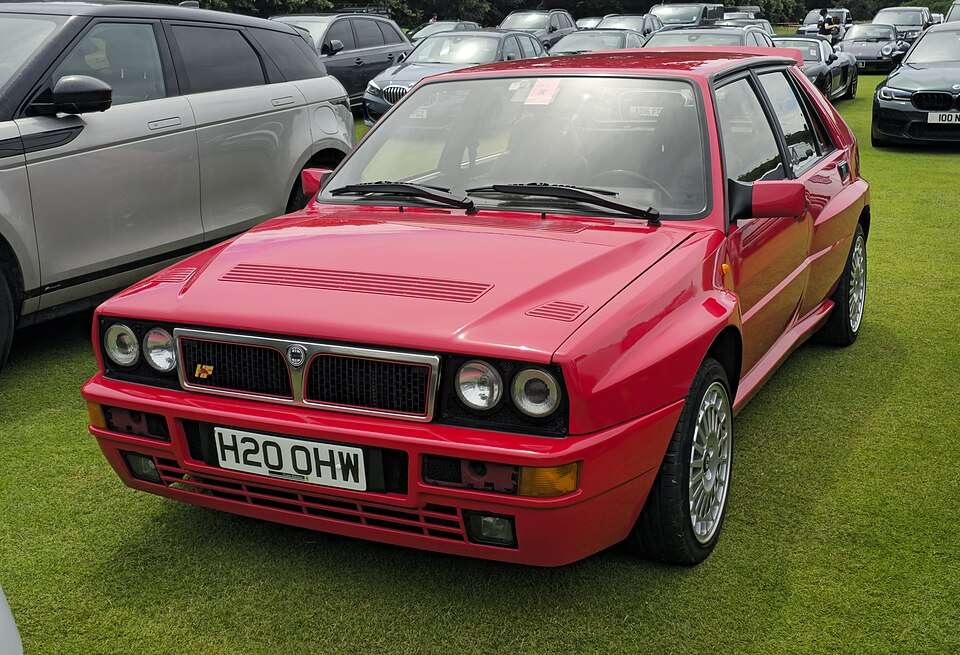
Images are illustrative surviving vehicles, not the advertised cars discussed in the market section. Individual credits and licence links accompany each photograph. No endorsement by a photographer, club, supplier or seller is implied. Prices and availability can change.