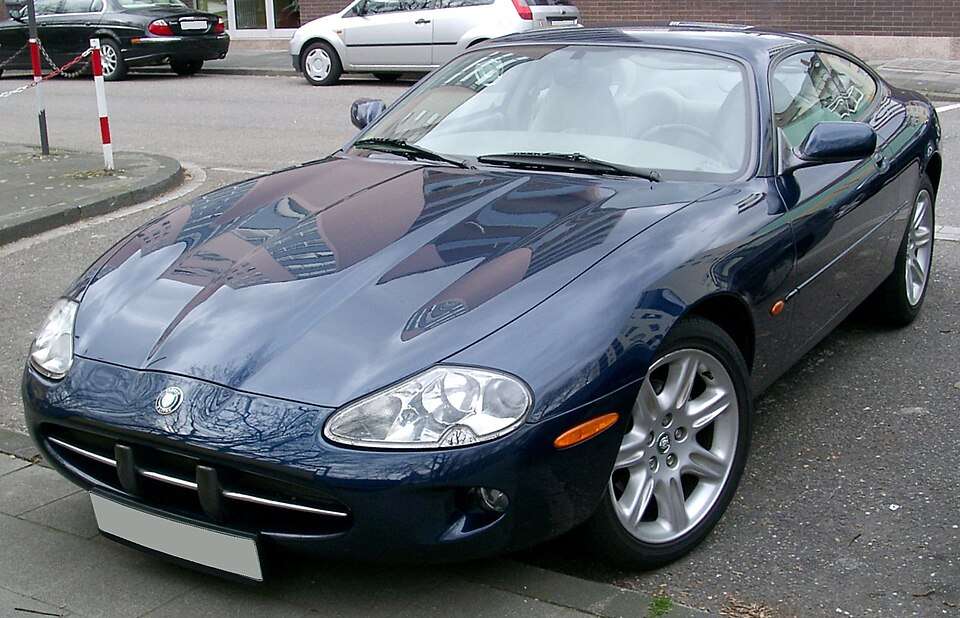
The first XK8 revived Jaguar’s grand-touring appeal with a V8, elegant coupe or Convertible body and a cabin designed for long journeys. The supercharged XKR adds substantial performance. Both can now look remarkably affordable beside their original showroom position, but neither has become a small-car maintenance proposition. This guide covers the steel-bodied X100 generation, separating early 4.0-litre cars from later 4.2-litre versions and the subsequent aluminium X150.
Our buying verdict
Prioritise structural condition, engine history and a properly functioning transmission before colour or wheel size. A sound XK8 with documented timing and cooling work can be a wiser purchase than a cheap XKR with hidden corrosion and warning messages. An independent Jaguar specialist inspection is money well spent.

XK8 or XKR, 4.0 or 4.2?
The XK8 launched in 1996 with Jaguar’s AJ-V8 engine and an automatic gearbox, offered as a coupe or fabric-roof Convertible. The supercharged XKR followed in 1998. Early cars use 4.0-litre engines; the 2003-model-year update, introduced during 2002, brought 4.2-litre engines and a six-speed automatic. Registration year alone can obscure the change, so confirm the build and actual engine/transmission.
The 4.0 XK8 uses a five-speed ZF automatic, while the 4.0 XKR uses a different, Mercedes-sourced five-speed. The 4.2 update brought ZF six-speed transmission technology to the range. Jaguar’s contemporary 2003-model launch information supports that distinction. Do not apply a service kit or fault diagnosis across those gearboxes simply because they all have a familiar Jaguar selector.
| Choice | Why consider it? | Buying emphasis |
|---|---|---|
| 4.0 XK8 | Naturally aspirated V8 touring character | Actual engine condition, early tensioner history, cooling and five-speed gearbox. |
| 4.0 XKR | Supercharged performance in the original shape | Additional supercharger/cooling equipment, correct five-speed transmission and maintenance evidence. |
| 4.2 XK8 | Later engine development and six-speed automatic | Verify actual specification, transmission servicing and body condition. |
| 4.2 XKR | Later supercharged performance | Higher consumable and equipment expectations; do not use an ordinary XK8 budget without checking. |
| Convertible | Open-air GT appeal | Roof hydraulics, seals, fabric, rear glass, alignment and water ingress. |
The later X150 is a different generation with aluminium construction and its own buying concerns. Mixed search results often label later cars loosely as XK8 or X100. Establish what you are viewing before using advertised prices as comparisons. Special editions and performance packages also need authentication through build and service evidence rather than wheels and badges.
For relaxed road use, a naturally aspirated coupe is a sensible starting point. The XKR’s performance is attractive, but it brings additional equipment and can have costlier brakes, tyres and access requirements. That is a reason to budget accurately, not a reason to reject every supercharged car. Buy the specification you actually want to maintain.
Try the driving position, rear-seat space and luggage access. The rear seats are limited and the low body may not suit every passenger or garage entrance. Larger wheels and lower-profile tyres can change ride quality and replacement costs. A specification that photographs well may be less comfortable on your everyday roads.
X100 prices: current asking examples
Car & Classic listings checked on 3 November 2026 included a 1998 4.0 XK8 with 106,500 miles at £3,500, a 1999 4.0 XK8 with 55,000 miles at £6,995, a 2005 4.2 XK8 with 100,000 miles at £7,950 and another 2005 4.2 with 52,703 miles at £10,950. These are seller descriptions and asking figures, not verified condition reports or completed sales.
The same results contained later X150 cars, imports, live auctions and inconsistent gearbox descriptions. Those should not be mixed into a single X100 price range. Compare the same engine, body and broad condition, then account for structural repairs, timing history, gearbox work, roof condition and consumables.
A £3,500 Jaguar can require work costing more than the purchase price. Ask for invoices rather than a verbal statement that it has been serviced, and distinguish a routine oil change from timing-system renewal or a comprehensive suspension refresh. A service stamp does not describe every operation performed.
Obtain a specialist inspection with the car on a lift, suitable diagnostics and a cold start followed by a proper warm road test. Budget for transport and a baseline service as well as the purchase. When faults are identified, request a written estimate with diagnosis, parts, labour and potential associated work rather than using a generic internet allowance.
Rust: the inspection that matters most
The X100 has a steel shell and can corrode seriously. Inspect front floorpan areas and the reinforcing or closing plates that can trap moisture beneath the footwells. Rust repairs here may require interior removal as well as welding and protection. A clean carpet and new underseal are not proof that the enclosed metal is sound.
Have a Jaguar specialist inspect the front chassis-leg areas around and behind the subframe/turret region, including access from the front wheelarches. Significant work can require subframe removal, making a small visible patch a larger fitted job. Assess related mounts, bushes and fixings at the same time so the estimate reflects the real scope.

Inspect the chassis sections ahead of the rear axle, suspension anchor points, A-frame or subframe mounting areas and their surrounding metal. Check sills at both ends, including areas hidden by covers and mudflaps. Dirt and salt can remain behind trim, while a superficial repair may cover rather than remove the affected structure.
Examine wheelarch lips, rear quarter areas above the bumper, boot and bumper mounting brackets. Loose bumpers can involve corroded brackets as well as damaged plastic. Look for mismatched paint, distorted seams and evidence of accident repair. A competent documented repair may be acceptable; unexplained structural work deserves further assessment.
Ask for restoration photographs showing the car before paint and throughout repair. A receipt for repair panels does not prove that they were fitted properly or that adjacent inner structure was sound. Obtain a quotation covering dismantling, welding, paint and corrosion protection. Do not assume panel availability makes restoration economical.
On Convertibles, inspect water tracks, roof-storage and boot areas, seals and carpets. Check door and roof alignment, particularly if the shell has been repaired. A roof that does not meet the body correctly may need more than fresh fabric. Stop short of forcing catches or moving mechanisms until the cause is understood.
V8 engines, timing tensioners and transmissions
Early engine history needs evidence
Early AJ-V8 engines used Nikasil bore treatment, and historical fuel-related bore wear is part of the model’s buying background. Many cars have had replacement engines or other work. Do not reject an engine on age alone, or assume survival proves it healthy. Establish the actual engine and history, then assess cold starting, breathing, oil use and test results where indicated.
A specialist may recommend compression, leakage or other measured checks if symptoms or history justify them. Ask what the findings mean for that engine rather than using one test as a guarantee. Persistent smoke, difficult starting, low oil or unexplained consumption should be investigated before paying for a ready-to-use car.
Timing chains and tensioners
The V8 uses timing chains. Earlier tensioner and guide designs are a known concern, so ask for specific evidence of the components fitted. An invoice should identify whether secondary tensioners alone or a more complete system was renewed, with date, mileage and engine application. “Chains done” does not describe the job sufficiently.
Listen at a genuinely cold start and as oil pressure builds, then assess the warm engine. Rattle can justify urgent investigation; absence of noise does not prove a particular tensioner revision is installed. Have a specialist confirm the appropriate parts for the engine number. A 4.0 kit with an explicit engine-number limit is not automatically suitable for every XK8 and XKR.
Do not invent a universal chain replacement mileage. Maintenance planning depends on fitted parts, condition, lubrication and history. If the evidence is absent, obtain an inspection and current quotation before normal use rather than relying on a seller’s statement that chain-driven engines never need attention.
Cooling and supercharger equipment
Inspect the water pump, thermostat housing and associated plastics, radiator, expansion system, hoses, fans and leaks. Ask about overheating events and why components were replaced. A new pump or aluminium replacement housing can be useful evidence of work, but it does not establish the condition of every part or rule out previous engine damage.
Observe stable warm-up and normal operating behaviour, with diagnostic temperature information where useful. Investigate coolant loss, contamination or abnormal pressure professionally. Do not remove a hot pressure cap. On the XKR, include the supercharger drive and charge-cooling equipment in the inspection and obtain the correct maintenance requirements.
Check auxiliary belts for wear and correct routing, engine mounts for deterioration and oil leaks for their actual source. Management warnings need diagnosis rather than an assumption that they are only an oxygen sensor. Access can be more involved on supercharged cars, so the price of a sensor alone may not represent the repair bill.

Gearbox and driveline
Test the automatic from cold and fully hot, checking engagement, shifts, kickdown and behaviour under normal load. Slipping, flaring, harsh shifts, delayed engagement or transmission warnings deserve proper diagnosis. A fault message may involve electrical supply or controls, but it can also reflect internal wear; do not buy on an untested cheap explanation.
Identify the gearbox before choosing fluid, filter and service procedure. The early XK8 ZF five-speed, early XKR Mercedes five-speed and later ZF six-speed do not share one universal service kit. Ask a transmission specialist to assess history and current condition and agree an appropriate maintenance plan.
Inspect differential and driveline leaks, mounts, joints and any vibration. A complete road test should include normal acceleration, overrun and cruising rather than a short demonstration at low speed. Check for evidence of grounding or poorly fitted exhaust parts that can create noises resembling drivetrain faults.
Suspension, brakes and wheels
Inspect front and rear bushes, wishbones, subframe mounts, dampers, springs and wheel bearings. A rear rattle can have several causes and should not be priced from one online diagnosis. Where adaptive damping is fitted, confirm correct operation and identify whether any replacement equipment retains or changes the original system.
Check braking progressively and inspect discs, pads, calipers, hoses and lines. Brake sizes and performance packages vary; identify actual hardware, especially on an XKR or modified car. Diagnose vibration across discs, hubs, wheels and suspension rather than assuming one cheap pair of discs will cure it.
Examine alloy wheels for cracks, distortion, corrosion and poor repairs, and check tyre age, specification and wear. Larger wheels can be costly to restore and may expose worn suspension through a harsher ride. Include a proper geometry check after relevant repairs rather than using tyres to mask an alignment issue.
Interior, electrics and Convertible roof
Test seat adjustment, heating where fitted, steering-column adjustment, climate control, windows, locks, mirrors, lights, wipers, instruments and audio. Check warning-lamp behaviour and all supplied keys and fobs. A weak battery can create confusing symptoms, so test battery and charging condition, but do not assume that explains every intermittent fault.
Inspect leather bolsters, veneer, console, carpets and coupe headlining. A sagging lining or worn seat can be repaired, but obtain a current fitted quotation. Missing trim and model-specific electronics may be harder to source than basic service items. Water ingress and damaged wiring need attention beyond cosmetic cleaning.

Run the Convertible roof through its proper sequence with the owner’s agreement and appropriate battery support. Check latches, windows, hydraulic leaks, noises and completion. Have a roof specialist diagnose slow or stuck operation before buying a pump or assuming the fluid is the sole cause. Use only the correct specified fluid and service procedure for the system; do not mix generic hydraulic products.
Inspect fabric, seams, heated rear glass, seals and drainage, and check the cabin and boot for moisture. A replacement roof cover does not establish that the frame and hydraulics are healthy. If it cannot close securely, include transport and weather protection in the purchase decision. A car sold as needing a small roof reset should have a diagnosis supporting that description.
Maintenance costs, timing kits and alternators
Affiliate disclosure: eBay parts links below are affiliate links using our campaign. We may earn a commission if you buy, at no extra cost to you. Links open search results rather than a verified individual product. Check engine, year, part number, seller, condition and returns; search results can contain incompatible items.
British Parts listed its BPK374 timing-chain kit at £336.29 plus VAT when checked on 3 November 2026. The primary page described chains, tensioners, guide rails, gaskets/seals and bolts, with XK8/XKR application from 1996 to engine number 0108122359. Confirm the exact contents and engine match before ordering. This is a parts-only example; fitted work, additional damage and other engine versions require separate quotations.
| Job / item | What to include | Model-specific search |
|---|---|---|
| 4.0 timing-system work | Engine-number check, correct chain/tensioner scope, seals, bolts, diagnosis and labour. | Compare 4.0 V8 timing kits |
| Alternator | Test charging and cables; confirm engine, output, pulley and access requirements. | Search X100 4.0 alternators |
| Cooling maintenance | Pump, thermostat/housing, hoses, fans and correct coolant procedure. | Search X100 cooling components |
| Routine service | Correct engine specification, oil, filters, plugs and belts. | Search 4.2 XK8 service parts |
| Gearbox service | Identify actual transmission and correct fluid/filter/procedure. | Search later ZF gearbox service parts |
| Suspension and brakes | Actual damping and brake equipment; include mounts, labour and alignment. | Search X100 suspension parts |
| Convertible roof | Diagnose first and identify exact component and fluid requirements. | Search X100 roof components |
Search results may include the later X150, V6 kits from other Jaguars, used components or incomplete packages. Verify engine and chassis application, part numbers, condition, quality, VAT, delivery and returns. The eBay links are separate shopping searches and do not guarantee the specialist’s kit or price. A catalogue result is not proof of compatibility.
Agree a dated baseline service covering lubrication, cooling, belts, timing evidence, brakes, tyres, gearbox and roof maintenance where applicable. Low mileage does not suspend age-related deterioration. Keep invoices with dates and mileages, and separate routine servicing from a diagnosis-led repair or a complete restoration.
Hidden X100 ownership costs
Set a first-year budget before making an offer. Add the purchase price, fees and collection, independent inspection, immediate servicing, diagnosed repairs, insurance, storage and a reserve for unresolved work. Use quotations for the car in front of you; a percentage of the purchase price is a poor substitute for knowing what needs doing.
- Structural repairs can require interior or subframe removal, associated mounts, paint and protection.
- Timing work may uncover damaged guides or additional wear; a cheap tensioner pair is not a complete fitted budget.
- XKR access, brakes, tyres and charge-cooling equipment can differ materially from an ordinary XK8.
- Roof hydraulics, headlining, seat repairs, keys and model-specific electronics can add up even when the car drives well.
- Parts are only part of the bill. Access, diagnosis, fluids, alignment, seized fasteners and VAT can change the total. Ask the workshop what its quotation includes and how additional work will be agreed.
- Exchange units and delivery. Alternators, starters and other rebuilt components can require a returnable old unit. Compare the surcharge, return postage, deadline and warranty before choosing a supplier.
- Insurance and downtime. Obtain a quote for the actual specification and declared modifications. Allow for recovery and alternative transport if this will be your only car.
XK8 and XKR viewing checklist
Before travelling
- Confirm registration, exact version, seller identity and ownership history. Ask about accidents, insurance write-offs, engine changes and modifications.
- Read the MOT chronology and request invoices, not just a stamped service book. Agree a cold start, inspection access and a properly insured test drive.
- Get a written list of included keys, original parts and any outstanding faults. For a distant car, request current underside and engine-bay photographs.
At the car
- □ Confirm X100 generation, XK8/XKR, 4.0/4.2, body style and actual transmission.
- □ Inspect footwell plates, floors, chassis-leg regions, sills and suspension/subframe mounting areas on a lift.
- □ See a cold start and fully hot running; investigate engine condition, oil use, cooling history and warning messages.
- □ Read itemised tensioner/chain invoices and confirm engine-number compatibility of the work.
- □ Test automatic operation, brakes, suspension and tyres, and obtain appropriate diagnostics for faults.
- □ Operate all electrics and any roof; price a complete first-year plan and missing trim before agreeing a deal.
- □ Compare identification with documents, check panel alignment and inspect accessible structure on a lift. Never go beneath a car supported only by a jack.
- □ Try lights, wipers, washers, heater, locks and warning lamps. Inspect tyres for age and damage as well as tread.
- □ Drive from cold to fully warm, using gears and brakes progressively. Note smoke, overheating, vibration, warning lights or hesitant acceleration; stop if a serious fault develops.
- □ Recheck hot starting and visible leaks afterwards. Record unresolved faults and obtain specialist estimates before paying a deposit.
Proceed when identity, structure and maintenance evidence fit the description. Investigate when a fault has a plausible cause but no diagnosis. Walk away when crucial inspection is refused, identity remains uncertain or the budget depends on a serious fault being cheap. Put any inspection condition and deposit terms in writing.
Jaguar X100 buying questions
Does an XK8 have a cambelt?
The AJ-V8 uses timing chains. Early tensioner and guide history matters, so obtain evidence of what is fitted and specialist advice where it is unknown.
Do all XKRs use a Mercedes gearbox?
No. The early 4.0 XKR uses a Mercedes-sourced five-speed, while the 4.2 update brought ZF six-speed technology. Identify the actual transmission before servicing.
Should I reject every early Nikasil engine?
No. Establish the actual engine and repair history and assess present condition with suitable specialist checks. Age or survival alone does not prove health or failure.
Where is serious X100 rust found?
Check front floorpan/plate areas, front chassis-leg regions, sills, rear structure and suspension/subframe mounts, plus arches and previous repairs.
Is a cheap XKR inexpensive to maintain?
Not necessarily. Its original level of equipment, performance and access requirements remain relevant even when its purchase price is low. Budget from an inspection and fitted quotations.
Sources and research method
Independently written desk research by Unusual Cars UK, checked on 3 November 2026. We have not road-tested or inspected the illustrated cars or independently authenticated sellers’ claims. Buying recommendations and inspection priorities are our editorial assessment. Historical guides inform technical context; their old price bands are not current valuations. Confirm service requirements against the actual vehicle and suitable workshop information.
- Classics World: X100 buyer’s guide — Body and ownership inspection context; gearbox details cross-checked and historic value predictions excluded.
- Jaguar 2003-model launch information, reproduced by Automotive Intelligence — Contemporary manufacturer material supporting the 4.2 update and ZF six-speed transmission.
- British Parts: BPK374 — Primary V8 application, engine-number limit and plus-VAT parts price checked 3 November 2026.
- Car & Classic: XK8/XKR listings — Dated asking examples; X150, imports and inconsistent specifications separated.
- GOV.UK used-car checks and MOT history — document and test-history checks.
Images are illustrative surviving vehicles, not the advertised cars discussed in the market section. Individual credits and licence links accompany each photograph. No endorsement by a photographer, club, supplier or seller is implied. Prices and availability can change.