Unusual Cars model guide
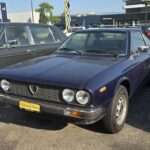
Lancia Beta Berlina
The advanced fastback saloon that introduced the Fiat-era Lancia—and became inseparable from Britain’s most famous corrosion controversy.

Quick answer: The Beta Berlina reached Britain in 1973 and was sold here with a range of Fiat-derived but Lancia-developed twin-cam engines. It combined front-wheel drive, a five-speed gearbox, independent suspension and four-wheel disc brakes with a practical fastback body—and later became the model most closely associated with Lancia’s UK rust scandal.
Lancia Beta Berlina history and UK-market story
Presented in 1972, the Beta was Lancia’s first completely new production model after Fiat took control. The Berlina was not a conventional three-box saloon: its stepped fastback profile concealed a large rear hatch, offering family-car practicality in a compact footprint.
British sales began in July 1973. Depending on year and series, UK buyers encountered 1.6, 1.8 and 2.0-litre versions, with the familiar Lampredi twin-cam extensively adapted for transverse installation. A five-speed gearbox, rack-and-pinion steering, independent MacPherson-strut suspension and disc brakes at all four wheels gave the car unusually sophisticated road manners.
Three principal visual generations followed. The 1975 Series 2 gained a larger glass area and revised nose, while the later Series 3 adopted further trim and equipment changes. Early corrosion problems, a widely publicised manufacturer buy-back and sensational reporting badly damaged the car and the marque in Britain. Not every Beta dissolved, but structural condition now matters far more than badge, engine size or cosmetic shine.
Lancia Beta Berlina specifications
| Years | 1972–1984; UK sales from 1973 |
|---|---|
| Engines | 1.4, 1.6, 1.8 and 2.0-litre twin-cam fours, market dependent |
| Transmission | Five-speed manual; automatic on selected versions |
| Drive | Front-wheel drive |
| Chassis | Independent strut suspension; four-wheel disc brakes |
| Typical UK performance | 1.8-litre: about 110 bhp and 110 mph |
Lancia Beta Berlina buying guide: rust and common problems
- Structure first: inspect inner and outer sills, floors, front crossmember, suspension turrets, subframe points and rear arches.
- Previous repairs: look for fresh underseal over poor welding, distorted jacking points and incomplete restoration photographs.
- Twin-cam engine: require timing-belt history and check oil pressure, cooling, smoke and carburettor or injection condition.
- Gearbox and steering: test synchromesh, driveshaft joints, wheel bearings and rack condition.
- Interior: dashboards, instruments, switchgear and correct seat fabrics are scarce.
- Model identity: confirm the series, engine, chassis number and UK registration history before valuing a rare survivor.
The Lancia Beta rust scandal explained
The phrase Lancia Beta rust scandal still dominates searches for the car, but the full story is more nuanced than the popular claim that every Beta rapidly dissolved. Early cars could suffer serious corrosion, including around structural mounting points, and Lancia’s highly publicised UK buy-back campaign amplified the damage to the marque’s reputation. Manufacturing quality, steel protection, road salt and poor repairs all played a part. Surviving cars are not automatically rust-free: the correct response is a thorough inspection of the shell and documentary evidence of any restoration, not an assumption based on paintwork.
Which Beta Berlina should you buy?
Condition should come before engine size or series. The early 1.6 and 1.8 cars preserve the original character, while later 2.0-litre versions offer easier performance and more equipment. Series 2 cars have the larger glass area introduced in 1975; later Series 3 examples received further styling and cabin revisions. Whichever version you prefer, a complete car with sound structure, correct trim and a specialist-maintained twin-cam is a better purchase than a cheaper project. Rebuilding a rusty shell and locating Berlina-specific interior parts can exceed the value of the finished car.
Lancia Beta Berlina FAQs
Was the Lancia Beta Berlina sold in Britain?
Yes. UK sales began in 1973, with several engine sizes and successive series offered during the 1970s and early 1980s.
Is the Beta Berlina a hatchback?
Yes. Although Lancia called it a Berlina, its fastback body has a large rear hatch and folding rear seat, giving it useful family-car practicality.
Do all Lancia Betas rust badly?
No, but corrosion is the decisive buying issue. Inspect the structure carefully even on restored cars, concentrating on sills, floors, crossmembers, suspension mounts, subframe points and screen surrounds.
What engine does the Beta use?
The Beta uses Lancia-developed versions of the Fiat Group Lampredi twin-cam four-cylinder, mounted transversely for front-wheel drive. UK engine availability varied by year.
Verdict
The Beta Berlina is far better than its British reputation suggests: technically ambitious, practical and enjoyable to drive. Nevertheless, sentiment cannot repair a weak shell. The right car is the most structurally honest survivor with a documented restoration or long-term specialist care.
Research basis: Stellantis Heritage, period model specifications, contemporary UK reporting and specialist Beta buying guides.