UNUSUAL CARS MODEL GUIDE
The Kia Cerato occupied an awkward but important moment in the company’s British story. It was more modern and polished than the Mentor it replaced, yet arrived only shortly before the European-designed cee’d changed perceptions of Kia entirely. Its UK career lasted barely two years, making survivors unexpectedly scarce.
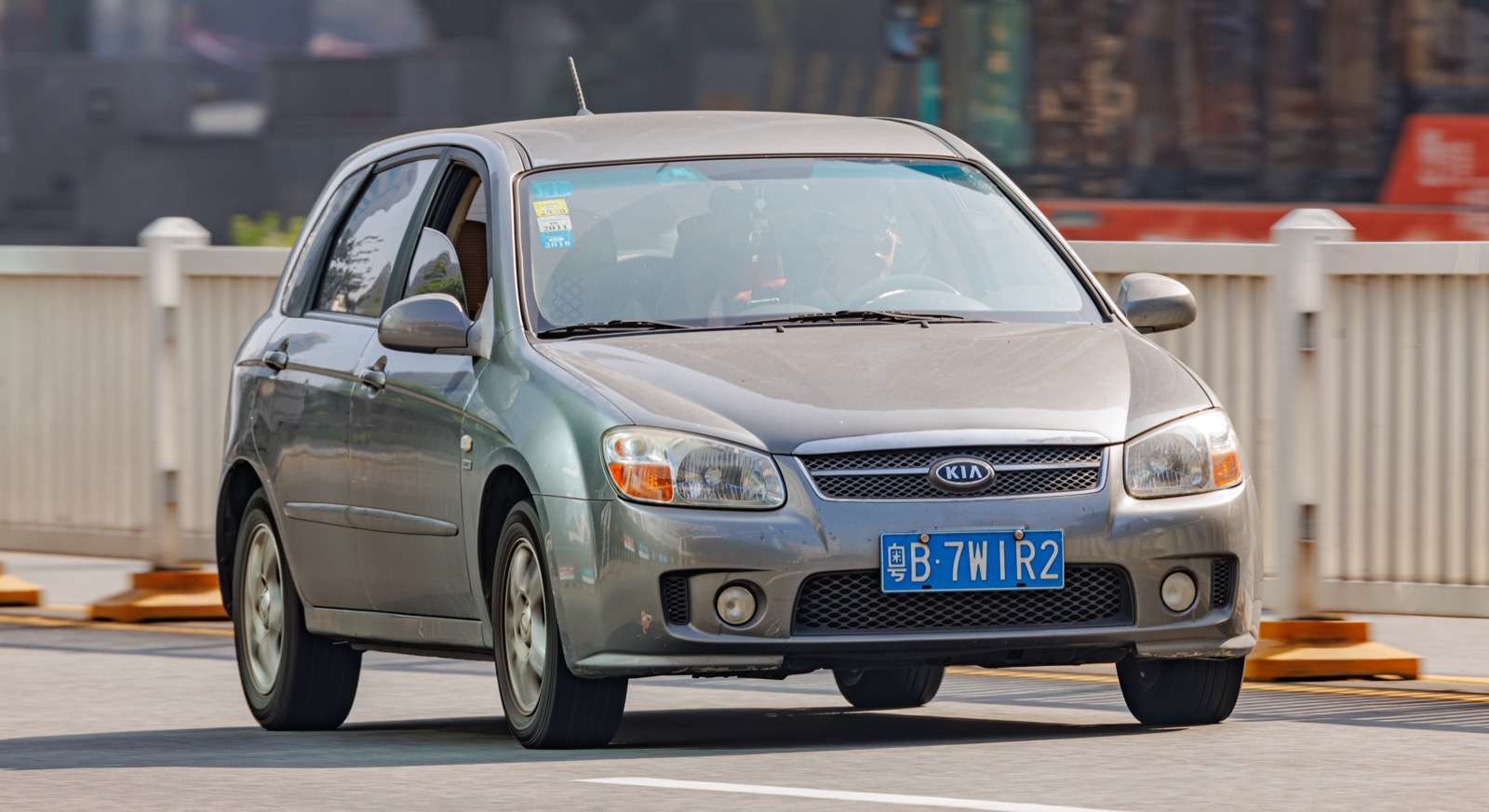
Featured image: Kia Cerato LD hatchback. Photograph by Dinkun Chen, CC BY-SA 4.0, via Wikimedia Commons; resized and locally hosted.
A short bridge to the cee’d
The Cerato made its European debut at the 2004 Geneva motor show and reached Britain that September. Its clean, conservative styling was less eccentric than the Shuma’s, while the cabin, independent suspension and safety equipment showed how quickly Kia was improving. Hatchback and saloon bodies gave it broader appeal than several earlier Kia family cars.
At launch the 1.6-litre petrol was the mainstay. A 2.0-litre petrol joined in January 2005 and the 1.5 CRDi followed in April, making the Cerato the first conventional Kia passenger car in Britain to offer diesel power outside the company’s MPVs and 4x4s. GS, LX and SE specifications were joined by the Zapp special edition in 2006.

UK range and specifications
| Specification | UK-market Kia Cerato |
|---|---|
| UK sales | September 2004–early 2007 |
| Bodies | Five-door hatchback and four-door saloon |
| Petrol engines | 1.6-litre (about 103 bhp); 2.0-litre (about 142 bhp) |
| Diesel | 1.5 CRDi, approximately 101 bhp |
| Transmission | Five-speed manual; automatic on selected petrol models |
| Suspension | Independent front and rear |
| Replacement | Kia cee’d |
Contemporary road tests praised the space, equipment and improving build quality more readily than the steering or refinement. That was enough for value-led buyers, but the Cerato never established a strong identity. Once the Slovakia-built cee’d appeared with European styling and a seven-year warranty, its predecessor became yesterday’s Kia almost overnight.
Love cars you don’t see every day?
Get forgotten cars, surprising motoring stories and the most interesting finds from Unusual Cars by email.
Free to join. No spam. Unsubscribe whenever you like. See our privacy policy.
Kia Cerato buying guide
Body and interior
Look closely at sills, wheelarches, floor edges, subframes and suspension mounts, especially on a car that has spent years outdoors. Check for mismatched paint and poor parking repairs. The cabin is hard-wearing but inexpensive plastics scratch, vents and handles can break, and replacement trim is increasingly difficult to find.

Engines and gearboxes
Demand a credible service history. Petrol engines should idle smoothly without smoke, overheating or heavy oil leaks. On the CRDi, check for reluctant cold starting, injector problems, turbo smoke and neglected oil changes. A manual should select every ratio cleanly and show no clutch slip; an automatic needs smooth engagement and changes.
Suspension, brakes and electrics
Listen for worn bushes, links and wheel bearings and inspect tyres for uneven wear. The car should brake straight without a warning lamp. Test the ventilation fan, air conditioning, windows, mirrors, central locking and stereo. A mechanically sound Cerato can be cheap to run, but model-specific body and trim parts are now the real ownership challenge.

Research sources
- RAC Drive: Kia Cerato 2004–2007 used review
- New Car Net: Kia Cerato buying guide
- Kia UK: corporate history
Continue the Kia story
Explore the Rare & Performance Kias hub, then follow the Cerato with the later pro_cee’d GT.