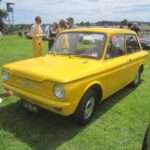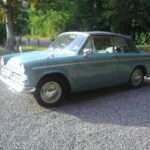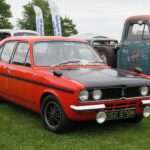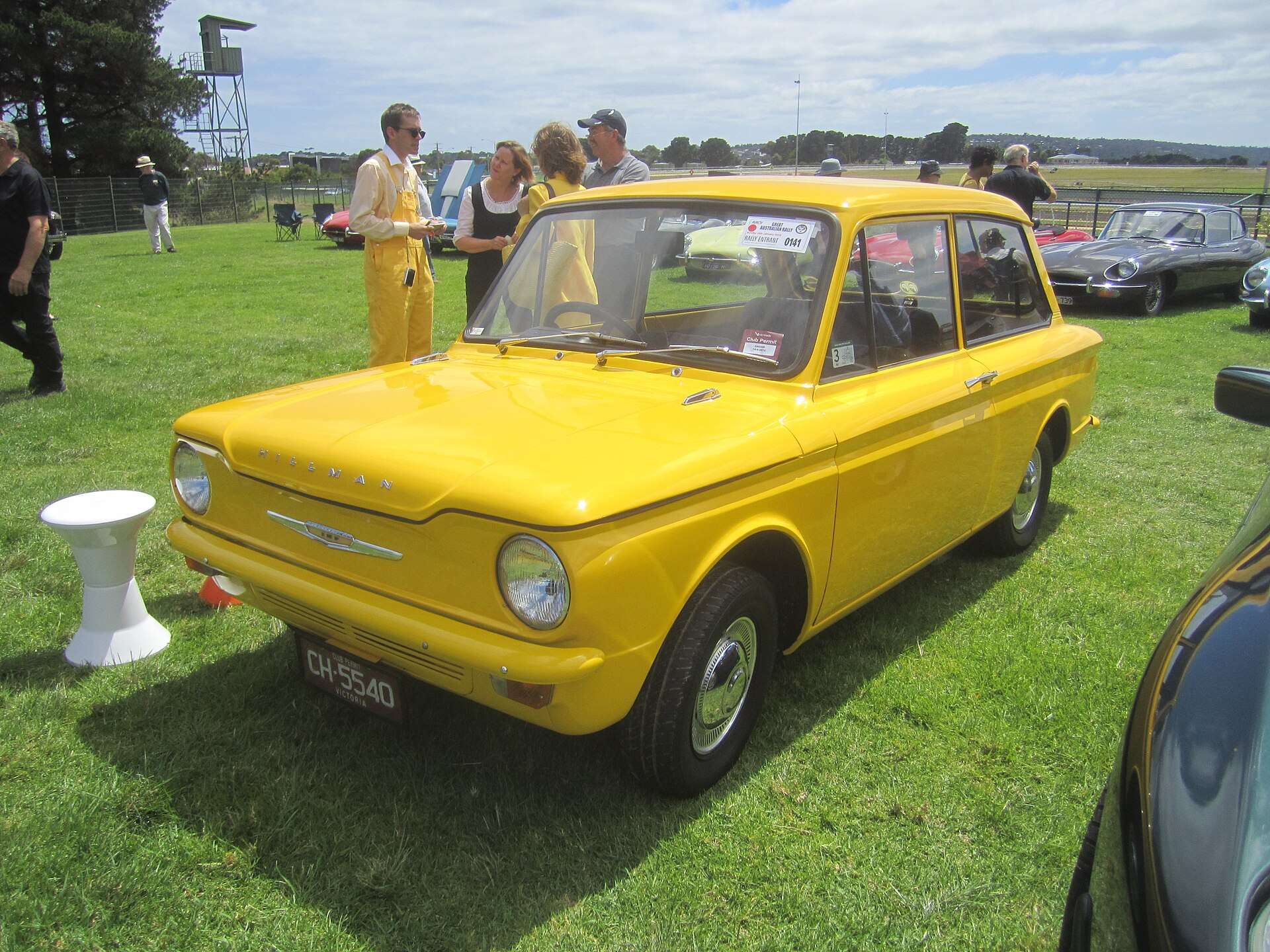
The Hillman Imp was Rootes Group’s ingenious answer to the Mini: a compact British saloon with a rear-mounted all-aluminium engine, fully independent suspension and an opening rear window. Launched in 1963 and built at a new Scottish factory, it was technically ambitious, enjoyable to drive and ultimately undermined by rushed development and inconsistent early quality. Surviving examples are now distinctive, usable classics with a loyal specialist following.
At a glance
- UK production: 1963–1976
- Assembly: Linwood, Renfrewshire
- Engine: 875cc or 998cc overhead-cam aluminium four-cylinder
- Layout: rear engine, rear-wheel drive
- Gearbox: four-speed manual, all-synchromesh
- Body styles: two-door saloon, Californian coupé and Husky estate
- Related models: Singer Chamois, Sunbeam Imp Sport and Stiletto, Commer van
Rootes takes on the Mini
Rootes began Project Apex at the end of the 1950s, when the company needed a modern small car to challenge BMC’s new Mini. Engineers Tim Fry and Mike Parkes chose a very different solution. Instead of putting the engine across the front, they placed a light four-cylinder unit behind the rear wheels. The 875cc engine was derived from a Coventry Climax design and used an aluminium block and cylinder head with an overhead camshaft—exotic engineering for an inexpensive family car.
The compact power unit left useful passenger space and allowed the rear window to hinge upwards for access to a shallow luggage platform. There was also a boot at the front. Independent suspension, rack-and-pinion steering and a four-speed gearbox with synchromesh on every forward ratio made the Imp unusually sophisticated. On paper it looked like one of Britain’s cleverest small cars.

Linwood and the difficult launch
The Imp was inseparable from the purpose-built Linwood plant near Glasgow. Government regional policy encouraged Rootes to establish production far from its traditional Midlands supplier base. Engines were cast at Linwood, while some components still travelled hundreds of miles between Scotland and Coventry. A new workforce, unfamiliar production systems and pressure to launch quickly all contributed to uneven build quality.
Early cars suffered from cooling troubles, weak water pumps, throttle-linkage problems and head-gasket failures. The engine itself was not fundamentally fragile, but it demanded correct coolant, careful bleeding and sound maintenance. Those early faults damaged the Imp’s reputation just as the Mini was becoming a cultural phenomenon. Rootes improved the car substantially, yet the first impression proved hard to erase.
How the range developed
The original saloon was joined by better-equipped Super versions and numerous badge-engineered relations. Singer sold the more luxurious Chamois, while Sunbeam offered sporting derivatives with twin carburettors. The attractive Californian used a lower fastback roof, and the boxier Husky provided estate-car practicality. Commercial buyers could choose the Commer Imp van.
A revised Mk II arrived in 1965 with detail improvements, conventional throttle operation and revised trim. Sporting 998cc derivatives demonstrated how effective the basic chassis could be in competition. Imps became successful in club racing and rallying, helped by low weight, excellent traction and engines that responded well to tuning. Production continued under Chrysler ownership until 1976. Around 440,000 Imp-family cars were built—far short of the original plan, but enough to create one of Britain’s most memorable small-car families.

UK specifications
| Version | Engine | Typical output | Character |
|---|---|---|---|
| Imp / Imp Deluxe | 875cc single-carburettor four | About 39bhp | Simple, light and economical |
| Imp Super | 875cc four | About 42bhp | Improved trim and everyday usability |
| Imp Sport / sporting derivatives | 875cc twin-carburettor four | About 51bhp | Livelier engine and stronger enthusiast appeal |
| 998cc derivatives | 998cc four | Varied by model and tune | More torque; frequently modified |
Specifications changed repeatedly and many surviving cars have acquired later engines, cylinder heads, carburettors or suspension parts. Identification should rely on chassis and engine numbers, period records and evidence of specification rather than badges alone.
What is an Imp like to drive?
A sound Imp feels light, alert and more substantial than its size suggests. The steering is direct, the gearbox is notably pleasant and the engine enjoys revs. With most of the weight over the driven wheels, traction is strong and the car works well on narrow, twisting roads. Later suspension settings are more predictable than those of the earliest cars, although abrupt lift-off inputs can still reveal the rear-engined balance.
Performance from a standard 875cc car is modest by modern standards, but low weight keeps it engaging. Cruising is happiest below contemporary motorway speeds, and mechanical noise is part of the experience. The opening rear glass makes the little saloon surprisingly convenient, even though luggage space is divided between front and rear.
Hillman Imp buying guide
Body and structure
Rust is the principal threat. Inspect the sills, floor edges, front suspension mounts, wheelarches, rear crossmember, door bottoms and the structure around both luggage compartments. Look beneath carpets and inside box sections where possible. Panel fit can reveal old accident damage or cosmetic restoration over poor metalwork. Replacement panels exist, but a deeply corroded shell can consume far more than the car’s value.
Cooling system and engine
The rear engine and front-mounted radiator require long coolant pipes and careful bleeding. Check for overheating, coolant loss, oil in the water, combustion pressure in the expansion tank and evidence of repeated head-gasket trouble. Correct antifreeze is essential because the alloy engine is vulnerable to corrosion. A noisy timing chain, low oil pressure or blue exhaust smoke warrants investigation. Do not assume every hot-running Imp merely needs a new radiator cap.
Transmission, steering and suspension
The gearbox should select every ratio cleanly and remain quiet on the overrun. Check driveshaft couplings, wheel bearings and rear suspension bushes. Excessive steering play, uneven tyre wear or a car that sits incorrectly may point to worn components or poor alignment. Modified cars can be excellent, but the quality and geometry of the work matter more than the parts list.
Trim and originality
Model-specific seats, instruments, badges and exterior fittings can be harder to find than mechanical components. Establish whether the car began as a Deluxe, Super, Californian or another derivative, and decide how much originality matters to you. Competition-inspired upgrades are common and can improve the driving experience, but they should be declared, engineered properly and reflected in the paperwork.

Ownership, parts and values
The Imp benefits from knowledgeable clubs and specialists, with good support for routine mechanical parts and many upgrades. Body panels, rare trim and correct sporting-model components require more patience. A properly sorted cooling system and regular maintenance make the car far less troublesome than its old reputation suggests.
Ordinary saloons remain among the more accessible distinctive British classics, while Californians, original sporting derivatives and unusually correct early cars command stronger prices. Restoration economics favour buying the best structurally sound example available. Documentation showing careful cooling-system work, corrosion repairs and sustained use is more valuable than fresh paint alone.
Why the Hillman Imp matters
The Imp was not simply a failed Mini rival. It was an ambitious attempt to create a new kind of British small car, backed by a new factory and engineering rarely seen at its price. Its troubled launch became the familiar story, but the car’s lively chassis, clever packaging and competition record explain why enthusiasm has endured. A good Imp is characterful, technically fascinating and genuinely different from almost every other 1960s family car.