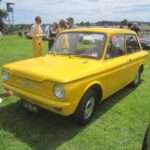
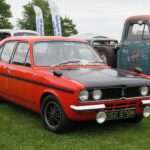
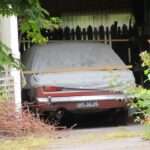
The Hillman Minx was one of Britain’s longest-lived family-car names, spanning nearly four decades of changing taste and technology. From the compact side-valve cars of the 1930s to the American-influenced Audax saloons and final Arrow-based New Minx, it served as the dependable centre of Hillman’s range. Its familiarity once made it easy to overlook; its rarity today makes the full story especially worth preserving.
At a glance
- UK production: 1932–1970
- Main eras: pre-war, immediate post-war, Audax and Arrow-based New Minx
- Body styles: saloon, tourer, convertible, estate and Californian hardtop
- Engines: side-valve and overhead-valve four-cylinders from roughly 1.0 to 1.7 litres
- Layout: front engine, rear-wheel drive
- Related models: Hillman Husky, Singer Gazelle and Sunbeam Rapier
- UK role: Rootes Group’s mainstream family car
The original Minx
Hillman introduced the Minx in 1932 after becoming part of the Rootes organisation. It was designed as an affordable, well-equipped light family car and quickly became the company’s defining model. Early cars used conventional separate-chassis construction and side-valve four-cylinder engines. Regular styling and mechanical revisions kept the Minx competitive through the 1930s, including the more streamlined Aero and “Magnificent” generations.
Production stopped during the Second World War and resumed in 1945 with a revised version of the pre-war design. These early post-war Minxes helped satisfy enormous demand for basic transport at home while supporting Britain’s urgent export drive. They were not fast, but their simple engineering and sensible proportions suited the period.

Post-war development
The Minx progressed through a complicated sequence of Marks and Phases during the late 1940s and early 1950s. Styling became more integrated, hydraulic brakes appeared and the engine grew in capacity. The important move from side valves to an overhead-valve unit improved performance and prepared the car for a much more modern successor.
This period also produced attractive variations including convertibles, estates and the two-door Californian hardtop. Rootes was skilled at sharing structures and components across its marques, so related Singer, Sunbeam and Humber models often combined familiar underpinnings with different engines, trim or body details.
The Audax Minx
The 1956 Audax-generation Minx is the version many enthusiasts picture first. Styled with input from Raymond Loewy’s organisation, it adopted a lighter monocoque body with pronounced tailfins, a wraparound rear window and distinctly transatlantic detailing. Beneath the fashion was straightforward front-engine, rear-wheel-drive engineering.
The Audax family evolved through numerous Series designations. Engine capacity rose from 1390cc through 1494cc to 1592cc and, in related or late forms, 1725cc. Saloons were joined by estates, convertibles and the stylish Californian. The same platform underpinned the Singer Gazelle and Sunbeam Rapier, giving owners useful mechanical commonality today.

The New Minx and the end of the name
In 1967 the Minx badge moved to the new Arrow platform shared with the Hillman Hunter. The New Minx was effectively the simpler, less powerful member of the range, using familiar 1.5- and 1.7-litre engines with clean, restrained styling. It was a capable car, but the Hunter name increasingly carried Hillman’s medium-car ambitions.
Minx production ended in 1970, closing a run that had begun before many British households owned a car. Across its life the model changed from a separate-chassis side-valve machine into a modern monocoque saloon, mirroring the development of the British family car itself.
Representative UK specifications
| Generation | Typical engines | Construction | Character |
|---|---|---|---|
| Pre-war Minx | 1.0–1.2-litre side-valve fours | Separate chassis | Compact, simple and historically significant |
| Post-war Mark/Phase cars | 1.2–1.4-litre side-valve and OHV fours | Separate chassis evolving by phase | Traditional early post-war family transport |
| Audax Series I–VI | 1.4-, 1.5- and 1.6-litre OHV fours | Monocoque | Stylish, varied and the best-supported generation |
| New Minx | 1.5- and 1.7-litre OHV fours | Arrow monocoque | Later, more restrained Hunter relative |
The Minx name covers too many revisions for one specification figure to describe every car. Buyers should identify the exact series, year, engine and body style before ordering parts or comparing values.
What is a Minx like to drive?
Experience depends heavily on generation. A pre-war or early post-war car is slow, narrow and best enjoyed on quiet roads, where light traffic allows its simple controls and period character to shine. Later Phase cars feel more capable but remain distinctly traditional.
An Audax Minx is the easiest route into the classic Minx experience. It has reasonable space, light controls and enough performance for relaxed A-road touring, particularly in later 1.6-litre form. The ride is comfortable and the steering predictable rather than sporting. The New Minx feels more modern and settled, sharing much of the Hunter’s dependable road manners.
Hillman Minx buying guide
Identify the car first
Model terminology is unusually important. Marks, Phases and Series can look similar while using different panels, trim and mechanical parts. Record the chassis and engine numbers, compare them with club data and establish whether the body style and specification are original. Misidentified cars cause problems when sourcing parts and valuing rare variants.
Body and chassis
On separate-chassis cars, examine the frame, outriggers, body mounts, floors and timber or steel body structure as applicable. Audax and Arrow monocoques need close inspection of sills, jacking points, inner wings, suspension mounts, floor edges and rear spring hangers. Convertibles demand special attention to sill strength and door alignment. Check estates and Californians for corrosion around tailgates, roof gutters and unique rear panels.
Engine and cooling
Side-valve engines are simple but can be tired after decades of use; low compression, smoke, bearing noise and overheating matter more than superficial cleanliness. OHV engines should show healthy oil pressure and stable coolant temperature. Listen for timing-chain and valve-gear noise, inspect for leaks and verify that carburettor and ignition parts match the model.
Transmission, brakes and steering
Expect some period noise, but excessive gearbox whine, jumping out of gear or a noisy differential suggests work ahead. Cars fitted with overdrive should engage and release cleanly. Pulling brakes, seized cylinders and perished hoses are common after storage. Steering play can arise from several joints and boxes; assess the complete system rather than accepting vagueness as normal.
Trim and rare body styles
Mechanical components often interchange across Rootes models, but Minx-specific brightwork, lights, dashboards and upholstery can be difficult to replace. Convertible and Californian parts are particularly scarce. A complete, shabby car may be a better proposition than a freshly painted example missing irreplaceable details.

Ownership and values
Owners’ clubs are essential because the Minx spans so many generations. Routine service parts for popular post-war engines remain obtainable, while early mechanical items, body panels and trim may require specialist searches. The simple engineering rewards careful home maintenance, but professional structural restoration can be expensive.
Four-door saloons usually remain the most affordable. Pre-war cars appeal to a more specialised audience, while sound Audax convertibles, Californians and exceptional original cars command the strongest prices. The New Minx is rare but often less expensive than its scarcity suggests. In every case, documented structural quality should outweigh paint finish.
Why the Minx matters
Few names illustrate British motoring change as clearly. The Minx carried families through the depression, post-war austerity, the export boom and the style-conscious 1960s. It was not a single landmark design but a succession of practical cars that evolved with their buyers. That breadth—and the disappearance of ordinary survivors—makes it one of Hillman’s most important stories.