UNUSUAL CARS MODEL GUIDE
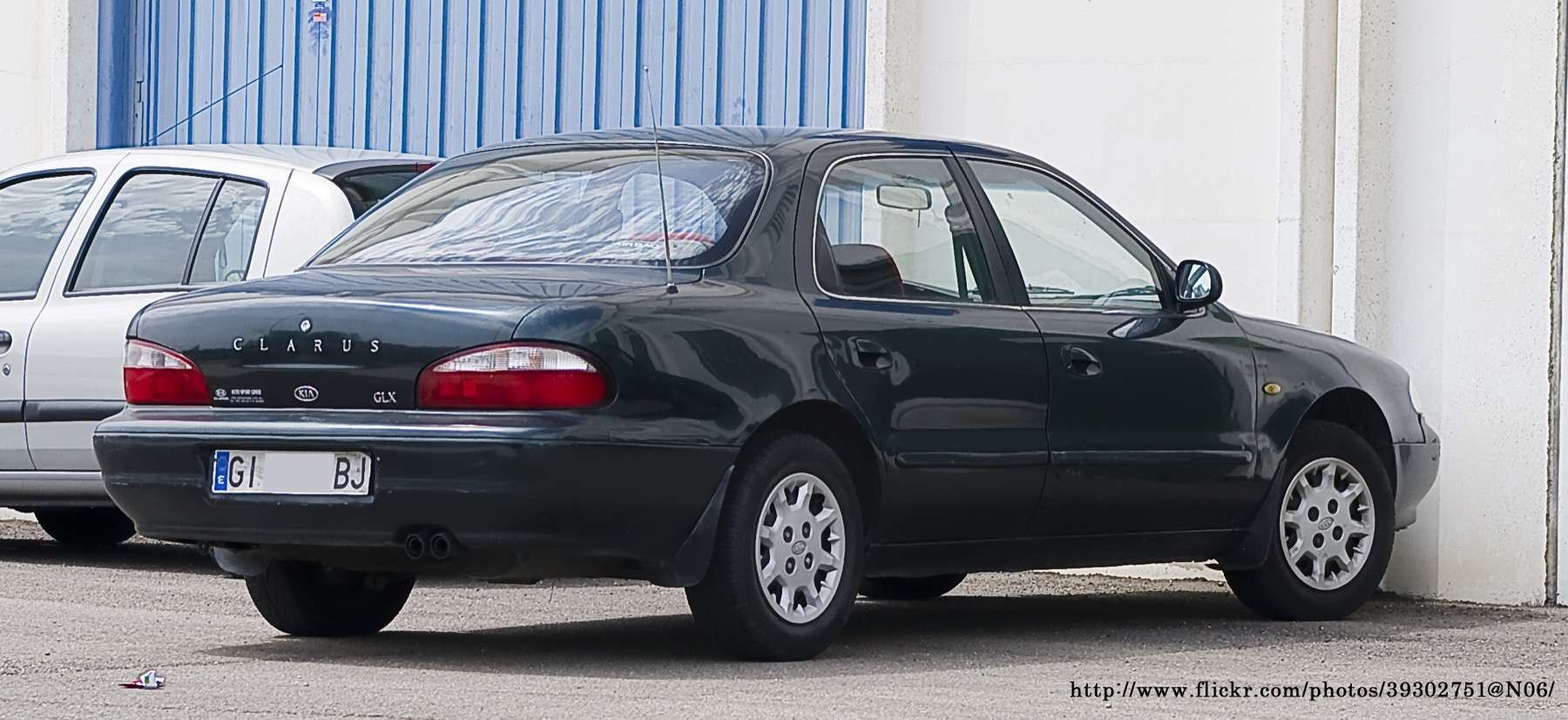
The Kia Clarus was a large family saloon that arrived in Britain almost unnoticed and disappeared less than two years later. Mazda-derived engineering, generous equipment and an exceptionally low price made rational sense, yet UK buyers largely ignored it. That brief career has turned the Clarus into one of the rarest ordinary Korean cars of its era.
Featured image: Kia Clarus 1.8. Photograph by Niels de Wit, CC BY 2.0, via Wikimedia Commons; resized and locally hosted.
From Credos to Clarus
Kia introduced the car in South Korea as the Credos in 1995. Its platform and much of its mechanical thinking came from the Mazda 626, continuing the Japanese connection already visible in the Pride and Mentor. By the time the renamed Clarus reached Britain four years later, the underlying design was no longer new—but it offered a great deal of metal and equipment for the money.
The September 1999 UK launch formed part of an expanded Kia range alongside the Sedona MPV and Shuma hatchback. Prices started at roughly £11,000, placing the Clarus below many smaller mainstream cars. The problem was image: buyers prepared to accept an unfamiliar badge often preferred the practicality of Kia’s MPVs and four-wheel drives.
UK versions and equipment
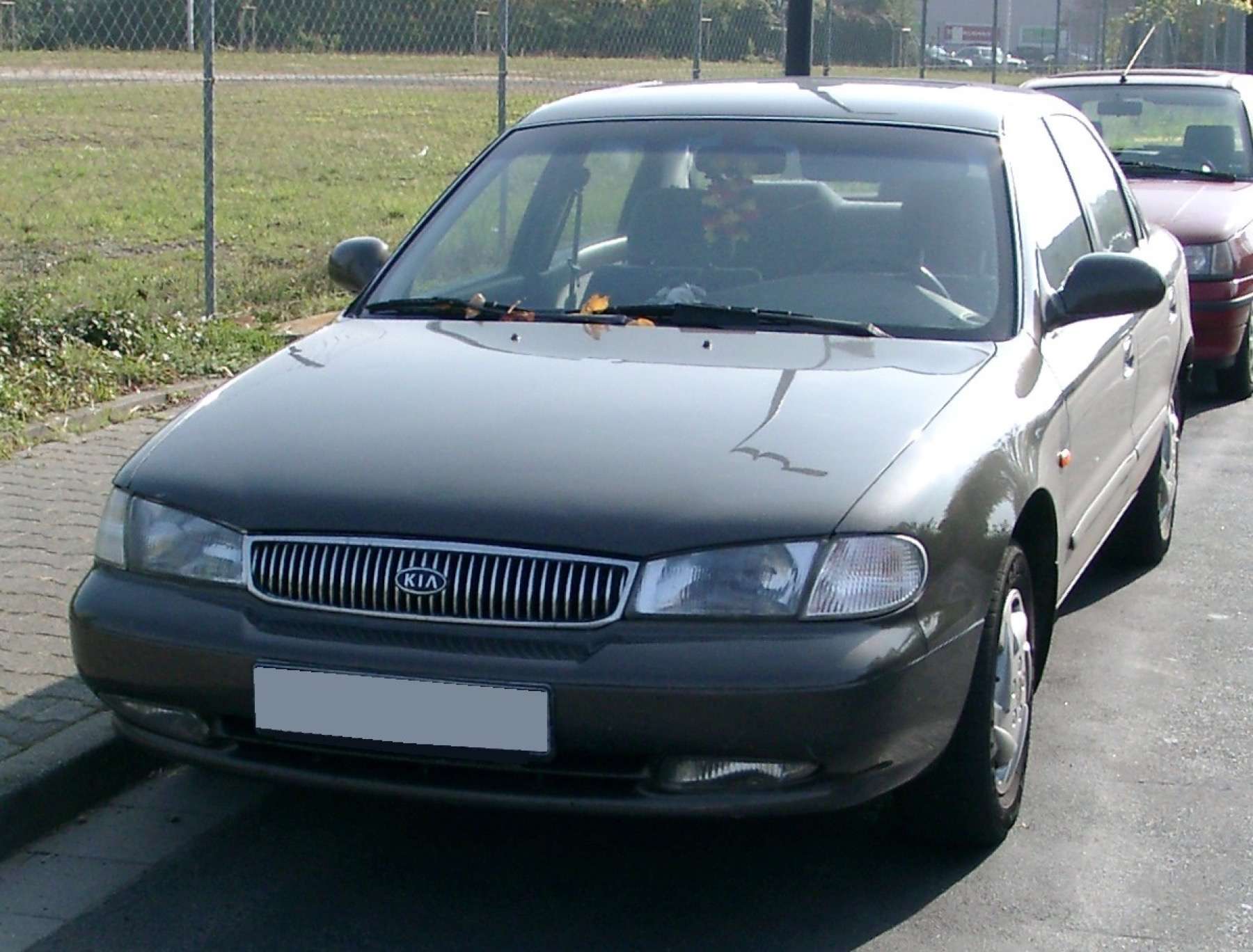
The entry-level 1.8 SX could be ordered with manual or automatic transmission. Two-litre cars came in GSX and Executive forms, again with both gearbox choices, while a 2.0 S special edition appeared in 2000. Even mid-range cars included equipment that remained optional on some European rivals.
| Specification | UK-market Kia Clarus |
|---|---|
| UK sales | September 1999–July 2001 |
| Body | Four-door saloon |
| Engines | 1.8- and 2.0-litre petrol fours |
| Power | Approximately 116 bhp (1.8) and 131 bhp (2.0) |
| Transmission | Five-speed manual or four-speed automatic |
| Trim | SX, GSX, Executive and 2.0 S |
| Replacement | Kia Magentis |
A contemporary 2.0 GSX specification included air conditioning, alloy wheels, anti-lock brakes, electric windows and mirrors, power steering, remote central locking and adjustable steering and seating. Performance was respectable rather than memorable, with contemporary reports quoting 0–60 mph in around 10.9 seconds for the 2.0.
Britain’s almost-forgotten Kia
Only a little over a thousand Claruses were reportedly on UK roads at the model’s early-2000s peak. Low resale values then made accident damage, corrosion and larger repairs economically terminal. The car’s lack of a famous sporting derivative or cultural association gave enthusiasts little reason to preserve it.
Love cars you don’t see every day?
Get forgotten cars, surprising motoring stories and the most interesting finds from Unusual Cars by email.
Free to join. No spam. Unsubscribe whenever you like. See our privacy policy.
Kia Clarus buying guide
Body condition
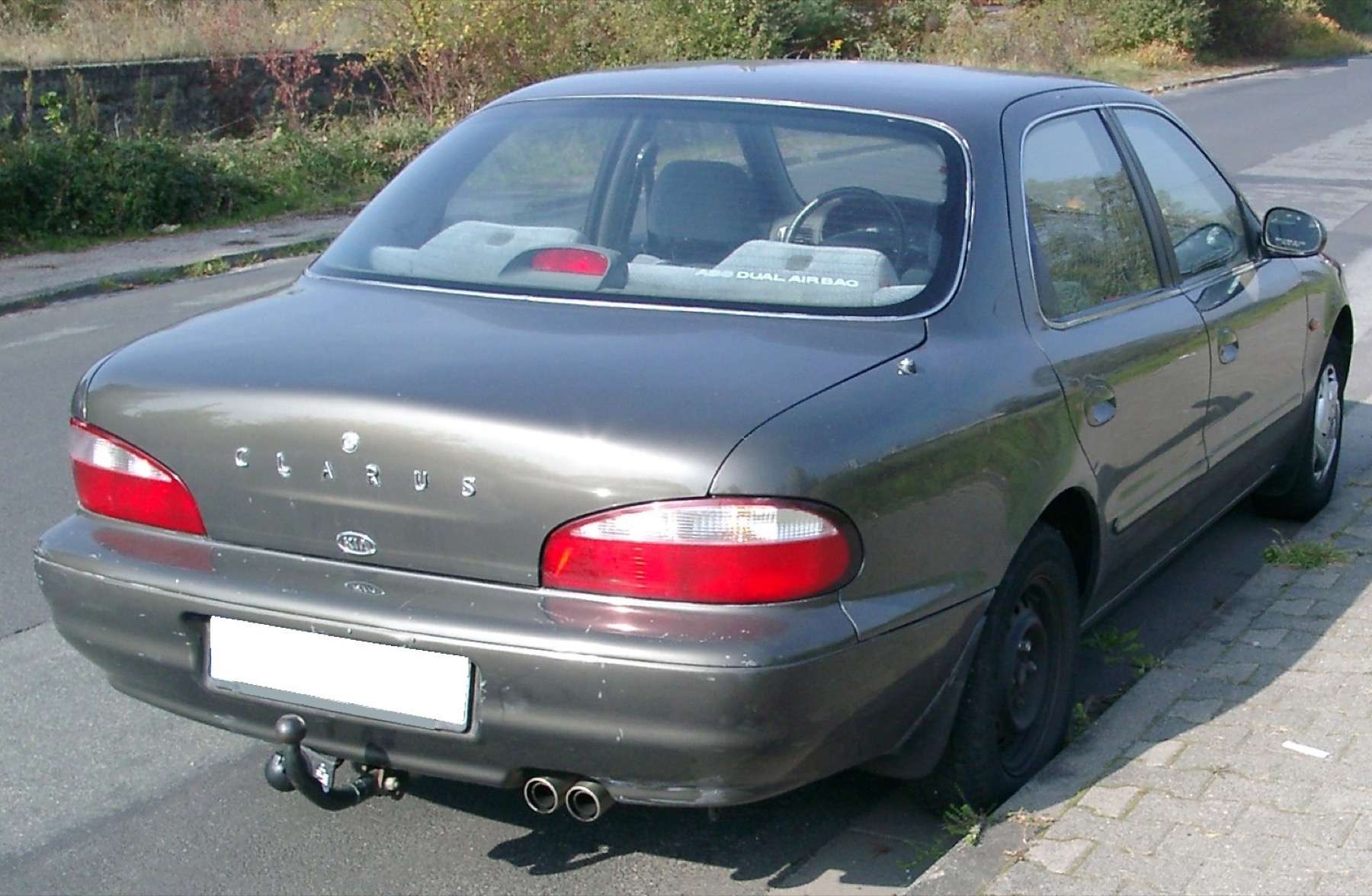
Inspect the sills, jacking points, wheelarches, floor, front and rear suspension mounts, boot floor and screen surrounds. Poor accident repairs are particularly undesirable because replacement panels are scarce. Check door bottoms and the edges of the bonnet and boot lid.
Engines and transmission
Both petrol engines should start cleanly and settle to a steady idle. Look for cooling-system neglect, oil leaks, exhaust smoke and missing timing-belt records. Automatics need smooth engagement and clean shifts; manual cars should not crunch or show clutch slip. Long periods of disuse can create as many problems as high mileage.
Suspension, brakes and electrical equipment
Listen for worn bushes and wheel bearings and check the car stops straight without an anti-lock warning lamp. Test air conditioning, electric windows, mirrors, central locking and every dashboard function. Mechanical consumables may cross-reference with other Kia or Mazda applications, but unique trim and lamps can be extremely difficult to replace.
Research sources
- RAC Drive: Kia Clarus used review
- Hagerty UK: Cars That Time Forgot—Kia Clarus
- Kia UK: corporate history
Continue the Kia story
Explore the Rare & Performance Kias hub, then follow the Clarus with its replacement, the Kia Magentis.