UNUSUAL CARS MODEL GUIDE
The Lamborghini Jarama was the marque’s final front-engined V12 production car. Built from 1970 to 1976, it placed Marcello Gandini’s compact fastback body over a shortened Espada platform and offered two-plus-two seating, a 3.9-litre V12 and five-speed manual gearbox. The later Jarama S, also called the 400 GTS, added power and detail improvements.
Quick answer: approximately 327 or 328 Jaramas were made, with the exact GT/GTS split varying between sources. Verify the version and factory identity, then inspect Marazzi-built steel bodywork for corrosion, the V12 and six Weber carburettors, cooling, gearbox, Salisbury differential, brakes, suspension, steering, electrics, ventilation and rare glass and trim.
Featured image: Lamborghini Jarama S. Photograph by Spanish Coches, CC BY 2.0, via Wikimedia Commons; locally hosted.
The compact successor to the Islero
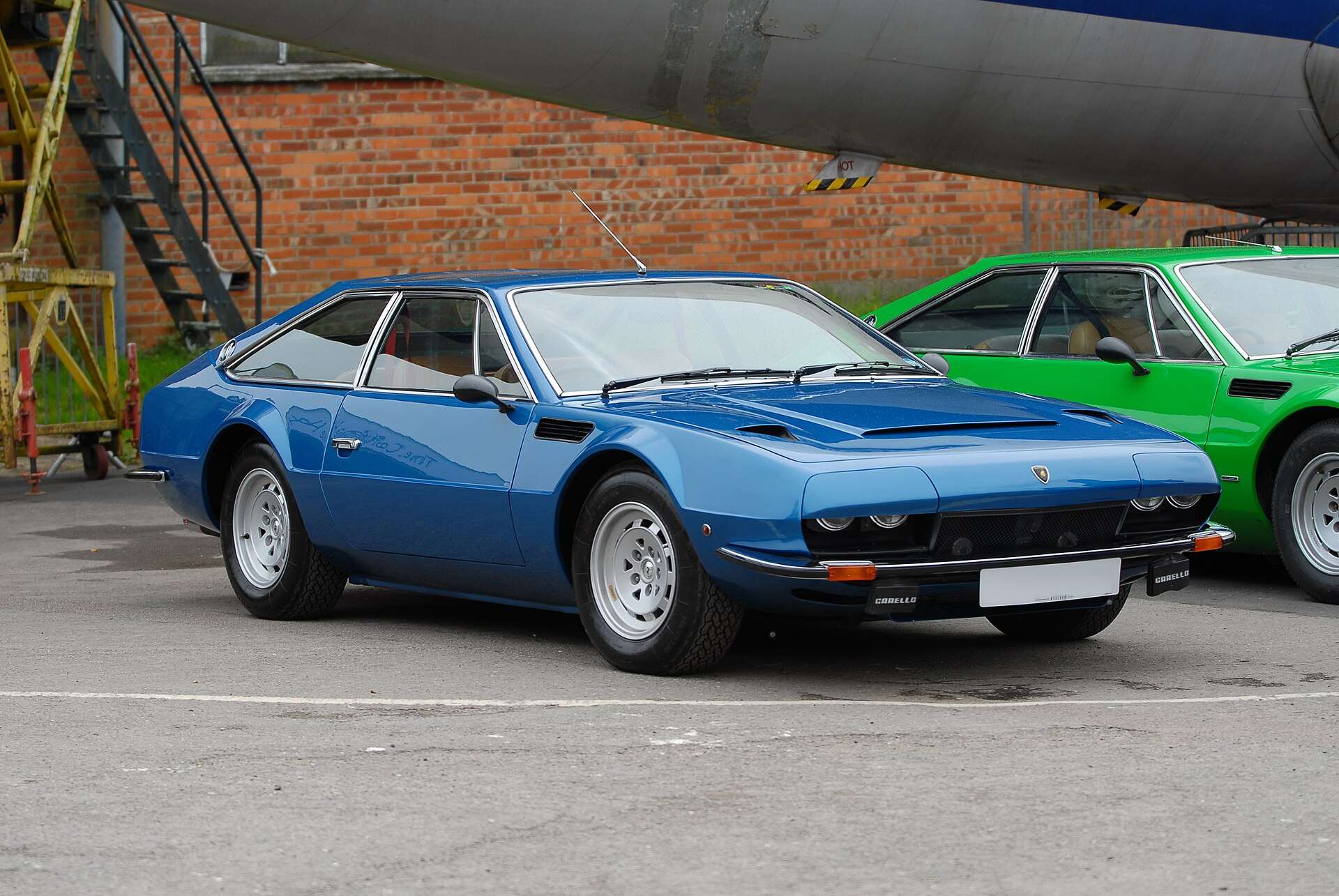
Lamborghini introduced the Jarama at Geneva in March 1970 as the successor to the Islero. It used the Espada’s independent-suspension platform shortened by roughly 270mm. Bertone’s Marcello Gandini gave it a short, wide body with partially covered headlamps, a steep windscreen and a fastback tail.
The car’s name referred to the Spanish region associated with fighting-bull breeding, not simply the Jarama racing circuit. Ferruccio Lamborghini preferred usable grand tourers and retained a Jarama S himself for years. The model represented the last development of the company’s original front-engined V12 idea before attention centred on the mid-engined Countach.
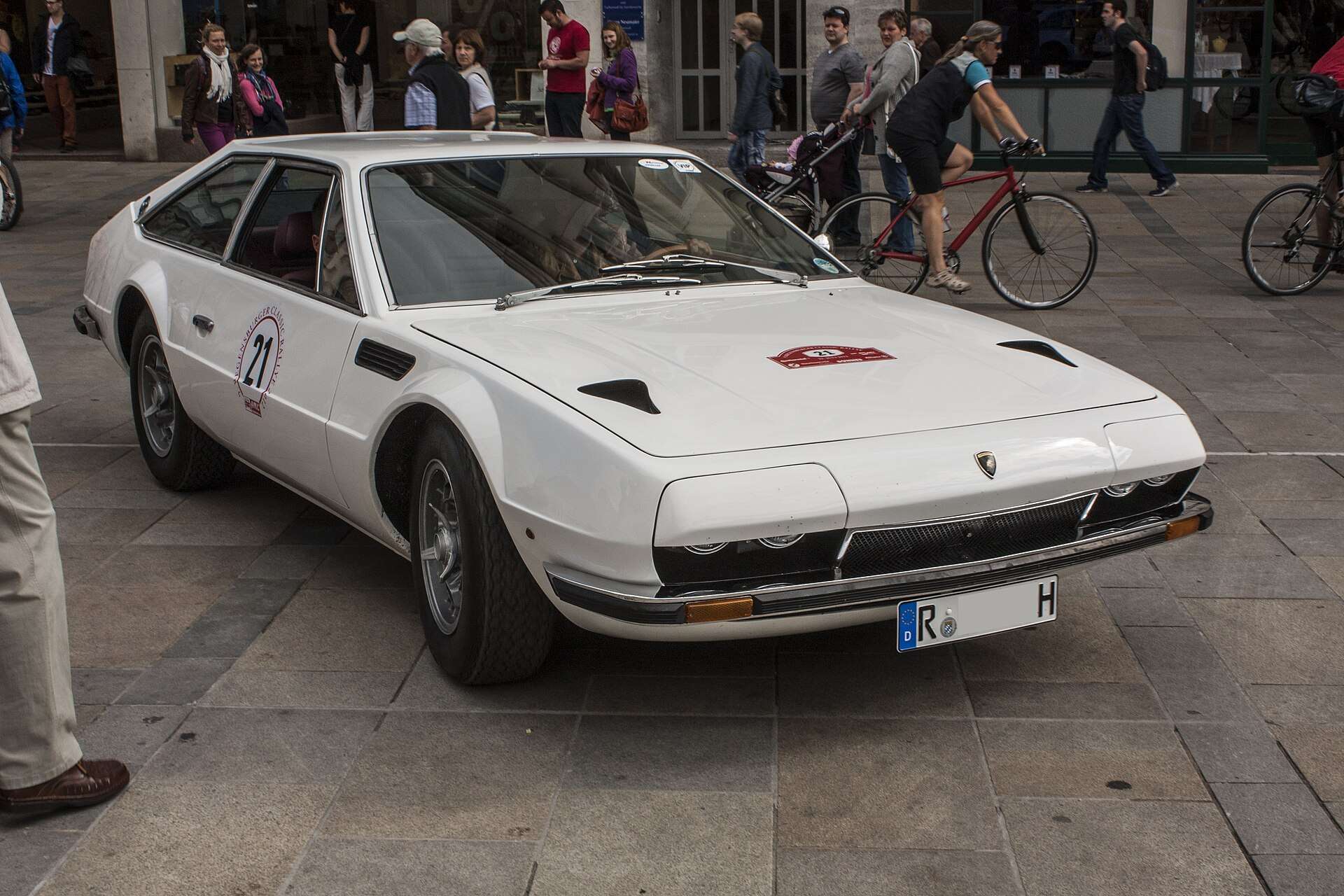
Jarama GT and Jarama S
| Version | Jarama GT / 400 GT | Jarama S / 400 GTS |
|---|---|---|
| Introduction | 1970 | 1972 |
| Engine | 3,929cc V12, commonly quoted at 350 CV | Revised 3,929cc V12, commonly quoted at 365 CV |
| Exterior clues | Original bonnet and early trim | Bonnet intake, additional vents and detail revisions |
| Cabin | Early dashboard and controls | Revised seats, dashboard and ventilation |
Production changes and later modifications make visual identification insufficient. Sources commonly put total production at 327 or 328, while the split between GT and GTS varies. Around two dozen right-hand-drive cars are reported. Confirm chassis, engine, gearbox, original steering position and specification through factory or recognised registry records.
Body construction and corrosion
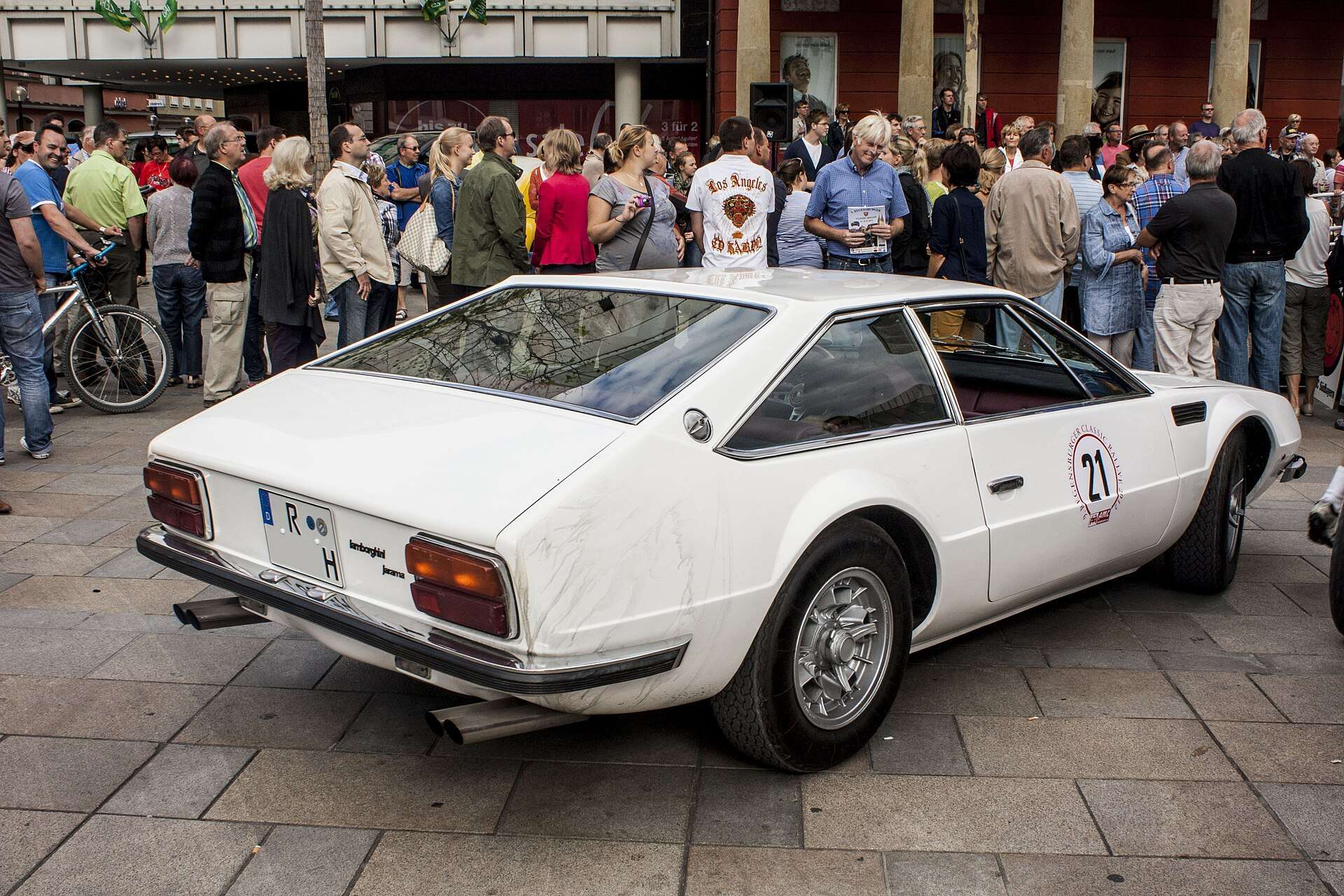
Marazzi built the steel bodies, and corrosion is the central structural risk. Inspect sills, floors, outriggers, wheelarches, door bottoms, screen and rear-window surrounds, boot floor and suspension pick-ups. Water traps around glass and trim can allow damage to progress beneath an apparently good repaint.
Check door and bonnet fit, headlamp mechanisms, bumpers, stainless trim, lamps and every piece of glass. Panels were hand-finished and replacements are scarce. Demand photographs and invoices for structural work. A car should sit squarely with consistent shut lines before cosmetic quality becomes relevant.

Love cars you don’t see every day?
Get forgotten cars, surprising motoring stories and the most interesting finds from Unusual Cars by email.
Free to join. No spam. Unsubscribe whenever you like. See our privacy policy.
V12, carburettors and cooling
The 3,929cc V12 uses four overhead camshafts and six Weber carburettors. Assess it from cold, looking for prompt oil pressure, even compression, stable temperature, clean hot restarting and controlled exhaust smoke. Carburettor imbalance can imitate deeper faults, but petrol odour, wet unions or perished hoses require immediate correction.
Inspect radiator, fans, water pump, hoses and evidence of previous overheating. Oil and coolant leaks should be traced rather than accepted as inevitable. Exhaust manifolds and the full system are costly to reproduce. Continuous specialist servicing is stronger evidence than an odometer reading unsupported by invoices.
Gearbox, differential and chassis
The five-speed manual should select cleanly at operating temperature without jumping out or serious synchromesh obstruction. Listen for gearbox, prop-shaft and Salisbury differential noise, then inspect clutch operation, hydraulics, mounts and half-shafts. Automatic transmission was available in tiny numbers and requires a separate parts and originality assessment.
Independent suspension and four-wheel disc brakes give the Jarama sophisticated period hardware. Inspect bushes, ball joints, dampers, springs, wheel bearings, rack and every brake hydraulic component. Tyre age, size and alignment can transform the road test. Heavy steering at parking speed is normal on an unassisted car; wandering, knocking and instability are not.
Cabin, electrics and buying strategy
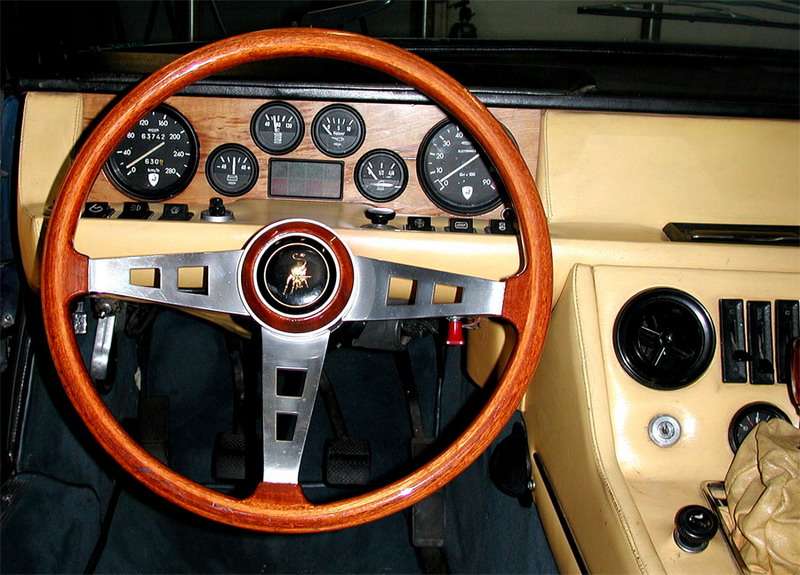
Test every instrument, lamp, window, wiper, fan and ventilation function. Heat and previous repairs can leave brittle wiring or improvised relays. The dashboard, seats, door cards, steering wheel and console vary between GT and GTS, so restoration should be compared with the individual build record.
Trace UK registration, import and restoration history, and verify whether right-hand drive is factory original. Books, tools and period correspondence strengthen provenance. The least expensive Jarama can become the costliest if structural, trim and V12 work arrive together; prioritise a complete car whose mechanical and body restoration is supported by evidence.

Sources and further reading
- Lamborghini: Jarama history and specifications
- Lamborghini: company milestones
- Car Collector International: Lamborghini Jarama buyer’s guide
- Supercar Nostalgia: Jarama historical and technical guide
- Bonhams: documented Jarama S catalogue entry
Continue the Lamborghini story
Explore the complete Lamborghini hub. Continue with the Lamborghini Islero and Lamborghini Espada.
Frequently asked questions
When was the Lamborghini Jarama built?
The Jarama debuted in 1970 and remained in production until 1976.
What is the difference between a Jarama GT and Jarama S?
The later S, or 400 GTS, received more power plus bonnet, ventilation, interior and detail revisions.
How many Lamborghini Jaramas were made?
Credible sources record approximately 327 or 328 cars; the exact split between GT and GTS varies.
Was the Jarama sold in right-hand drive?
Yes. Around two dozen right-hand-drive cars are generally reported, but the original configuration of any example should be verified.
What should be checked before buying one?
Authenticate the version, then inspect corrosion, body restoration, V12, carburettors, cooling, gearbox, differential, suspension, brakes, electrics, glass and trim.