UNUSUAL CARS MODEL GUIDE
The Ferrari Berlinetta Boxer family covers the 365 GT4 BB, carburettor 512 BB and fuel-injected 512 BBi produced from 1973 to 1984. It replaced the front-engined Daytona with a low, mid-engined flat-12 flagship and established the architecture later evolved into the Testarossa.
Quick answer: choose the derivative you most value, then buy the best documented structure and drivetrain. A Boxer demands specialist checks of engine-out belt history, valve gear, cooling and fuel systems, carburettors or Bosch injection, clutch, gearbox and differential, suspension, corrosion, metric tyres, accident repairs and originality.
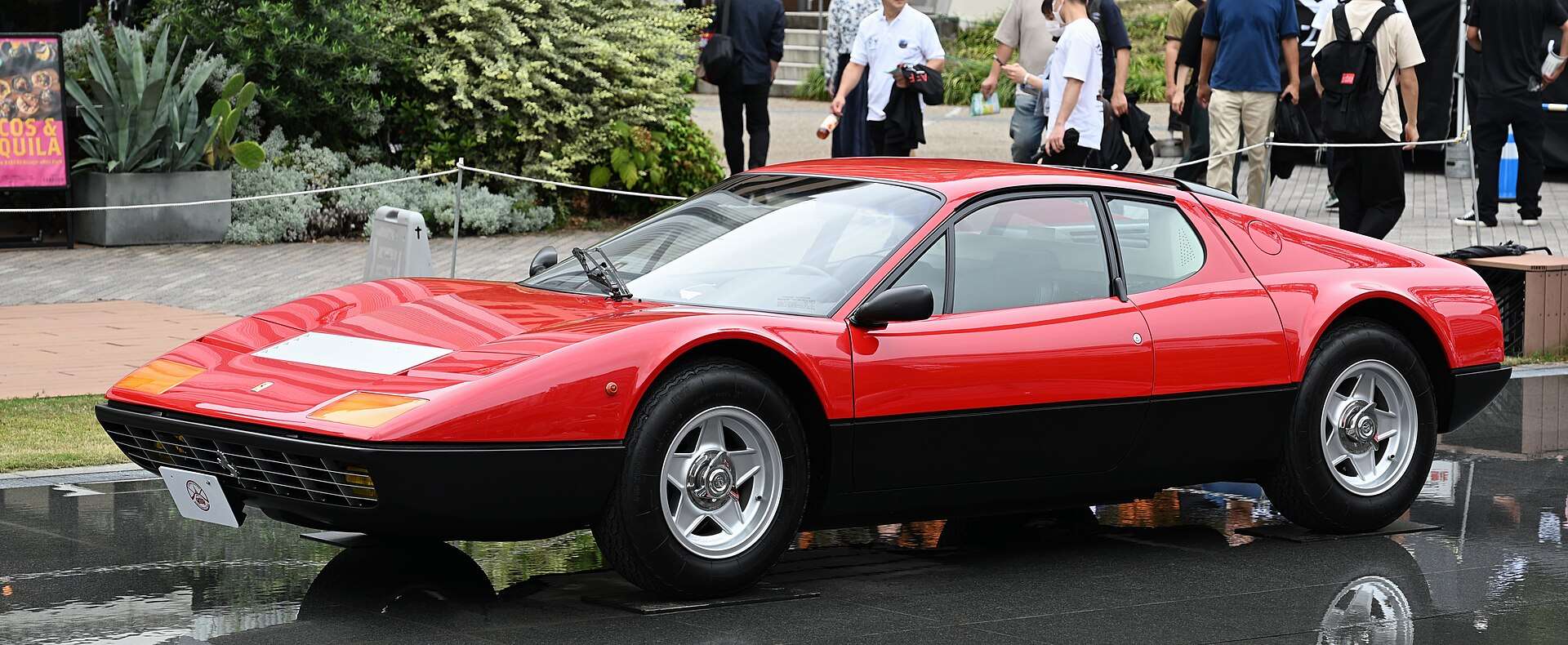
Featured image: red and black Ferrari 365 GT4 BB side view. Photograph by TTTNIS, CC0, via Wikimedia Commons; locally hosted.
Ferrari moves its flagship engine behind the cabin
The 365 GT4 BB was shown in 1971 and entered production in 1973. It succeeded the 365 GTB4 Daytona and became Ferrari’s first series-production road car with a twelve-cylinder engine mounted behind the occupants. Pininfarina’s wedge-shaped body drew from the P6 concept, while Scaglietti built the panels over a tubular steel chassis.
Ferrari called the car Berlinetta Boxer because its cylinder banks sit at 180 degrees, although the shared crankpins make “flat-12” the more precise mechanical description. The engine is mounted above the five-speed transaxle, keeping the wheelbase compact but placing substantial mass high in the rear structure.
365 GT4 BB, 512 BB and 512 BBi
| Model | Period | Engine and factory output | Identification |
|---|---|---|---|
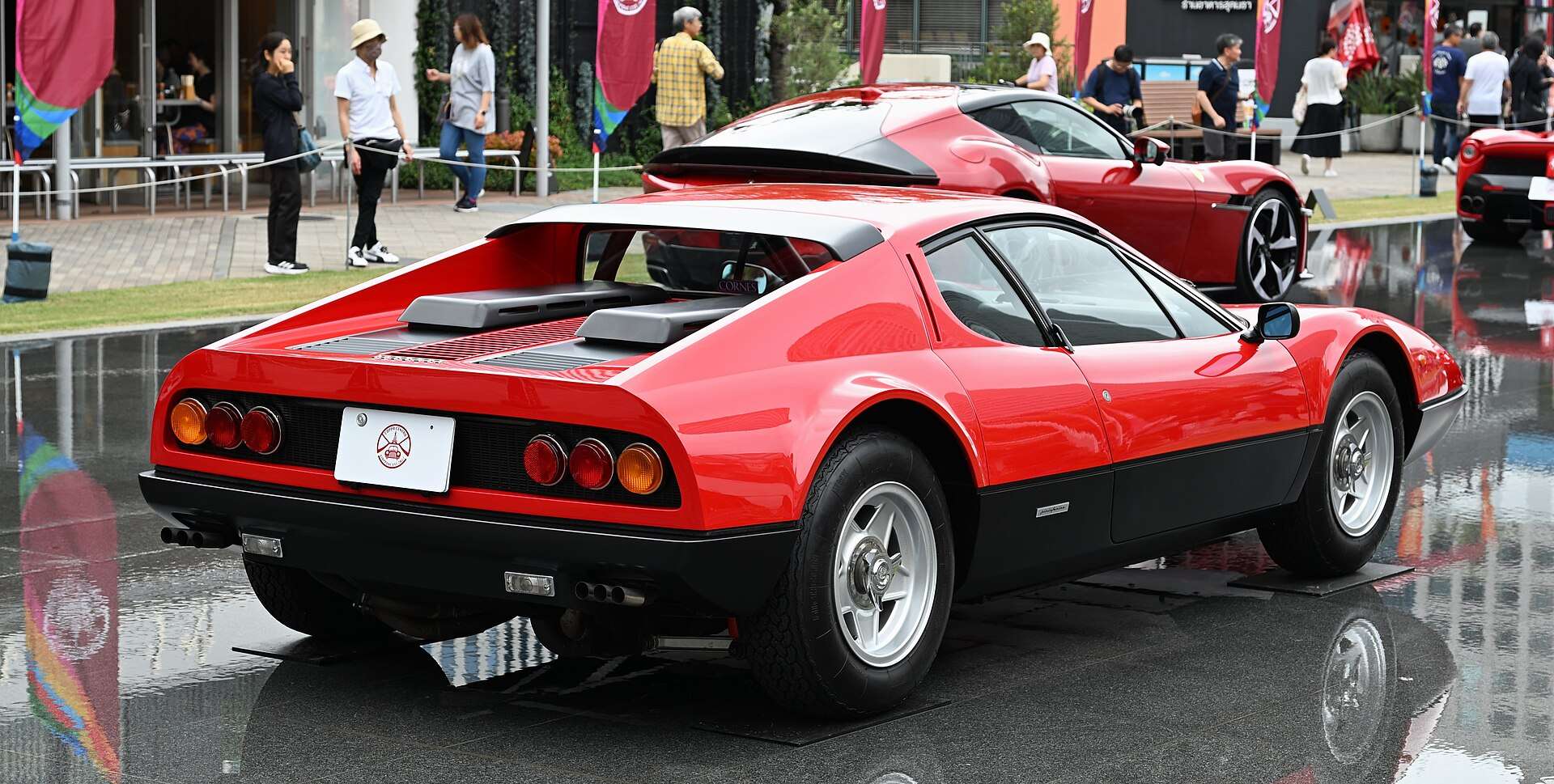
| 365 GT4 BB | 1973–1976 | 4.4-litre flat-12, 380hp | Six rear lamps and six exhaust outlets |
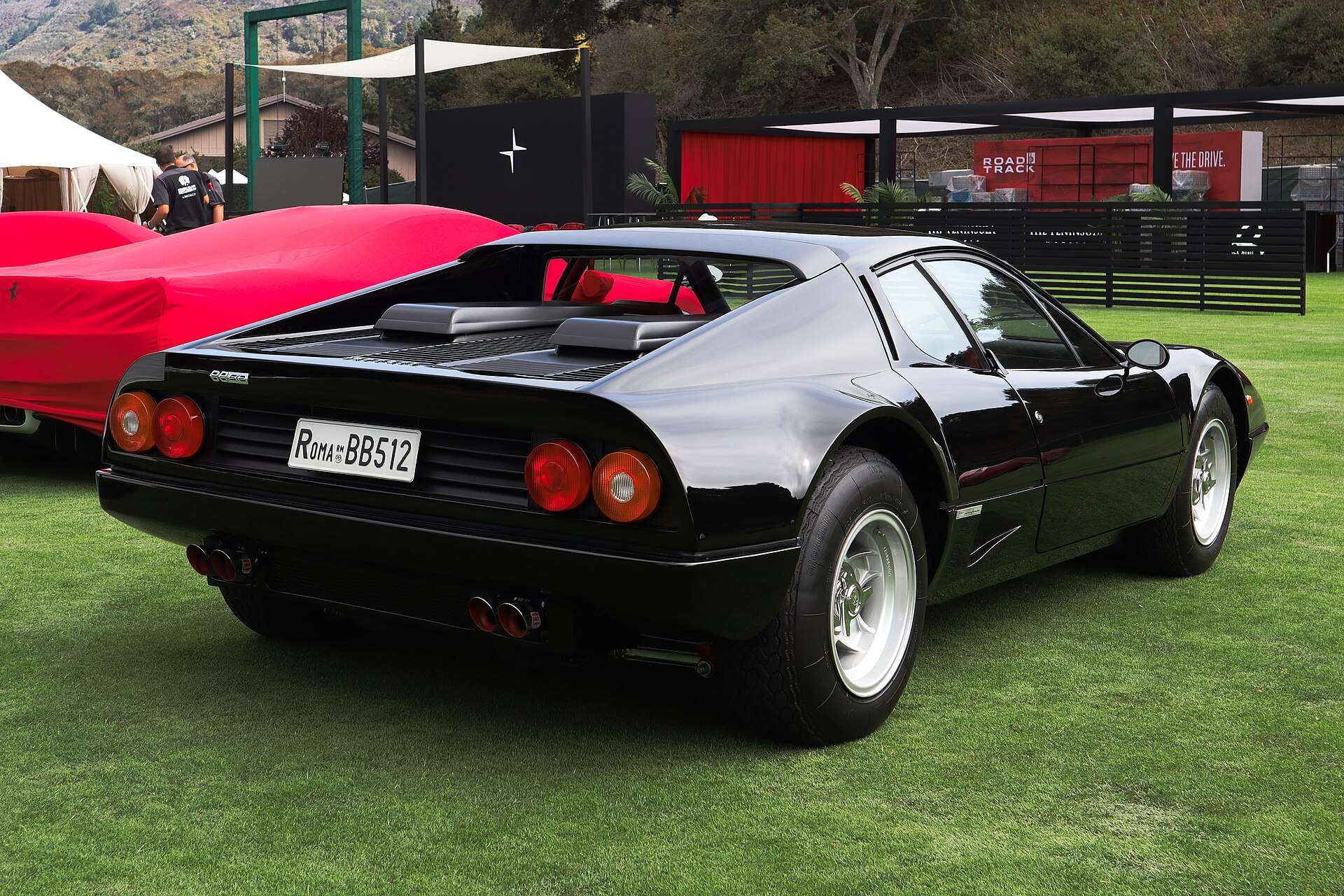
| 512 BB | 1976–1981 | 4.9-litre flat-12, 360hp | Four rear lamps, four exhausts and revised body |
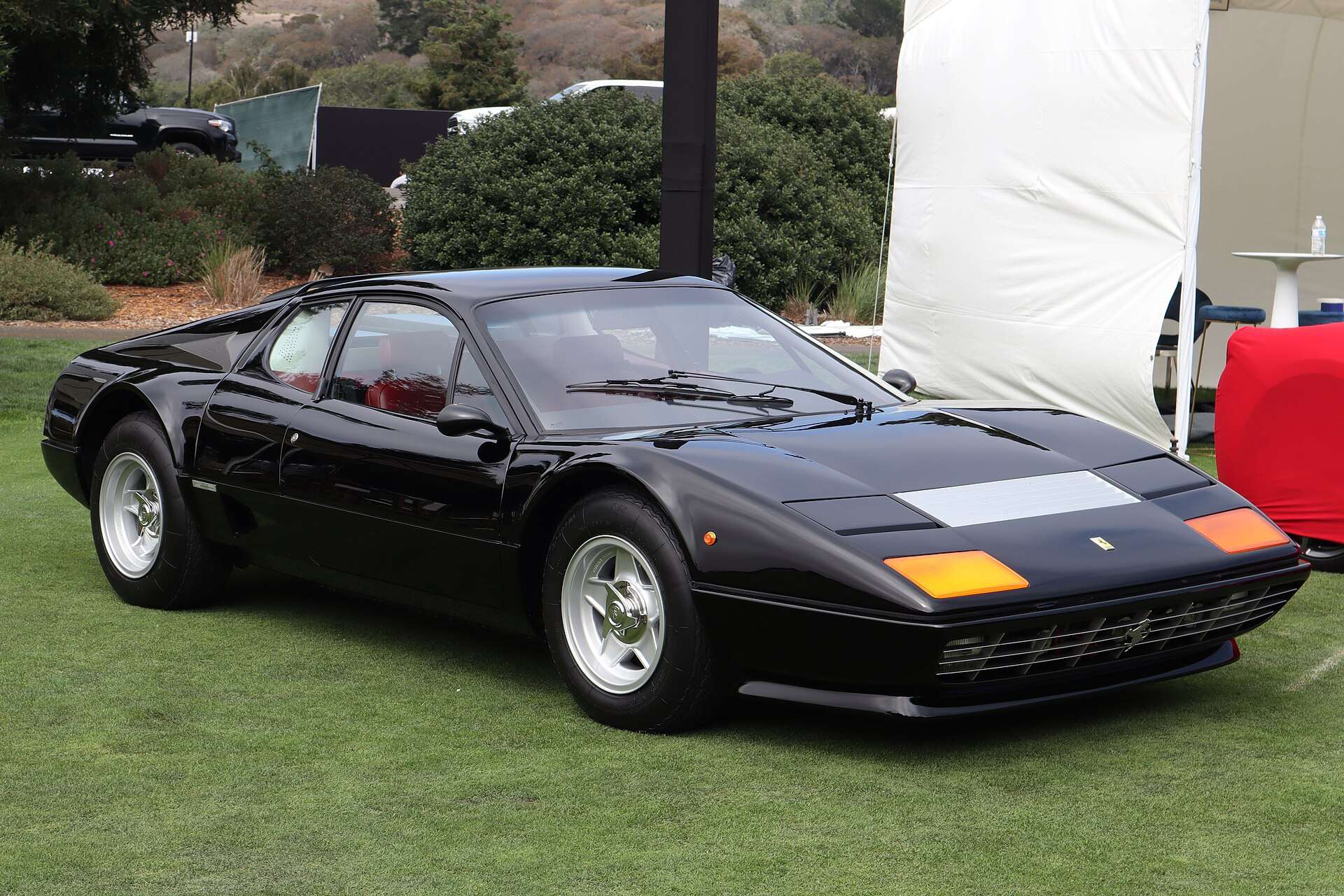
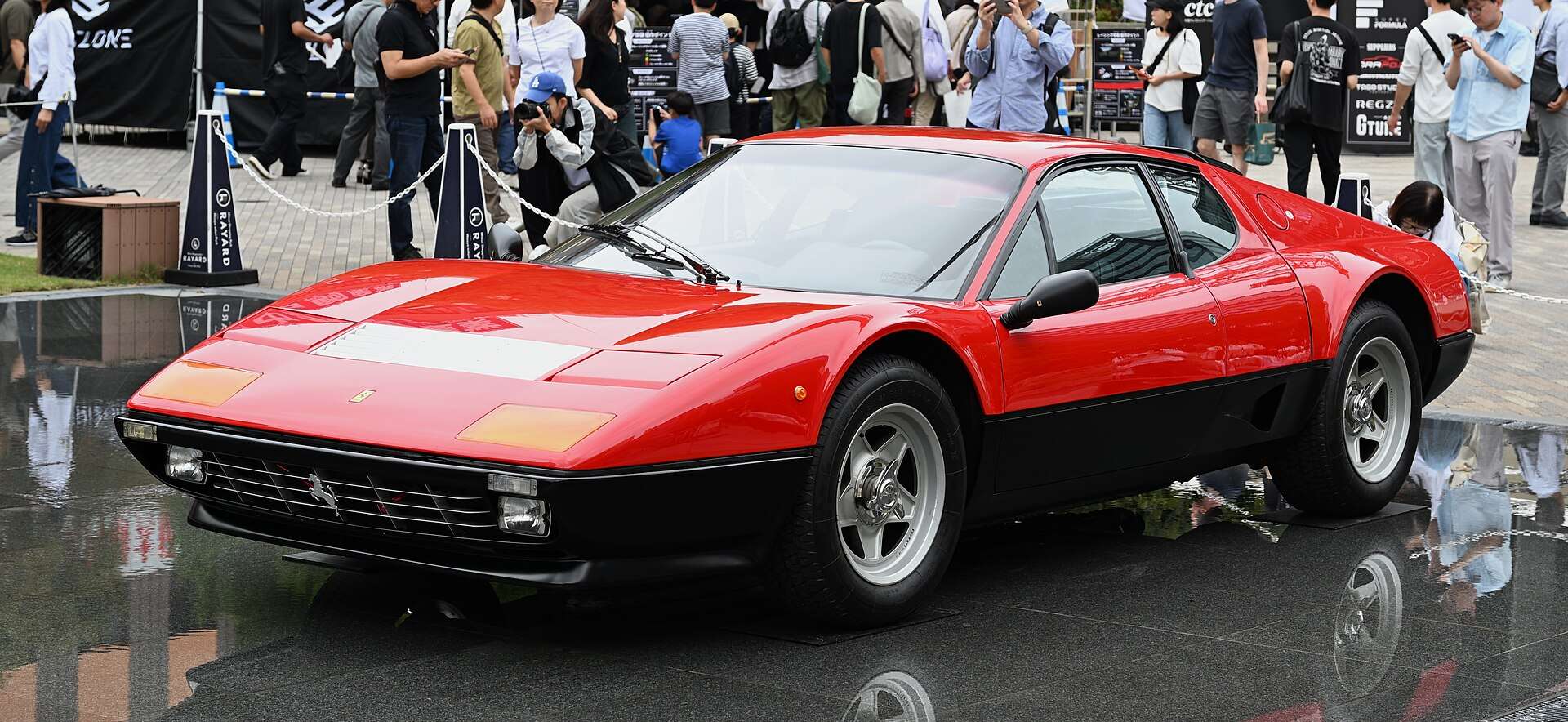
| 512 BBi | 1981–1984 | 4.9-litre injected flat-12, 340hp | Bosch K-Jetronic and exposed front driving lamps |
The 512’s name denotes approximately five litres and twelve cylinders. Extra capacity brought more torque, while a wider body and front spoiler improved stability. The BBi exchanged four triple-choke Weber carburettors for Bosch injection, improving starting and emissions consistency at the expense of some peak power and induction drama.
Love cars you don’t see every day?
Get forgotten cars, surprising motoring stories and the most interesting finds from Unusual Cars by email.
Free to join. No spam. Unsubscribe whenever you like. See our privacy policy.
Flat-12 maintenance and fuel systems
Timing-belt replacement is an engine-out operation on every Boxer. A major service should address tensioners, valve clearances, cam seals, hoses, water pump, ignition and any emerging oil or coolant leaks. Sodium-filled exhaust valves and cylinder-head condition require specialist judgement, particularly where maintenance history is incomplete.
Carburettor cars need clean fuel delivery, balanced Webers and careful cold-start technique; stale fuel and heat can cause difficult starting or vapour lock. The BBi’s K-Jetronic system is reliable when clean but suffers after long storage through pumps, injectors, warm-up regulators and fuel distributors. All versions need renewed flexible fuel hoses and a clean tank system.

Gearbox, differential and chassis
The five-speed transaxle carries the engine above it, so gearbox oil works hard and accurate maintenance matters. Second gear can be reluctant when cold, but noise, jumping out of gear or a distressed differential can mean very expensive work. Assess clutch effort and release, driveshaft joints and oil leaks during a long test.
Unassisted steering and a heavy clutch are part of the design, not faults. The car should nevertheless track accurately and feel stable. Inspect dampers, bushes, wheel bearings, brakes, wheels and tyre age. Some BBi cars use metric Michelin TRX tyres, which are available but costly; an apparently attractive car on old tyres is not road-ready.
Body, identity and originality
The hand-built body combines steel, aluminium and glassfibre sections. Examine the tubular chassis, sills, floors, wheelarches, door bottoms, screen surrounds, suspension pick-ups and the interfaces between dissimilar materials. Front valances and the long rear clamshell are vulnerable to damage. Chassis measurement is sensible where tyre wear or panel fit suggests an old accident.
Verify chassis, engine and gearbox identities along with original market specification. Imported cars may have acquired non-standard bumpers, emissions equipment or wiring. Boxer paint schemes, wheels, seats and exhausts have also been altered over time. A correct, fully documented restoration is preferable to superficial originality hiding structural or mechanical neglect.

Sources and further reading
- Ferrari: the 365 GT4 BB
- Ferrari: 512 BB factory specifications
- Ferrari: 512 BBi factory specifications
- Sports Car Market: Ferrari 512 BBi buyer’s guide
Continue the Ferrari story
Explore the complete Ferrari hub. Continue with the Ferrari Testarossa family and Ferrari 400 and 412.
Frequently asked questions
What does BB mean on a Ferrari?
Ferrari used BB for Berlinetta Boxer, referring to the 180-degree twelve-cylinder engine and berlinetta body.
What is the difference between 365 GT4 BB and 512 BB?
The 512 has a larger 4.9-litre engine, more torque, a wider body and four rear lamps and exhaust outlets instead of six.
What changed on the Ferrari 512 BBi?
The BBi replaced the 512 BB’s Weber carburettors with Bosch K-Jetronic fuel injection and received related detail changes.
Do Ferrari Boxers need engine-out belt services?
Yes. Timing-belt service requires removal of the flat-12 and transaxle assembly, making detailed recent invoices essential.
What should be checked before buying a Ferrari Boxer?
Check identity, engine-out service history, valves, fuel and cooling systems, clutch, gearbox, differential, tyres, chassis corrosion, accident repairs and originality.