UNUSUAL CARS MODEL GUIDE
The Ferrari 550 Maranello and 575M are front-engined, two-seat V12 grand tourers built from 1996 to 2006. The 550 replaced the mid-engined F512 M and proved that a front-engine Ferrari could match its predecessor on track while being quieter, easier to service and far better suited to long journeys.
Quick answer: the manual-only 550 is the more analogue car; the 575M adds a 5.75-litre engine, adaptive suspension and optional F1 transmission. Both are fundamentally robust when used and maintained. Check belt history, cooling hoses beneath the inlet manifold, fuel tanks, crank pulley, clutch, dampers, steering rack, wheels, alarm fobs and sticky interior trim.
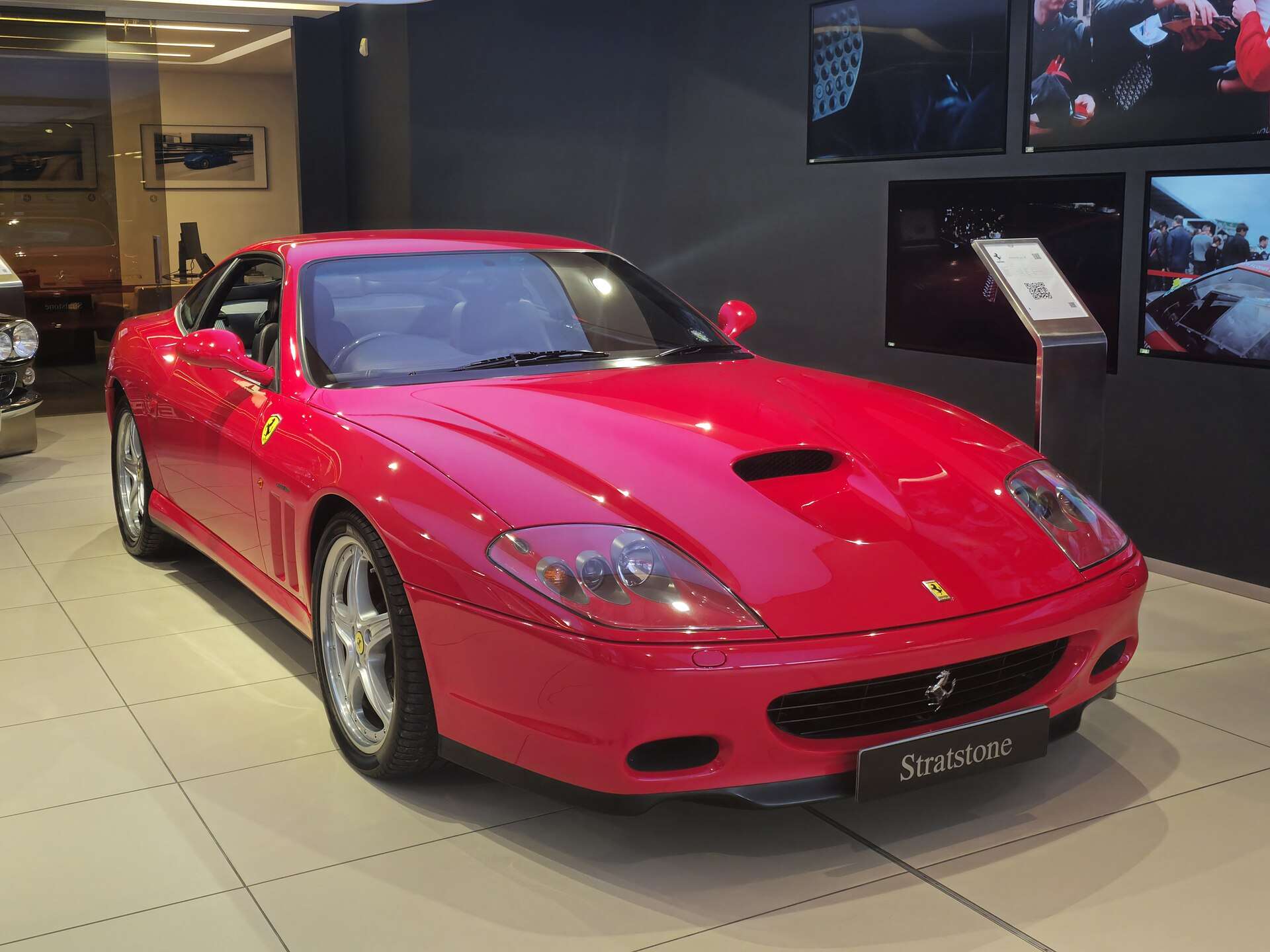
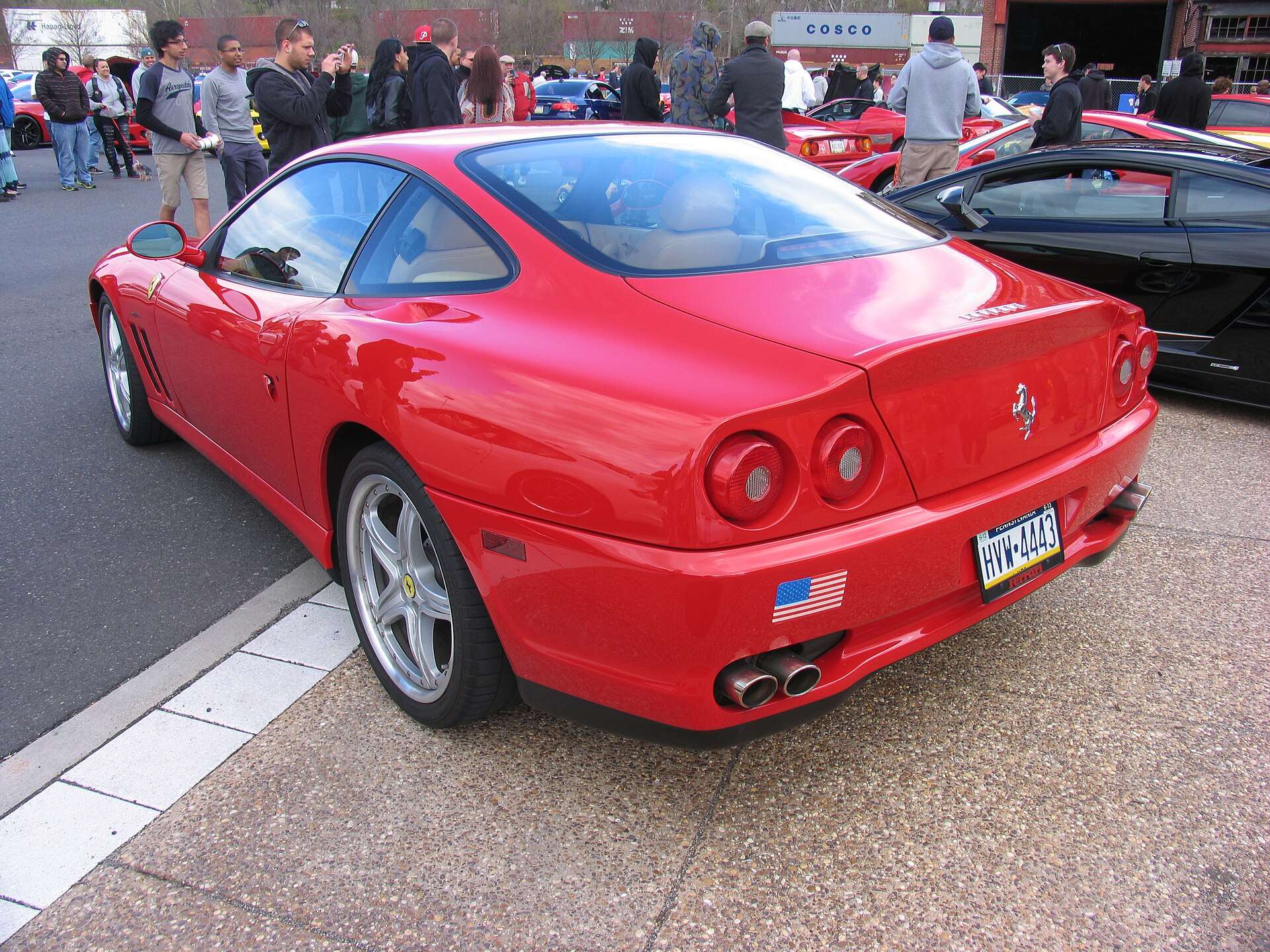
Featured image: red Ferrari 550 Maranello front three-quarter. Photograph by Calreyn88, CC BY 4.0, via Wikimedia Commons; locally hosted.
Ferrari returns its flagship V12 to the front
Launched in 1996, the 550 Maranello placed its 5,474cc V12 behind the front axle and a six-speed transaxle at the rear. The layout delivered near-even weight distribution and a useful boot without the heat, visibility and luggage compromises of the Testarossa family. Pininfarina’s body used aluminium panels joined to a steel structure through Feran transition material.
Ferrari rated the 550 at 485cv and 320km/h. Electronically controlled dampers and switchable traction control broadened its ability, yet the gated manual gearbox and relatively modest driver interface kept it direct. At Fiorano it was quicker than the F512 M it replaced, settling the argument that a top-level Ferrari had to be mid-engined.
550, Barchetta, 575M and Superamerica
| Version | Years | Engine | Main distinction |
|---|---|---|---|
| 550 Maranello | 1996–2001 | 5,474cc, 485cv | Six-speed manual coupé |
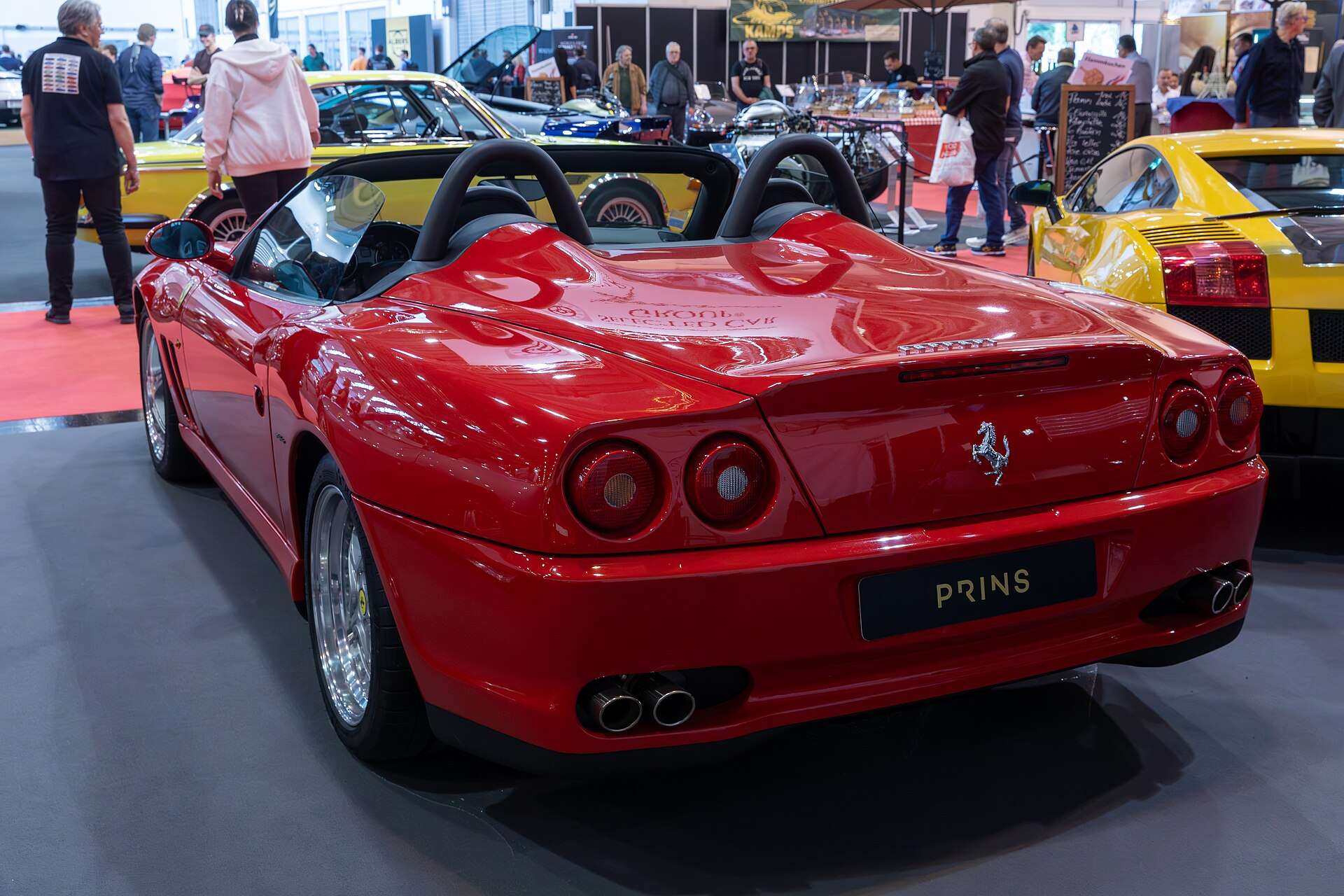
| 550 Barchetta | 2000–2001 | 5,474cc, 485cv | Limited open model with emergency weather cover |
| 575M Maranello | 2002–2006 | 5,748cc, 515hp | Revised chassis, adaptive damping and optional F1 gearbox |
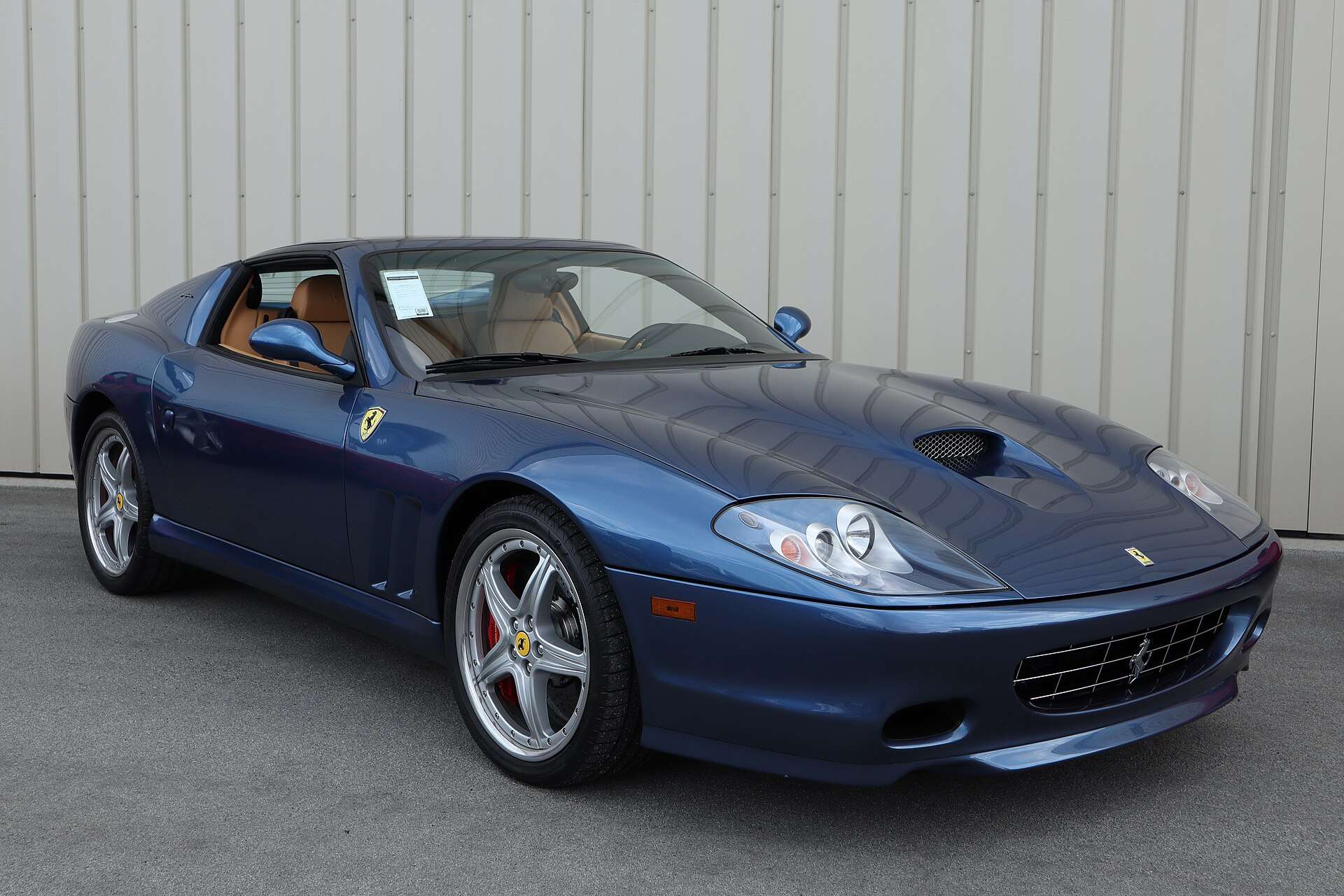
| 575 Superamerica | 2005–2006 | 5,748cc, 540hp | Limited rotating glass-roof derivative |
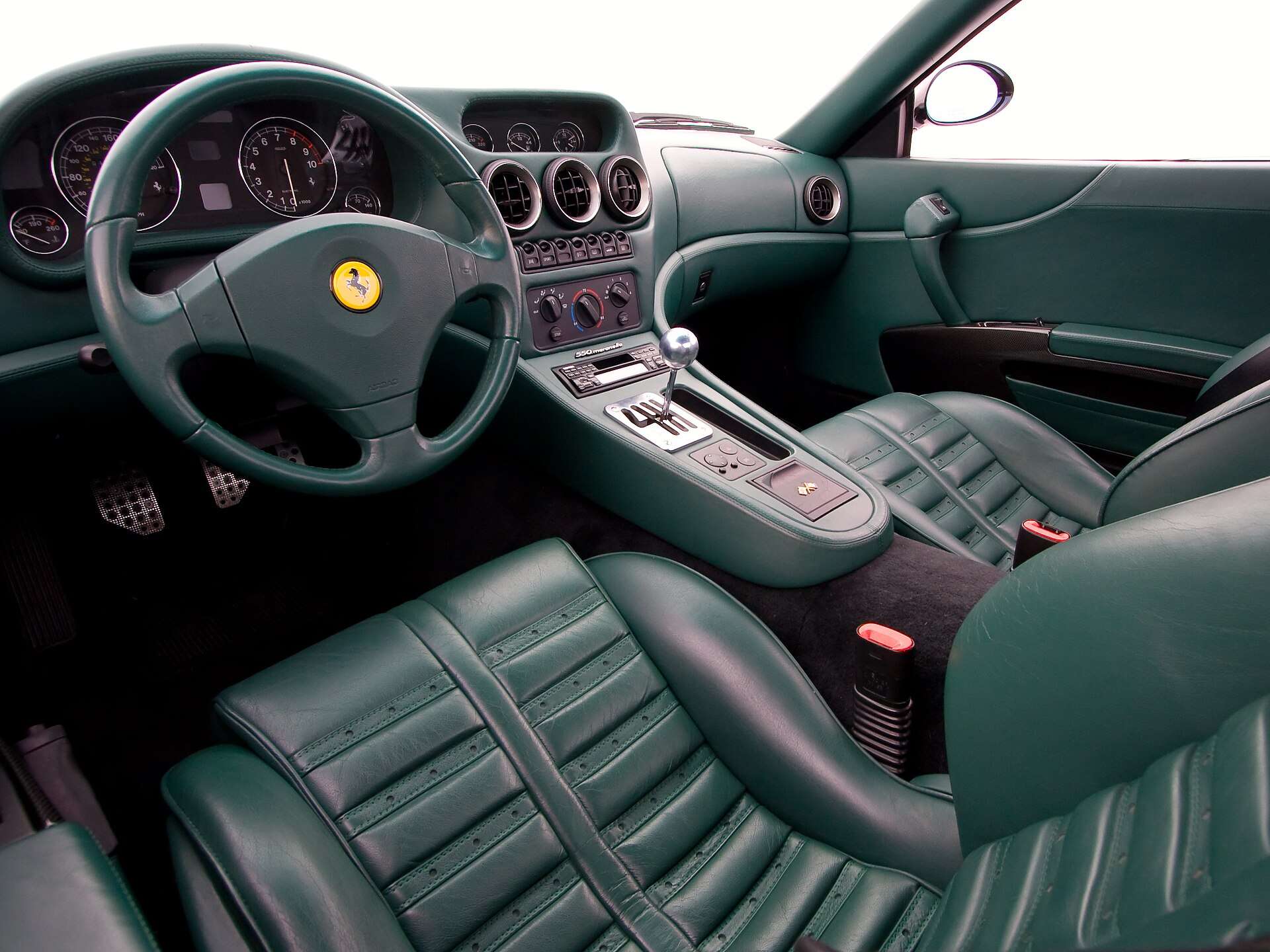
The 575M’s M again meant modificata. Its extra capacity and torque made it faster, while the F1 option reflected changing buyer expectations. The Fiorano Handling Package sharpened springs, dampers, steering and brakes. Specification matters: a well-optioned 575M can feel quite different from a standard early car.
Love cars you don’t see every day?
Get forgotten cars, surprising motoring stories and the most interesting finds from Unusual Cars by email.
Free to join. No spam. Unsubscribe whenever you like. See our privacy policy.
V12, belts and cooling
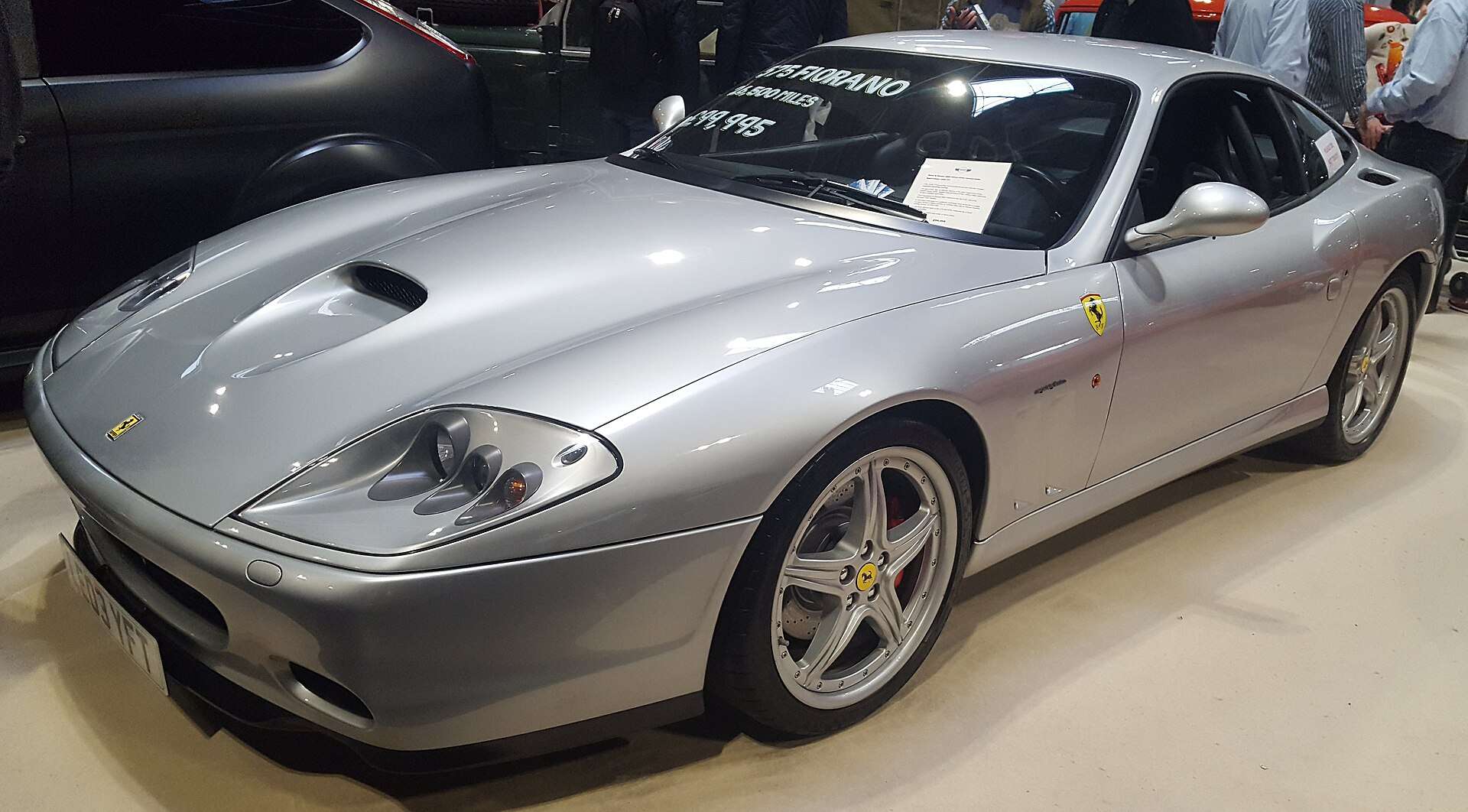
The dry-sump V12 is capable of high mileage with consistent maintenance. Confirm belt and tensioner dates, annual fluids and work on hoses hidden in the engine valley. Inspect for coolant, oil and power-steering leaks, then check the crank pulley for delamination and vibration. A long test from cold should show stable temperatures and clean response throughout the rev range.
Fuel tanks on some earlier cars can leak, and transmission oil coolers, engine mounts and exhaust components age. The 550’s accessible front-engine layout helps, but it does not turn a neglected V12 into an inexpensive project. A specialist inspection should include diagnostics, compression assessment where indicated and examination on a lift.
Transmission, suspension and brakes
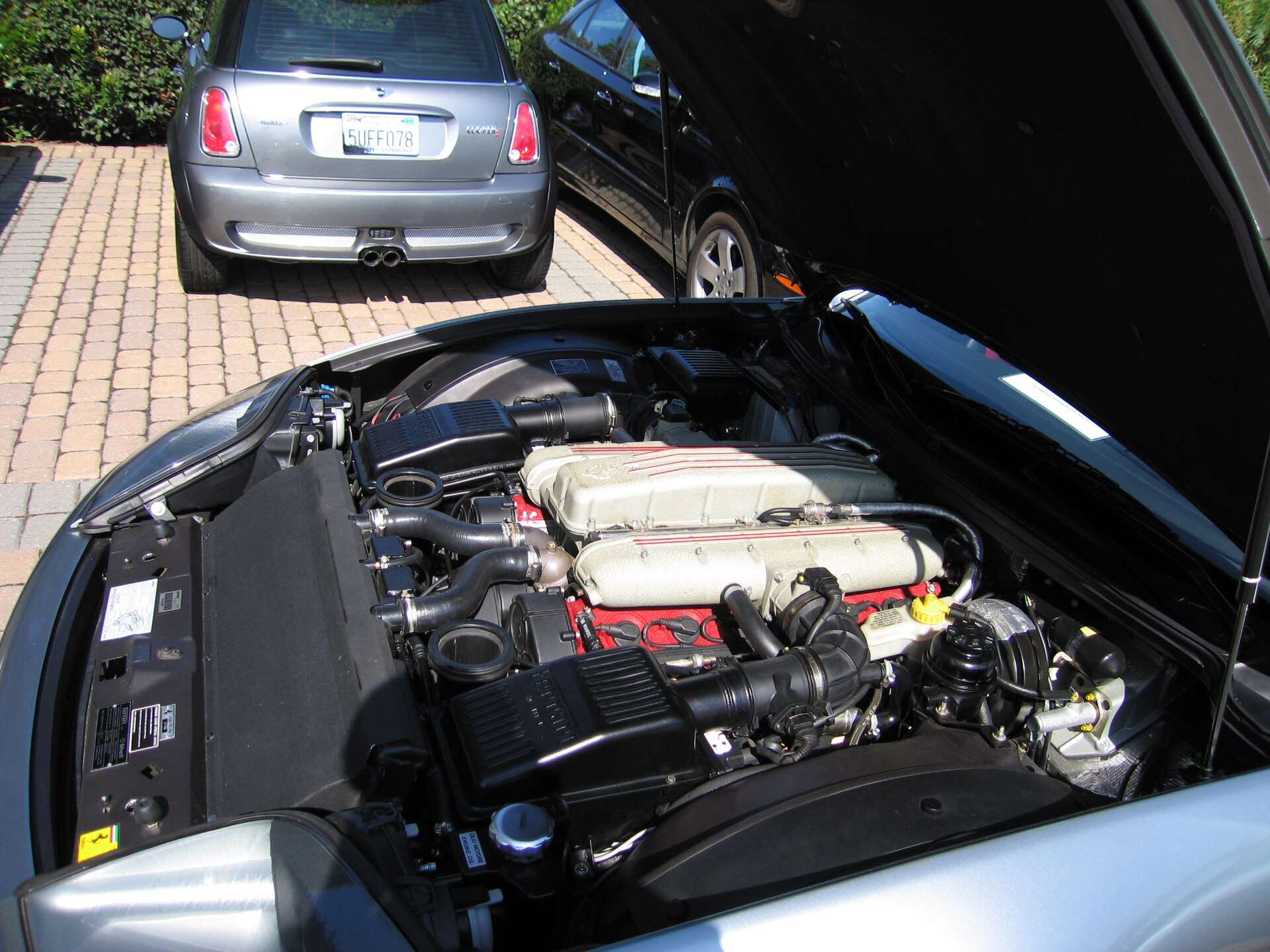
The 550’s six-speed manual should feel positive, though second can be reluctant before the oil warms. Check clutch bite, release-bearing noise and gearbox synchros. On a 575M F1, request a diagnostic clutch-wear reading and test hot and cold changes, slow manoeuvring and reverse engagement.
Electronic dampers must work without warning lights or fluid leaks. Inspect bushes, ball joints, wheel bearings and the speed-sensitive steering rack. Original 550 Speedline wheels were subject to a cracking recall and should have been replaced by BBS items; verify markings and condition. Tyres must be correct, matched and recent.
Body, electrics and special versions
Aluminium limits traditional rust but does not eliminate corrosion around fasteners, accident damage or poor refinishing. Inspect panel gaps, undertrays, jacking points and the steel structure. Test air conditioning, windows, seats, instruments and alarm; the red master fob is important on early systems. Sticky switch coatings and shrinking leather are common age-related faults.
The 550 Barchetta’s fabric cover is an emergency item rather than a conventional hood, so cars need careful storage. The 575 Superamerica’s rotating electrochromic glass roof must operate smoothly and be inspected for delamination or electrical faults. These limited cars justify more originality scrutiny than the standard coupés.
Sources and further reading
- Ferrari: 550 Maranello factory specifications
- Ferrari: 575M Maranello factory specifications
- Classic & Sports Car: Ferrari 550 buyer’s guide
- Hagerty UK: Ferrari 550 Maranello at 30
Continue the Ferrari story
Explore the complete Ferrari hub. Continue with the Ferrari 456 and Ferrari Testarossa family.
Frequently asked questions
What is the difference between Ferrari 550 and 575M?
The 575M has a larger 5.75-litre V12, adaptive damping, revised styling and cabin details, and an optional F1 paddle-shift transmission.
Does the Ferrari 550 have an automatic option?
No. The 550 Maranello was supplied with a six-speed gated manual. Ferrari introduced an optional F1 transmission with the 575M.
How often do 550 and 575M belts need changing?
Follow the current schedule advised by the specialist maintaining the particular car, and verify belt and tensioner work by date as well as mileage.
What is special about the 550 Barchetta roof?
Its fabric cover was intended for temporary emergency use rather than normal high-speed driving, so storage and completeness are important.
What should be checked before buying a 550 or 575M?
Check service and belt history, cooling hoses, fuel tanks, crank pulley, clutch or F1 system, dampers, steering rack, wheels, tyres, electrics and body repairs.