Affiliate notice: This guide contains affiliate links. As an Amazon Associate I earn from qualifying purchases.
For a Mégane IV RS 280, 300 or Trophy, shortlist a Renault-aware setup around the exact build, gearbox and controller you need to read. Generic EOBD is useful for supported engine-emissions information. EDC, 4Control, restraint and body-system questions need a more specific coverage check, with later security-gateway permissions considered separately.
This is the five-door, 1.8-litre turbo Mégane RS. It is a different diagnostic proposition from the earlier three-door 2.0-litre cars. Unusual Cars has not independently tested an RS, consumer scanner or gateway service; the advice below is based on manufacturer and tool documents plus clearly limited owner-question research.
Which Mégane RS is covered?
UK RHD Mégane IV/XFB Renaultsport five-door hatch road cars from 2018, including pre-facelift 280 and 300 Trophy and facelift 300/Trophy through the final 2023 model family, with later registration checked against build. 1.8-litre turbo petrol with six-speed manual or six-speed EDC where offered on the exact UK version. Include an original UK Ultime only after its equipment is identified; no special-edition coverage guarantee. Exclude Trophy-R, Mégane III 250/265/275, ordinary Mégane/GT/RS Line, estates, hybrids/electric models, imports, racecars and materially modified electronics.
The 2018 Renault Sport announcement identifies the 280’s drivetrain and steering context. Renault’s 2020 facelift announcement explains the later 300 family, while the Ultime release documents that final special edition. Market, phase and original build still control the equipment enquiry.
| Version | Scanner-selection distinction |
|---|---|
| 280 or 300/Trophy | Record phase, build and original controller/software identities. |
| Six-speed manual | Do not expect an EDC transmission report. |
| Six-speed EDC | Ask for exact RS transmission-controller reading, not ordinary Mégane EDC coverage. |
| Later builds and Ultime | Confirm gateway/access conditions and actual fitted equipment. |
| Trophy-R | Excluded; do not apply the ordinary RS equipment assumption. |
Quick choice: engine information or wider Renault reporting?
| Question | Route to investigate | Important limitation |
|---|---|---|
| Engine warning, emissions codes or readiness | Compatible generic EOBD reader | Does not establish the health of EDC or 4Control. |
| EDC warning or shifting concern | Confirmed RS transmission-controller reporting | No clutch learning, programming or wear-value guarantee. |
| 4Control/ABS/steering concern | Supported reports from the fitted controllers | No road-test, calibration or active-command instructions here. |
| Later car will not allow a requested operation | Build-specific tool and authorised access check | A brand-wide list or protocol logo does not establish permission. |
What a generic reader can still contribute
Generic EOBD can report supported emissions-related engine codes and information. Some drivetrain complaints may produce a code visible through that route, so it is wrong to claim a basic reader can never show a gearbox-related code. The limitation is that it does not establish complete reporting from the fitted transmission or chassis controllers.
Save the original result, scan mode and any available freeze-frame context. If the symptom concerns EDC or steering, ask what the Renault-aware report adds rather than assuming an empty engine scan settles it. Supported data varies with build and software; an advertised live-data function is not proof of a particular clutch or steering measurement.
EDC owner questions: warnings and mechanical symptoms differ
A 2018 RS 280 owner question describes a noise on pulling away while the gearbox still engaged and shifted. There was no verified diagnosis in the reviewed thread. A noise can require mechanical assessment even when electronic reporting supplies little information.
A separate RS 280 EDC discussion reports intermittent gear-selection trouble after an alleged low-oil incident. It includes owner-reported codes and several suggestions, without a confirmed final repair. That history cannot establish a common defect, a universal temperature threshold or the cause of another car’s complaint.
The practical purchase question is whether the scanner can identify and read the actual RS EDC controller. Keep the complete codes, descriptions and current/stored status, plus recent work and the conditions when the concern appears. An ordinary Mégane GT’s transmission, a Clio RS EDC entry or a general transmission menu is not an exact substitute.
Reading is separate from learning, resetting or programming. A tool offering adaptations somewhere in its Renault software has not established an appropriate procedure for this gearbox. This guide provides no clutch-setting values, oil-level method or instructions for recovering lost drive.
4Control needs its own supported diagnostic scope
Renault’s launch information identifies four-wheel steering as part of the ordinary RS chassis proposition. The diagnostic task is to establish which fitted steering or stability controller recorded useful information. A generic engine report cannot provide a whole-system conclusion.
Ask separately about code reading and the precise data you need. Do not assume rear-wheel angle, calibration status or an actuator test is available because the reference list has a steering row. Steering and brake concerns need qualified assessment, and a cleared warning is not a certificate that either system is functioning correctly.
Later gateway access is an extra check, not a universal cutoff
Renault’s current platform list distinguishes Mégane IV phases and their diagnostic arrangements. iCarsoft’s gateway guidance also describes authorised access for newer Renault vehicles using specified products. It does not establish gateway authentication on the FR V2.0 or on every RS build.
Do not transfer the FCA/Stellantis date mentioned on that vendor page to Renault, and do not assume that all diagnostic reading is blocked on every later car. Ask what your exact build allows, which functions need authentication, whether the chosen hardware supports that route and what account, licence or ongoing charge applies.
A protocol claim such as CAN-FD, a Mégane IV family entry and an authenticated gateway service answer different questions. None substitutes for confirmation of the actual RS task. This article provides no bypass, security-access or coding instructions; unresolved permissions belong with the tool supplier or a legitimately equipped specialist.
What the FR V2 evidence supports on this RS
The Renault reference list includes Mégane IV controller families. It is a useful starting point, but not a dedicated RS 280/300/Trophy coverage certificate. Keep the FR V2.0 recommendation conditional until current hardware, database, exact controller and access requirements are established.
A more expensive scanner is justified only by a useful supported function, not by a larger reset count. In particular, an upgrade advertised with active tests does not establish safe or supported 4Control commands, EDC adaptations or gateway access on your car. A targeted specialist report can be a sensible alternative to buying the complete workshop setup.
Compare complete diagnostic setups
| Setup | Device and connection | Best fit and limits |
|---|---|---|
| Generic reader, such as an Autel AL519-type unit | Standalone wired reader; confirm exact current package | Supported engine-emissions reading. Not proof of Renault non-engine coverage. |
| Genuine Renault-aware handheld, such as iCarsoft FR V2.0 | Standalone reading; package-specific PC/card-reader update route | Candidate only after model/controller/task confirmation. Wider FR models are not automatic compatibility upgrades. |
| Legitimate Renault CLIP through a specialist | Officially supported interface, Windows environment and access arrangements | Factory diagnostic context without an owner buying the whole setup; individual functions remain vehicle-dependent. |
The current FR V2.0 product page advertises a standalone handheld and free updates. Buy by the exact hardware model and supported software package, not the shape of the case or an old marketplace description. Confirm how that serial updates and whether a compatible PC or supplied card reader is required using the official update instructions.
The Autel generic-reader manual illustrates the engine/emissions route. A suitable multibrand enhanced reader is another candidate only where its exact variant and coverage match the task. Do not confuse generic OBD2 support with enhanced Renault access, or one product variant with another.
Legitimate Renault CLIP: hardware and access matter
Renault’s January 2026 applicability list places XFB Mégane IV on CLIP BORNEO3. That is a platform route, not a guarantee of every reading or service function. Use the official ASOS offer and its current terms to check software access and subscriptions; an interface alone is not the complete system.
The May 2026 prerequisites specify the relevant interface and supported Windows environment. They identify Windows 11 and particular Windows 10 IoT LTSC editions, rather than a blanket promise for ordinary Windows 10, macOS or a phone. Match the current requirements to the actual configuration; a generic ELM327 or J2534 label is insufficient. Copied software bundles are outside this guide.
Get a report that helps the next decision
Start with the real build, engine, transmission and fitted equipment. Keep the symptom timeline, recent work and tool/database version with the scan. Preserve controller names, complete codes, descriptions, status and available context before clearing anything. Where a function is unavailable, record that limitation rather than presenting an engine-only scan as a complete vehicle check.
Distinguish a controller that replied with no stored faults from a fitted controller that did not reply, and from equipment the car never had. Codes and data narrow an investigation; they do not certify mechanical condition or identify a replacement part on their own. Safety-system faults and work beyond supported reading require appropriately qualified help.
Love cool cars? Join Unusual Cars Club FREE!
Get forgotten motoring finds, stories, helpful car content and more.
Free to join. No spam. Unsubscribe whenever you like. See our privacy policy.
Frequently asked questions
Is a Renault-aware reader worth buying for one fault?
Only if its confirmed coverage suits the task and the information will be useful. Compare the complete supported package with the cost and value of a targeted specialist report. A cheaper reader that only addresses the engine may still be enough for an engine-emissions question.
Does this guide promise code clearing, resets or active tests?
No. Reading, clearing, resetting, adapting and commanding a component are different functions. Exact write or service operations need their own vehicle-specific support and procedures. A warning disappearing after a clear does not prove that the underlying concern is repaired.
Will one scanner cover every version in this guide?
That is not established. Confirm the build, actual controller, software version and intended task. Family-level lists and broad product claims are useful leads; they are not a substitute for exact compatibility confirmation.
More Renault diagnostic guides
Browse all Renault diagnostic scanner guides or the main car diagnostic directory.
Compare Twingo II 133 for its separate hatchback scope, Mégane III 250/265/275 for the earlier manual RS, and Clio IV RS EDC for its different transmission application.
Compare related Renault guides: Wind 1.2 TCe / 1.6 133 · Laguna III Coupé.
Sources and limitations
Research reviewed: 15 October 2026. Documentary evidence supports the qualified selection advice. Owner discussions identify questions, not fault frequency, verified causes or scanner capabilities. Exact functions can vary by build, module, software, interface and tool version. No independent vehicle or scanner testing is claimed.
Core references: Renault platform applicability; official setup prerequisites; FR V2 reference coverage; current coverage-check route. Model and owner references are linked beside the relevant discussion.
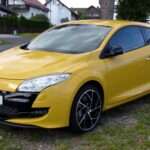
Photo: Guillaume Vachey / Wikimedia Commons — CC0 1.0. Original scene retained; resized for display.