UNUSUAL CARS MODEL GUIDE
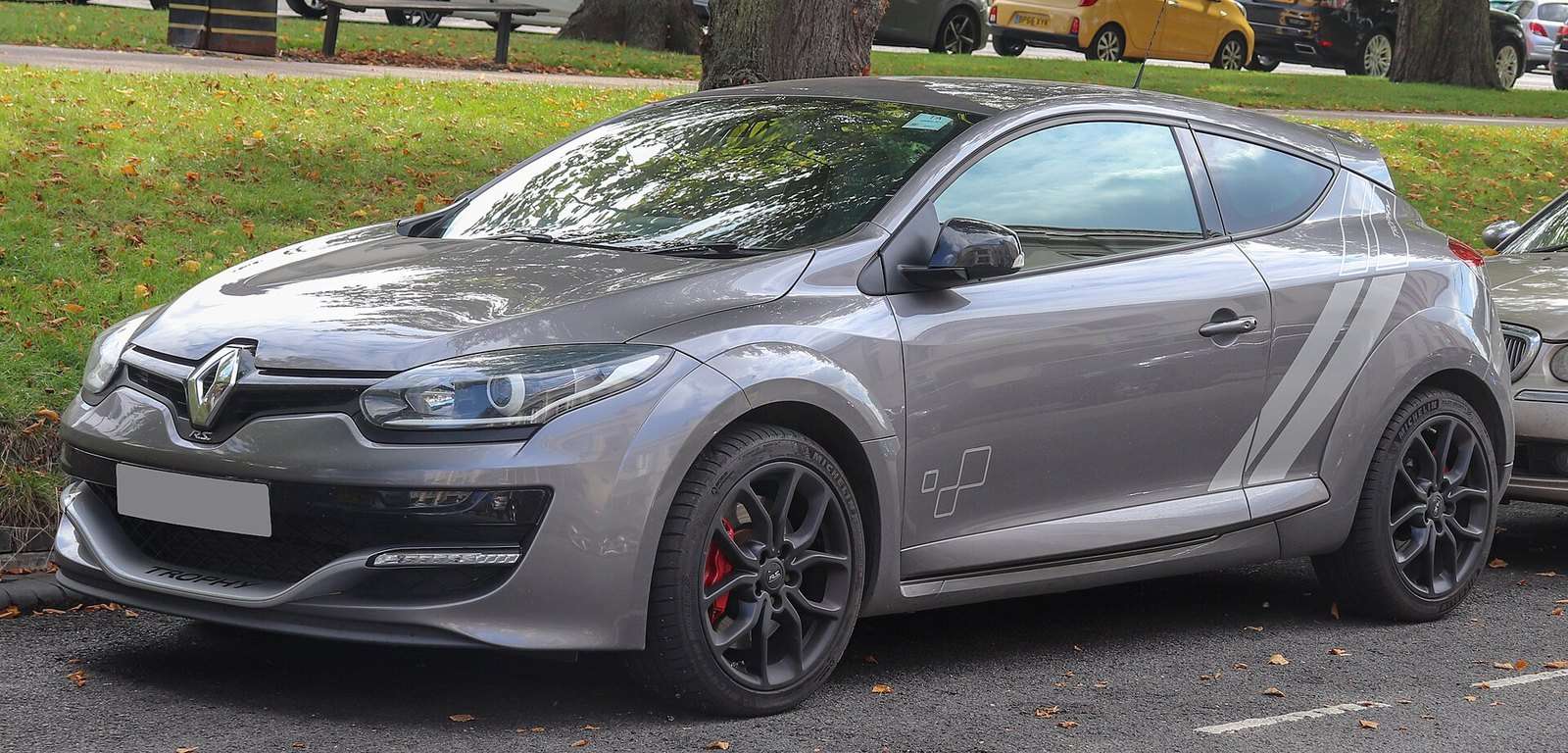
The third-generation Renault Mégane RS turned a three-door family coupé into one of the defining front-wheel-drive performance cars of the 2010s. UK buyers first received the 250, followed by the 265 and 275, while Trophy and Trophy-R editions progressively sharpened the same basic formula: a 2.0-litre turbocharged engine, six-speed manual gearbox, sophisticated front suspension and, on Cup-chassis cars, a mechanical limited-slip differential.
Featured image: 2015 Renault Mégane Renaultsport 275 Trophy front three-quarter view. Photograph by Vauxford, CC BY-SA 4.0, via Wikimedia Commons; locally hosted.
From 250 to 265 and 275
The Mégane III RS arrived in Britain in 2010. Its 1,998cc F4Rt turbocharged four-cylinder produced 250PS and drove the front wheels through a six-speed manual gearbox. Renault Sport replaced the ordinary front strut with a separate steering-axis arrangement intended to control torque steer while preserving steering accuracy. Brembo four-piston front calipers, a central exhaust outlet and wider bodywork separated it from the regular Mégane Coupé.
Renault offered two distinct chassis characters. Sport cars used a more road-biased set-up, while the Cup chassis added firmer springs and dampers, grooved front discs and a mechanical limited-slip differential. Some UK cars combined the Cup chassis with fuller equipment, so an advert saying “Cup” is not enough: inspect the specification and differential rather than relying on graphics.

The 265 update and limited editions
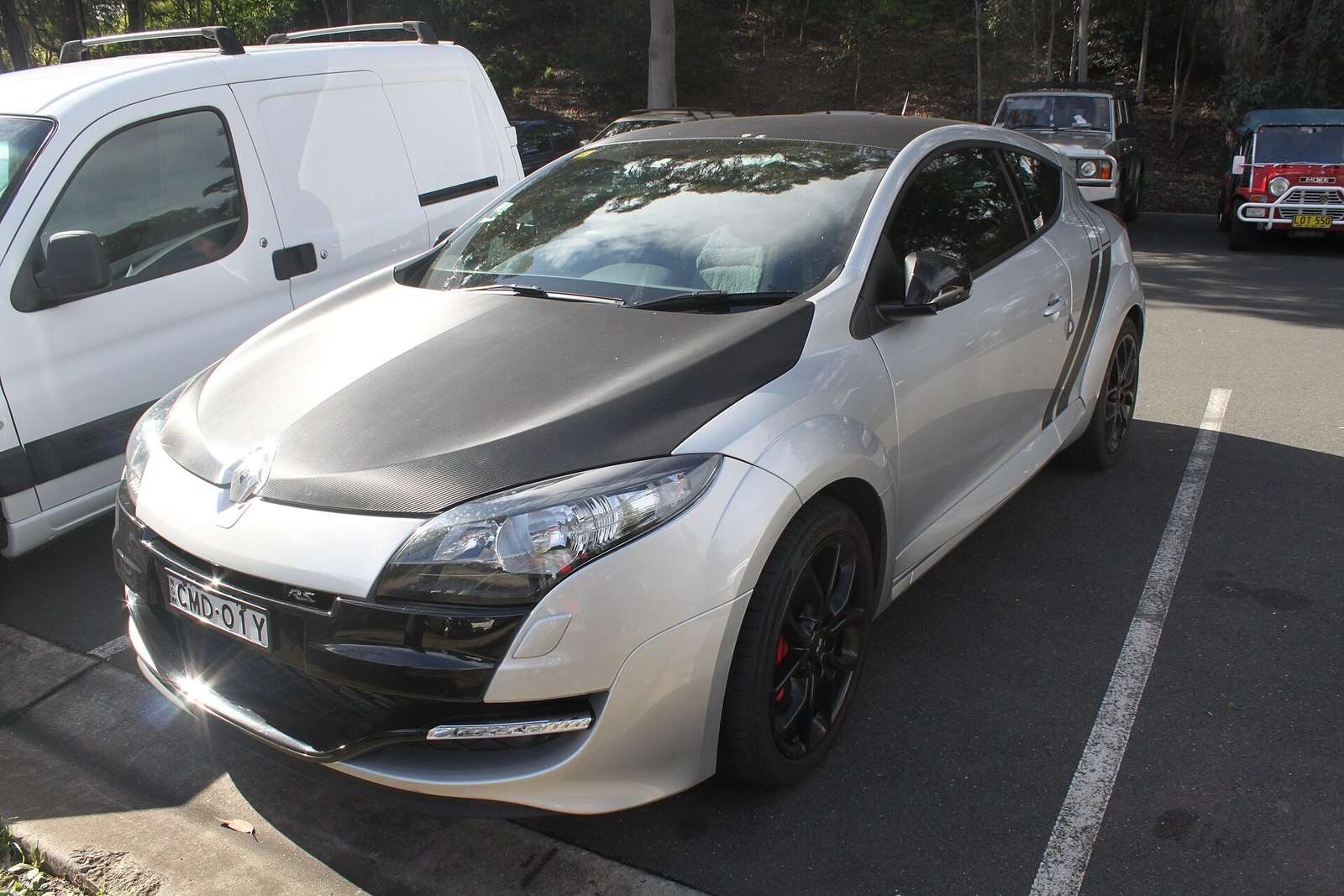
The 265 Trophy appeared in 2011 with 265PS, 360Nm and a Nürburgring front-wheel-drive lap record. Only 500 were planned globally, with 50 allocated to the UK. For the 2012 model year the 265 output became the mainstream RS specification, accompanied by a facelift and selectable engine mapping through the Sport mode.
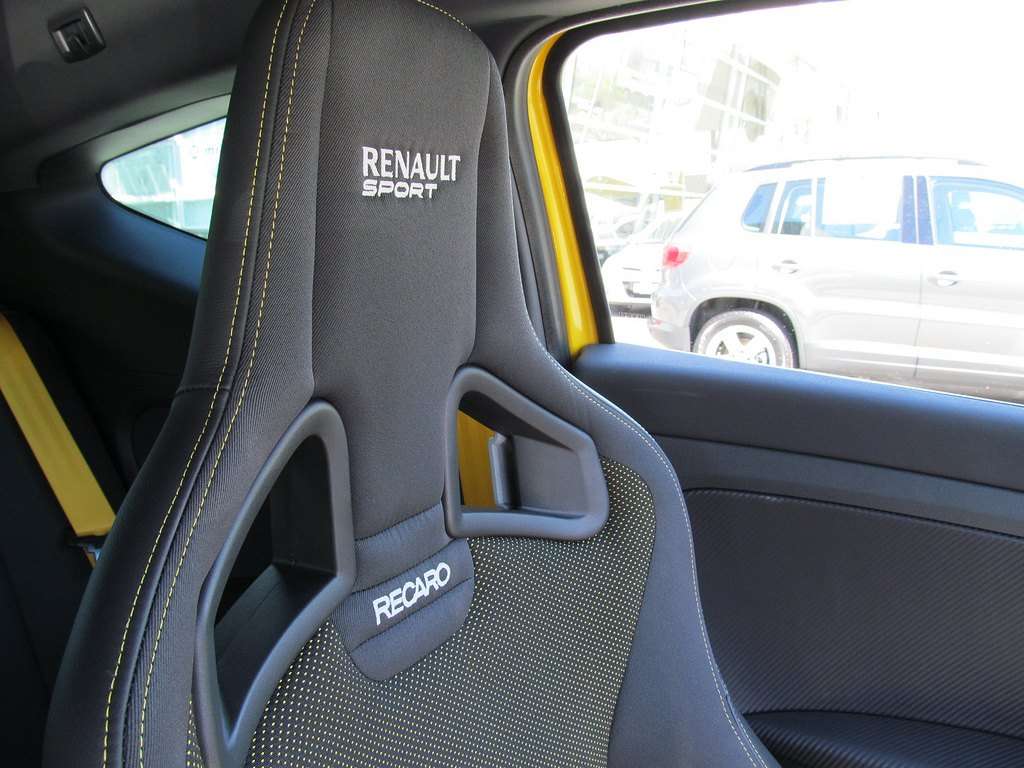
Renault created several market and motorsport-themed editions, including Red Bull Racing cars, but equipment differs by country and year. The important mechanical distinction remains whether the car has the Cup chassis and limited-slip differential. R.S. Monitor telemetry, Recaro seats, larger wheels and a panoramic roof are desirable options, not proof of the underlying chassis.
| Version | Approximate output | Main distinction |
|---|---|---|
| RS 250 | 250PS | Original 2010 version; Sport or Cup chassis |
| RS 265 | 265PS | Higher output and updated styling/electronics |
| RS 275 | 275PS | Final evolution, often with Akrapovič exhaust |
| 275 Trophy-R | 275PS | Two-seat, weight-reduced record car |
Love cars you don’t see every day?
Get forgotten cars, surprising motoring stories and the most interesting finds from Unusual Cars by email.
Free to join. No spam. Unsubscribe whenever you like. See our privacy policy.
RS 275, Trophy and Trophy-R
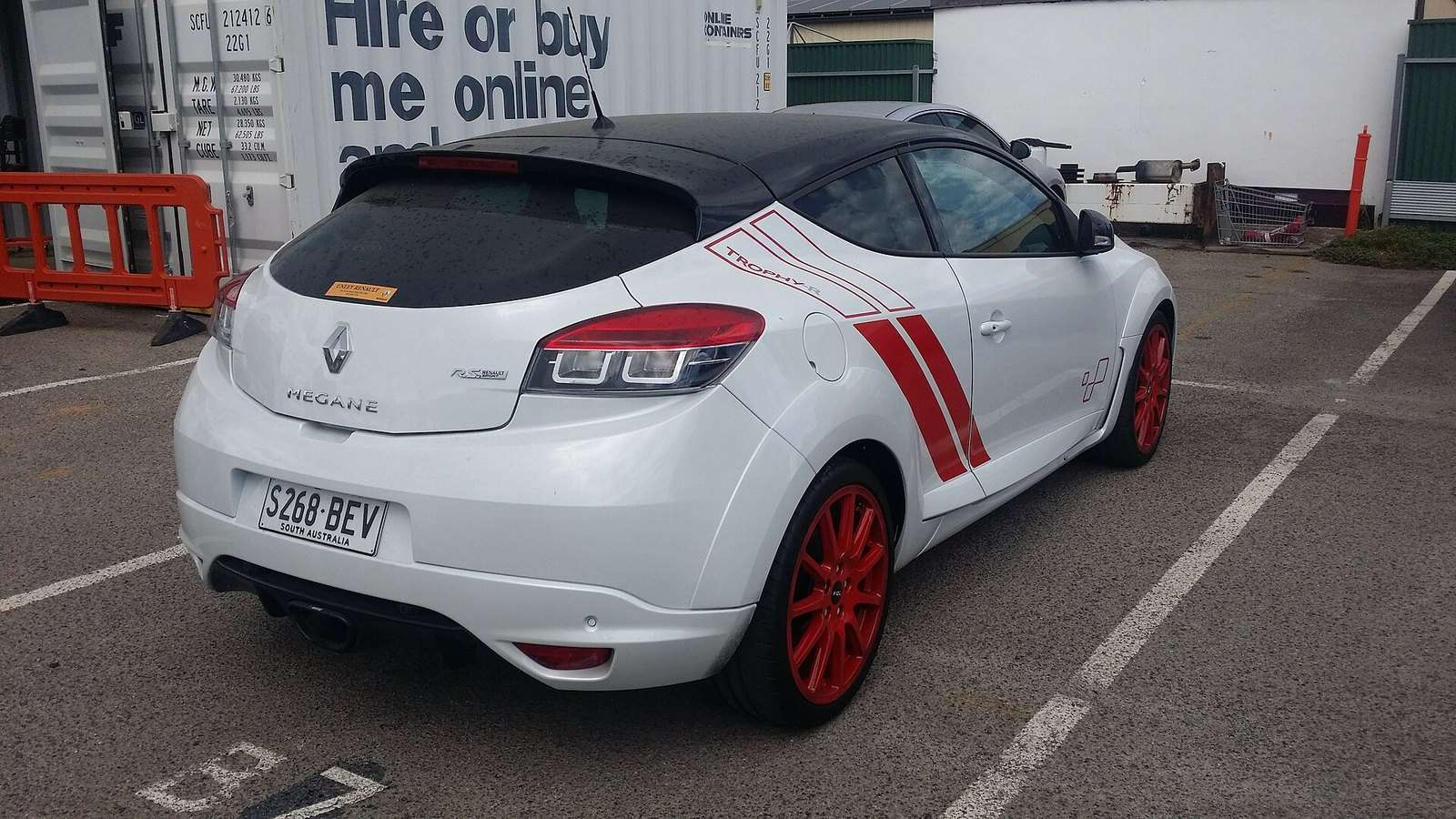
The RS 275 raised output to 275PS and became the final development of the Mégane III road car. Trophy models added Cup hardware and an Akrapovič titanium exhaust, while Trophy-R removed the rear seats and much comfort equipment. Öhlins adjustable dampers, composite front springs, lighter wheels and serious tyres turned the Trophy-R into a focused track car.
Renault built 250 Trophy-Rs worldwide. Laurent Hurgon used one to reclaim the Nürburgring front-wheel-drive record in 2014, continuing the record lineage started by the R26.R. A genuine Trophy-R is therefore a distinct collector model, not simply a white 275 with stickers; its numbered status and original lightweight equipment must be documented.
Engine, belts and transmission
The F4Rt is robust when serviced but still needs age-based cambelt, tensioner, auxiliary-belt and water-pump work. Demand invoices with dates and mileages. Start from cold and listen for dephaser rattle, pulley noise or an uneven idle. Check for boost leaks, smoke, oil around the turbo system and cooling-system neglect; modified cars need evidence of sensible mapping and supporting maintenance.
The PK4 six-speed gearbox should select every ratio cleanly when cold and hot. A high clutch bite, slip under full boost or dual-mass-flywheel vibration can make an apparently cheap car expensive. Inspect engine and gearbox mounts if the drivetrain knocks on load changes, and check driveshaft boots and wheel bearings.
Chassis, brakes, tyres and body
Swivel hubs, lower ball joints, top mounts, anti-roll-bar links, dampers and springs all affect the precision for which these cars are known. Knocks, heavy steering, uneven tyre wear or a car that follows cambers need investigation. Cup cars should be firm, not unstable. Correct four-wheel geometry and four matching premium tyres matter more than cosmetic modifications.
Brembo calipers should wear pads evenly and release cleanly. Inspect discs, rear calipers, handbrake and brake hoses. Look underneath for damaged jacking points, corrosion on subframes and poor repairs after track use. Check the long doors, bonnet alignment, front splitter, rear diffuser and central exhaust, then test key cards, windows, climate control, navigation and R.S. Monitor where fitted.

Buying checklist
Confirm the chassis specification
Sport, Cup chassis and Cup model descriptions are often confused; check the differential, brakes, springs and original build information.
Value service history above modifications
A standard car with belts, fluids, tyres and geometry documented is a safer starting point than an aggressively mapped example.
Inspect special editions as complete cars
Recaros, Akrapovič exhausts, Öhlins dampers and Trophy-R parts are costly and easy to remove or imitate.
References
- evo: Mégane 265 Trophy review and UK allocation
- PistonHeads: Mégane RS 250/265/275 buying guide
- Renault: Mégane R.S. history and record lineage
- Unusual Cars: Mégane 250/265/275 diagnostic guide
Continue the Renault story
Explore the complete Renault hub, then read Renault Mégane R26 and R26.R and Mégane 250/265/275 diagnostic guide.
Frequently asked questions
What is the difference between a Mégane RS 250, 265 and 275?
They are successive power and specification evolutions of the Mégane III RS: approximately 250PS, 265PS and 275PS respectively.
Does every Mégane RS have a limited-slip differential?
No. The mechanical limited-slip differential is associated with Cup-chassis cars; verify the individual car rather than the badge.
What engine does the Mégane RS 250 use?
It uses Renault's 1,998cc turbocharged F4Rt four-cylinder engine with a six-speed manual gearbox.
How many Mégane 275 Trophy-R cars were built?
Renault produced 250 Trophy-R examples worldwide.
What is the most important maintenance proof?
Dated evidence for cambelt, tensioner, auxiliary-belt and water-pump work is essential, alongside regular oil and cooling-system service.