UNUSUAL CARS MODEL GUIDE
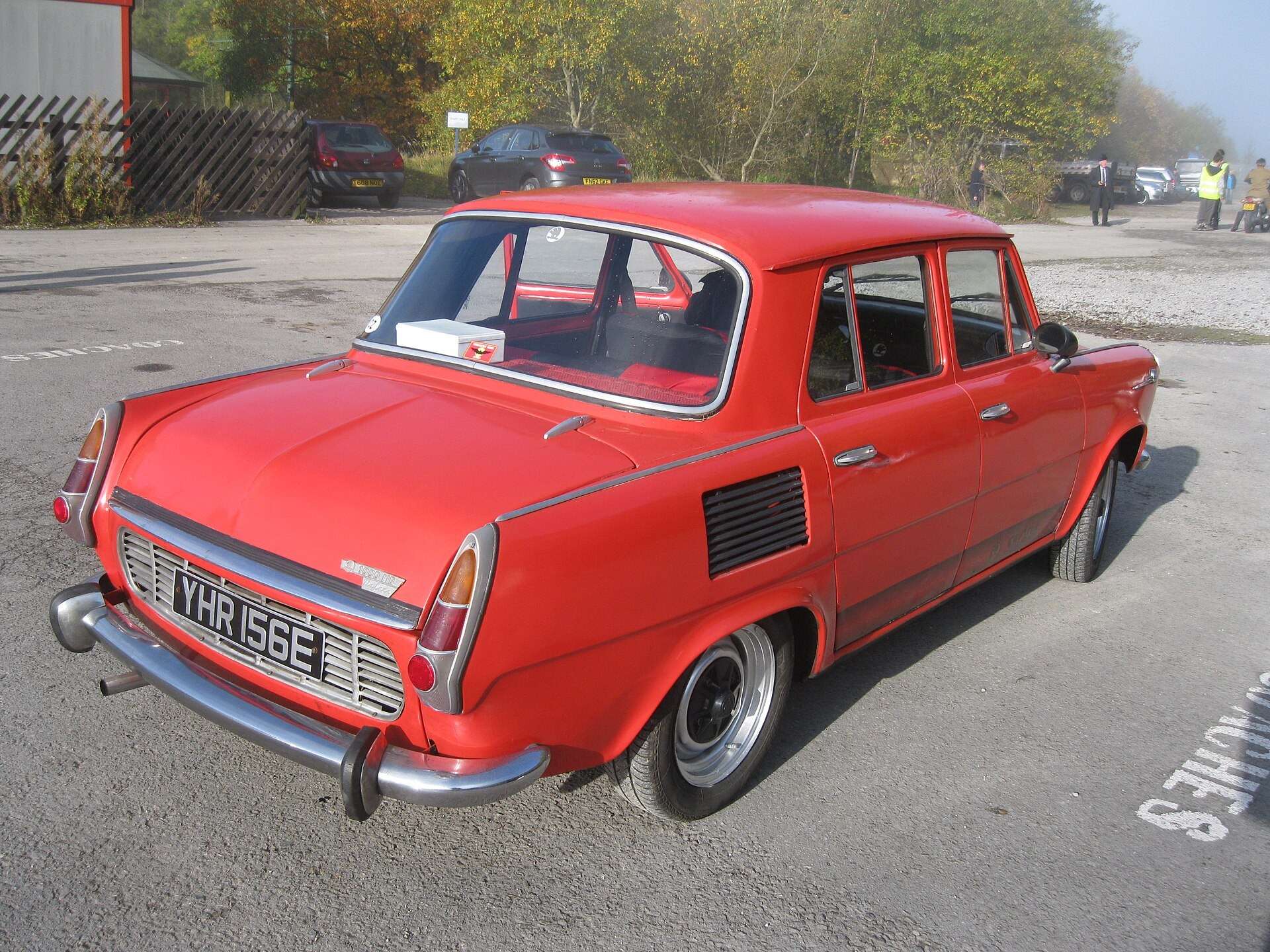
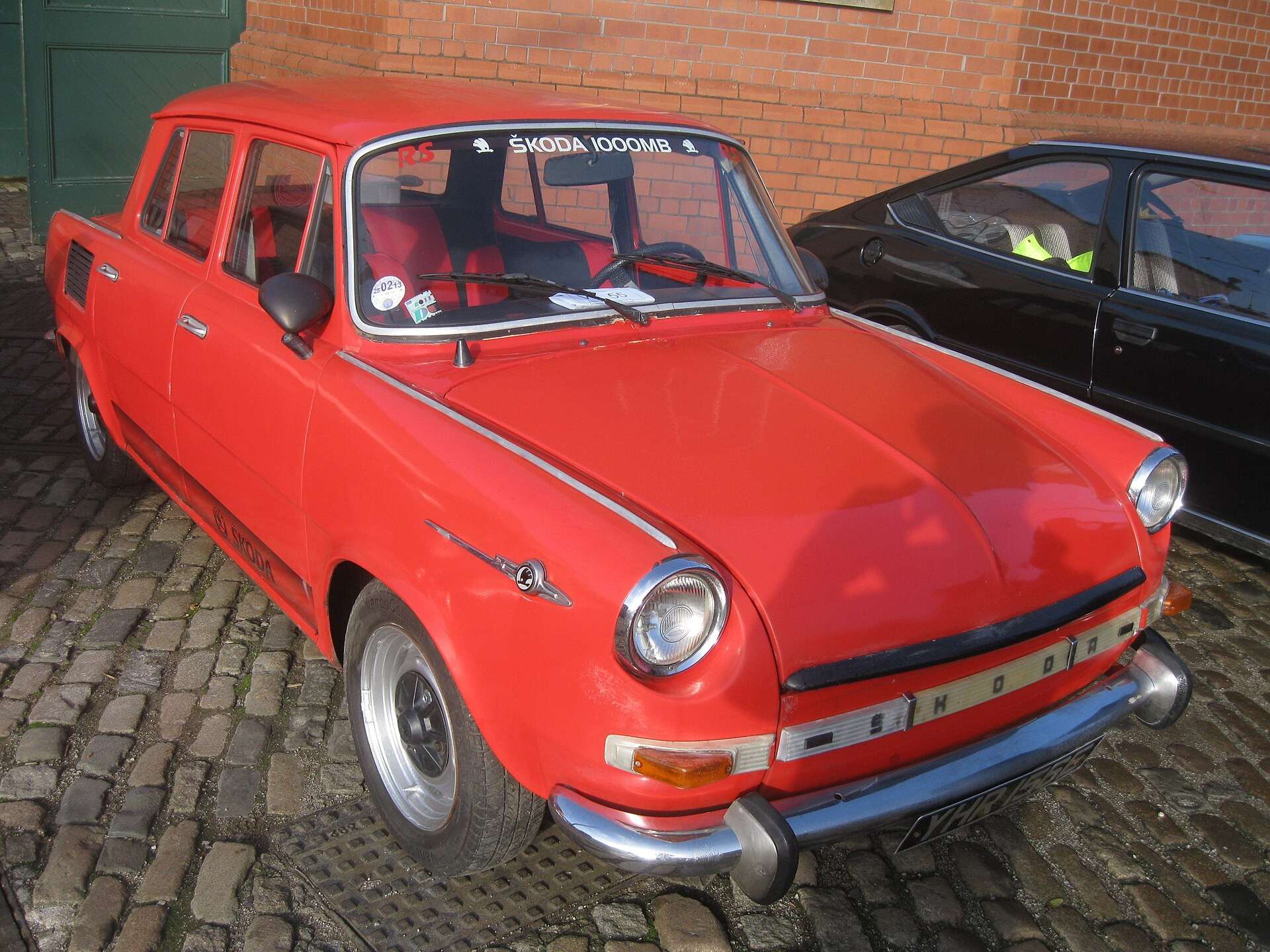
The Škoda 1000 MB was the car that transformed the company. Launched in 1964, it replaced the old backbone-chassis Octavia saloon with a modern unitary body, rear engine and rear-wheel drive. Its aluminium engine casting process was advanced, while the scarce two-door MBX gave the family saloon a stylish pillarless companion.
Featured image: Škoda 1000 MB De Luxe. Photograph by Andrew Bone from Weymouth, England, CC BY 2.0, via Wikimedia Commons; locally hosted.
A completely new Škoda
Škoda built a new factory at Mladá Boleslav for the 1000 MB and redesigned almost every major system. The initials referred to the factory town, while the number identified the engine class. Unlike the front-engined Octavia, the new car placed its water-cooled four-cylinder engine behind the rear axle.
The layout released useful cabin and luggage space from a compact footprint. It also reduced the number of heavy driveline components running through the passenger compartment, although a front boot and rear-mounted cooling system created their own maintenance demands.

Models and specifications
| Version | Engine | Notes |
|---|---|---|
| 1000 MB | 988 cc four-cylinder | Main four-door saloon in standard and De Luxe forms. |
| 1100 MB | 1,107 cc four-cylinder | Later larger-engined development. |
| 1000/1100 MBX | Two-door pillarless body | Rare derivative, with only 2,517 examples produced. |
| Total MB saloons | 1964–1969 | More than 440,000 four-door cars were built. |
The four-speed transaxle sits with the engine at the rear. Outputs were modest, but low weight and compact dimensions made the car economical and easy to place.
Love cars you don’t see every day?
Get forgotten cars, surprising motoring stories and the most interesting finds from Unusual Cars by email.
Free to join. No spam. Unsubscribe whenever you like. See our privacy policy.
Innovative manufacturing
Škoda used pressure die-casting to produce aluminium engine and gearbox cases at high volume. The method reduced weight and machining while demonstrating industrial ambition beyond the car’s budget-market image. The unitary shell was equally significant because it broke with the separate backbone used by the 440 and original Octavia.
UK advertising stressed value, economy and durability. Today that ordinary export role is part of the appeal: the car provides a direct window into 1960s motoring outside the usual Western European choices.

The rare MBX
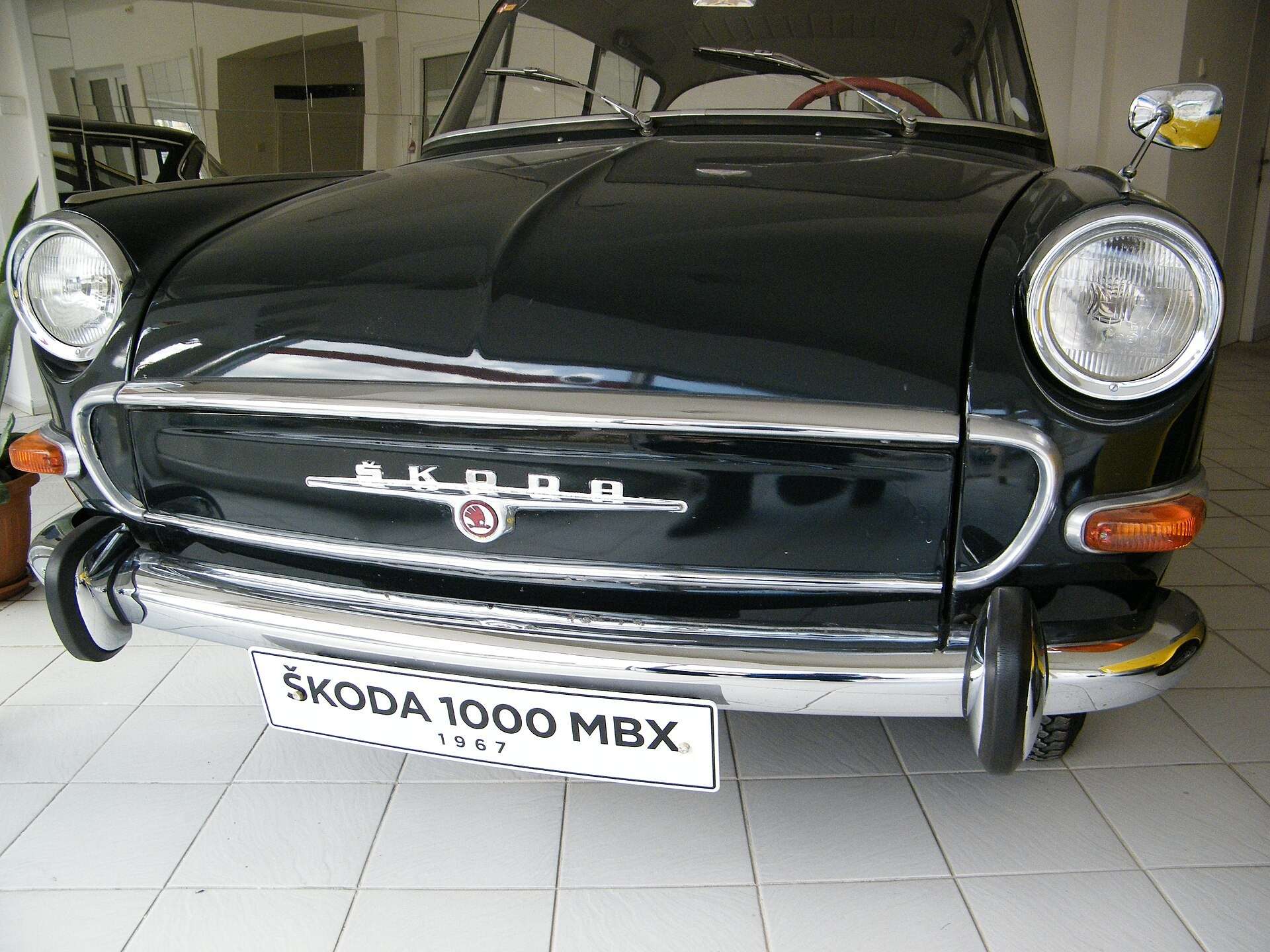
The MBX used a two-door body without a conventional centre pillar, giving it a light, almost coupé-like side profile. Achieving that look required additional body engineering and careful door adjustment. Low production makes complete cars valuable, but it also makes replacement glass, seals, trim and body sections especially difficult.
Do not assume every two-door shell is authentic. Compare the chassis identity, factory details and known history with specialist records.
Buying and ownership checks
Cooling and engine
The rear engine relies on a long, healthy cooling circuit. Check the radiator, hoses, water pump, thermostat and evidence of overheating. Oil leaks are common on neglected cars; persistent smoke, low pressure or crankcase noise needs investigation.
Body and suspension
Inspect sills, floors, jacking points, suspension mountings, inner wings, the front luggage compartment and the rear engine bay. Check doors and glass fit carefully on an MBX.
Transmission and originality
Listen for transaxle whine, test every gear and assess clutch take-up. Confirm that brightwork, lamps, wheel trims, instruments and interior fittings are correct because small missing pieces can dominate restoration time.
Sources
- Škoda Storyboard: classic Felicia history
- Škoda Storyboard: 60 years of Octavia
- Škoda Storyboard: 1000 MB history
- Škoda UK: Škoda 100 history
- Škoda UK: modern Felicia anniversary
Continue the Škoda story
These cars chart Škoda’s route from post-war engineering to its modern Volkswagen-era identity. Explore the complete Škoda hub, then compare the front-engined Octavia, then continue with the Škoda 100 and 110.
Frequently asked questions
What does 1000 MB mean?
The number refers to the roughly one-litre engine and MB identifies Mladá Boleslav, Škoda’s home and factory town.
Was the 1000 MB rear-engined?
Yes. Its water-cooled engine and transaxle sit behind the rear axle and drive the rear wheels.
Was it sold in Britain?
Yes. The 1000 MB was exported to the UK as a value-focused family saloon.
How rare is the MBX?
Only 2,517 MBX two-door cars were produced, making it much rarer than the four-door saloon.
What should buyers check first?
Start with corrosion, cooling-system condition, transaxle noise and completeness of model-specific trim.