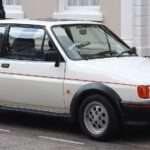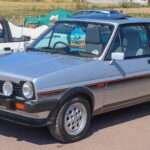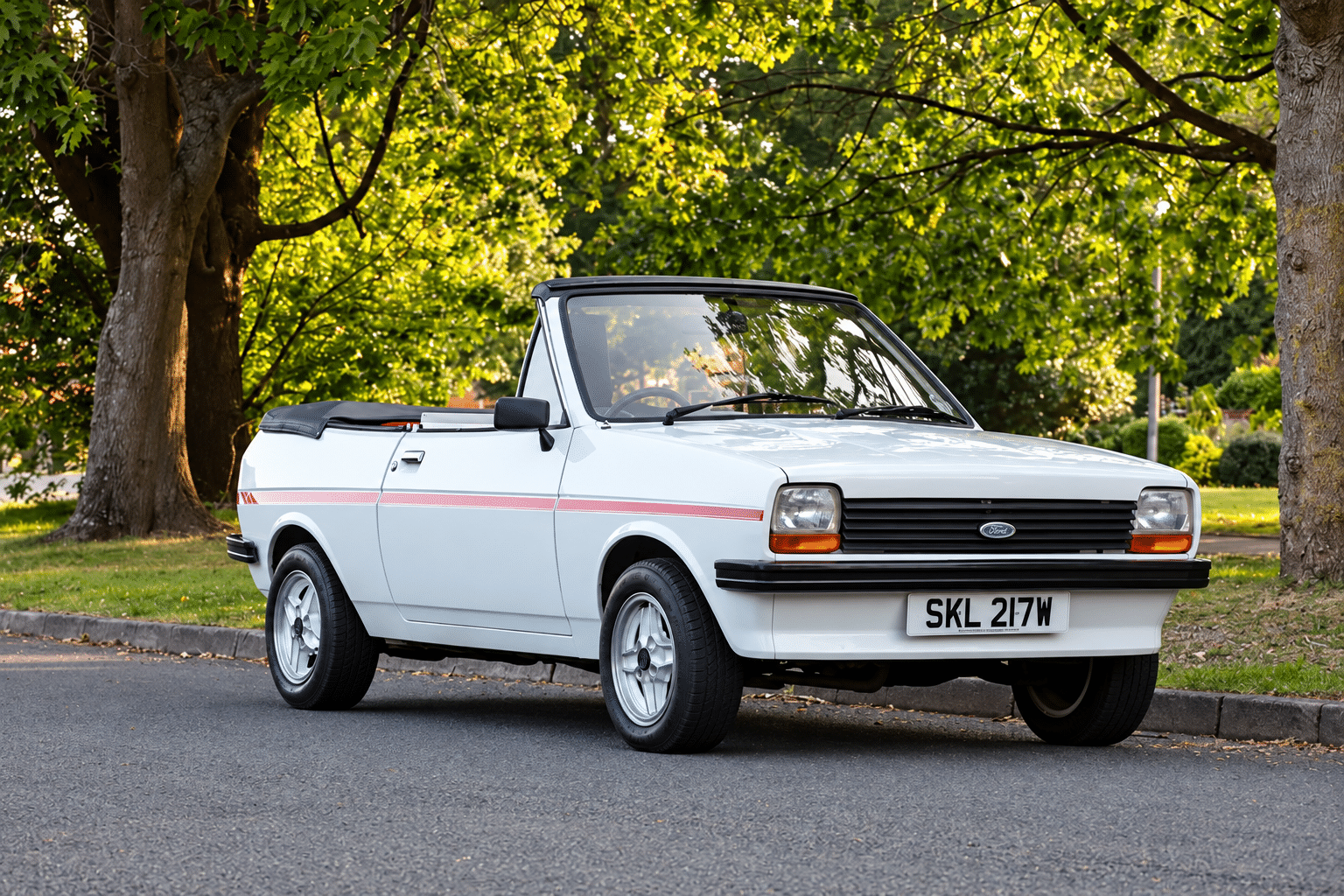
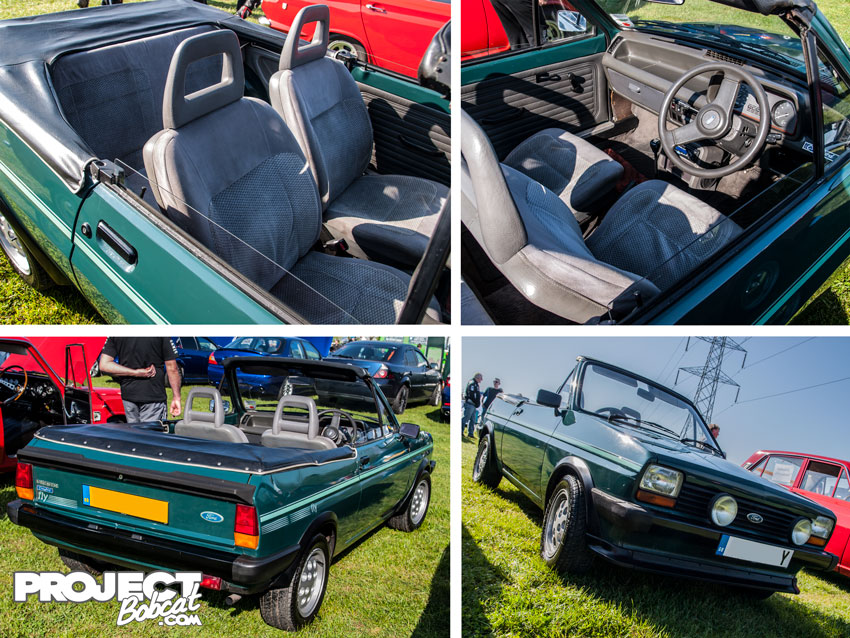
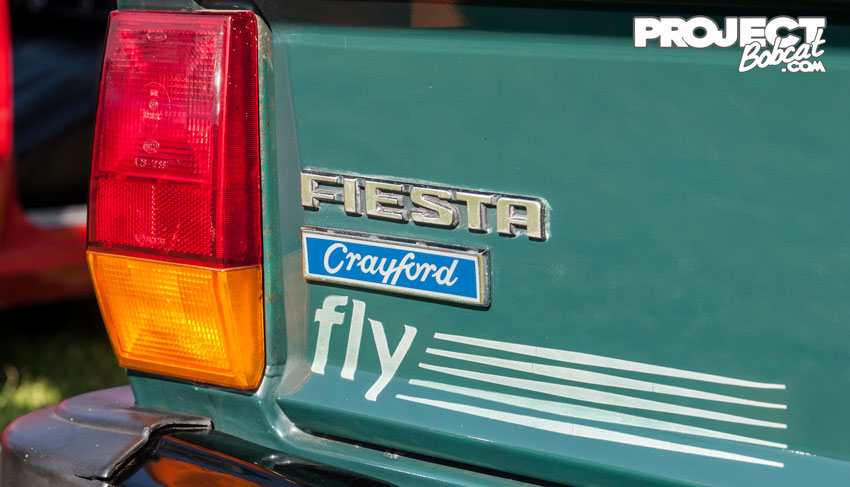
The Mk1 Ford Fiesta Fly was the tiny convertible Ford never officially built: a clever British coachbuilt conversion created by Crayford at the beginning of the 1980s.
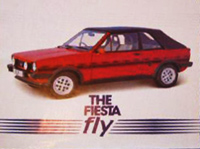
1. It was created because Crayford needed a more affordable convertible
By 1981, factory-built convertibles such as the Volkswagen Golf were putting pressure on traditional coachbuilders. Crayford responded by turning Ford’s inexpensive supermini into an open car that could reach a much wider audience.
2. David McMullan designed it
Crayford split its workshop into two development teams during the winter of 1981. David McMullan led the Fiesta project, while Jeff Smith worked on a proposed open-top Austin Metro.
3. The name “Fly” came from a type of lightweight carriage
The name was not simply a reference to speed. A fly was a fast, light open carriage—an unusually appropriate description for a roofless Fiesta weighing very little.

4. Its boot was permanently welded shut
Removing a roof weakens a monocoque shell, so Crayford used a welded-up rear section to restore strength without adding a heavy external roll bar. The result looked cleaner than many small-volume convertible conversions.
Love cars you don’t see every day?
Get forgotten cars, surprising motoring stories and the most interesting finds from Unusual Cars by email.
Free to join. No spam. Unsubscribe whenever you like. See our Privacy Policy.
5. The conversion was designed to avoid repainting the whole car
The cut edges were rust-proofed and hidden beneath moulded plastic sill trims. That ingenious detail reduced labour and helped keep the conversion’s price within reach of ordinary Fiesta buyers.
6. It was not restricted to the 1.3 Ghia or XR2
Although the sporting versions attract the most attention today, Crayford converted humble models too. Surviving cars and period records include 957cc Populars, 1.1-litre cars, 1.3s and later XR2-based Flys.
7. Crayford considered using second-hand donor cars
To make the idea genuinely affordable, Crayford planned “off-the-peg” conversions using carefully selected used Fiestas. Contemporary plans aimed to produce a complete open car for less than £4,000.
8. Crayford built only the earliest cars
Production totals are often confused. Crayford itself appears to have completed roughly 18 to 30 Mk1 examples at Westerham, rather than the entire run usually attributed to the company.
9. F. English took over production
The conversion rights passed to the coachbuilding division of Dorset Ford dealer F. English during 1982. Autocar reported around 100 conversions by September 1983, and specialists believe the eventual total may have reached roughly 200.
10. The XR2 Fly’s price worked against it
F. English promoted the open-top XR2 through Ford sports dealers, but the finished car cost more than £8,000—serious money for a Fiesta in the early 1980s. Around 30 XR2 versions were reportedly sold before momentum faded.
The surviving population is larger than the old “only 20 built” story suggests. Project Bobcat currently lists more than 90 Fly and related cars, although provenance matters because later copies were comparatively easy to create.
Love cars you don’t see every day?
Get forgotten cars, surprising motoring stories and the most interesting finds from Unusual Cars by email.
Free to join. No spam. Unsubscribe whenever you like. See our Privacy Policy.