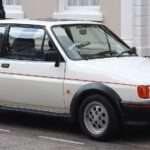
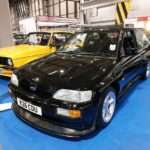
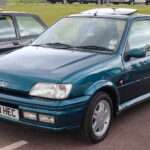
The Ford Fiesta XR2 turned Britain’s everyday supermini into a pocket-sized performance car. Across two generations it combined simple engineering, low weight and instantly recognisable styling—and helped define what an affordable hot hatch should be.

1. The Fiesta began as Project Bobcat
Ford developed its first modern front-wheel-drive supermini under the internal name Bobcat. Henry Ford II personally approved the Fiesta name before the car reached Britain in 1977.
2. The XR2 arrived four years after the Fiesta
The first XR2 joined the range in 1981. It used a 1.6-litre Kent Crossflow engine, giving the smallest Ford enough performance to sit alongside the Escort XR3 in the new XR family.
3. It was the first production Fiesta capable of 100 mph
Ford celebrated the Mk1 XR2 as the first Fiesta to break the 100 mph barrier. That headline mattered enormously when most superminis were still designed almost entirely around economy and urban use.
4. Pepperpot wheels had a practical origin
The perforated alloy wheels became one of the XR2’s defining visual details. Their openings were not just decorative: they helped airflow around the brakes while giving the car a distinctive motorsport-influenced stance.
Love cars you don’t see every day?
Get forgotten cars, surprising motoring stories and the most interesting finds from Unusual Cars by email.
Free to join. No spam. Unsubscribe whenever you like. See our Privacy Policy.
5. Round headlamps separated it from ordinary Mk1s
The XR2 received round headlamps, deeper spoilers, wheelarch extensions and contrasting graphics. Ford created a special appearance without changing the Fiesta’s basic, upright and highly practical shape.

6. The Mk2 XR2 was more than a restyled Mk1
Launched in 1984, the second-generation XR2 gained the 1.6-litre overhead-cam CVH engine and a five-speed gearbox. Revised suspension, brakes and wider low-profile tyres made it a more mature high-speed car.
7. Its 96 bhp worked because the car was so light
The Mk2’s output sounds modest today, but the Fiesta weighed well under a tonne. Short gearing and an eager naturally aspirated engine made it feel lively at ordinary road speeds.
8. Neither early XR2 used fuel injection
Both the Mk1 and Mk2 XR2 relied on carburettors. Fuel injection would appear on later fast Fiestas, but the original cars retained the sound, response and occasional temperament of a well-tuned carburetted engine.

9. The XR2 became a motorsport building block
Simple mechanicals and a huge supply of affordable parts made the Fiesta popular in club rallying, racing and autocross. That success also meant many road cars were stripped, modified or used beyond economical repair.
10. Ford sold millions of Fiestas—but surviving XR2s are scarce
The Fiesta became one of Britain’s best-selling cars, yet the early XR2s suffered from corrosion, theft and years when values were low. Correct interiors, wheels and body trim are now important markers of a genuinely original car.
Love cars you don’t see every day?
Get forgotten cars, surprising motoring stories and the most interesting finds from Unusual Cars by email.
Free to join. No spam. Unsubscribe whenever you like. See our Privacy Policy.
More classic Fords
Continue with our Ford Escort XR3i Mk3 facts or explore the Ford archive.
Sources
For more about this car, read our Ford Fiesta XR2 and XR2i guide.