UNUSUAL CARS MODEL GUIDE
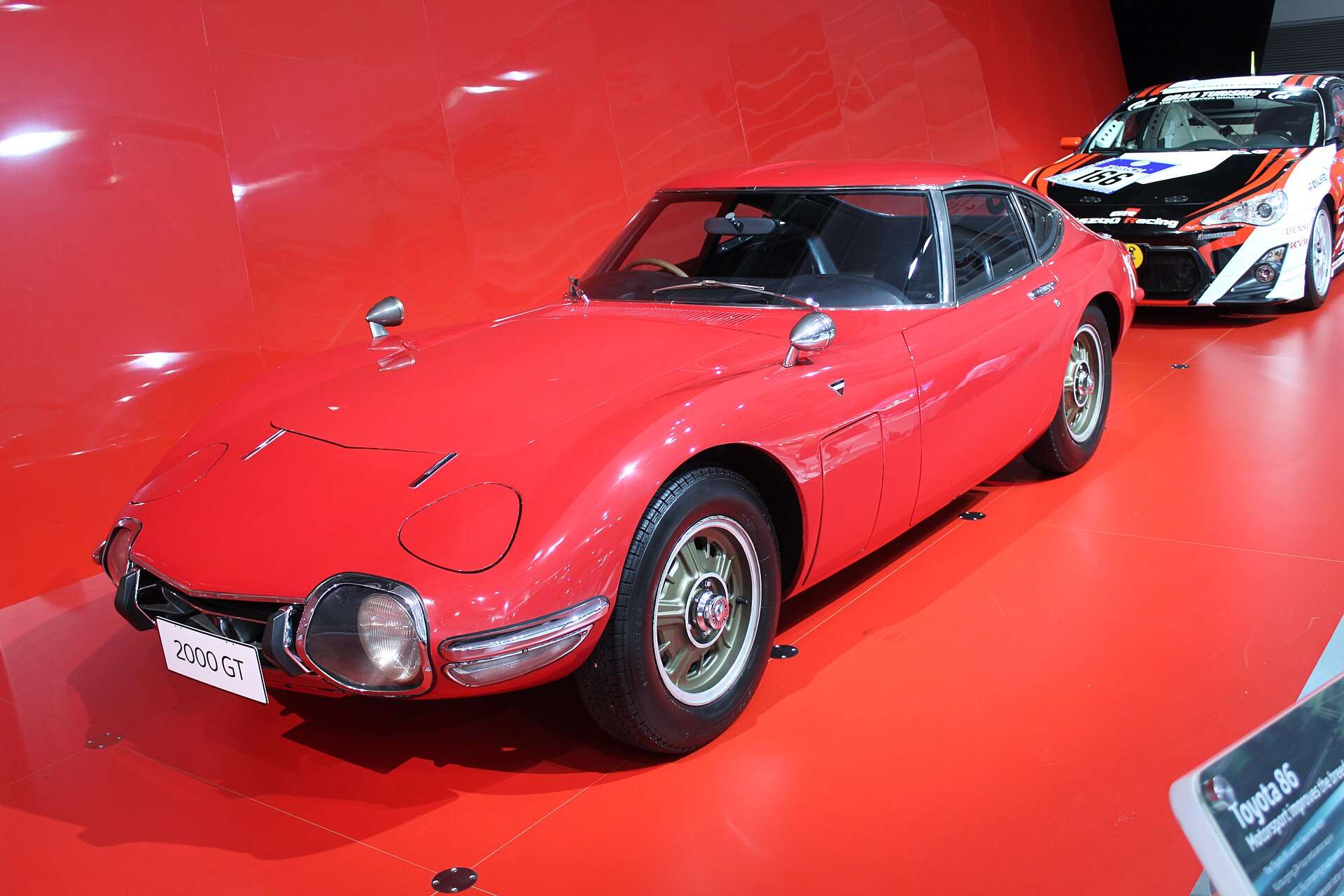
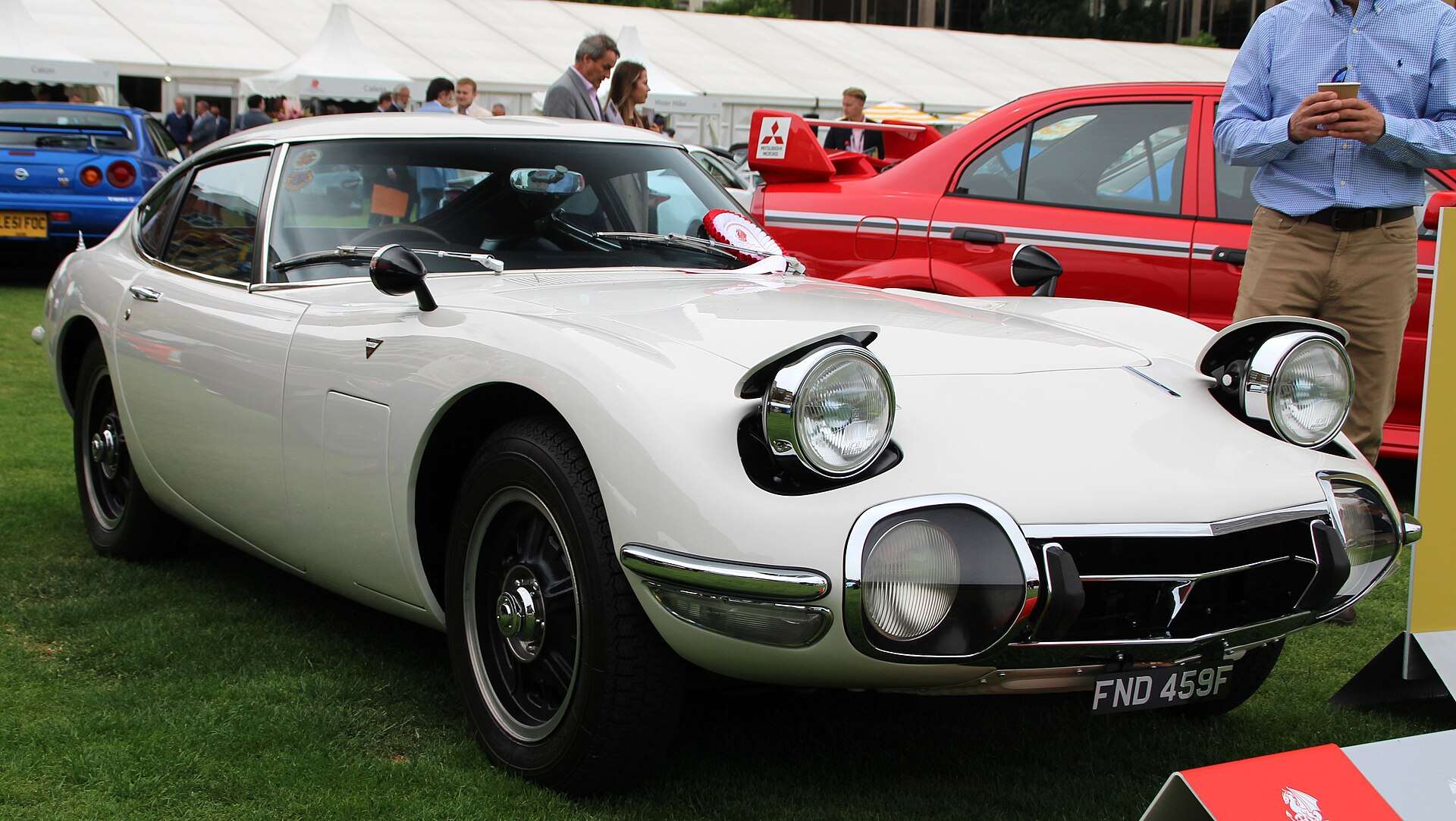
The Toyota 2000GT was the car that proved a Japanese manufacturer could build a world-class grand tourer. Developed by Toyota with Yamaha, shown as a prototype at the 1965 Tokyo Motor Show and placed on sale in May 1967, it combined a 2.0-litre twin-cam straight-six with a backbone frame, independent suspension, four-wheel disc brakes and an exceptionally low two-seat coupé body.
Quick answer: Toyota’s official record gives 150PS, 220km/h, 1,120kg and only 337 production cars before manufacture ended in 1970. Its rarity matters, but its deeper significance is technical: the 2000GT changed international expectations of Toyota and helped establish the Japanese collector-car market.
Why Toyota built the 2000GT
Japanese motorsport expanded rapidly after the first Japan Grand Prix in 1963. Toyota wanted a practical high-performance car that could be used on the road yet adapted for competition with relatively few changes. Rather than derive it from an ordinary saloon, the company treated the 2000GT as a technology showcase.
Toyota set the overall layout, design and basic parameters. Yamaha helped develop engine performance and carried out detailed body and chassis work under Toyota’s direction. Because the intended volume was tiny and the finish required careful hand work, Yamaha also handled production at its Iwata factory.
The 3M engine and Yamaha’s role
The 1,988cc 3M engine began with the architecture of Toyota’s M-series straight-six. Yamaha helped create the twin-cam cylinder head and production detail required for the flagship. Toyota quoted 150PS at 6,600rpm. Drive passed to the rear wheels, and the five-speed transmission, limited-slip differential and low seating position reinforced the car’s grand-touring purpose.
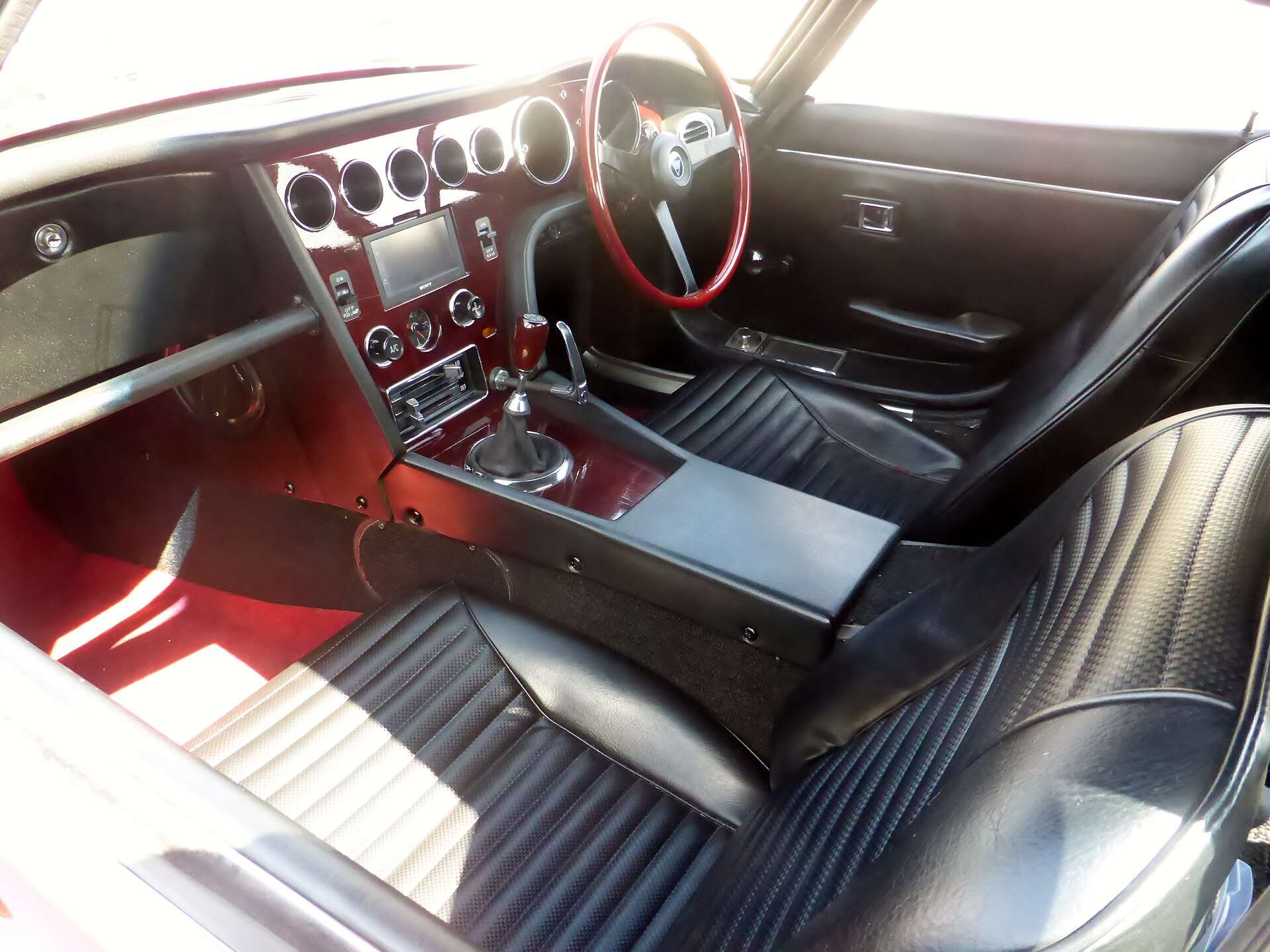
Yamaha’s experience went beyond engines. Its musical-instrument woodworking knowledge helped solve problems with the interior timber when exposed to heat, while the production team also dealt with magnesium wheels, complex glazing and carefully matched paint across steel and glass-reinforced panels.

Chassis and technical specification
An X-shaped backbone frame gave the compact body its structure. Suspension was independent at all four corners with double wishbones and coil springs. Four-wheel disc brakes, rack-and-pinion steering, radial tyres and magnesium alloy wheels placed the car at the front edge of Japanese production engineering in 1967.
| Specification | Toyota figure |
|---|---|
| Model code | MF10 |
| Engine | 1,988cc 3M inline-six, DOHC |
| Maximum output | 150PS at 6,600rpm |
| Kerb mass | 1,120kg |
| Dimensions | 4,175mm long, 1,600mm wide, 1,160mm high |
| Wheelbase | 2,330mm |
| Maximum speed | 220km/h |
| Production | 337 cars in Toyota’s official production record |
Speed records and competition
Before the road car went on sale, Toyota subjected the 2000GT to an endurance record attempt at Yatabe in October 1966. Despite severe weather, the car covered 16,000 kilometres over 78 hours at an average of 206.1km/h. Toyota records three world records and 13 international records from the trial.
The model also competed in Japanese and American racing. A 2000GT won the first Fuji 24-Hour Endurance Race in 1967. Those results were not decorative publicity: they supported Toyota’s argument that the new coupé could compete with established international sports cars.
The Bond roadsters
Two prototypes were converted to open form for the 1967 James Bond film You Only Live Twice. They were not normal production convertibles and should not be used to suggest that Toyota sold a roadster version. Their cultural effect was nevertheless enormous, putting the unfamiliar Toyota shape in front of a global cinema audience.

Production numbers and surviving variants
Toyota’s vehicle-lineage and GR Heritage records both state that 337 cars were manufactured before production ended in 1970. Some specialist histories quote 351 when prototypes and special builds are added. The difference is a matter of definition, so the defensible public figure for production road cars is Toyota’s 337.
Most cars used the 2.0-litre 3M engine, but a very small number of MF12 cars for the US market used a 2.3-litre SOHC engine. Detail changes also distinguish earlier and later cars. On a vehicle of this value, identification should be based on factory records, chassis stampings and expert inspection rather than appearance alone.
Love cars you don’t see every day?
Get forgotten cars, surprising motoring stories and the most interesting finds from Unusual Cars by email.
Free to join. No spam. Unsubscribe whenever you like. See our privacy policy.
Why values became so high
The 2000GT combines several things the collector market rarely finds in one car: beauty, extreme scarcity, first-class engineering, motorsport credibility and a clear place in industrial history. It is also the most internationally recognised early Japanese sports car. Those qualities pushed the best examples into the same market as important European exotics.
Headline auction prices can be misleading because provenance, originality, left- or right-hand drive, colour, condition and the specific chassis history make an enormous difference. A public guide should not present a single current value as though every 2000GT were interchangeable.
Ownership and inspection context
A 2000GT is not an ordinary classic-car purchase. The backbone frame, aluminium and glass-reinforced panels, model-specific glazing, timber interior and low-volume mechanical parts require marque-level expertise. Historic repairs that would be acceptable on a cheaper car can materially alter authenticity and value here.
Toyota Gazoo Racing added the 2000GT to its GR Heritage Parts programme in 2020, initially announcing reproduced transmission and differential parts. That factory support is significant, but it does not make the car simple to restore. Any purchase should include documented provenance, body and chassis measurement, mechanical examination and consultation with a recognised specialist.

Frequently asked questions
How many Toyota 2000GTs were made?
Toyota’s official history states that 337 production cars were made before production ended in 1970. Higher totals sometimes include prototypes and special-purpose cars.
Did Yamaha design the Toyota 2000GT?
Toyota set the overall layout, styling and basic parameters. Yamaha worked under Toyota’s direction on engine performance and detailed body and chassis development, then built the cars in low volume.
What engine did the Toyota 2000GT use?
The principal MF10 version used Toyota’s 1,988cc 3M DOHC straight-six, officially rated at 150PS at 6,600rpm.
Was there a production Toyota 2000GT convertible?
No. Two prototype cars were converted to open form for You Only Live Twice, but Toyota did not sell a normal production roadster.
Why is the Toyota 2000GT so important?
It combined advanced engineering, credible competition results, international performance and very low production. It demonstrated that Toyota and the wider Japanese industry could create a sports car equal to established European rivals.
Research sources
- Toyota: 2000GT history and specifications
- Toyota: development of sports cars and the Yatabe record run
- Yamaha Motor: from trial production to manufacturing
- Toyota Gazoo Racing: 2000GT GR Heritage Parts
- Toyota UK: history of a Japanese icon
- Featured image: 1967–70 2000GT by Jeremy from Sydney, CC BY 2.0.
Continue the Toyota story
Explore the Rare & Performance Toyotas hub, follow Toyota’s straight-six line into the Supra A70, or compare the later Supra A80.