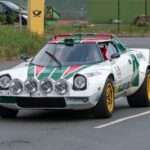
Quick answer: the Lancia Fulvia Coupé was a compact front-wheel-drive Italian coupé built from 1965 to 1976. It combined a narrow-angle V4, disc brakes and unusually sophisticated chassis engineering with elegant in-house styling. The lightweight HF versions turned that refined road car into a major rally winner, culminating in victory at the 1972 Monte Carlo Rally.
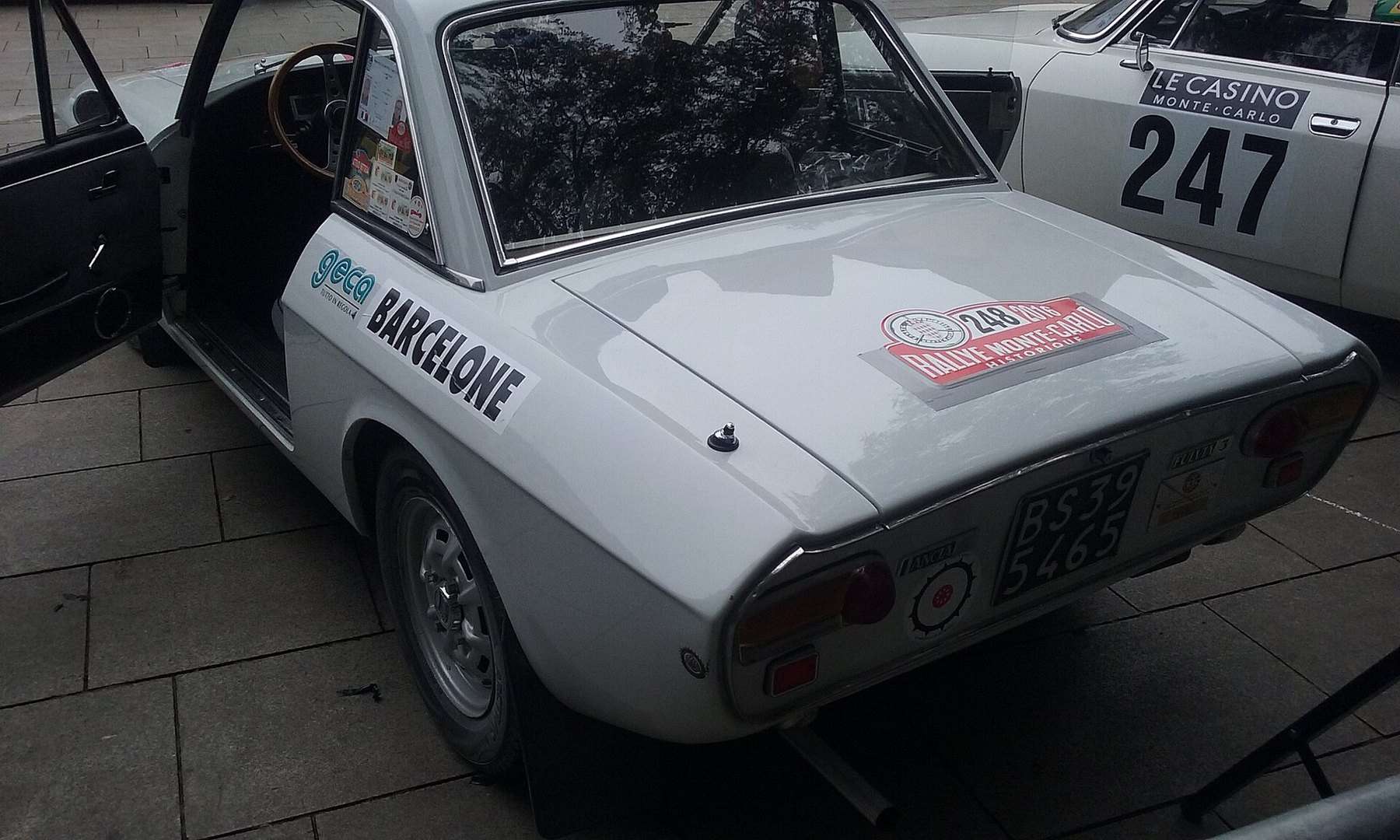
Why the Fulvia Coupé matters
The Fulvia arrived before front-wheel drive became routine in sporting cars. Its engine sat ahead of the driven wheels, yet careful weight distribution, independent front suspension and a well-controlled rear axle gave the small Lancia unusual precision. The narrow-angle V4 kept the engine compact, while four-wheel disc brakes reinforced the sense that this was a technically serious car rather than a conventional saloon wearing a prettier body.
Piero Castagnero designed the Coupé within Lancia rather than sending the project to an outside coachbuilder. Its slim pillars, upright glasshouse and clean flanks produced a shape that remained recognisable through eleven years of production.
From 1.2 Coupé to 1.6 HF
| Version | Character | Key distinction |
|---|---|---|
| 1.2 Coupé | Original small-capacity road car | Early Series 1 detailing and four-speed transmission |
| 1.3 and 1.3 S | Mainstream enthusiast models | More performance; later cars gained five speeds |
| 1.2 HF and 1.3 HF | Lightweight competition-led derivatives | Reduced weight, tuned engines and HF identity |
| 1.6 HF Fanalone | Most celebrated homologation-era version | 1,584cc engine, enlarged headlamps and extensive lightweight detailing |
| Series 2 1600 HF | Later 1.6-litre road and rally derivative | Revised production specification with fewer aluminium panels |
| Fulvia 3 | Final production phase | Detail and trim changes before production ended in 1976 |

The nickname Fanalone, meaning large headlamp, belongs specifically to the first-series 1.6 HF with its prominent inner lamps. Lancia states that 1,258 examples were built, plus 20 additional Squadra Corse chassis. Later 1600 HF cars are significant in their own right but should not automatically be described as Fanalones.
The narrow-angle V4 explained
The Fulvia’s cylinders are arranged in two very close banks beneath one cylinder head. This unusual architecture made the V4 shorter than a conventional inline-four while retaining Lancia’s preference for compact, technically distinctive engines. Capacity grew from roughly 1.2 litres to 1.3 and 1.6 litres, with HF cars using higher states of tune and weight reduction rather than relying on a much larger engine.
Rally success and Monte Carlo 1972
The Fulvia restored Lancia to the front rank of international rallying. Works and private cars accumulated results through the late 1960s, and the 1.6 HF’s defining victory came on 28 January 1972 when Sandro Munari and Mario Mannucci won the Monte Carlo Rally in car number 14. Lancia subsequently secured the 1972 International Championship for Manufacturers.

The win mattered beyond one event. It strengthened showroom demand, extended the Coupé’s production life and created the sporting momentum that led directly to the purpose-built Stratos. The later Fulvia Montecarlo road edition echoed the victorious car’s red paint, black panels and competition graphics but used the 1.3 S mechanical package.
Fulvia Sport Zagato and the Berlina
The Fulvia name also covered the original four-door Berlina and the aluminium- or steel-bodied Sport styled by Zagato. They share important mechanical ideas but serve different audiences. This guide concentrates on the factory Coupé family; the site’s surviving 1971 Fulvia Berlina archive page remains a dated vehicle story rather than a substitute for the Coupé guide.
Lancia Fulvia buying checks
- Structure: examine the front subframe, its rear mounting areas, chassis legs, sills, floors and suspension pick-up points.
- Body: inspect wheelarches, doors, bootlid and prior repairs; cosmetic paint can conceal structural corrosion.
- V4 engine: check oil pressure, smoke, timing-chain noise, cooling and water-pump condition.
- Transmission: listen for worn synchromesh and confirm the correct gearbox for the claimed series.
- Brakes: establish whether early Dunlop or later Girling components are fitted and budget for age-related overhaul.
- Identity: authenticate any HF, Fanalone, Montecarlo or Zagato claim through chassis records and specialist knowledge.

Love cars you don’t see every day?
Get forgotten cars, surprising motoring stories and the most interesting finds from Unusual Cars by email.
Free to join. No spam. Unsubscribe whenever you like. See our privacy policy.
Lancia Fulvia FAQs
Is the Lancia Fulvia front-wheel drive?
Yes. The Berlina, Coupé and Sport use a front-engine, front-wheel-drive layout. That was still unusual among sporting coupés when the Fulvia appeared.
What does Fanalone mean?
Fanalone means large headlamp and refers to the first-series Fulvia Coupé 1.6 HF, distinguished by its oversized inner headlights and lightweight competition-led specification.
Which Fulvia won the 1972 Monte Carlo Rally?
Sandro Munari and Mario Mannucci won in a works Fulvia Coupé 1.6 HF carrying number 14.
What are the worst rust areas on a Fulvia?
The front subframe and its mounting points are critical, followed by chassis legs, sills, floors, suspension pick-ups and common outer-panel areas.
Is every red Fulvia with rally stripes a genuine HF?
No. Competition colours and badges have been widely replicated. The chassis identity, construction details and documentary record must support any HF claim.
Research basis: Lancia and Stellantis Heritage histories and technical material, supported by established Fulvia buyer’s guides. Production and identity claims should be checked against chassis-specific factory or marque-club records.