

The Citroën DS did not merely replace an old model in 1955; it reset expectations for what a family car could be. Its streamlined body, high-pressure hydraulics, powered controls and extraordinary ride made rivals look pre-war overnight. The simpler ID broadened the idea without diluting its character.
This guide explains the history, important versions, engineering and ownership context, with facts checked against Citroën/Stellantis heritage material and model-specific references.
History and development
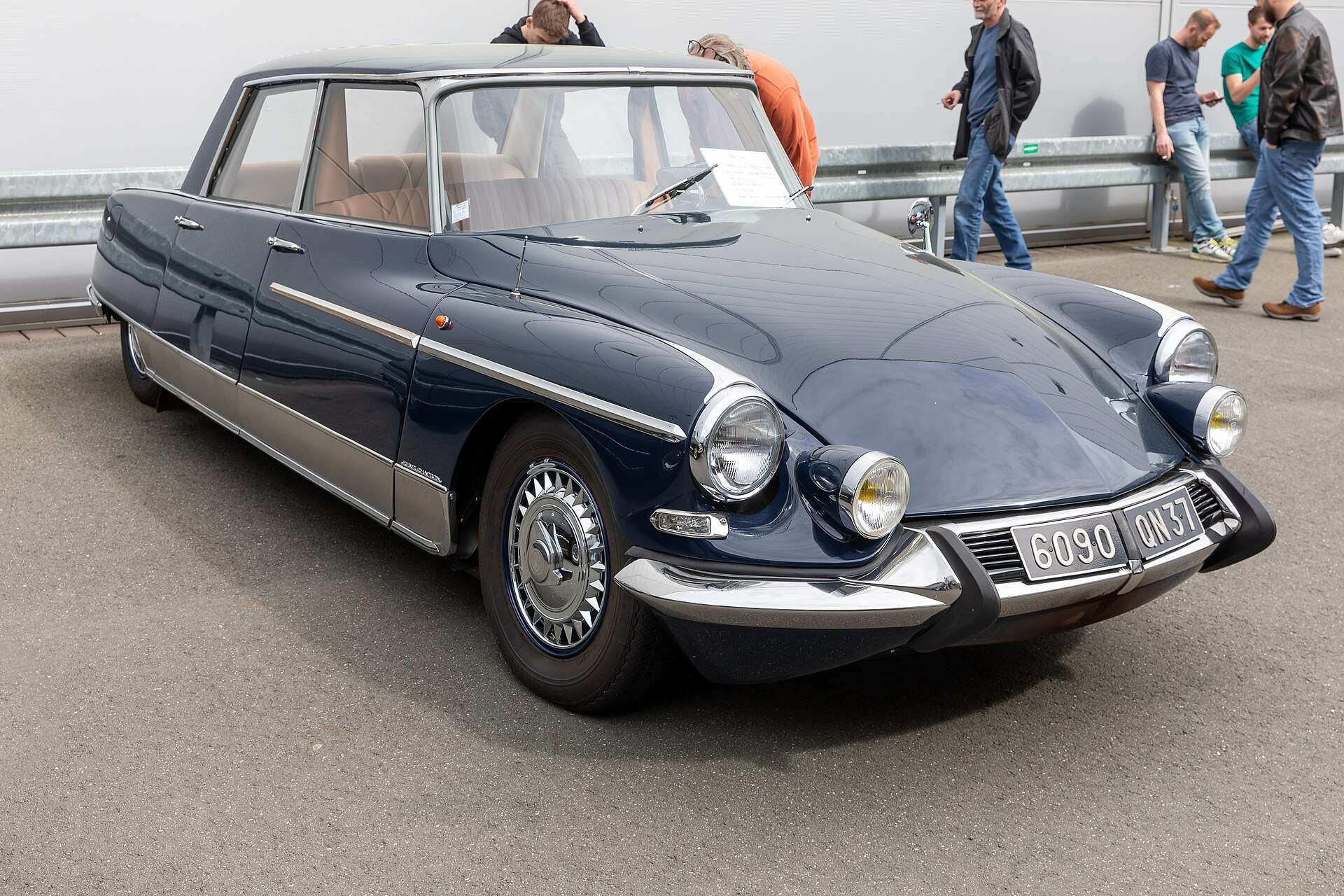
Unveiled at the 1955 Paris motor show, the DS 19 was the long-awaited successor to the Traction Avant. Flaminio Bertoni shaped the body while André Lefèbvre led the engineering and Paul Magès developed the hydraulic system. Early cars used the familiar 1,911cc engine because the proposed flat-six was abandoned, yet the chassis and controls were anything but conservative. The ID arrived in 1957 with fewer hydraulic functions and a lower price. Through DS 19, DS 20, DS 21 and fuel-injected DS 23 development, the range gained power, improved brakes, a redesigned nose and—on suitably equipped later cars—headlamps that turned with the steering. Production ended in 1975 after more than 1.45 million DS and ID cars had been built.
Engineering that made it different
A central high-pressure hydraulic circuit powered the self-levelling suspension, brakes and steering, and on the DS also assisted the clutch and gear selection. Nitrogen-filled spheres provided the springing medium. The result was constant ride height, remarkable bump absorption and the ability to continue after losing a rear wheel in demonstrations that became part of the legend. The single-spoke steering wheel, mushroom brake button and semi-automatic transmission reinforced the sense that the DS belonged to another age.
Love cars you don’t see every day?
Get forgotten cars, surprising motoring stories and the most interesting finds from Unusual Cars by email.
Free to join. No spam. Unsubscribe whenever you like. See our privacy policy.
Models and versions explained
| Version | Why it matters |
|---|---|
| ID 19 / ID 20 | Simplified controls and trim made Citroën’s advanced shape and suspension more accessible. |
| DS 19 / DS 20 | The core saloons evolved steadily in power, reliability and finish. |
| DS 21 / DS 23 | The fastest factory saloons; electronic injection became available and the DS 23 IE was the ultimate production development. |
| Safari / Break | Long-roof derivatives combined exceptional load carrying with self-levelling suspension. |
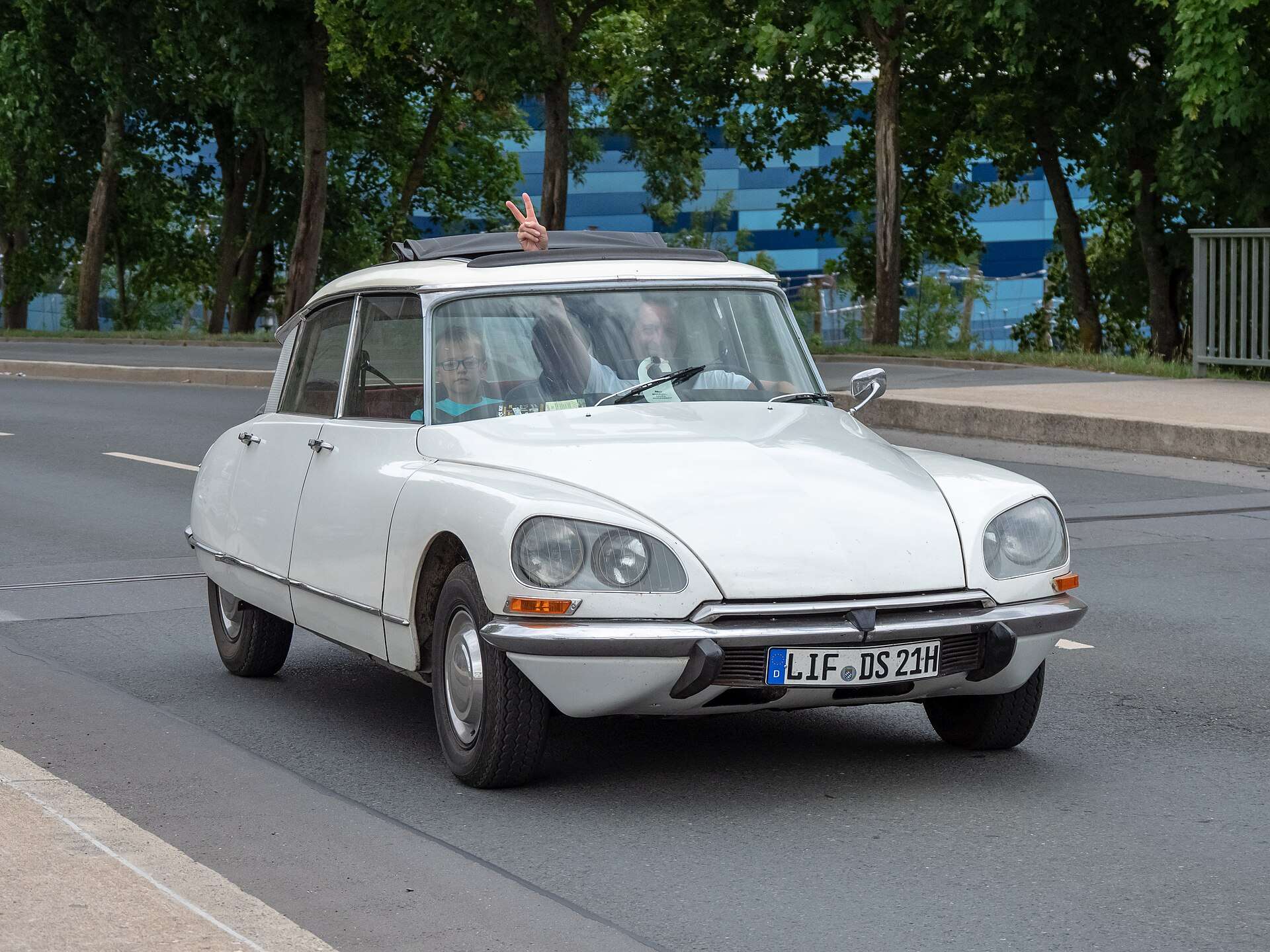
| Décapotable | Henri Chapron-built convertibles are among the most valuable and most frequently replicated DS variants. |
What it is like to drive
A healthy DS isolates occupants from broken roads without feeling detached. Its long wheelbase, narrow rear track and front-wheel drive give secure, progressive behaviour rather than sporting sharpness. The brakes can feel startlingly sensitive and the hydraulic gear selector requires acclimatisation, but both are integral to the car’s personality.
Ownership and preservation
Condition and specialist knowledge matter more than headline mileage. Inspect the chassis rails, boot floor, roof surround, sills and suspension mounting areas; outer panels can disguise structural corrosion. Hydraulic leaks, tired spheres and incorrect fluid are warning signs. Cooling, charging and fuel systems deserve the same attention as the hydraulics. Verify a claimed Décapotable carefully because conversions exist.
Parts availability varies sharply between routine service components and model-specific trim. Before buying, confirm identity from chassis records, inspect the structure on a lift and budget for preventative work rather than assuming a fresh MOT proves the car is sound.
Why it matters now
The appeal is larger than rarity alone. This model demonstrates Citroën’s habit of solving familiar problems with distinctive engineering and design. Preserving an honest example protects a part of European motoring history that conventional performance statistics cannot fully explain.
Frequently asked questions
What is the difference between a Citroën DS and ID?
The ID used the same basic body and hydropneumatic suspension but had simpler trim and fewer hydraulically powered controls, making it cheaper and less complex.
Did every DS have swivelling headlights?
No. The feature arrived with the 1967 nose redesign and depended on specification and market rules.
What fluid does a Citroën DS use?
Later green-fluid cars use mineral LHM. Earlier cars used different fluids, so the system type must be identified before anything is added.
How many DS and ID cars were built?
Citroën produced more than 1.45 million examples across the saloon, estate and related body styles between 1955 and 1975.
Is a Citroën DS difficult to own?
It needs a knowledgeable specialist and careful inspection, but the systems are logical and well understood. Neglected corrosion is usually a greater threat than the concept of hydraulics itself.
Continue the Citroën story
Browse the Rare & Performance Citroëns hub, read our BX 4TC guide or discover the 10 Things Saxo VTR/VTS feature.
Research note: Dates, production totals and technical specifications were checked against Citroën/Stellantis heritage sources and contemporary model documentation. Equipment and outputs varied by market and year; verify an individual car from its chassis number and original records.


