_VR6_5-door_hatchback_(27221866220).jpg?width=1600)
Why VR6 architecture mattered
A conventional V6 uses two widely separated cylinder heads. Volkswagen’s VR layout placed the cylinder banks at a very narrow angle beneath one cylinder head, creating an engine short enough to fit transversely where a straight-six could not. The idea enabled six-cylinder refinement in the Golf without lengthening the nose into a different class of car.
_VR6_5-door_hatchback_(27426958161).jpg?width=1600)
From Corrado to Golf
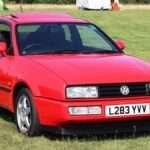
The VR6 reached the Corrado before becoming the performance flagship of the Mk3 Golf. European Golf versions generally used a 2.8-litre engine producing 174 PS, while selected all-wheel-drive Syncro applications used a 2.9-litre derivative. Market specifications differ, making engine code and drivetrain more reliable than a badge alone.

Love cars you don’t see every day?
Get forgotten cars, surprising motoring stories and the most interesting finds from Unusual Cars by email.
Free to join. No spam. Unsubscribe whenever you like. See our privacy policy.
Performance with a different character
The VR6’s strength was broad, smooth delivery rather than the frantic top end of a contemporary 16-valve four-cylinder. The Mk3 shell was heavier and more refined than the Mk2, so the flagship felt like a compact grand tourer. Its soundtrack and motorway flexibility became as important to its reputation as acceleration figures.
.jpg?width=1600)
Design and cabin
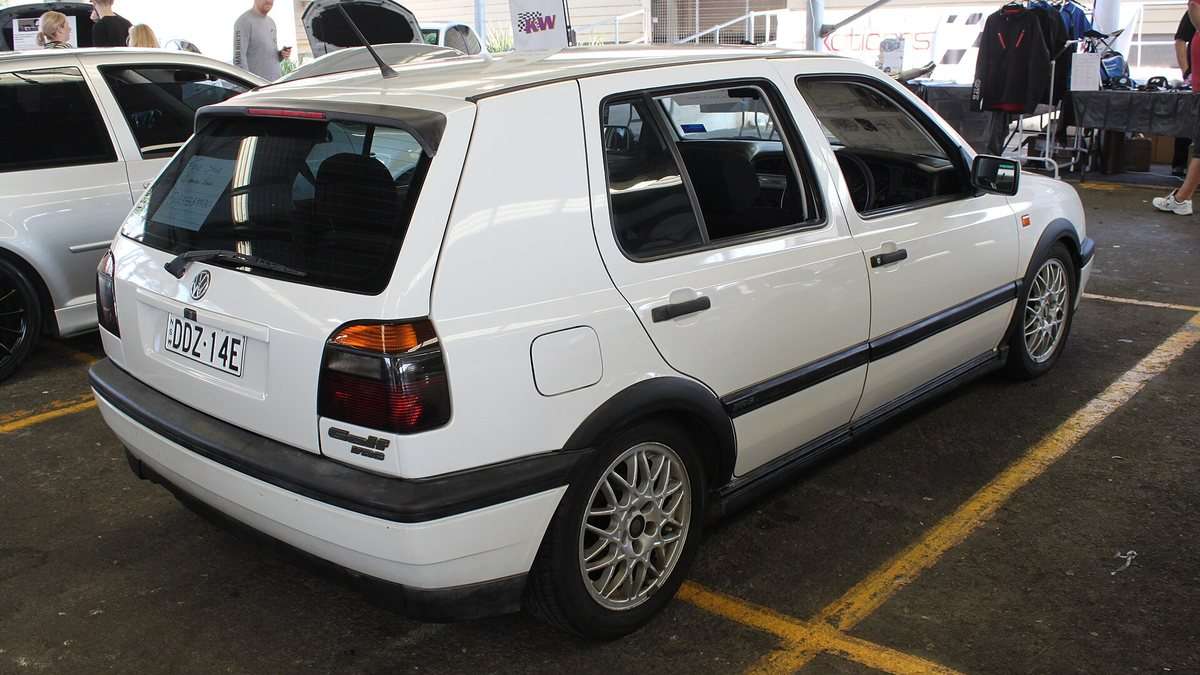
Externally the VR6 was intentionally restrained, with subtle badging, alloy wheels and equipment changes rather than a homologation-style body. Three- and five-door cars were offered in various markets. Inside, supportive seats and richer trim reinforced the idea that this was the mature Golf performance model rather than a stripped circuit special.
Legacy of the six-cylinder Golf
The Mk3 established the VR6 as a Volkswagen enthusiast engine and prepared the way for later 2.8, 3.2 and 3.6-litre applications across the Group. It also influenced the Golf R32: a later, more focused four-wheel-drive interpretation of the same compact six-cylinder idea.
Versions at a glance
| Version | Engine | Drive | Character |
|---|---|---|---|
| Golf VR6 | 2.8-litre VR6, 174 PS | Front-wheel drive | Main European flagship |
| Golf VR6 Syncro | 2.9-litre VR6, market dependent | All-wheel drive | Rarer traction-led derivative |
| Golf GTI 16V | 2.0-litre four, 150 PS | Front-wheel drive | Lighter-revving alternative |
Frequently asked questions
Is the Golf VR6 a GTI?
The Mk3 VR6 was positioned above or alongside the GTI depending on market. It is usually identified simply as VR6 rather than as a GTI engine option.
Why is it called VR6?
The name combines V-engine and Reihenmotor—German for inline engine—because the narrow-angle layout shares characteristics of both.
Did every Mk3 VR6 have four-wheel drive?
No. Most were front-wheel drive. Syncro versions existed in some markets and require separate identification.
Is the Golf VR6 the same as a Corrado VR6?
They share the narrow-angle engine concept, but engine capacity, tuning, chassis and body are model specific. A European Corrado VR6 normally used 2.9 litres; the common Golf version used 2.8.
Continue the Volkswagen story
Browse the Rare & Performance Volkswagens hub, compare it with the Corrado VR6, or return to the Mk2 GTI.