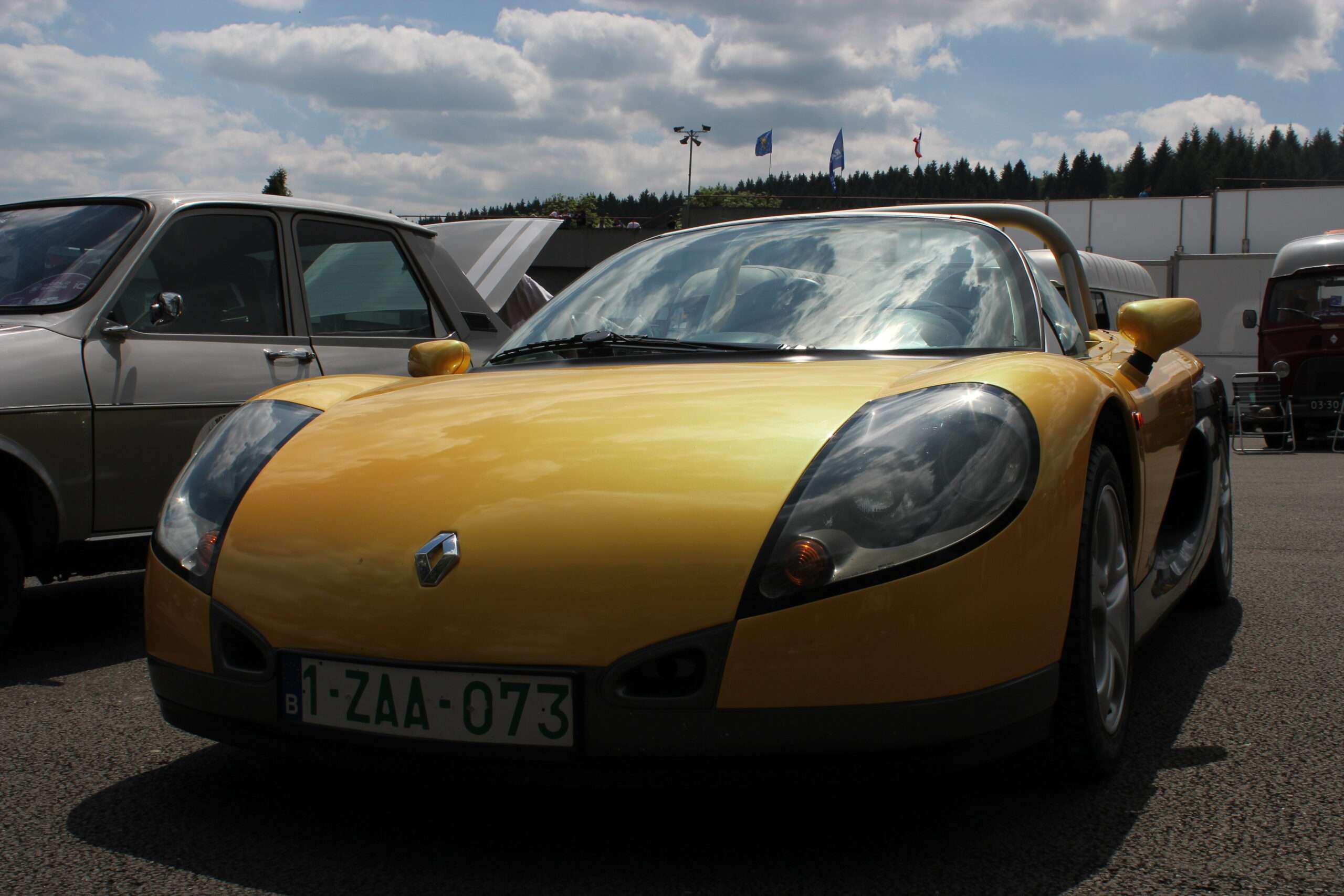
The Renault Sport Spider was the car that turned Renault Sport from a competition department into a road-car badge. Built around a bonded and riveted aluminium chassis, weighing less than 790kg and powered by the Clio Williams engine behind its occupants, it rejected comfort in favour of immediacy.
Renault Sport Spider at a glance
| Production | 1996–1999 |
|---|---|
| Built | 1,726, including 90 Trophy cars |
| Engine | 1,998cc F7R 16-valve four-cylinder |
| Power | 150hp; 180hp Trophy |
| Layout | Rear-mid-engine, rear-wheel drive |
| Chassis | Aluminium |
| Top speed | 210km/h |

Born at the start of Renault Sport road cars
Renault revealed the Spider at the 1995 Geneva Motor Show and began production at Dieppe in 1996. The Alpine factory had long carried Renault’s specialist-car traditions; the Spider gave it a radically modern project and became the first production model to wear the Renault Sport identity that would later define celebrated Clios and Méganes.
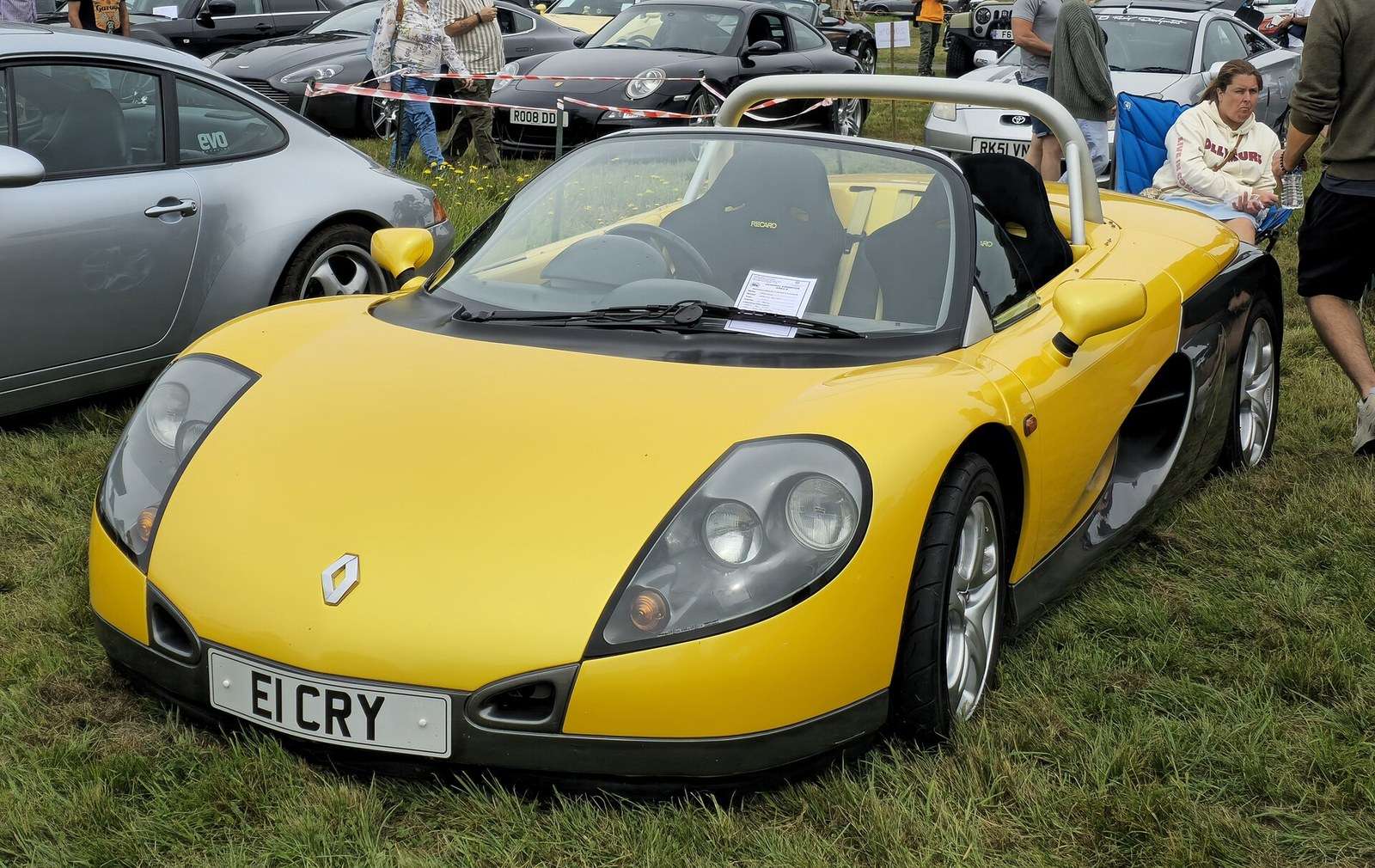
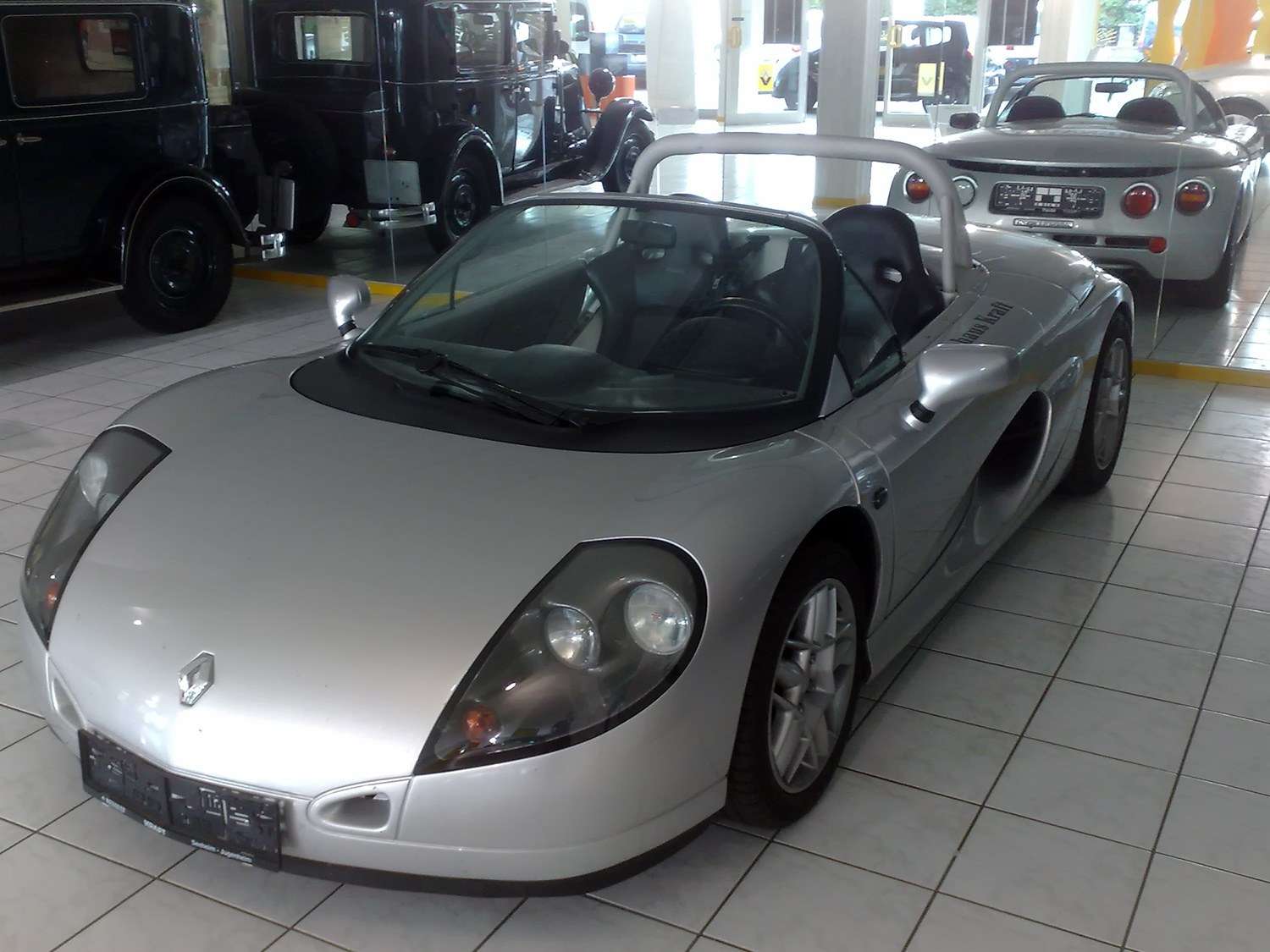
This was not a converted hatchback. Renault created a dedicated aluminium structure and placed the engine transversely behind the seats. Composite exterior panels covered a wide, low chassis with exposed suspension thinking and a functional roll hoop. The result looked like a concept car because its engineering brief had little in common with ordinary Renaults.
The Clio Williams engine in a different world
The 1,998cc F7R four-cylinder was shared in principle with the Clio Williams and produced 150hp. In a car below 790kg, that output created a power-to-weight ratio and throttle response that mattered more than a dramatic headline figure. Drive went through a five-speed gearbox to the rear wheels.
The engine’s location also changed its character. Noise, heat and vibration sat immediately behind the occupants, while unassisted steering and brakes preserved a direct connection between driver and road. Renault omitted power assistance, ABS and even heating from the most focused specification.

Deflector or windscreen?
The earliest and most uncompromising cars used an aero screen rather than a conventional windscreen. Renault’s own heritage description notes that occupants were expected to wear helmets. A windscreen version followed and made the Spider more usable without turning it into a conventional roadster. Market availability varied, and right-hand-drive British cars are particularly recognisable in windscreen form.
Neither version offered the insulation associated with a normal sports car. The Spider was about airflow, steering weight, mechanical noise and the sensation of speed at sensible road velocities.
Love cars you don’t see every day?
Get forgotten cars, surprising motoring stories and the most interesting finds from Unusual Cars by email.
Free to join. No spam. Unsubscribe whenever you like. See our privacy policy.
The Trophy and the one-make series
Renault developed a dedicated one-make championship around the Spider. The Trophy version gained a full roll cage, competition equipment and an engine producing 180hp. Renault records only 90 Trophy cars within the total production of 1,726, making the racing derivative a significant part of the model’s history rather than a decorative special edition.
Why it remains important
The Spider established themes that later Renault Sport cars would reinterpret: modest power used intelligently, serious chassis development and a willingness to prioritise driving experience over prestige. Yet no later model was quite as pure. Even the mid-engined Clio V6 provided a roof, windscreen and a greater degree of everyday civilisation.
Its rarity, aluminium construction and model-specific parts also mean it deserves to be understood as a specialist car, not merely an unusual Renault. The best examples preserve original body panels, correct suspension and the details that distinguish road and Trophy specifications.
Renault Sport Spider FAQ
How many Renault Sport Spiders were built?
Renault records 1,726 examples built between 1996 and 1999. That total includes 90 purpose-built Trophy competition cars, making every version a genuinely low-volume Renault Sport product.
Did every Renault Sport Spider have a windscreen?
No. The earliest road cars used a small aerodynamic deflector, leaving occupants exposed to the airflow. A conventional windscreen version followed and became the more practical choice for road use.
Is its engine related to the Clio Williams?
Yes. The Spider uses the 1,998cc F7R 16-valve engine associated with the Clio Williams. Road cars produced about 150hp, while Trophy racers were developed to approximately 180hp.
Where was the Spider built?
Renault assembled the Spider at the Alpine factory in Dieppe. Its aluminium chassis and composite body panels made it very different from Renault’s mainstream production cars.
Why was the Trophy version created?
The Trophy supported a one-make racing series that showcased Renault Sport engineering. It was lighter, more powerful and more competition-focused than the road car.
Continue the Renault story
Explore more unusual French performance cars in the Rare & Performance Renaults hub.
Research note: Production, weight, engine and Trophy figures were checked against Renault’s official heritage archive.