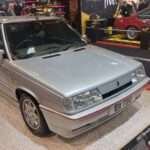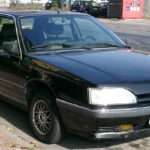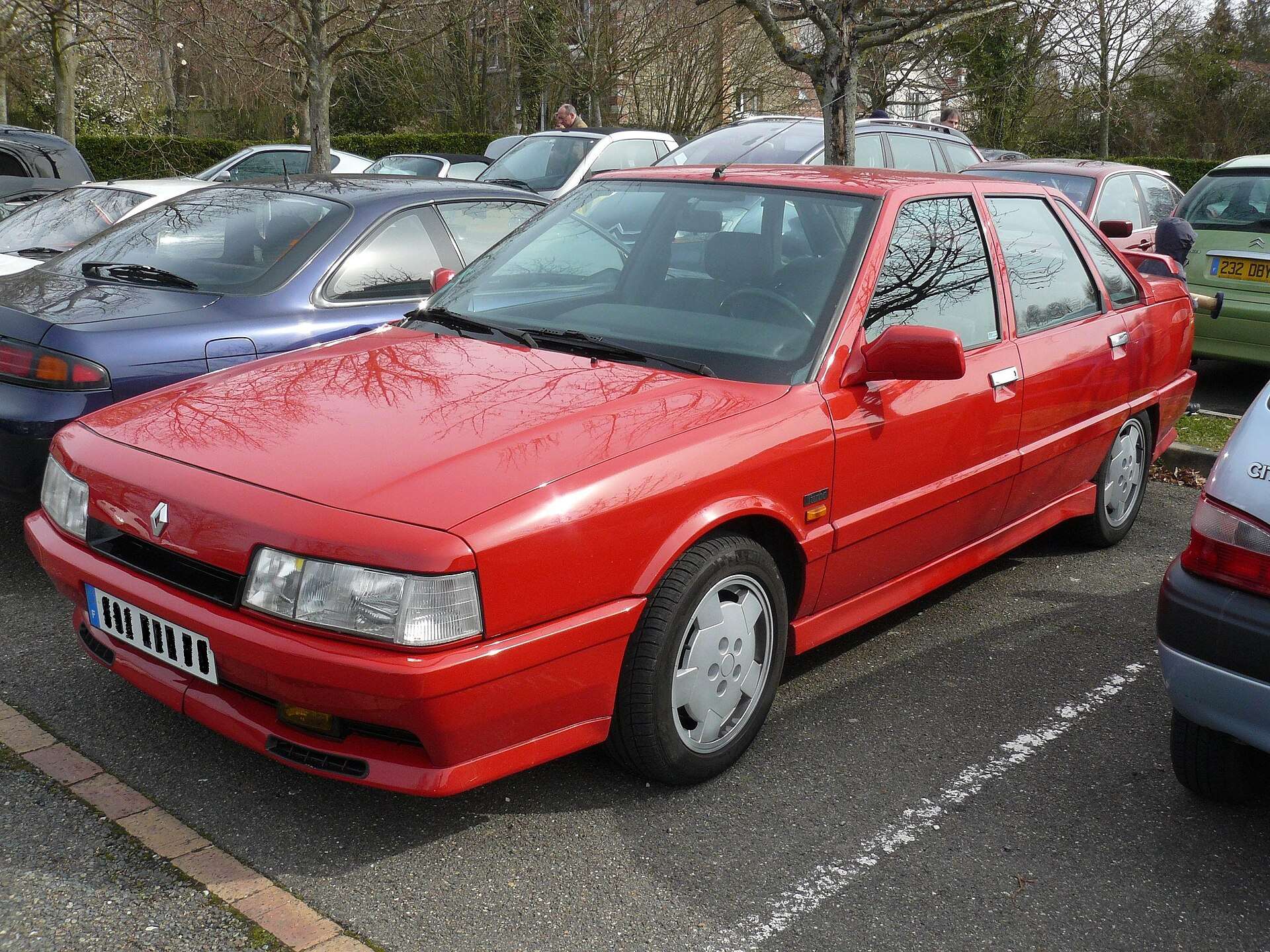
The Renault 21 Turbo was the family saloon that suddenly decided to chase Europe’s fastest executive cars. Beneath its restrained body sat a 175hp turbocharged alloy engine, sophisticated electronic management and a chassis developed for serious speed. It was fast enough for the French gendarmerie, successful enough to win a national touring-car title and sufficiently slippery to set extraordinary records on ice.
Renault 21 Turbo at a glance
| Production | 1987–1992 |
|---|---|
| Engine | 1,995cc turbocharged inline-four |
| Power | 175hp |
| Top speed | 227km/h (141mph) |
| Drive | Front-wheel drive; Quadra four-wheel drive also offered |
| Body | Four-door three-box saloon |
| Production | Approximately 14,000 |
A performance car hiding in a family range
Renault launched the 21 in 1986 as a spacious family car offered in saloon, hatchback and estate forms. Only a year later, the 2 Litre Turbo transformed that sensible brief. Its discreet bumpers, rear spoiler, alloy wheels and lowered stance hinted at the changes, but the shape remained recognisably that of an ordinary company car.
That understatement was deliberate. Renault wanted a credible rival for rapid German saloons without copying them. The result combined French ride and aerodynamic thinking with the kind of straight-line performance normally associated with a much more expensive badge.

The 1,995cc turbo engine
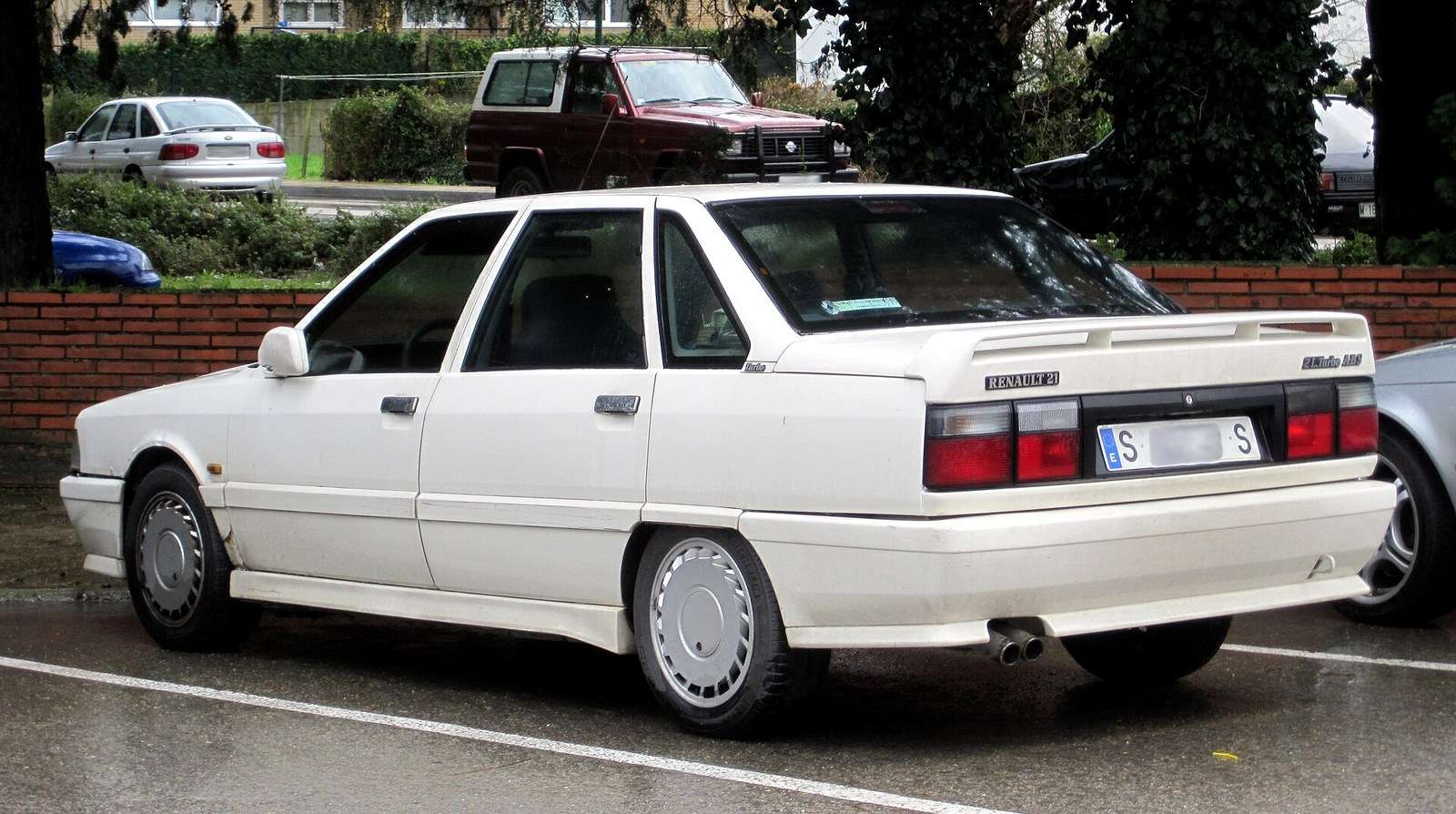
The longitudinally mounted four-cylinder was built from lightweight alloy and used fully electronic engine management—advanced hardware in this class during the late 1980s. A turbocharger and two air-cooled intercoolers helped produce 175hp, while careful heat shielding reflected lessons Renault had learned through competition and Formula One.
Its 227km/h maximum made the 21 Turbo genuinely rapid rather than merely brisk. Just as important was its mid-range force: the car could cover long distances quickly without advertising its ability through an extravagant body kit or a harsh cabin.
Front-wheel drive and the Quadra
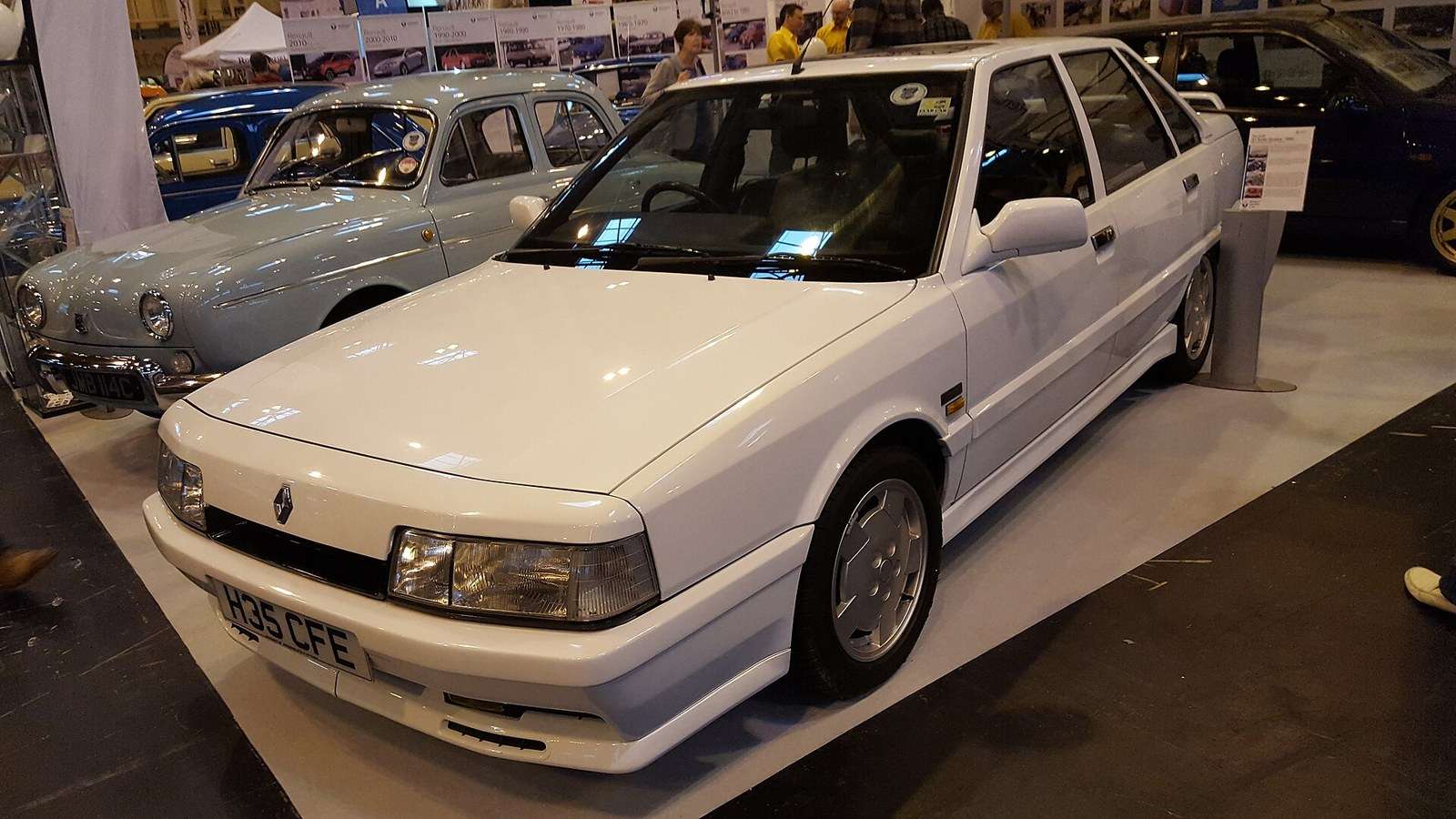
Most 21 Turbos drove their front wheels, a layout that demanded well-judged suspension geometry and tyre control. Renault added four-wheel disc brakes, ABS, lowered suspension and dedicated running gear. Later, the Quadra version sent power to all four wheels, adding all-weather traction and another layer of rarity.
The two versions have distinct characters. The lighter front-drive car feels more obviously like a very fast Eighties Renault; the Quadra provides security and deploys its performance with less drama. Neither should be reduced to a specification-sheet comparison with later turbo saloons—the analogue responses are central to the appeal.
Love cars you don’t see every day?
Get forgotten cars, surprising motoring stories and the most interesting finds from Unusual Cars by email.
Free to join. No spam. Unsubscribe whenever you like. See our privacy policy.
A champion, an interceptor and an ice-record car
The 21 Turbo’s achievements make its low profile even more surprising. The French gendarmerie used it for rapid motorway intervention. In the 1988 French Superproduction championship, four-wheel-drive competition versions driven by Jean Ragnotti and Jean-Louis Bousquet won six of ten races, with Ragnotti taking the title.
That same year, journalist and driver Jean-Pierre Malcher took a near-production 21 Turbo to Sweden’s frozen Lake Hornavan. Renault records speeds of 246.926km/h on snow tyres and 250.610km/h on studded tyres. Those figures reveal how aerodynamically efficient and fundamentally stable the unassuming saloon could be.

Why it disappeared from view
Renault produced around 14,000 examples between 1987 and 1992, but survival is far lower. Age, corrosion, scarce trim, complicated turbo hardware and years of low values removed many from the road. Others were modified when originality carried little premium. A complete standard car is now a far rarer sight than its production figure suggests.
It also suffered from arriving outside Britain’s most familiar performance-car narratives. The Sierra Cosworth became a cultural landmark and German sports saloons retained prestige; the Renault was remembered mainly by those who encountered one when it was new. That makes it an ideal Unusual Cars subject: significant engineering hidden behind a name many enthusiasts have almost forgotten.
Renault 21 Turbo FAQ
How powerful was the Renault 21 Turbo?
Renault quotes 175hp from its 1,995cc turbocharged four-cylinder engine.
Was there a four-wheel-drive version?
Yes. The Quadra version used four-wheel drive, while the principal production model was front-wheel drive.
How many were built?
Renault records approximately 14,000 examples produced from 1987 to 1992.
Did the French police use the Renault 21 Turbo?
Yes. The French gendarmerie used the model for rapid-intervention work.
Continue the Renault story
Explore the mid-engined Renault 5 Turbo and Turbo 2, the lighter Renault 5 GT Turbo, or the celebrated Clio Williams.
Research note: Production, power, speed, competition and ice-record figures were checked against Renault’s official The Originals heritage archive.