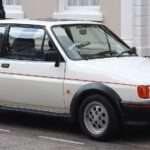
The Ford Cortina Savage was one of the most audacious British performance saloons of its era. Long before manufacturers routinely installed large engines in compact family cars, former racing driver and team manager Jeff Uren put Ford’s 3.0-litre Essex V6 into the Cortina and developed the suspension, brakes and transmission to match.
It was not an official Ford production model, yet it was far more than a casual engine swap. Savage conversions were engineered, road tested and sold through Uren’s Race Proved operation, often using new Cortinas supplied with Ford’s support.
| Cortina Savage facts | Details |
|---|---|
| Creator | Jeff Uren / Race Proved |
| Main engine | 2,994cc Ford Essex V6 |
| Standard output | approximately 138bhp |
| Estimated production | approximately 1,000–1,100 across all versions |
Who was Jeff Uren?
Uren brought deep competition experience to road-car tuning. He won the 1959 British Saloon Car Championship as a privateer in a Ford Zephyr, worked with Ford’s competition activities and later managed John Willment’s racing operation. He helped develop fast Willment Cortinas before establishing Race Proved Performance and Racing Equipment Ltd in 1967.
When John Willment moved on to establish J.W. Automotive Engineering with John Wyer, Uren continued producing road-going performance Fords. His knowledge of racing, testing and Ford components made the Savage a developed package rather than a headline-grabbing prototype.

How the Cortina became a Savage
Development began with the Mk1 Cortina, but the Mk2 arrived before the conversion entered regular production. Uren’s team therefore repeated much of its work around the new shell, and the first generally recognised production Savage was based on the Mk2.
The defining change was the 2,994cc Essex V6 used in larger Fords such as the Zodiac. In standard form it was quoted at around 138bhp and, crucially, offered far more torque than a normal Cortina. Weslake-assisted tuned versions provided 170, 180 or 190bhp, while an extreme fuel-injected Savage Special PI was advertised at 218bhp.

More than an engine conversion
Race Proved spent months making the car behave as a complete package. Contemporary reporting described 27 suspension trials before Uren was satisfied. The extra performance brought revised springs and dampers, reinforced suspension mounting points, altered geometry and additional roll control.
Anti-fade brake materials dealt with the extra speed. Power normally passed through a strong four-speed Ford gearbox to a strengthened rear axle with a limited-slip differential. Lotus Cortina wheels, suitable radial tyres and an auxiliary eight-gallon fuel tank completed the touring specification.
The cabin could include Contour seats, a leather-covered alloy steering wheel, wooden gear knob, footrest and 140mph speedometer. Outside, a restrained lower-body flash and V6 badges were often the principal clues. The Savage’s greatest trick was that it still looked like a Cortina.
Love cars you don’t see every day?
Get forgotten cars, surprising motoring stories and the most interesting finds from Unusual Cars by email.
Free to join. No spam. Unsubscribe whenever you like.
The Mk2 Savage defined the name
The Mk2 was the best-known and most numerous version. Many used the Cortina 1600E as a starting point, retaining its upmarket trim while substituting the Essex V6 for the Kent four-cylinder engine. Two-door and four-door saloons were offered, while estate conversions were also possible.
In 1967 a Savage started at £1,365 before options. It cost far more than an ordinary Cortina but delivered an unusual combination of space, civility and performance. Motor Sport praised how enjoyable yet effortless it was to drive—an accurate summary of the torquey V6 character.
Ford did not manufacture the cars, but the relationship was cooperative. Uren later recalled that Ford public-relations chief Walter Hayes helped obtain scarce 1600E donor cars because the Savage attracted affluent buyers who might not otherwise have chosen a Ford.
The rarer Mk3 Cortina Savage
Uren continued when the larger Mk3 Cortina arrived. The basic formula remained, though buyers could specify much more powerful engines and costly upgrades. A basic two-door Savage was listed at £1,915, while the Savage Special PI combined Weslake development, Tecalemit fuel injection and a special exhaust. A 1972 test found its acceleration capable of troubling genuinely exotic cars.

Cheetah and other Uren Fords
The related Cortina Cheetah used the smaller 2.5-litre Essex V6. Later Savages were based on the Mk4 Cortina, and a one-off Mk5 is recorded. Uren applied similar thinking to other Fords, producing Escort-based Navajo and Apache models and Capri-based Comanche and Stampede conversions.
Production and survival
Exact numbers are difficult because these were specialist conversions, not a conventional Ford production run. The most widely repeated estimate is 1,000 to 1,100 Savages across all Cortina generations, with the overwhelming majority based on the Mk2. Only about 50 to 100 Mk3 examples are believed to have been made.
Survival is far lower. Cortinas corroded, Savages were modified for competition and some donated their valuable mechanical components. Because recreating the basic formula is possible, period documentation and Race Proved history are fundamental to the identity of a genuine car.
Why the Cortina Savage matters
The Savage anticipated the modern performance saloon: a large, flexible engine in a practical medium-sized body, backed by thoughtful chassis development and discreet styling. It also represents an era when an independent specialist could work closely with a major manufacturer and sell something the normal catalogue did not provide.
Ford Cortina Savage FAQ
Was it built by Ford?
No. Jeff Uren’s Race Proved operation designed and converted it, with Ford’s knowledge and support.
What engine did it use?
Most used the British 2,994cc Ford Essex V6. The related Cheetah used the 2.5-litre version.
Did every Savage have the same power?
No. Standard cars had about 138bhp, while progressively more powerful tuned and fuel-injected specifications were available.
Continue the Ford story
Browse the Rare & Performance Fords hub, explore Colin Chapman’s lighter approach in the Lotus Cortina, or discover another specialist conversion in the Tickford Capri.
Research note: Details were checked against period Motor Sport road tests, the Ford Cortina Mk2 Owners Club, the Cortina Mk3 Club and published Jeff Uren records. Production numbers remain estimates because these were specialist conversions.