Rare performance Vauxhalls
The Vauxhall Firenza HPF ‘Droopsnoot’ was one of the boldest British performance cars of the 1970s: a short-lived 2.3-litre coupé whose low, aerodynamic nose and five-speed gearbox became central to Vauxhall’s return to motorsport.

What is a Vauxhall Firenza HPF?
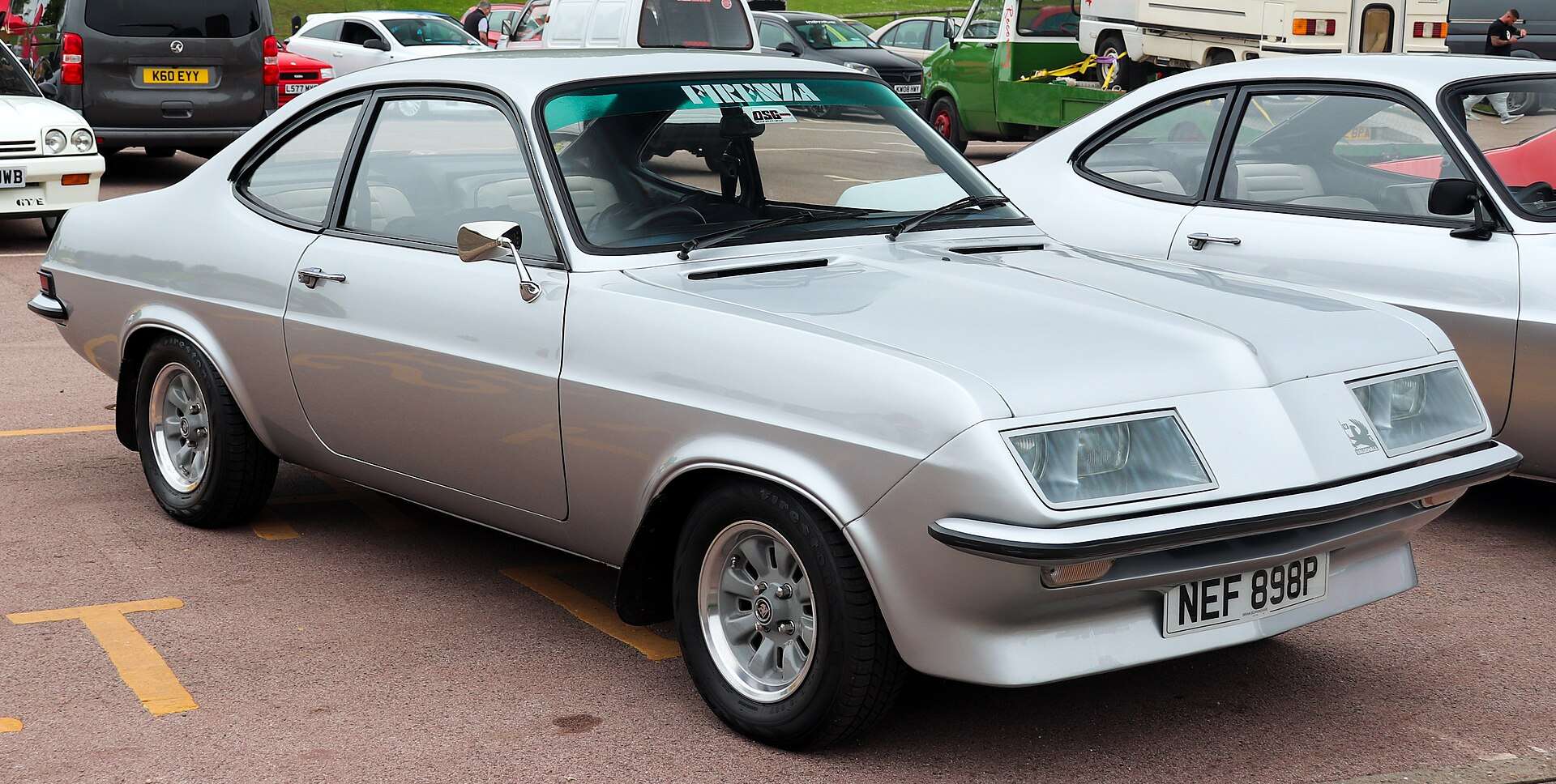
The Firenza was Vauxhall’s two-door coupé based on the HC Viva/Magnum family. In 1973, Vauxhall rationalised the range and created the HP—High Performance—model. The HPF combined the Magnum Coupé’s basic architecture with a distinctive aerodynamic nose, hand-finished 2.3-litre slant-four engine work and a five-speed gearbox. The front treatment gave it the name every enthusiast remembers: Droopsnoot.
Vauxhall Heritage describes the HPF as the company’s first five-speed model. Its 2279cc four-cylinder engine received hand-finished combustion chambers, inlet tracts and valve throats, which Vauxhall said released an additional 21bhp. The firm quoted 0–60mph in 7.6 seconds and 120mph maximum speed: serious figures for a British coupé of the period.
Why the Droopsnoot matters
The nose was not merely decoration. It gave the Firenza a low, clean visual identity at a time when many mainstream performance cars still relied on upright grilles and chrome. It also connected directly to Vauxhall’s competition ambitions. The HPF arrived alongside the return of Dealer Team Vauxhall, with Bill Blydenstein and Gerry Marshall central to the motorsport story.
It was not a long commercial success. Vauxhall says only 204 cars were built, as industrial disputes, the fuel crisis and shrinking appetite for performance cars made the projected volume impossible. That rarity is why an HPF needs careful inspection rather than assumption.
Firenza HPF specifications at a glance
| Body | Two-door coupé |
|---|---|
| Engine | 2279cc inline four-cylinder ‘slant-four’ |
| Transmission | Rear-wheel drive; five-speed manual |
| Quoted performance | 0–60mph in 7.6 seconds; 120mph top speed |
| Production | 204 cars, according to Vauxhall Heritage |
What to check before buying
Start with identity. A genuine HPF should have a coherent history: registration and VIN evidence, factory specification, owners’ club knowledge, restoration photographs and invoices for parts. The wrong front end, engine or trim does not automatically make a car undesirable, but it should change how it is described and valued.
- Shell: inspect sills, floors, chassis rails, front valance, inner wings, suspension pick-up points, rear arches and boot floor. Corrosion repairs can be extensive and model-specific panels are not always straightforward.
- Droopsnoot parts: examine the nose, lamps, grille treatment, bumper details and fit. Poorly repaired composite or fabricated parts can be expensive to correct.
- Engine: listen for bottom-end noise, inspect oil pressure and cooling, and identify the exact engine fitted. A later conversion can be usable but is not an original HPF engine.
- Gearbox and axle: check shift quality, propshaft vibration, differential noise and leaks. A five-speed conversion must not be confused with original HPF specification.
- Trim and details: seats, instruments, badging and wheels are part of the ownership experience; missing rare items can take time to locate.
FIA history and competition connections
The FIA Historic Database lists the Vauxhall Firenza Magnum 2300 as a 2279cc, rear-wheel-drive Group 1 homologated car, number 5565, with an April 1974 homologation date. The record also lists numerous period extensions covering areas from the engine and gearbox to brakes, dry-sump equipment and body reinforcement. That is useful competition context, but it does not identify an individual road car as an HPF.
HPF, Firenza, Magnum or replica?
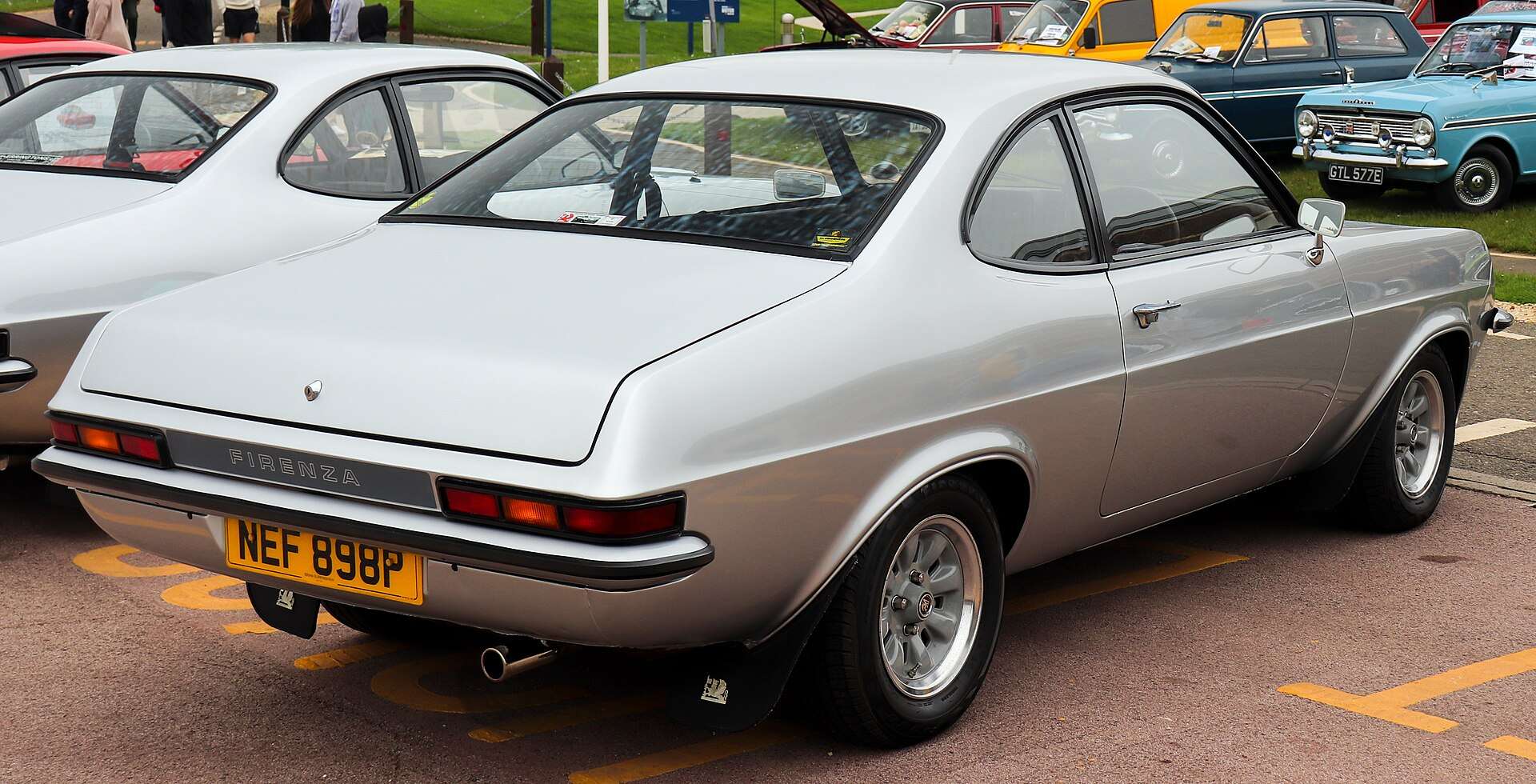
The distinction is important. A normal Firenza or Magnum Coupé can make a compelling classic, while a well-executed Droopsnoot-style conversion can be a brilliant driver’s car. But an HPF should be advertised as genuine only where its identity is supported by evidence. Ask what the car began as, what it carries now and which changes are documented.
Where the Firenza fits in the Vauxhall story
The Firenza HPF was the dramatic 1970s precursor to Vauxhall’s later performance models. Continue to the Rare & Performance Vauxhalls hub, compare its motorsport-era spirit with the Chevette HS & HSR guide, or move forward to the Astra GTE guide.
Love cars you don’t see every day?
Get forgotten cars, surprising motoring stories and the most interesting finds from Unusual Cars by email.
Free to join. No spam. Unsubscribe whenever you like. See our Privacy Policy.
Frequently asked questions
How many Firenza HPFs were made?
Vauxhall Heritage states that 204 were built, against a projection of 1,000 per year.
Why is it called the Droopsnoot?
The nickname comes from its low, aerodynamic front treatment, which distinguished it from the standard Firenza and Magnum Coupé.
Is every Firenza with a Droopsnoot nose a genuine HPF?
No. The front styling alone is not proof. Buy on documentation, shell identity, correct specification and quality of work.
Research note: key production, mechanical and performance claims in this guide were checked against Vauxhall Heritage; competition homologation data was checked against the FIA Historic Database. Inspect any individual car and its records before purchase.