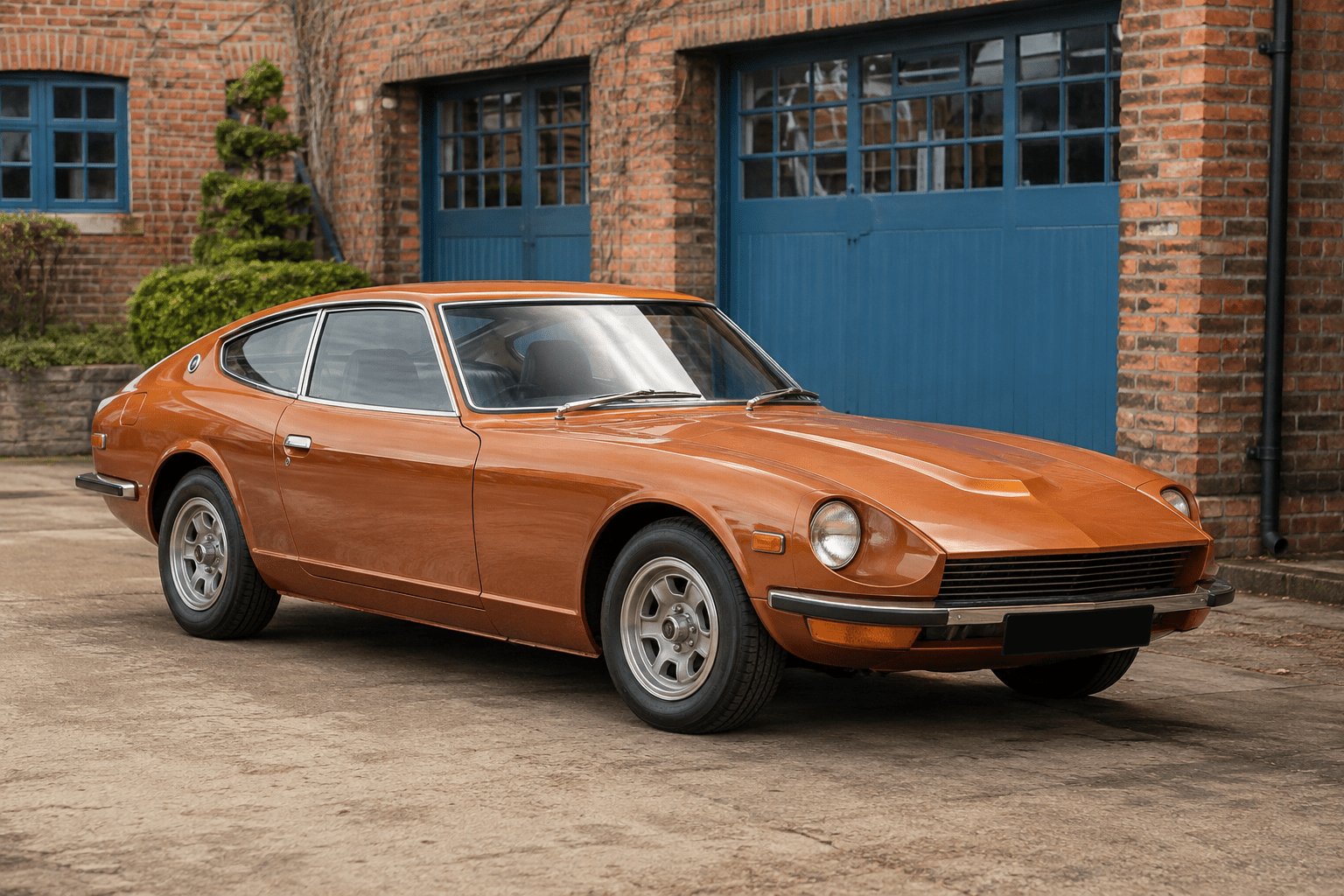
The Datsun 260Z developed the original S30 Z-car with a larger L26 straight-six and, in many markets, a choice of two-seat and longer 2+2 bodies. Today, shell condition, identity and the quality of decades-old repairs matter far more than a polished set of wheels or a freshly tuned engine.
What is a Datsun 260Z?
The 260Z is part of Nissan’s first-generation S30 Z-car family. It followed the 240Z and used the larger L26 inline-six engine. Export timing, emissions equipment, carburettors, gearboxes and quoted outputs varied, so figures from American or Japanese references should not automatically be applied to a UK car.
Nissan’s Heritage Collection records that the S30 Fairlady Z was launched in 1969 and became an international success. The 260Z continued the same fundamental long-bonnet, rear-wheel-drive formula before the S30 family gave way to the S130-generation 280ZX.
Datsun 260Z two-seater versus 2+2
| Version | Principal difference | What buyers should check |
|---|---|---|
| Two-seater | Shorter wheelbase and cabin, following the original two-seat Z-car layout. | Confirm identity and originality rather than assuming every short car is a 240Z. |
| 2+2 | Longer wheelbase, extended roofline and small rear seats. | Check the longer shell, rear-seat area, quarter trim and body-specific glass and seals. |
The versions share a clear family resemblance but do not share every body, exhaust, glass, interior or trim component. Decide which configuration you want before viewing and price missing parts against the correct body style.
260Z versus 240Z: what changed?
The visible headline is the move from the 240Z’s L24 engine to the 260Z’s 2.6-litre L26. The 260Z also belongs to a later phase of S30 development, with detail changes that varied across production periods and markets. The availability of the 2+2 widened the car’s appeal, but it also created two distinct shapes and ownership propositions.
It is unhelpful to treat every 260Z as a slower, heavier 240Z or every 240Z as automatically more desirable. Condition, originality, body style, provenance and driving quality determine whether an individual car is worth owning. Read our separate Datsun 240Z UK buying guide for the earlier model.
Where does a Datsun 260Z rust?
Corrosion is the defining inspection issue. A lift, strong light and an experienced S30 specialist are more useful than a folder of photographs showing only the paintwork. Where the seller permits it, inspect beneath carpets and removable trim as well as underneath.
Front chassis and engine bay
Check chassis rails, crossmember and tension-rod areas, suspension turrets, inner wings, battery tray, radiator support and the lower front wings.
Sills, floors and jacking areas
Examine inner and outer sills, floor seams, seat mounts and jacking points. Crushed metal, layered patches and thick coating deserve investigation.
Rear body and suspension
Inspect rear wheelarches, quarter panels, suspension mounting areas, boot floor, spare-wheel well, rear valance and fuel-tank surroundings.
Screen and hatch apertures
Look around windscreen and hatch seals, scuttle, doors and tailgate. Damp carpet, staining and condensation can reveal long-standing leaks.
L26 engine and carburettor checks
- Start it cold: agree this before travelling. Listen for persistent rattles, watch for smoke and check how quickly it settles to an even idle.
- Inspect fluids: examine oil and coolant condition, look for leaks and confirm that temperature remains stable during a meaningful drive.
- Assess the induction system: carburettor type and emissions equipment varied by market and many cars have been converted. Identify what is fitted before diagnosing or valuing it.
- Check tuning methodically: worn spindles, air leaks, poor ignition condition and incorrect fuel pressure can resemble carburettor problems.
- Inspect fuel delivery: tank contamination, deteriorated hoses, filters and pumps are important on a car that may have spent years in storage.
Compression or leak-down testing can add evidence when engine condition is uncertain, but results should be interpreted alongside oil pressure, cold-start behaviour, service records and a road test.
Gearbox, clutch and differential
Use every gear when the car is cold and warm. Check synchromesh, clutch take-up and slip, bearing noise and whether the lever jumps out of gear. Automatic transmission availability depended on market and specification; where fitted, assess fluid condition using the correct procedure, engagement, shift quality and kickdown.
Listen for differential whine and driveline clunks as load is applied and released. Vibration may involve propshaft joints, wheel and tyre problems, mounts or bearings, so do not accept an optimistic diagnosis without inspection.
Steering, suspension and brakes
The car should track predictably and respond consistently. Check steering joints, rack, wheel bearings, bushes, springs and dampers for wear or mismatched upgrades. Uneven tyre wear can point to alignment, accident damage or deteriorated components.
Inspect front discs, rear drums, flexible hoses, hard lines, master cylinder and handbrake. A car emerging from long storage may need extensive hydraulic work even if it appears cosmetically restored. Test braking safely for pull, vibration and inconsistent assistance.
Interior, trim and difficult-to-find parts
Make a written inventory of dashboard components, instruments, console, heater controls, seats, carpets, door cards, headlining, luggage trim, badges, lamps and exterior brightwork. Parts availability changes and an advertisement saying “easy to find” is not evidence.
Operate every electrical item, including instruments, warning lamps, exterior lighting, heater fan, wipers, washers and any electric aerial. Look for cut wiring, old alarm systems and poorly installed audio equipment. Replacing an entire modified loom can be much harder than repairing one isolated fault.
Imports, rebodied cars and identity checks
Establish whether the car was supplied in Britain or imported later. For imports, examine dating, customs and registration evidence and identify the original market specification. Compare the chassis stamping and plates with the V5C and historical paperwork.
A car assembled from multiple shells or carrying questionable identity requires specialist and legal advice before purchase. Likewise, a 260Z with a different engine is not necessarily a bad car, but the description, registration record, insurer and price should all reflect what it actually is.
Modified Datsun 260Zs
Common changes include different carburettors, exhausts, wheels, suspension, brakes and L-series engine combinations. Judge modifications as an integrated system. Inspect fuel and brake lines, welding, clearances, cooling, wiring and the availability of setup records.
- Ask who supplied and fitted each major component.
- Request invoices, tuning records and specifications.
- Confirm wheel and tyre clearance through steering and suspension movement.
- Check whether removed original parts accompany the car.
- Confirm that modifications are correctly declared to the insurer and recorded where required.
UK historic tax and MOT position
As of September 2026, GOV.UK says vehicles built or first registered more than 40 years ago may be exempt from MOT testing if they have not been substantially changed. The keeper must make the relevant declaration and the car must remain roadworthy. Historic vehicle tax treatment follows its own eligibility and application process.
Questions to ask the seller
- Is it a two-seater or 2+2, and was it UK-supplied or imported?
- Do the chassis identity, plates and V5C agree?
- Who repaired or restored the shell, and are photographs and invoices available?
- Which engine, induction system, gearbox, differential, brakes and suspension are fitted?
- How long has it been stored, and what recommissioning has been completed?
- Which original parts, manuals, keys and spares are included?
- Can it be inspected on a lift and started completely cold?
Datsun 260Z viewing checklist
Before travelling
Request chassis details, underside photographs, a history summary and modification list. Confirm that the engine will be cold and that a lift inspection is possible.
During inspection
Check identity first, then structure, leaks, completeness and electrical operation. Photograph suspect areas and do not let wet paintwork disguise body condition.
During the road test
Monitor temperature and instruments, use every gear, assess steering and braking, and listen under acceleration, steady speed and overrun.
Before paying
Reconcile all paperwork, price faults and missing trim, confirm insurance, and obtain a receipt listing the vehicle, claims, documents and included parts.
Frequently asked questions
Is a Datsun 260Z an S30?
Yes. The 260Z belongs to the first-generation S30 Z-car family, alongside the 240Z and export-market 280Z. The later 280ZX belongs to the S130 generation.
Did the 260Z come as a two-seater and 2+2?
Both body styles existed, although availability varied by market and production period. The 2+2 has a longer wheelbase, extended roofline and small rear seats.
Is a 260Z cheaper to restore than a 240Z?
Not necessarily. The cost is driven by corrosion, repair quality, completeness and the desired standard. A sound, complete 260Z can be far better value than a cheaper but structurally poor S30.
Which carburettors should a 260Z have?
Induction and emissions specifications varied by year and market, and many cars have been converted. Identify the individual car and consult the correct market documentation rather than applying one universal answer.
Does a Datsun 260Z need an MOT?
Many examples satisfy the age threshold for historic-vehicle exemption, but substantial-change rules and individual circumstances apply. Check current GOV.UK guidance and remember that an exempt car must still be roadworthy.
Research note: S30 history was checked against Nissan’s Heritage Collection and official Z-car material. UK historic-vehicle information was checked against GOV.UK in September 2026. Production details and specifications vary by year and market.