
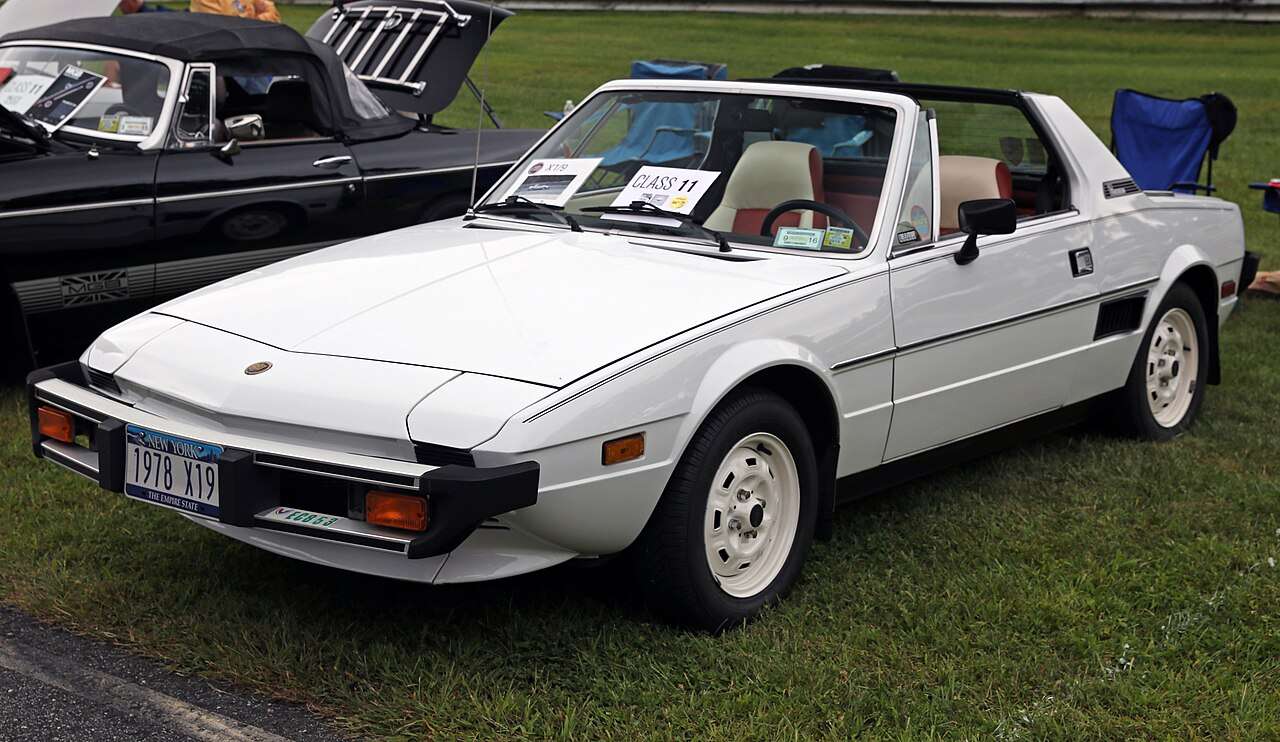
The Fiat X1/9 is one of the most inventive affordable sports cars of the 1970s and 1980s. It combined a Bertone wedge shape, a removable targa roof and a mid-engined layout in a compact package that ordinary enthusiasts could buy and maintain.
What is the Fiat X1/9?
The X1/9 was a two-seat, rear-wheel-drive sports car with its engine mounted transversely behind the cabin. Marcello Gandini styled it for Bertone, translating ideas seen in the Autobianchi Runabout concept into a production car. Fiat launched the X1/9 in 1972 as a successor to the 850 Spider, but the new car’s architecture was far more ambitious.
Its name came from Fiat’s internal project code. The wedge profile, pop-up headlamps and thick rollover structure made the car look exotic, while much of the running gear drew on high-volume Fiat components. That combination—special layout, accessible mechanical parts—remains central to its appeal.
Fiat and Bertone production
Early cars were built with 1,290cc engines and four-speed gearboxes. Fiat introduced the 1,498cc, five-speed version for the 1979 model year, giving the X1/9 more flexible performance and helping it meet the expectations of export buyers. In 1982 Bertone took responsibility for final production and marketed the car under its own name in many markets. Production continued until 1989.
Stellantis Heritage records roughly 150,000 cars built across the model’s long life. The X1/9 also found a substantial audience in the United States, where regulation-shaped bumpers and emissions equipment changed its appearance and output over time.
Fiat X1/9 models at a glance
| Version | Engine | Gearbox | Key points |
|---|---|---|---|
| X1/9 1300 | 1,290cc four-cylinder | 4-speed manual | Early, lighter specification; small bumpers on European cars |
| X1/9 1500 | 1,498cc four-cylinder | 5-speed manual | More torque, later interior and revised exterior details |
| Bertone X1/9 | 1,498cc four-cylinder | 5-speed manual | Later production and market-specific trim editions |
How does an X1/9 drive?
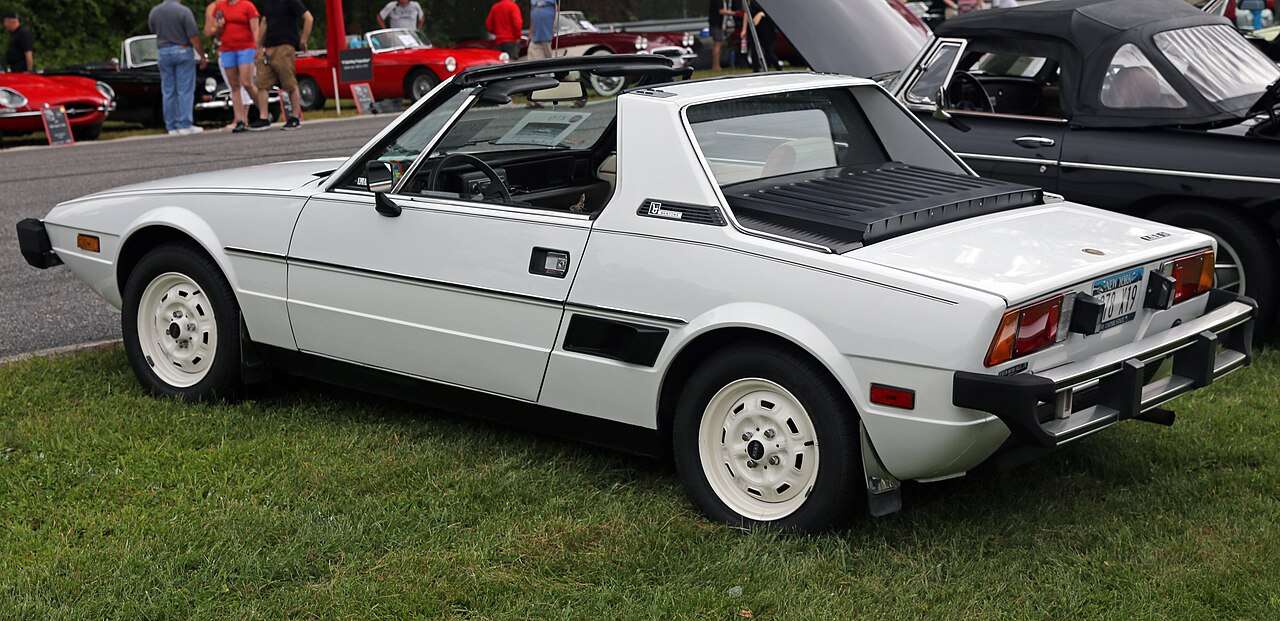
The X1/9 was never about huge power. Its strengths are low weight, compact dimensions, accurate steering and the balance created by placing the engine close to the centre of the car. A healthy example feels agile and communicative rather than intimidating. The removable roof panel stores in the front luggage compartment, turning it into an open car without sacrificing the security of a substantial rollover hoop.
Fiat X1/9 problems and buying checks
Rust
Corrosion is the decisive issue. Inspect the sills, floor, suspension mounting points, inner wings, windscreen surround, door bottoms, engine bay and the structure around both luggage compartments. Cosmetic paint can conceal expensive repairs, so photographs of restoration work and a specialist inspection are valuable.
Cooling system
The radiator sits at the front while the engine is behind the cabin, so long coolant pipes run through the car. Check for leaks, damaged pipes, poor bleeding, failed fans and signs of overheating. The system should hold temperature steadily in traffic.
Engine, gearbox and fuel system
Listen for timing-belt or tensioner noise, confirm when the belt was changed, and look for oil or coolant leaks. Worn synchromesh can make fast changes baulky, while vague selection may come from linkage wear. Old fuel hoses in the engine bay are a safety concern and deserve immediate inspection.
Trim, roof and electrics
Check that the targa panel fits and seals, the pop-up lamps rise together, the fan and instruments work, and water has not damaged the cabin. Model-specific trim is often harder to replace than routine mechanical parts.
Is the Fiat X1/9 a good classic?
For the right owner, yes. It offers a genuinely unusual layout, an important Bertone design and engaging handling without supercar running costs. The best purchase is a structurally sound, well-sorted car with evidence of careful cooling-system maintenance. A cheap rusty example can consume far more than the price difference to a good one.
Love cars you don’t see every day?
Get forgotten cars, surprising motoring stories and the most interesting finds from Unusual Cars by email.
Free to join. No spam. Unsubscribe whenever you like. See our privacy policy.
Frequently asked questions
Who designed the Fiat X1/9?
Marcello Gandini designed the X1/9 at Bertone. Its production shape developed ideas from the earlier Autobianchi Runabout concept.
Is the Fiat X1/9 mid-engined?
Yes. The transverse engine sits behind the two-seat cabin and drives the rear wheels.
What engines did the Fiat X1/9 use?
Main production versions used 1,290cc and 1,498cc Fiat four-cylinder engines. The later 1500 was paired with a five-speed manual gearbox.
When did Bertone take over the X1/9?
Bertone assumed full production responsibility in 1982 and later cars were commonly sold under the Bertone name. Production continued to 1989.
What is the biggest Fiat X1/9 buying risk?
Structural corrosion is the biggest risk. A professional inspection of the sills, floors and suspension mounting areas is more important than shiny paint.
Continue the Fiat story
From the Uno Turbo and Strada Abarth to the five-cylinder Fiat Coupé, our Fiat hub connects the marque’s most unusual sporting cars.

