UNUSUAL CARS MODEL GUIDE
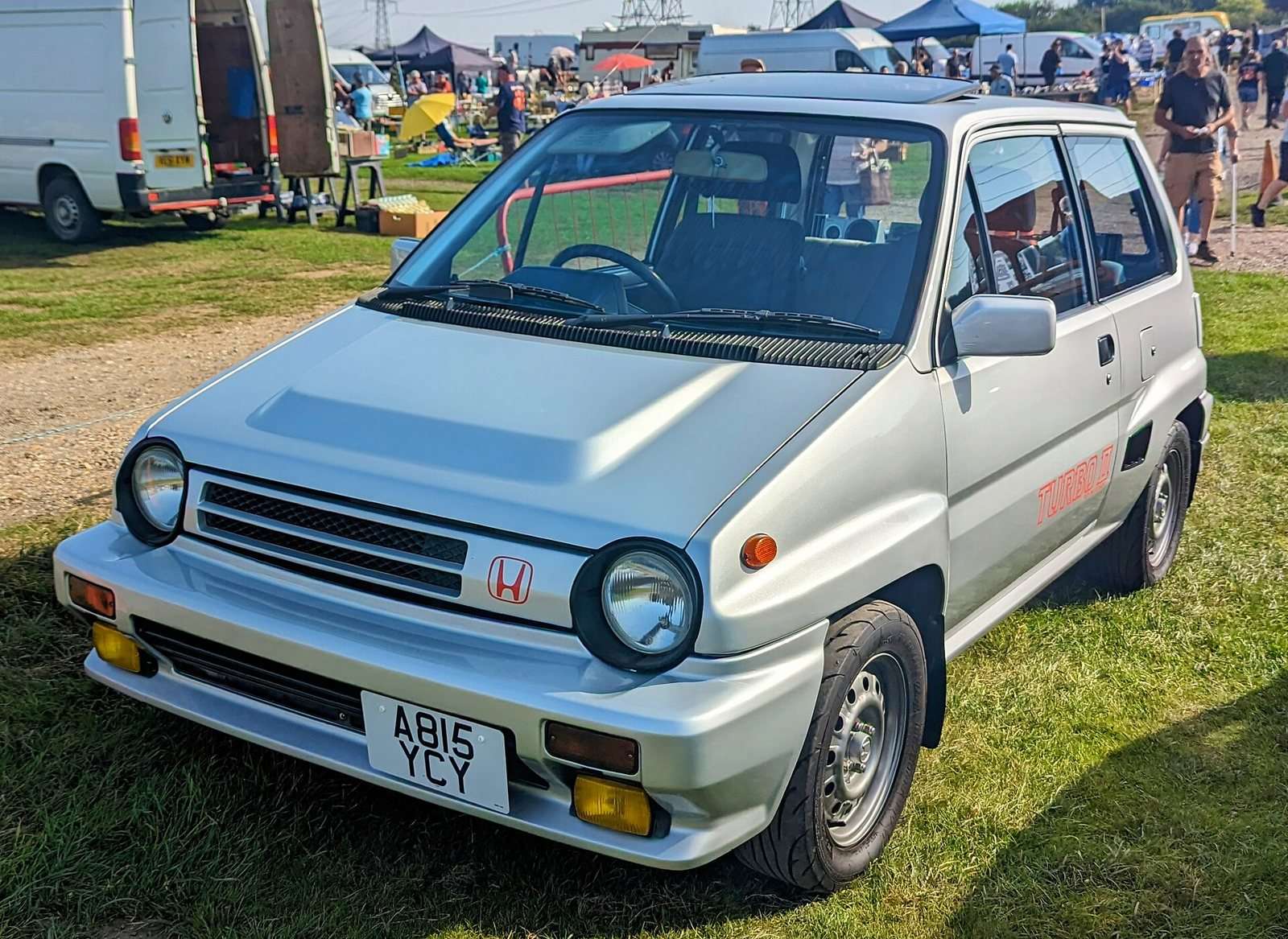
The Honda City Turbo II is the 110PS, intercooled flagship of the first-generation City range. Introduced in Japan in November 1983, it wrapped serious forced-induction engineering in a tiny, tall hatchback whose swollen arches earned it the enduring “Bulldog” nickname.
Quick answer: the Turbo II is far more than a cosmetic special. Honda added an intercooler, raised boost, widened the body and tyres and revised the chassis. Survivors are rare outside Japan, so originality and structural condition matter more than headline power.
From practical City to miniature performance car
The original City arrived in 1981 as a space-efficient urban car. Its tall body provided useful passenger room without needing a long footprint, while the optional folding Motocompo scooter demonstrated Honda’s playful approach to city mobility. The first City Turbo followed in 1982 after a project led by Hirotoshi Honda and Mugen.
Honda developed the idea further for the Turbo II. Rather than simply increasing boost, engineers treated the car as an integrated performance model. The body became wider, the stance more stable and the engine gained the intercooling needed to sustain greater output.
Intercooled 1.2-litre turbo engine
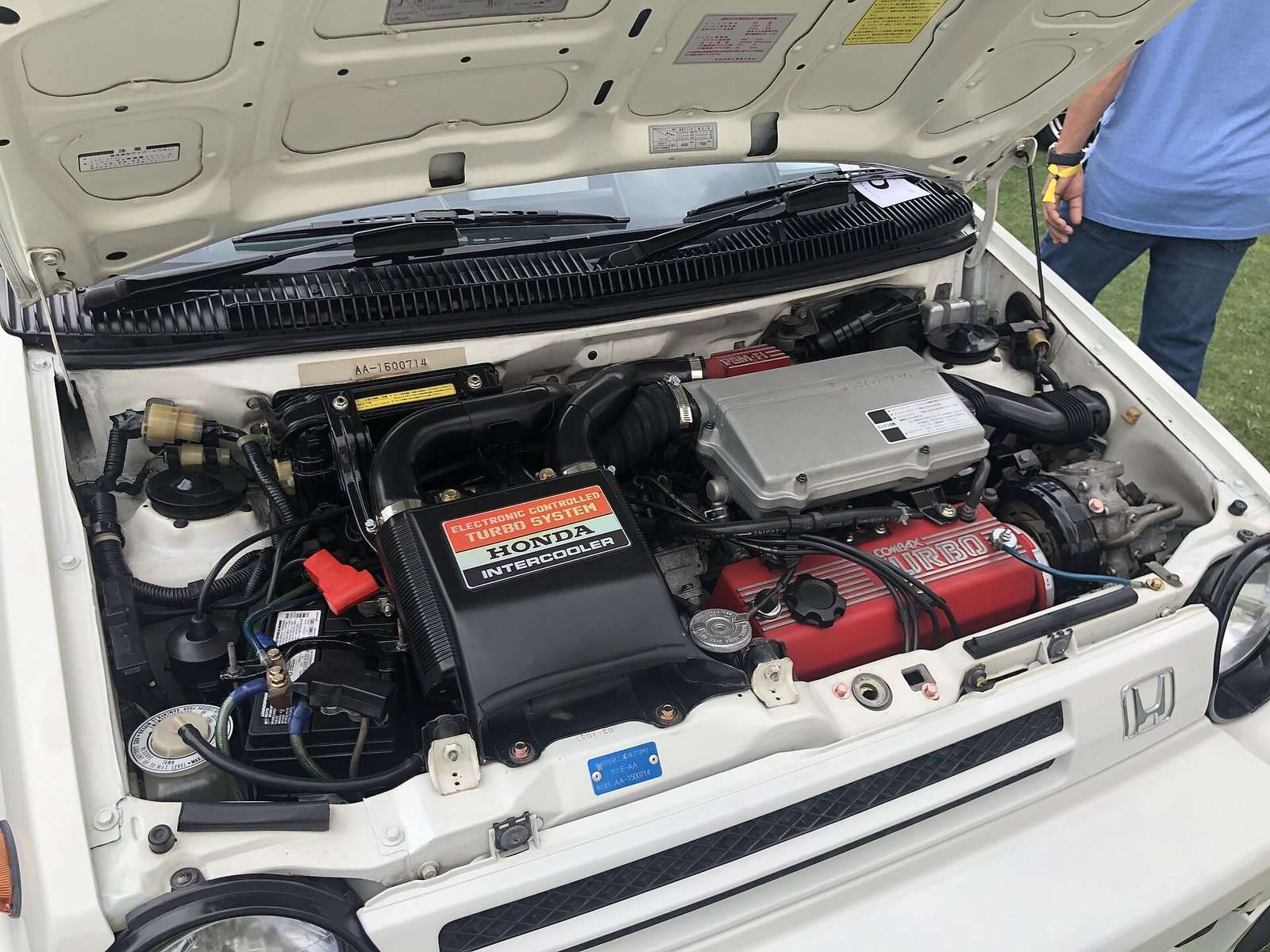
Honda’s October 1983 launch material described the Turbo II as the first 1.2-litre-class car fitted with an intercooler. Its 1,231cc ER engine used Honda’s COMBAX compact-combustion concept, electronic fuel injection and a turbocharger running high boost for the period.
Official output was 110PS at 5,500rpm with 16.3kg-m of torque at 3,000rpm. Those numbers sound modest today, but the City weighed little more than 700kg. The appeal comes from its rapid boost response, short gearing and the contrast between ordinary hatchback packaging and conspicuous mechanical intent.
| Specification | Honda City Turbo II |
|---|---|
| Launch | November 1983, Japan |
| Engine | 1,231cc four-cylinder turbo, intercooled |
| Power | 110PS at 5,500rpm |
| Torque | 16.3kg-m at 3,000rpm |
| Transmission | Five-speed manual, front-wheel drive |
| Character | Wide-bodied lightweight performance hatch |
Why the Turbo II looks so different
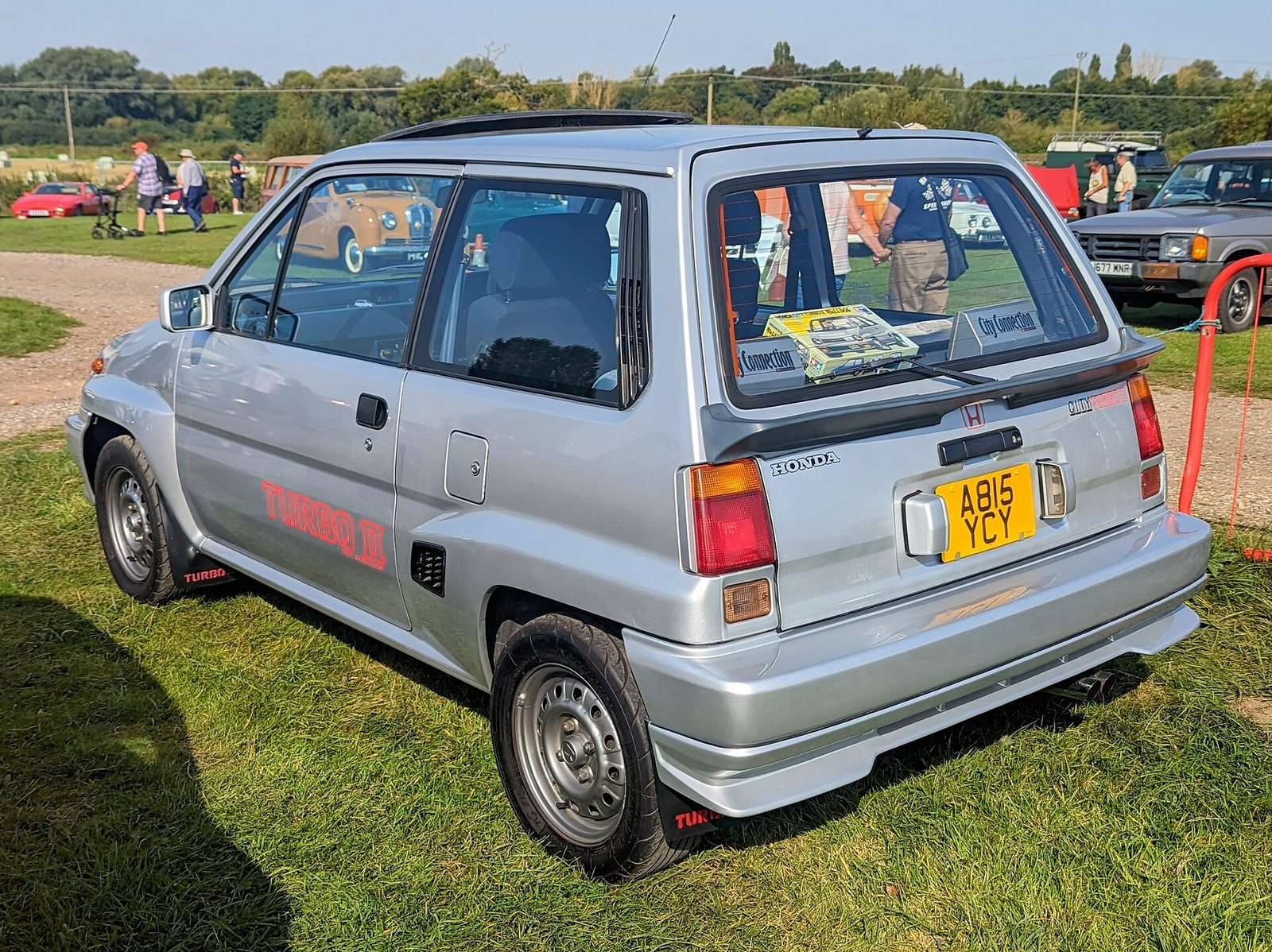
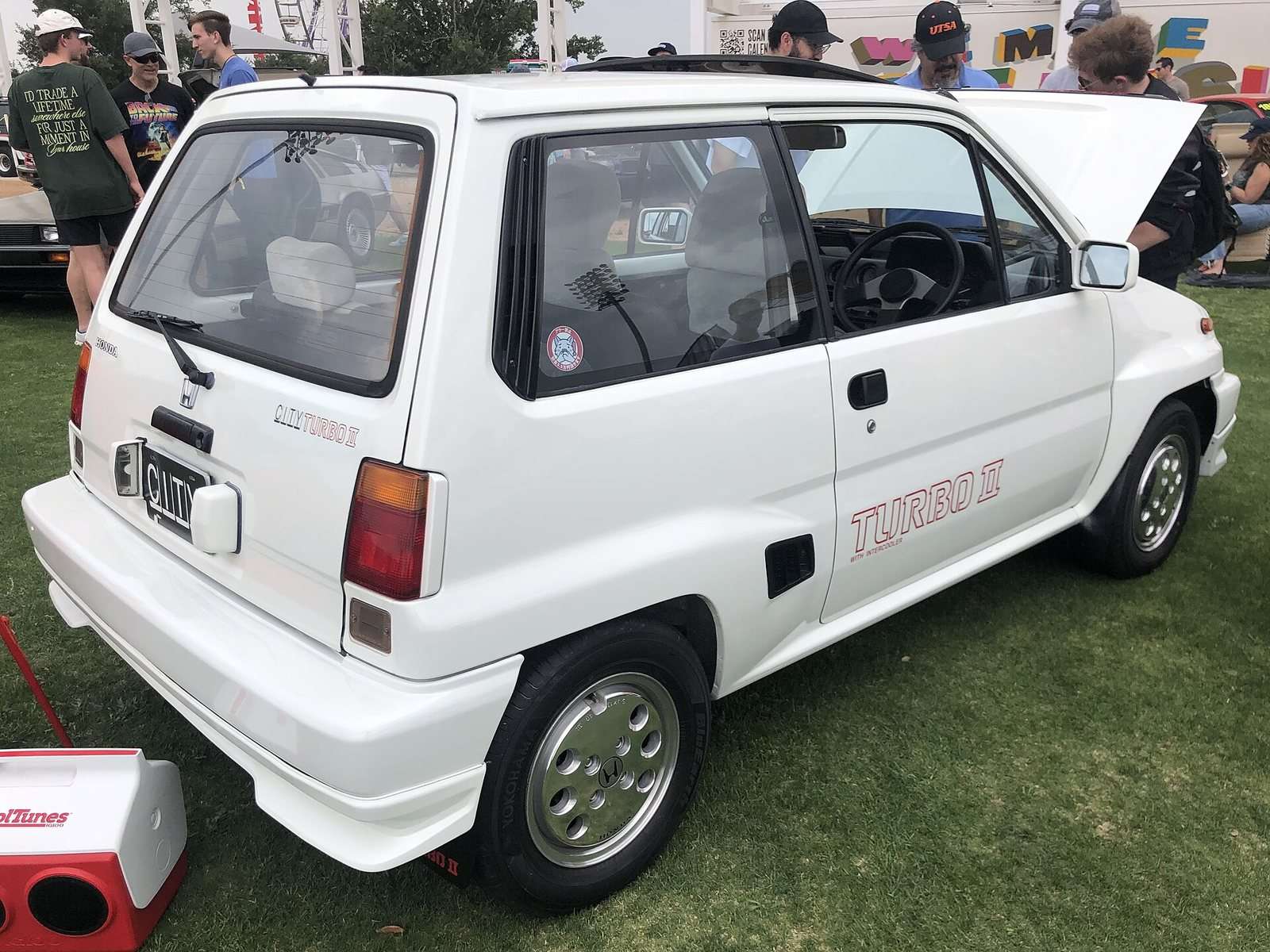
The Turbo II’s broad arches are functional. Honda widened the tracks and fitted larger 185/60 R13 tyres, then reshaped the front wings, rear quarters and bumpers around them. The bonnet power bulge, asymmetrical grille detail and bold Turbo II graphics complete a shape unlike the narrow standard City.
Inside, the upright dashboard, digital additions and tightly packaged cabin preserve the character of the base car. A correct interior is important because model-specific trim, instruments, steering wheel and switchgear are now difficult to replace.

The Motocompo connection
The Motocompo was a 49cc folding scooter created to fit across the City’s luggage floor. Honda’s “trunk bike” is often shown with the Turbo II, and the pairing has become an icon of 1980s Japanese product design.
It is important not to describe the scooter as standard Turbo II equipment. City buyers could choose the Motocompo separately, and many surviving scooters have been paired with cars later. An original scooter is valuable in its own right, but the car should stand on its own identity and history.

Love cars you don’t see every day?
Get forgotten cars, surprising motoring stories and the most interesting finds from Unusual Cars by email.
Free to join. No spam. Unsubscribe whenever you like. See our privacy policy.
Honda City Turbo II buying guide
Identity and completeness
Start with the chassis number and Japanese import documentation. Confirm that the wide arches, bumpers, bonnet, wheels, instruments, seats and engine installation match a Turbo II. Conversions and Turbo I cars wearing later parts exist, and replacement exterior panels are scarce.
Rust and previous repairs
Inspect sills, floor seams, jacking points, wheelarches, suspension mounts, windscreen surround, tailgate aperture and spare-wheel well. Imported cars can look clean underneath yet hide older accident or corrosion repairs beneath fresh coating. Check panel gaps and seams before judging paint.
Turbo, fuelling and cooling
Test from cold and look for smoke, boost hesitation, fuel leaks, overheating and unstable idle. Old hoses, vacuum lines, injectors and sensors can create faults that are hard to diagnose without specialist knowledge. Evidence of correct fluids, regular oil changes and sympathetic warming is valuable.
Gearbox, brakes and suspension
Check synchromesh, clutch bite, driveshaft joints, wheel bearings and straight-line braking. The car should feel alert rather than loose. Incorrect springs or tyres can spoil the balance, while worn bushes and dampers are likely on a four-decade-old lightweight car.
Parts support
Routine consumables can often be matched, but unique trim, body panels, turbo hardware and electronics may require sourcing from Japan or enthusiast networks. A complete, running car with documentation is usually safer than a cheaper project missing rare components.
Why the Bulldog still matters
The Turbo II captures Honda at its most experimental: a practical tall hatchback transformed into a technically serious performance car, then promoted alongside a folding scooter. It is quick enough to be entertaining without losing the compactness that inspired the original City.
Research sources
- Honda Heritage: development of the first City
- Honda: City Turbo II launch and specifications, 26 October 1983
- Honda Heritage: Motocompo concept and design
Continue the Honda story
Explore the Rare & Performance Hondas hub, compare the Beat kei roadster or the first-generation NSX.
Frequently asked questions
What is the Honda City Turbo II?
The City Turbo II is the wide-bodied, intercooled version of Honda’s first-generation City. Launched in Japan in November 1983, it used a 1.2-litre turbocharged engine producing 110PS.
Why is the City Turbo II called the Bulldog?
Its flared wheelarches, wider tyres and compact, upright proportions gave it a squat stance that Japanese enthusiasts nicknamed Bulldog.
Did the Honda City Turbo II include a Motocompo?
The folding Motocompo scooter was designed to fit in the City’s luggage area and could be bought alongside some City models, but it was not standard equipment with every Turbo II.
Was the Honda City Turbo II sold in Britain?
No. It was a Japanese-market model, so British cars are private imports and require careful checks of identity, history, rust and parts support.
What should be checked before buying a City Turbo II?
Prioritise shell corrosion, turbo and fuel-injection health, cooling, gearbox condition, originality of the wide-body parts and evidence that rare trim and engine components are complete.