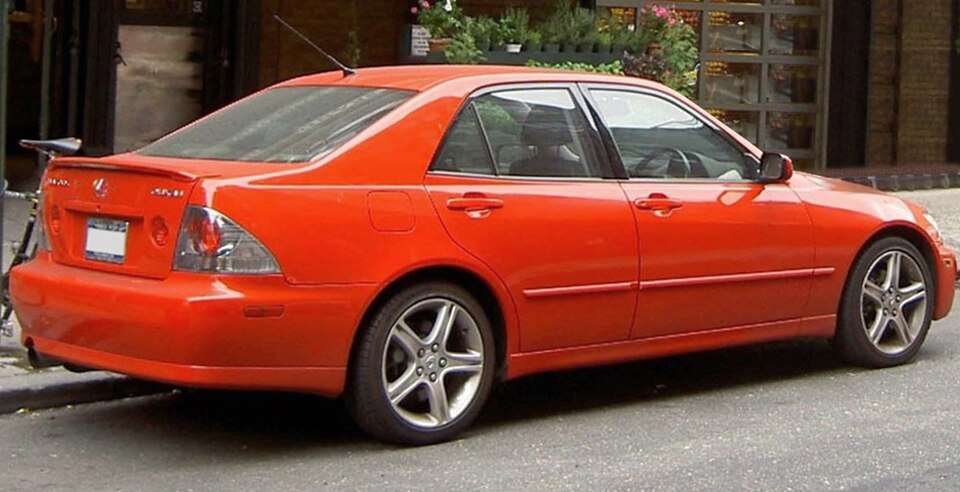
The first Lexus IS pairs rear-wheel drive with a naturally aspirated straight-six and an unusually distinctive cabin. A good IS200 or IS300 can still be an appealing everyday enthusiast car, but the youngest examples are now more than twenty years old. Lexus’s reputation does not protect a neglected sill, worn suspension joint or overdue timing belt. This UK guide covers the original XE10 generation, including SportCross, rather than the later V6, diesel and hybrid models.
Our buying verdict
For an engaging, modestly powered road car, begin with an original IS200 manual with sound structure and documented servicing. Choose an IS300 if you value extra torque and relaxed automatic driving; a SportCross adds useful flexibility but needs its own body and trim checks. Condition, rust assessment and evidence of careful use are more important than an attractive badge, low advertised mileage or promises about future tuning potential.

IS200, IS300 or SportCross: choose the right XE10
The original UK IS arrived in 1999 and continued until the next generation replaced it in 2005. Both IS200 and IS300 use straight-six petrol engines, but they are not simply different tunes of the same engine. The IS200’s 2.0-litre 1G-FE and IS300’s 3.0-litre 2JZ-GE require their own correct service parts. The IS300 is naturally aspirated; a 2JZ badge does not mean it left the factory with the Supra’s turbocharged powertrain.
| Version | UK specification context | Buying focus |
|---|---|---|
| IS200 manual | 2.0-litre straight-six, 153bhp; six-speed manual | Rust, clutch/gearbox condition and whether it remains an honest road car. |
| IS200 automatic | Same basic engine with four-speed automatic | Smooth cold/hot operation and whether the performance suits you. |
| IS300 | 3.0-litre straight-six, 211bhp; UK five-speed automatic | Correct engine and transmission history; separate running-cost budget. |
| SportCross | Liftback body available with IS200 and IS300 versions | Tailgate, water ingress, load-area fittings and model-specific panels. |
| Imported Altezza / converted car | Specification can differ substantially from a UK Lexus | Verify engine, chassis identity, conversion quality and paperwork separately. |
Lexus’s 2004 UK update confirms the different manual and automatic combinations. A manual IS300 advert therefore needs investigation of its market origin or conversion history rather than an assumption that it is an ordinary UK factory specification. Likewise, an Altezza RS200 can have a different engine from an IS200; the names and similar body shape do not establish mechanical equivalence.
Confirm original trim and differential specification from the build information and the actual car. Do not assume that every IS200 has a limited-slip differential, or that a Sport badge still means the original unit is present. A welded differential, angle kit, hydraulic handbrake or missing stability systems changes the purchase completely. For normal road use, standard geometry and correctly functioning safety equipment are strong advantages.
Later equipment changes can add appeal, but leather, wheels and tinted rear lamps are easier to change than a bodyshell. Choose a car that you enjoy in its present form. Buying a cheap example with the intention of immediately correcting rust, suspension, drivetrain and interior defects usually requires a much larger budget than the advert suggests.
UK prices: separate the original IS from later generations
Research snapshot: 4 November 2026. The PistonHeads IS page displayed 58 adverts across several generations. Among the visible examples was a 2002 IS200 SE automatic with 80,000 miles advertised at £4,000. This is a single asking-price observation, not a completed sale or a representative valuation for manuals, IS300s or SportCross models.
Most visible listings on that page were later IS250s, diesels and IS300h hybrids. Their prices are not evidence for the original straight-six cars. In particular, an IS300h is a later hybrid and cannot be used as a price or maintenance comparison for a first-generation IS300 simply because the names look similar. The checked sample was insufficient to publish a defensible current IS300 or SportCross price band.
Build a shortlist by exact engine, gearbox, body style and condition. Record mileage, underside photographs, belt history, evidence of rust repairs and whether the car has been altered for drifting. A desirable manual or uncommon body style may attract a seller’s premium, but rarity alone says nothing about structural condition or what another buyer will eventually pay.
Compare the asking price plus the work you can actually substantiate. Obtain an inspection and written repair estimates before treating a discount as value. A correctly repaired car with extensive evidence can be a better purchase than a shiny, untouched-looking example with hidden corrosion. Equally, photographs of welding prove little unless the repair quality, affected areas and protection can be assessed.
Rust inspection: put the bodyshell ahead of the service stamp
Arrange a lift inspection with someone familiar with older Japanese cars. Examine inner and outer sills, rear arch edges, jacking areas, floor seams, suspension mounting areas and the condition of subframes and fasteners. Look behind accessible trim and covers where the seller permits. Underseal should prompt a closer look at the surface beneath, not automatically earn a clean bill of health.
Read MOT corrosion advisories as a timeline. Ask where repairs were made, who did them and whether photographs show the metal before, during and after the job. Small external bubbles can be the visible edge of a larger repair. Have a body specialist distinguish cosmetic surface work from structural metal replacement and quote the complete scope, including paint and protection.
Inspect brake and fuel lines, tank-area hardware, exhaust mountings and heat shields while underneath. Check that jacking damage has not been hidden with fresh coating. A seller’s description of “usual rust for the age” is not a useful repair estimate. If the structure cannot be examined properly, do not assume the uncertainty is covered by a modest price reduction.
Check panel gaps, inner wings, boot floor, light mountings and paint texture for collision repairs. On SportCross cars, operate the tailgate, lock, rear wiper and heated glass, inspect seals and luggage-floor areas for moisture and confirm that the load cover and folding-seat mechanisms are complete. Model-specific glass, lamps and trim deserve an availability check before purchase.
Inspect the windscreen surround, door seals and any sunroof area for water marks. Feel carpets and check the boot for dampness and evidence of electrical repairs. Unexplained moisture can add wiring, trim and diagnostic costs to the original leak. A freshly shampooed interior does not explain away wet insulation.

Engine, timing belts, suspension and transmission checks
Start cold and look for prompt starting, an even idle, warning-lamp behaviour and unusual exhaust smoke. Repeat the inspection after a fully warm drive. The straight-six should feel smooth, but a quiet idle cannot prove the health of an ageing cooling system, catalytic converter or automatic gearbox. Scan relevant fault codes and investigate recent warning-light resets rather than accepting a fresh MOT as a complete engine assessment.
Both engines require timing-belt attention. Ask for invoices giving date, mileage, engine and the components renewed. Confirm the current time-and-mileage requirement with Lexus or an experienced specialist for the VIN. Historic launch mileage claims should not be treated as permission to leave a decades-old belt in place. If the evidence is absent, include a properly scoped replacement in the immediate budget.
Price the correct belt, tensioner/idler arrangement, seals where required and the water-pump decision with the workshop. An IS200 kit is not an IS300 kit. Inspect for oil contamination and leakage around the front of the engine and cam-cover areas, and have any VVT-i-related leakage diagnosed. A small visible oil leak can make belt-area work more extensive than a simple kit change.
Inspect the radiator, hoses, expansion system, water pump and evidence of overheating. Ask about coolant loss and pressure-test suspected leaks. Do not open a hot cooling system during a viewing. On a road test, look for stable temperature behaviour and proper heater output; unexplained coolant loss or overheating requires diagnosis before deciding what the car is worth.
Check ignition components, intake plumbing, idle behaviour and emissions evidence. A misfire can damage an exhaust catalyst if ignored, while a catalyst-efficiency code does not by itself prove that a particular sensor needs replacing. Examine the exhaust for leaks and modifications, and ask a workshop to estimate a lawful, correctly functioning system if components have been removed or unsuitable parts fitted.
Give the front lower ball joints deliberate inspection time. Have a competent technician check joints, boots, fasteners and associated suspension parts using the correct method. Do not infer that a lack of knocking means every joint is sound. Steering and suspension defects can have serious consequences, so visible damage, play or suspect repairs should be resolved before further road use. This is a condition-based inspection priority, not a claim that every car has the same defect or a quoted failure rate.
Fensport’s own catalogue identifies separate handed front lower joints for the IS200/IS300 application. That helps explain why a cheap search result must be checked for the correct side and quantity. It does not establish that every available joint has equivalent quality. Ask the fitter to specify reputable parts and inspect the surrounding arms, bushes and steering hardware rather than replacing only the cheapest visible component.
For an IS200 manual, check selection through all six gears from cold, reverse engagement, clutch bite and slipping under sensible load. Listen for noises that change with clutch position and investigate vibration through the drivetrain. For an automatic, test drive and reverse engagement and shifts both cold and hot. Delays, flare, shunts or burnt-fluid concerns need specialist assessment; a fluid change is not a guaranteed repair for internal wear.
Inspect differential and driveshaft areas for leaks, noise and poor modifications. A welded differential may be obvious during tight manoeuvres but should be identified by inspection and history, not by a risky test. Check tyres for mismatched brands, stretched fitments and abnormal wear, and assess brakes, calipers, wheel bearings, dampers and springs. Lowered cars need checks for damaged travel stops, rubbing, poor alignment and compromised road clearance.
Cabin, instrument cluster and equipment checks
The watch-like instrument cluster is one of the original IS’s signatures. Verify that the gauges work, the warning lamps complete their normal self-check and the displayed mileage agrees with the paperwork. Check illumination, climate-control operation, air-conditioning output and the original or replacement stereo. A working radio does not prove that an aftermarket installation has been wired properly.
Inspect seat bolsters, adjustment mechanisms, seat heating where fitted, carpets and headlining. Test windows, mirrors, central locking, both keys and the boot or tailgate release. Check any pop-up navigation screen, while remembering that an old navigation system’s presence does not make its mapping current or its electronics inexpensive to repair.
Try the rear seats and actual luggage access. The saloon and SportCross meet different needs; inspect folding mechanisms and load-area fittings rather than assuming that the more versatile body makes every task easy. Confirm spare-wheel or puncture equipment, locking-wheel-nut key and supplied tools. Missing small pieces can be annoying to source after the purchase.
On a car advertised as an unmodified road example, look for signs of previous competition-style use: altered seats or belts, non-standard steering wheels, removed trim, damaged wiring and poorly refitted safety equipment. Ask directly about past modifications that have been removed. A return to standard appearance does not document the quality of the underlying work.

Maintenance costs: engine-specific belts, alternators and service parts
The figures below are editorial planning allowances for parts only, unless a fitted service is explicitly identified. They are not live eBay quotes: brand, specification, availability, delivery and VAT treatment vary. Obtain a registration/VIN-matched written estimate before committing to a repair. Cheap search results can include incompatible parts, deposits or single components rather than a complete kit.
Affiliate disclosure: the parts searches below use our eBay affiliate campaign. We may earn a commission if you buy, at no additional cost to you. Search results are not a recommendation of every seller or product; verify fitment, maker, returns and warranty.
| Maintenance item | Parts allowance / search | What to check |
|---|---|---|
| IS200 timing-belt kit | £70–£160 | IS200/1G-FE application only; verify included components and VIN. |
| IS200 water pump | £40–£100 | Check scope alongside belt work; coolant and labour extra. |
| IS200 oil/filter service parts | £45–£85 | Match oil specification and quantity; do not order for the later IS250. |
| IS200 spark plugs | £35–£85 | Correct six-plug set and heat range; inspect ignition leads/coils as fitted. |
| IS200 alternator | £110–£250 | Match unit/output and consider exchange deposit, delivery and warranty. |
| Front lower ball joints | £45–£150 | Confirm left/right and quantity; choose a reputable maker and competent installation. |
| IS200 front discs and pads | £90–£200 | Check actual brake specification, calipers and rear brakes too. |
| IS200 manual clutch kit | £120–£250 | Labour, flywheel assessment and hydraulic repairs excluded. |
For the 3.0-litre engine, start with separate searches: IS300 timing-belt kit: allow £90–£200 for parts and IS300 alternator: allow £130–£280 for parts. These are editorial planning allowances under the same affiliate disclosure and fitment cautions above, not current quotations. The IS200 search results are not a parts list for an IS300.
Ask the workshop to identify labour, seals, pump, fluids, VAT and any damaged fasteners separately. Belt work, structural corrosion and transmission diagnosis need written scopes. A basic oil service does not demonstrate that the car has caught up with age-related maintenance, and an inexpensive component cannot cancel the labour needed to reach and fit it.
Hidden ownership costs: rust, fuel and previous modifications
Rust repair can be the largest uncertainty in a relatively inexpensive XE10. Obtain a bodyshop assessment before committing, especially if fresh coatings hide the repair area. The complete job may include cutting back to sound metal, inner structure, fabrication, welding, paint and cavity protection. A quote for an outer repair patch is not the same as a structurally sound finished sill.
Fuel needs an honest budget. A smooth six-cylinder engine and automatic gearbox do not make an IS300 a modern economy car, and the IS200 is not automatically inexpensive to fuel simply because it has less power. Use realistic annual mileage and a conservative consumption assumption. Historic brochure test figures and 2001 tax examples should not become current running-cost claims.
Get insurance terms for the actual car, declaring suspension, wheel, differential, exhaust, engine and gearbox changes. Check current road tax and any emissions-zone treatment from the registration record. Imports and converted cars need particular care over the recorded engine and specification. A seller’s claim that everything is “on the logbook” should be checked against the documents and insurer’s requirements.
Allow for tyres, geometry and a group of suspension jobs rather than one joint in isolation. Rare SportCross trim, lamps, glass and luggage fittings can be slower to source than routine service parts. Keep a reserve for diagnosis and repairs after purchase. Spend it on a sound structure, safe suspension and correct maintenance before pursuing more power or cosmetic restoration.

IS200 and IS300 viewing checklist
- Confirm XE10 identity, engine, body, gearbox and UK/import history; distinguish IS300 from later IS300h models.
- Inspect the underside on a lift, concentrating on sills, arches, jacking areas, floors, mounts and brake/fuel lines.
- Read corrosion advisories and repair evidence chronologically; obtain a bodyshop estimate for unresolved structural concerns.
- Check dated timing-belt invoices and the correct engine-specific scope; budget immediate work where evidence is missing.
- Start cold, scan faults and inspect cooling, oil leakage, idle quality and emissions concerns.
- Have suspension joints, boots, arms, brakes, tyres and steering examined properly, including the front lower joints.
- Road-test manual or automatic fully warm and investigate drivetrain noise, differential changes and evidence of drifting.
- Test cabin equipment, both keys and any SportCross fittings; confirm insurance and preserve a first-year repair reserve.
Lexus IS200 and IS300 buying questions
Is the original IS300 a turbocharged 2JZ?
No. The UK first-generation IS300 used the naturally aspirated 2JZ-GE straight-six. Turbo conversions need a separate technical, documentation and insurance assessment; the engine family name is not evidence of factory turbo hardware.
Does the IS200 have a timing chain?
The first-generation IS200 uses a timing belt, as does the IS300. Their kits differ. Check dated invoices and confirm the current VIN-specific time-and-mileage requirement instead of applying advice for later Lexus engines.
Was a UK IS300 available with a manual?
The period UK factory specification lists a five-speed automatic for the IS300. A manual example needs its market origin or conversion history checked carefully. The IS200 had six-speed manual and four-speed automatic options.
Is every IS200 fitted with a limited-slip differential?
Do not assume so. Verify factory specification and the unit currently fitted. Badges, claims about Sport trim and a previous owner’s description cannot establish whether it has an original, replacement or welded differential.
What matters most on a cheap IS200?
Structural condition and safe steering, suspension and brakes come first, followed by timing-belt evidence, cooling health and gearbox operation. A low purchase price does not make extensive corrosion or poorly documented modifications economical to resolve.
Research, sources and image credits
Checked 4 November 2026. Independently written inspection advice is supported by period Lexus material, a first-party parts application and a limited live asking-price observation. We have not inspected the pictured or advertised vehicles, and the sources do not establish fault prevalence or future values.
- Lexus UK, 24 September 2001: IS300 and SportCross launch specification, engine and transmission.
- Lexus UK, 19 April 2004: IS200/IS300 equipment and transmission update.
- Fensport: handed front lower ball-joint application for IS200 and IS300; used for fitment context, not a failure-rate claim.
- PistonHeads: IS listings and the dated 2002 IS200 automatic asking-price example.
Photographs include overseas cars and an Altezza 1G-FE engine-bay illustration. They show body, cabin and engine-family details, not guaranteed UK equipment or the condition of a car being offered for sale. Original sources, contributors and reuse licences are credited beside every image.