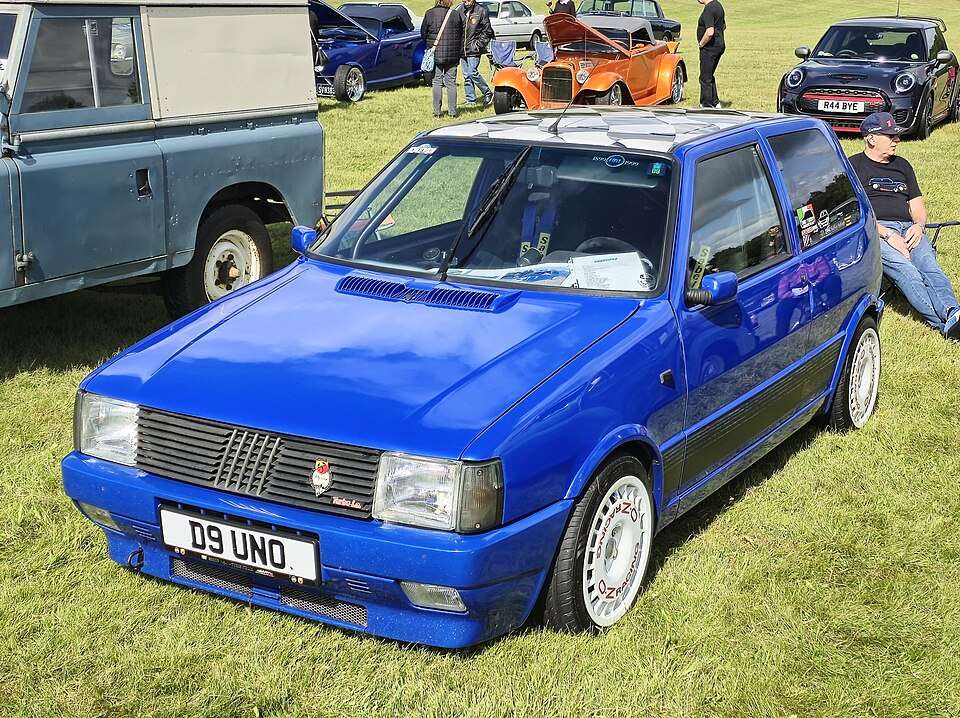
The Fiat Uno Turbo i.e. puts a turbocharged engine into a light, practical hatchback with unmistakable eighties character. A good one feels like a special survivor, but the buying challenge is substantial: hidden corrosion, scarce trim, uncertain identity and poorly documented boost modifications can turn a tempting advert into a difficult restoration. This guide separates the earlier 1.3-litre Mk1 from the later 1.4-litre Mk2 and focuses on evidence a buyer can actually check.
Our buying verdict
Buy the shell and completeness first, then assess the engine and modifications. An honestly documented, sound car with its trim intact is usually preferable to a cosmetically impressive project with rusty turrets, missing interior pieces and an unexplained turbo setup. Arrange an inspection with someone who understands these Fiats.

Mk1 1.3 or Mk2 1.4 Uno Turbo?
The Uno Turbo i.e. appeared in 1985 with a 1,301cc turbocharged, fuel-injected four-cylinder engine. The later facelifted Mk2 used a 1,372cc installation with differences in engine, management, styling and trim. Outputs vary by market and emissions specification, so establish the actual engine code and equipment rather than treating every Uno Turbo as mechanically identical.
The i.e. designation refers to fuel injection. This is not the same fuelling arrangement as the carburetted Renault 5 GT Turbo, despite the cars often appearing on the same shopping list. Use diagnosis and parts suited to the Fiat’s actual injection and ignition system. Conversions can further complicate the distinction.
| Choice | Appeal | What to establish |
|---|---|---|
| Mk1 1.3 Turbo | Original shape and distinctive early interior | Correct engine, turbo/injection installation, shell repairs and scarce early trim. |
| Mk2 1.4 Turbo | Revised styling and later development | Actual market/emissions specification, management and compatible service components. |
| Imported car | Potential alternative when UK supply is thin | Original documents, mileage units, corrosion history and parts application. |
| Modified car | May suit an enthusiast’s use | Boost, mapping, fuelling, cooling, brakes and installation records as a complete system. |
| Re-shelled or substantially restored example | Can preserve a car that otherwise would be lost | Transparent identity, legal documentation, structural quality and insurer acceptance. |
Badges, wheels and a turbo engine do not prove a car left the factory as a Turbo i.e. Cross-check chassis and engine information, old records and restoration photographs. A properly documented restoration or re-shell needs an informed assessment; a vague story should not attract an originality premium. Do not confuse an ordinary Uno or a later market-specific model with the European Turbo specification being discussed.
Choose early appearance or later refinement according to preference, but do not let that preference override the condition of the shell. Replacing missing Mk1 seat material or control details may be harder than buying ordinary service items. A complete car is valuable when the alternative is a long search for unobtainable pieces.
Try the seating position and controls. The Uno’s compact, light character is part of its appeal, but it will not offer modern refinement or crash protection. Decide whether it suits the journeys and storage arrangements you have. A sympathetic road car and a heavily modified show or track project need different budgets and inspection briefs.
Uno Turbo prices: a small, mixed market
Car & Classic results checked on 3 November 2026 included a 1988 1.3 Turbo i.e. advertised in the UK at £8,950 with a stated 10,961 miles. An overseas left-hand-drive 1.3 example with 122,500 kilometres was advertised at €20,900 and appeared twice in the results with matching details. These are seller asking figures and descriptions, not verified mileage, condition or completed-sale values.
The sample is too small and inconsistent to justify a reliable UK market range. Other results were simply labelled Uno, included an automatic or related to a Fiorino pick-up; those are not safe comparables for a genuine Turbo i.e. Do not assume a search result belongs in the comparison merely because it appeared under a Turbo filter.
Ask how a low displayed mileage is supported. Old MOTs, service records, cluster repairs and storage history matter. A car with very little recent use can still need tyres, fuel-system work, cooling and brakes before regular driving. A newly polished engine bay is not evidence that recommissioning was comprehensive.
Build a shortlist of the same generation and broad specification, then compare structural condition, identity, trim and documented mechanical work. Budget for inspection, transport, baseline servicing and a reserve. Obtain a written assessment of welding and engine concerns rather than negotiating around a generic price for a repair panel or turbo.
Rust: inspect beyond the exterior panels
Corrosion is the decisive buying issue. Inspect sills and the sections behind their covers, floor edges, jacking areas, front and rear suspension mounting regions and turrets. Rear turret deterioration is repeatedly described in long-standing owner reports and deserves direct inspection beneath luggage trim with permission. A tidy arch outside does not establish that the inner structure is sound.
Have the car lifted and examine both sides of repair areas. Patches over corroded metal, missing drainage and thick coating over unexplained seams need investigation. A small hole near a suspension attachment can demand a very different repair from a blister on a removable panel. Ask a specialist to assess the load-bearing structure and repair quality.
Check the battery tray and bulkhead, inner wings, front panel around the lights, windscreen corners, arches, door bottoms, fuel-filler region and rear body. Sunroof cars need inspection around the aperture and drainage. Water tracks, damp carpets and luggage-area staining should lead to an identified source and a check for damage beneath them.

Tailgate construction and fittings differ across the range and generation. Inspect the actual panel, glazing, hinge and latch areas, spoiler and seals rather than applying a generic Uno rust description to every Turbo. Check boot floor and spare-wheel areas and look for water entry through rear seals and lamps.
Restoration photographs should show the shell before paint, during metal repairs and before trim was refitted. A collection of finished show photographs does not prove the inner sills or towers were repaired properly. Include dismantling, inner structure, welding, paint and protection in a quotation. Cheap pattern panels do not make skilled restoration cheap.
Look for accident damage through inconsistent gaps, distorted seams, overspray and mismatched paint. A documented repair can be acceptable; unexplained structural work or an identity discrepancy should be resolved before a deposit. Do not rely on one badge, sticker or trim feature to authenticate the entire vehicle.
Turbo engines, injection, cooling and transmission
Timing belts and baseline maintenance
Both engine families discussed here use a timing belt. Obtain a dated invoice with mileage and the parts and procedure used. Confirm a suitable time-and-mileage schedule with a Fiat specialist for the engine and components actually fitted. If the record is absent, arrange a baseline timing service before normal use rather than assuming low mileage makes an old belt safe.
A belt-only receipt is not evidence that the tensioner, seals or other relevant items were inspected or replaced. Ask what the workshop included and what it found. The small cost of a loose belt should never be mistaken for the full installed job, especially where access, oil leaks or worn associated components add work.
Identify the 1.3 versus 1.4 installation by engine information and records. The fact that a generic product lists Uno, Punto or Tipo does not mean it is appropriate for a turbocharged Uno. Confirm part number, profile, dimensions and engine-code application with the supplier and workshop.
Cold start and engine condition
Ask the owner to leave the engine cold. Check fluids before starting and observe how it fires, idles and warms. Persistent smoke, heavy breathing, knocks or coolant loss need diagnosis. A brief start on the driveway cannot establish the health of a turbo engine under load and when thoroughly warm.
Oil supply and regular maintenance are important to both engine and turbocharger. Inspect leaks and ask about oil consumption, pressure concerns and the reason for any rebuild. Where symptoms justify it, a specialist may use measured pressure, compression or leakage tests. One reassuring test does not certify every part of a modified engine.

Turbo, boost and fuelling
Check turbo plumbing, oil and coolant connections where fitted, intake hoses, intercooler and wastegate or boost controls appropriate to the installation. A healthy car should deliver power cleanly under sensible load without alarming smoke, detonation-like noises or misfire. Have abnormal behaviour investigated before repeating a demanding test.
Ask what boost level and mapping are used, who did the work and whether fuelling, ignition, charge cooling and exhaust changes were considered together. A boost controller is not a complete tuning package. Obtain supporting invoices and calibration information and disclose modifications to the insurer.
Rough idle, difficult hot starts and flat performance can have several causes: air leaks, fuel delivery, ignition, electrical supply or mechanical wear. Avoid buying on an untested claim that it only needs an inexpensive sensor. The correct test equipment and knowledge of the fitted system matter more than a generic code reader on an older installation.
Cooling and fuel-system age
Inspect radiator, hoses, thermostat, pump and fan operation and ask about overheating history. A dashboard fan switch may be part of a deliberate installation, but it can also conceal a failed original control. Establish the reason and inspect the workmanship. Do not remove a hot coolant cap or ignore persistent coolant loss.
Fuel hoses, clamps, pump wiring and tank condition deserve attention, especially after storage. Old rubber and improvised connections can undermine a car that otherwise runs well. Stop an inspection if fuel is leaking. Recommissioning should assess the whole system rather than only replacing stale petrol.
Gearbox, clutch and chassis
Test every gear cold and hot. Pay attention to synchromesh, bearing whine, jumping out and the quality of clutch release. A slightly deliberate period shift is different from a gearbox that grinds or refuses gears. Linkage wear and clutch adjustment may contribute, but they should be diagnosed rather than assumed.
Check clutch slip, judder, mounts and driveshaft joints and boots. Modified torque output can increase wear, so a new clutch receipt does not prove the gearbox and differential are healthy. Ask what components were used and whether the setup is appropriate for the engine.
Inspect suspension bushes, balljoints, steering rack and joints, dampers, springs and wheel bearings. Excessive torque steer, wandering or uneven tyre wear can reflect worn components or poor alignment. A coherent suspension refresh is more useful than fitting stiff springs to mask tired bushes.
Test brakes progressively and inspect calipers, discs, pads, hoses and metal lines. Some market versions had additional anti-lock equipment; identify what is actually fitted and obtain specialist advice on faults and parts. Do not assume all ordinary Uno braking components are correct for a Turbo or a modified car.
Check tyre age, suitable specification, wheel condition and clearance. Very large or wide wheels can alter ride, steering and geometry. A stance that looks good in photographs is not evidence that the car drives properly. Include alignment after relevant repairs and assess corroded or seized adjustment hardware.
Original trim, instruments and electrics
Inspect seats, bolsters, carpets, belts, dashboard, control pods or later switches, door cards, parcel shelf and headlining. Correct early materials and Turbo-specific details can be difficult to source. Price a coherent interior repair rather than assuming one replacement seat cover will match aged surrounding trim.

Test instruments, warning lamps, lights, wipers, heater fan, demister, windows and locks. Where a digital instrument arrangement is fitted, check it thoroughly and establish repair support. A standard analogue cluster and a digital option do not have identical parts requirements.
Inspect fusebox, earth and accessory wiring where accessible and test charging and battery condition if symptoms suggest low voltage. A non-working window can involve switches, wiring or mechanism rather than just a motor. Old alarms and stereos can create intermittent faults, so ask what has been altered and retain a wiring record if buying a modified car.
Sunroof operation and sealing need a separate check. Do not force a stiff mechanism or assume a leak can be solved with sealant. Identify the source of dampness and inspect floor and connections beneath. A fresh carpet or headlining can improve appearance while concealing the history of water entry.
Maintenance costs, timing kits and alternators
Affiliate disclosure: eBay parts links below are affiliate links using our campaign. We may earn a commission if you buy, at no extra cost to you. Links open search results rather than a verified individual product. Check engine, year, part number, seller, condition and returns; search results can contain incompatible items.
AE CAR listed Dayco 94513, a belt-only item referencing OE 4242396 for specified 1.3 Turbo i.e. engine applications, at £12.90 excluding VAT when checked on 3 November 2026. The page identified 1,301cc engine codes and 1985–1990 application. Confirm the actual code and current total. This is not a complete kit, water-pump package or fitted timing service and should not be applied to every 1.4 Turbo.
| Job / item | What to establish | Model-specific search |
|---|---|---|
| Mk1 1.3 timing service | Correct belt, tensioner, related inspection, engine code and fitted labour. | Compare 1.3 Turbo timing kits |
| Mk2 1.4 timing service | Separate application check and complete fitted scope. | Search 1.4 Turbo timing kits |
| Alternator | Test battery, earths, wiring and output; verify mounting and pulley. | Search Uno Turbo alternators |
| Routine service | Correct oil, filters, plugs and inspection of hoses and ignition. | Search 1.3 Turbo service parts |
| Cooling | Radiator, pump, thermostat, hoses and fan control as a system. | Search Uno Turbo cooling parts |
| Turbo-related work | Diagnose cause and associated oil/fuel/cooling issues, not just the turbo itself. | Search Turbo-specific components |
| Brakes and suspension | Actual Turbo/modified specification, fitting and alignment. | Search Uno Turbo brake parts |
The eBay links are separate searches and do not guarantee the quoted supplier’s part or price. Results may include ordinary Unos, wrong engines, old stock, used items and incomplete kits. Confirm part numbers, condition, quality, VAT, delivery and returns. A seller compatibility table is a starting point, not a replacement for checking the car.
After purchase, agree a baseline service and a dated plan for timing, lubrication, cooling, brake fluid, tyres, fuel hoses and drivetrain requirements. Long-stored cars need a recommissioning inspection before regular use. Keep invoices and records of modifications so future parts decisions do not rely on an increasingly inaccurate registration lookup.
Hidden Uno Turbo ownership costs
Set a first-year budget before making an offer. Add the purchase price, fees and collection, independent inspection, immediate servicing, diagnosed repairs, insurance, storage and a reserve for unresolved work. Use quotations for the car in front of you; a percentage of the purchase price is a poor substitute for knowing what needs doing.
- Turret, sill and floor corrosion can require extensive inner-structure work beyond the visible panel.
- Original Mk1 trim, seats, instruments, lamps and body details may need patient sourcing or specialist repair.
- Poor boost modifications can involve fuelling, ignition, cooling and engine work rather than one replacement turbo.
- Re-shelled or converted cars require transparent records, an informed inspection and an agreed insurance position.
- Parts are only part of the bill. Access, diagnosis, fluids, alignment, seized fasteners and VAT can change the total. Ask the workshop what its quotation includes and how additional work will be agreed.
- Exchange units and delivery. Alternators, starters and other rebuilt components can require a returnable old unit. Compare the surcharge, return postage, deadline and warranty before choosing a supplier.
- Insurance and downtime. Obtain a quote for the actual specification and declared modifications. Allow for recovery and alternative transport if this will be your only car.
Uno Turbo viewing checklist
Before travelling
- Confirm registration, exact version, seller identity and ownership history. Ask about accidents, insurance write-offs, engine changes and modifications.
- Read the MOT chronology and request invoices, not just a stamped service book. Agree a cold start, inspection access and a properly insured test drive.
- Get a written list of included keys, original parts and any outstanding faults. For a distant car, request current underside and engine-bay photographs.
At the car
- □ Confirm Mk1/Mk2, 1.3/1.4, actual engine and genuine or transparently documented identity.
- □ Inspect turrets, sills behind covers, floor edges, battery/bulkhead region and suspension mounts on a lift.
- □ See cold and hot running; investigate smoke, oil pressure/use, cooling and fuel leaks.
- □ Read dated timing invoices and the complete specification of turbo, boost, fuelling and ignition changes.
- □ Test gearbox, clutch, steering and brakes and inspect tyres, wheels and geometry.
- □ Inventory scarce trim and electrics, inspect for water ingress and obtain written repair estimates before paying.
- □ Compare identification with documents, check panel alignment and inspect accessible structure on a lift. Never go beneath a car supported only by a jack.
- □ Try lights, wipers, washers, heater, locks and warning lamps. Inspect tyres for age and damage as well as tread.
- □ Drive from cold to fully warm, using gears and brakes progressively. Note smoke, overheating, vibration, warning lights or hesitant acceleration; stop if a serious fault develops.
- □ Recheck hot starting and visible leaks afterwards. Record unresolved faults and obtain specialist estimates before paying a deposit.
Proceed when identity, structure and maintenance evidence fit the description. Investigate when a fault has a plausible cause but no diagnosis. Walk away when crucial inspection is refused, identity remains uncertain or the budget depends on a serious fault being cheap. Put any inspection condition and deposit terms in writing.
Fiat Uno Turbo buying questions
Are Mk1 and Mk2 Turbo engines identical?
No. The earlier 1.3 and later 1.4 installations differ, with market and emissions variations too. Confirm engine code before buying parts.
Is an Uno Turbo carburetted like a Renault 5 GT Turbo?
The Turbo i.e. uses fuel injection. Diagnose the actual Fiat injection and ignition system rather than transferring advice from a different car.
Where is the most serious rust?
Inspect rear turrets, suspension mounts, sills and floor edges, plus battery/bulkhead regions, inner wings and previous repairs. Hidden structure matters more than exterior shine.
Does a turbo engine prove a genuine Turbo i.e.?
No. Check chassis, engine, records and restoration history. Badges and engine swaps do not prove factory identity.
Is a cheap timing belt the main maintenance cost?
No. A loose belt price excludes tensioning components, diagnosis, associated parts and labour. Structural condition and completeness can dominate the ownership budget.
Sources and research method
Independently written desk research by Unusual Cars UK, checked on 3 November 2026. We have not road-tested or inspected the illustrated cars or independently authenticated sellers’ claims. Buying recommendations and inspection priorities are our editorial assessment. Historical guides inform technical context; their old price bands are not current valuations. Confirm service requirements against the actual vehicle and suitable workshop information.
- Classic Car Reviews: Uno Turbo i.e. — Authored review and inspection context updated September 2026; valuation bands not reused as market evidence.
- Fiat Forum: owner buying discussion — Primary owner-reported corrosion and completeness concerns; dated anecdotes, parts availability and prices not treated as current guarantees.
- AE CAR: Dayco 94513 / OE 4242396 — Primary 1.3 engine-code application and excluding-VAT belt-only price checked 3 November 2026.
- Car & Classic: Uno Turbo listings — Small dated asking sample; duplicates and unclear ordinary-Uno entries excluded from a UK range.
- GOV.UK used-car checks and MOT history — document and test-history checks.
Images are illustrative surviving vehicles, not the advertised cars discussed in the market section. Individual credits and licence links accompany each photograph. No endorsement by a photographer, club, supplier or seller is implied. Prices and availability can change.