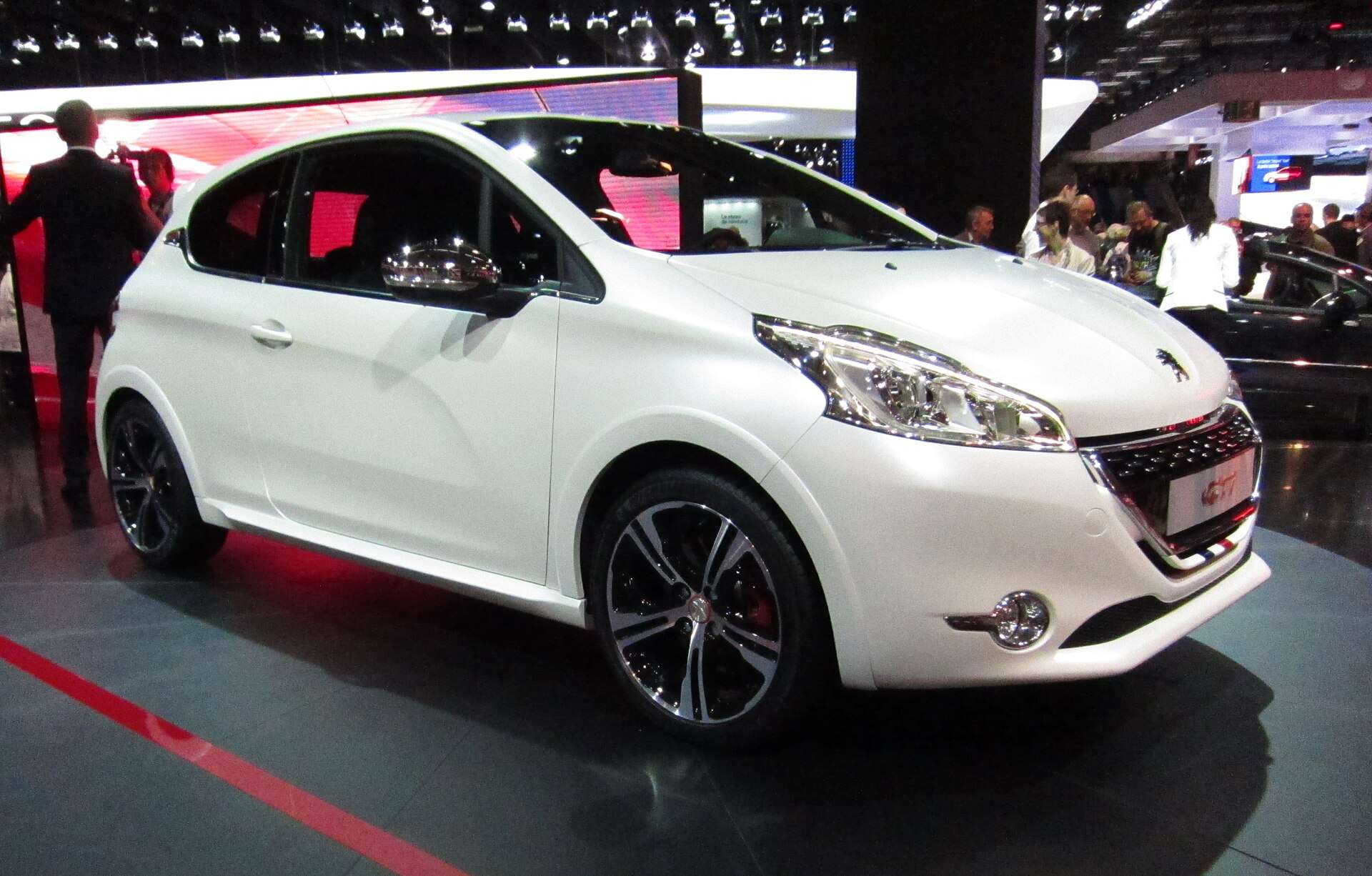
The petrol Peugeot 208 GTi combines a compact three-door body with a lively 1.6-litre turbocharged engine and a six-speed manual gearbox. It can be an attractive used hot hatch, but the ordinary GTi and the more specialised 30th/Peugeot Sport versions need to be judged on their actual hardware. This guide covers the first-generation petrol car, with UK buying checks, dated parts evidence and a clear separation from the newer electric E-208 GTi.
Our buying verdict
Start with a standard, documented car that runs cleanly from cold and has convincing oil-service and repair invoices. A 30th or GTi by Peugeot Sport is a stronger enthusiast proposition when its differential, brakes, suspension and seats are authentic and healthy. An unresolved timing noise, misfire or cooling fault needs diagnosis before purchase. A cheap advert is not good value if several expensive jobs are waiting.

Standard GTi, 30th and GTi by Peugeot Sport
The petrol GTi uses the 1.6 THP engine and a six-speed manual transmission. Early and later output labels are often described as 200 and 208, while UK bhp figures can appear lower because of the units used. Do not turn a badge or a retailer’s rounded power description into a precise engine identification. Establish the VIN, engine code, build date and original market.
The 30th anniversary model is more than a paint scheme. Peugeot’s 2014 release describes a 10 mm lower suspension, wider track, dedicated chassis tuning, a Torsen limited-slip differential and Brembo four-piston front calipers with 323 mm discs. Its 18-inch wheel and tyre package, seats and other details also differ from an ordinary GTi.
| Version | What makes it relevant | What to verify |
|---|---|---|
| Standard petrol GTi | Accessible entry to the 1.6 THP hot hatch | Engine and build details, oil history, timing evidence and condition |
| GTi Prestige / equipment variants | Comfort equipment may improve daily use | Exact model-year equipment; a trim label does not prove Peugeot Sport running gear |
| GTi 30th anniversary | Limited-edition specification developed by Peugeot Sport | Identity, differential, brakes, seats, suspension, paint and numbered-edition evidence |
| GTi by Peugeot Sport | More focused chassis and traction package | Factory specification, Torsen, brake condition and correct replacement parts |
| Modified GTi | Potentially appealing to a specialist buyer | Hardware, calibration, insurance, emissions compliance and documented workmanship |
Peugeot’s dedicated 2017 technical release confirms a standard mechanical Torsen differential on the GTi by Peugeot Sport. That is a concrete reason to distinguish it from a car with red details or replacement badges. Ask for build information and inspect the fitted hardware before paying for that specification.
The 30th was offered in more than one colour, so a two-tone finish is not the only route to a genuine example. Equally, a repainted or wrapped standard car does not become a 30th. Check the identity and original specification separately from the quality of any cosmetic work.
Which version should you buy?
For everyday use and a tighter maintenance budget, we would start with a sound ordinary GTi. For someone who values the chassis and is prepared to maintain it, the 30th or Peugeot Sport car is worth the extra research. The price premium should be supported by authenticity, condition and invoices, not an assumption that the most desirable badge is always the best purchase.
Try the driving position before committing. The small steering wheel and high instruments do not suit every driver in the same way. Set the seat and wheel to a comfortable position, check that you can read the instruments and try rear access and boot loading. A specification sheet cannot decide whether the ergonomics work for you.
208 GTi prices: the current asking evidence
Car & Classic’s 208 GTi page checked on 4 November 2026 showed a 2016 UK manual at 76,000 miles asking £3,995, and a 2018 GTi Prestige at 45,000 miles asking £8,499. The latter advert claimed chain and clutch work. Those are seller claims to verify through invoices, not facts independently established by this guide.
A 2015 30th was also displayed in the Netherlands at €19,950 and 63,552 kilometres. Its market, mileage units and edition make it unsuitable as a direct UK standard-GTi comparator. The small sample does not justify a national price band or a measured premium for a Peugeot Sport car.
Use asking prices as a starting point, then compare the work needed. Timing repairs, tyres, brakes, cooling faults and clutch wear can erase the saving on a cheap car. Conversely, a dearer car with a claimed repair needs evidence of what was actually replaced. A new tensioner is not automatically equivalent to a complete timing job.
Build the first-year total before negotiating: inspection, purchase, exact-registration tax and insurance, immediate repairs, routine maintenance and a reserve. Keep the reserve after purchase. A car that consumes the whole budget at the point of sale is not affordable merely because its monthly fuel use looks reasonable.

Bodywork, identity and accident damage
Match the VIN and registration documents, establish ownership, review MOT mileage and advisories and arrange a provenance check for finance, theft and insurance history. Ask about body repairs and modifications. A valid MOT is useful evidence, but it is not a structural or accident-history certificate.
Inspect sills, jacking points, floor, rear underbody and suspension mounting areas on a lift. Look for corrosion, crushed lifting areas, impact damage and coatings that obscure the substrate. Low spoilers and modified ride height can conceal the results of poor access or repeated grounding.
Compare panel gaps, paint texture and colour in daylight. Inspect bonnet and wing fixings, lamp mounts, door shuts and the boot floor. A car with uneven tyre wear or a steering wheel that is not centred needs a chassis and alignment assessment, not an assumption that a quick tracking adjustment will solve it.
On a two-tone, matt-finish or repainted car, ask how damaged panels would be matched and repaired. A conventional polish may not be appropriate to every finish. Obtain a bodyshop assessment of defects before buying on the assumption that a distinctive paint job is easy to restore.
Open and close both long doors, check handles, locks and seals and inspect the cabin for water staining or musty smells. Check the tailgate and boot trim. If there is damp, trace the entry point and consider drying and electrical consequences rather than treating carpet cleaning as a repair.
1.6 THP engine problems and inspection priorities
Timing chain: what the invoices need to show
The GTi’s 1.6 THP uses a timing chain. It should not be confused with the wet timing belt associated with smaller PureTech engines in other 208s. A generic “Peugeot 208 timing belt” search can lead to the wrong job, wrong parts and wrong maintenance advice.
Arrange a genuine cold start and listen for persistent or abnormal timing-area noise. Ask a Peugeot/THP specialist to investigate relevant faults, cam/crank correlation and service history. A rattle can have more than one cause; diagnosis should establish what is wrong rather than automatically replacing the first component named online.
Where timing work is claimed, obtain an invoice showing the date, mileage, chain, tensioner, guides and other parts fitted. Pug1Off’s supplier page distinguishes the basic chain kit from additional dephaser, pump, pulley and cover-gasket choices. That illustrates why two quotes both called “timing chain replacement” may cover different work.
Do not assume that a chain has a universal replacement mileage or that a later registration guarantees immunity from every timing problem. Maintain the correct oil specification and service plan, investigate symptoms and assess the actual engine. A recent engine-light reset is not proof of a completed repair.
Oil service, leaks and running quality
Check oil level using the correct procedure and review invoices for the approval used, calendar gaps and filters. Ask about top-ups and the distance between them. An owner’s description of acceptable oil use is not the same as a measured record, and one short drive cannot establish long-term consumption.
Observe cold start, warm idle and normal acceleration. Smoke, misfires, hesitation or an uneven idle need diagnosis. Ignition, intake leaks, fuel delivery, timing, compression and control systems can produce overlapping symptoms. Avoid buying a car described as needing only a coil or a sensor unless that diagnosis is supported.
Direct-injection intake deposits can be part of a THP assessment, but cleaning should follow evidence and diagnosis. It is not a blanket cure for poor running. If symptoms justify it, ask whether compression, leak-down or inspection is appropriate and interpret the results with a specialist.
Cooling and turbocharger
Inspect coolant when cold, hoses, radiator area, thermostat/pump connections and visible signs of dried leakage. On a normal drive, observe temperature behaviour and heater operation. After the drive, look again for fresh leaks without opening a hot cooling system. Repeated coolant loss or overheating needs a traced cause.
Ask about turbo and boost-related work. Check intake and charge connections and the quality of any aftermarket installation. A boost warning or hesitation does not by itself identify a failed turbo. Diagnostic codes, pressure control, fuelling and mechanical condition need to be considered together.
A tuned car needs invoices for the calibration and supporting hardware, not just a claimed power output. Establish what fuel and service plan the installer specified, whether the exhaust and emissions system remain appropriate for road use, and whether the insurer will accept the actual changes. Returning to standard can require several components and labour jobs.

Clutch, gearbox, differential and chassis
Assess clutch take-up, slipping under normal load, pedal behaviour and gear selection from cold and fully warm. Listen for noises that change with clutch position and road speed. A complete quotation should identify whether clutch, release parts, flywheel assessment and gearbox work are included. Do not force a reluctant shift during a viewing.
On a Peugeot Sport or 30th, establish the differential and correct gearbox specification from records and inspection. Do not use an aggressive public-road test to prove limited-slip operation. A specialist can assess noise, leaks and the suitability of the installed parts more usefully than a seller’s demonstration of wheelspin.
Inspect dampers, springs, bushes, mounts and steering joints on a lift. Confirm the components fitted to a focused edition rather than replacing them with a generic 208 equivalent. Uneven ride height or tyre wear should prompt a geometry and component assessment, especially where aftermarket suspension has been installed.
Brake hardware is an important cost distinction. The 30th’s manufacturer specification includes Brembo four-piston calipers and 323 mm front discs. Check the actual system, corrosion, seized hardware, pad wear and disc condition on both faces. A cheap ordinary-GTi disc listing is not an equivalent replacement for every version.
Interior, electrics and everyday usability
Test the driving position, seat adjusters, seat security and rear-access mechanisms. On Peugeot Sport seats, inspect bolsters, trim and mountings carefully and obtain realistic repair estimates. A worn seat can be expensive to restore correctly even when the rest of the cabin looks tidy.
Test the touchscreen, audio, phone connection, climate functions, windows, mirrors, locks, lights and wipers. Try your own phone and check the system after a warm restart. An older screen that functions correctly may still lack features you want; an aftermarket solution should be assessed for integration and wiring quality.
Check both keys and the normal warning-light sequence. Have a diagnostic scan interpret stored faults, including relevant non-engine systems. Battery, charging and connection checks should precede an assumption that an alternator or control module needs replacement. Intermittent faults deserve a written diagnosis rather than an assurance that they are normal.

Maintenance costs and useful parts
Affiliate disclosure: The eBay links below use our campaign 5339238906. We may earn a commission on qualifying purchases. They open vehicle-specific searches, not vetted products or guaranteed-fitment recommendations. Check VIN, engine, build date, component numbers, seller terms and the workshop’s requirements before ordering.
On 4 November 2026, Pug1Off’s online shop displayed its genuine Peugeot EP6/N18 208 GTi timing-chain kit at £245. The description lists the chain, guides/pad, tensioner, pinion, specified screws and crank seal, and identifies both 200 and 208 model labels. It is a parts listing, not a fitted repair; the page did not clearly establish VAT treatment, so confirm VAT, delivery and current fitment before ordering.
The same page separately prices optional dephaser, pump, pulley and rocker-cover-gasket choices. Compare 208 GTi timing-chain kits against the exact written parts list. Obtain a fitted quote that includes the relevant additional parts, oil, diagnostic work, timing verification and road test. A low kit price alone is not a repair budget.
| Item | What to establish | Compare availability |
|---|---|---|
| Timing-chain kit | Correct engine code, complete contents and associated parts/labour | Timing-chain kit on eBay |
| Oil and filters | Correct approval, quantity and model-specific schedule | Oil and filters on eBay |
| Spark plugs and coils | Correct THP specification; diagnose misfire first | Spark plugs and coils on eBay |
| Alternator and battery | Match start/stop and electrical specification; test charging system | Alternator and battery on eBay |
| Water pump and thermostat | Trace leak/temperature fault; confirm coolant and fitted scope | Water pump and thermostat on eBay |
| Clutch and release parts | Match gearbox, inspect related components and quote labour | Clutch and release parts on eBay |
| Standard GTi brakes | Identify the actual caliper and disc dimensions | Standard GTi brakes on eBay |
| Peugeot Sport brakes | Use 30th/Sport-specific hardware and dimensions | Peugeot Sport brakes on eBay |
| Suspension and mounts | Match ordinary or Peugeot Sport specification; include geometry | Suspension and mounts on eBay |
| Intake and boost parts | Diagnose leaks/control faults before ordering hardware | Intake and boost parts on eBay |
Obtain written estimates which separate diagnosis, parts, labour, fluids, tax and delivery. A parts price is not a fitted repair bill. Agree how additional work discovered during dismantling will be authorised, and retain invoices showing date, mileage and the actual specification used.
At purchase, prioritise structure, tyres, brakes, leaks and overdue maintenance before cosmetic or performance upgrades. Where servicing is unproven, budget for a baseline inspection and the work it identifies. Confirm manufacturer requirements for the exact vehicle rather than relying on a timetable borrowed from a related model.
Hidden ownership costs
The asking price is only the beginning. Include these less obvious expenses when deciding which example offers value.
- Incomplete timing quotations,The kit, optional parts, fluids and access labour need separate identification. A tensioner-only invoice is not necessarily a complete job.
- Peugeot Sport brakes and seats,The equipment that makes a focused edition appealing can cost appreciably more to repair than standard items.
- Distinctive paint,Matt and two-tone finishes need appropriate repair and maintenance methods; price defects with a bodyshop.
- Tyres and wheel condition,Correctly matched tyres, inner-rim damage and alignment can add an immediate bill.
- Cooling and poor-running diagnosis,Repeated parts replacement without a traced cause is a warning, not evidence that every possible fault has been eliminated.
- Tuning and insurance,Declare changes, check road-use compliance and include the cost of undoing unsuitable modifications.
Get an insurance quote for the actual specification before committing, including modifications. Check current vehicle tax against the exact registration, and allow for inspection, recovery or collection, secure storage and the first year’s due work. Long periods of storage do not stop tyres, fluids, seals or corrosion ageing.
Viewing checklist: from first enquiry to decision
Before travelling, request the registration and VIN, service invoices, MOT chronology, modification list and confirmation that a cold start and independent inspection are welcome.
- Obtain VIN, engine/build details, service invoices, timing-work scope and modification list before travelling.
- Match identity, ownership, provenance and MOT mileage; verify 30th or Peugeot Sport claims against build evidence.
- Inspect underside, lifting points, paint, accident repairs, tyres and wheel inner faces on a lift.
- Start genuinely cold and assess timing noise, idle, smoke, fluids and leaks. Arrange a THP-capable diagnostic assessment.
- Test normal power delivery and cooling, then inspect again when warm. Investigate misfires or pressure warnings before purchase.
- Assess clutch and gearbox cold and hot, and inspect the correct differential, brakes and suspension for the version.
- Check seat access/security, driving ergonomics, touchscreen, climate functions, electrics and both keys.
- Obtain itemised immediate and upcoming repair quotes, then compare total first-year cost with another car.
Proceed when identity, condition and records agree. Investigate unexplained noises, warning lamps, leaks and gaps before paying. Walk away from concealed identity, serious unresolved structural concerns or refusal of an appropriate inspection. A discount does not define the upper limit of an unknown repair.
Buying questions answered
Does the Peugeot 208 GTi have a wet timing belt?
The petrol 1.6 THP GTi covered here uses a timing chain. Do not apply the smaller PureTech engine’s wet-belt maintenance advice to it.
Is every GTi fitted with the Torsen differential?
No. Verify the specific version. Manufacturer material confirms the Torsen on the 30th and GTi by Peugeot Sport; ordinary GTi trim or red details do not establish that hardware.
Is a Peugeot Sport car worth the premium?
It can be for a buyer who values the chassis and has the budget for its dedicated brakes, suspension and seats. Authenticity and condition should support the premium.
What should timing-chain paperwork include?
Date, mileage and an itemised list of parts and work. Confirm whether it covered the chain, tensioner, guides, related seals and any required additional components.
Would you buy a modified 208 GTi?
Only with clear hardware and calibration records, an appropriate inspection, insurance acceptance and road-use compliance. Claimed power alone is not enough evidence.
Sources and research method
Researched on 4 November 2026 using the manufacturer, workshop, supplier and market pages listed below. Manufacturer material establishes specification; workshop accounts inform inspection priorities; supplier listings show dated costs and availability. Advertised prices are asking prices, not sold values or independent condition reports.
- Peugeot: 208 GTi 30th engineering release — Primary evidence for chassis, Torsen, brakes, seats and colour choices.
- Peugeot: GTi by Peugeot Sport Torsen differential — Manufacturer confirmation of the mechanical differential on this specific version.
- Pug1Off: 208 GTi EP6/N18 timing-chain kit — Dated displayed parts price and itemised base/optional contents; VAT and installed scope require confirmation.
- Car & Classic: 208 GTi advertisements — Individual UK asking examples and separately identified overseas 30th listing.
Also use the GOV.UK used-car checks and MOT history service. Verify current recall completion with the manufacturer against the VIN. These checks cannot certify the condition of an individual vehicle.
This is a research-based buying guide, not a report of a first-hand test of the cars advertised. Prices, parts and availability change; confirm quotes and fitment. An independent inspection should resolve vehicle-specific concerns before purchase.